St. Ignatius of Antioch, bishop and martyr, pray for us—that we may hunger for the Eucharist, preserve the unity of the Church, and remain faithful to Christ whatever the cost.
St. Ignatius of Antioch
St. Ignatius of Antioch was one of the earliest bishops, martyrs, and theologians of Christianity. He lived so close to the apostolic age that his writings provide an extraordinary window into what Christians believed immediately after the New Testament period.
He is not to be confused with St. Ignatius of Loyola, who founded the Jesuits in the sixteenth century.
Why he is especially important
St. Ignatius is a powerful historical witness because he wrote only a generation or two after the Apostles. His letters show that belief in the Real Presence, the authority of bishops, the threefold ministry, and the universality of the Catholic Church did not suddenly appear centuries later. These elements were already present near the beginning of the second century.
His final journey became a living sermon: the bishop traveled in chains toward death while strengthening the churches, defending Christ’s true humanity, proclaiming the Eucharist, and begging Christians to remain united.
Today I attended service at a Catholic church, and I’m seriously considering joining the Pope’s people. Hawa watu hawana mambo mingi. 😂
You criticise their religion, they listen until you finish. Nobody is rolling up their sleeves to defend Rome. You came with your mouth, finish talking and go home.
They attend Mass, receive Communion, say Hail Mary, then some pass by their local for a cold beer.
From “peace be with you” to “weka moja baridi” without quarrelling with anybody. 😂
Nobody is inspecting your clothes. Wear the same shirt every Sunday until the collar gives up.
You came to see God, and God already knows that shirt.
No loudspeaker facing somebody’s cows, announcing that the devil has refused to leave the village. The church bell rings, and those who are going start walking.
And they’re not begging you to join. The church has been beside the road since your grandfather was a boy. You know the entrance. Ukijiskia, ingia.
What pleased me most was not being asked to stand up, introduce myself, say who invited me and explain whether I’m visiting or looking for a spiritual home. Yaani I can come and pray without giving the village my CV? 😂
By the time I left, nobody had recruited me into a committee or asked why my wife hadn’t come.
Very disciplined people. Somebody tell the Pope there is a man from Kingeero coming and I already know where the church is. 😂
"We have seen that, to remain in a state of prayer, it is not necessary to be always actively praying." —Raoul Plus, S.J., pg. 77
An excerpt from How to Pray Always
Father Raoul Plus, S.J., makes an important distinction between an act of prayer and a state of prayer.
We cannot constantly be reciting prayers or consciously thinking about God. Work, conversation, illness, and ordinary responsibilities require our attention. But we can remain inwardly oriented toward God—a disposition of faith, love, dependence, and readiness to do His will. In that sense, the prayer may cease as a deliberate mental act while the soul continues to be prayerful.
A person remains in a state of prayer when:
the day has been offered to God;
ordinary duties are performed for His glory;
joys and sufferings are accepted in union with Christ;
the heart returns to God whenever circumstances permit;
one avoids deliberate sin and seeks to live in His presence.
This illuminates St. Paul’s command to “pray without ceasing” (1 Thessalonians 5:17). Paul cannot mean that every moment must be occupied by spoken prayer. Rather, one’s whole life becomes prayer because it is lived before God and directed toward Him.
It is much like a mother caring for her sick child. She may not continually say, “I love you,” because she is busy preparing medicine, changing linens, or watching through the night. Yet every action proceeds from love. Her attention is occupied, but her love has not ceased. Likewise, a Christian may be absorbed in work while the underlying movement of the heart remains toward God.
A simple morning offering establishes this intention:
Lord, I offer You all my prayers, works, joys, and sufferings of this day. Let everything I think, say, and do be united with Jesus and accomplished for Your glory.
Brief aspirations—“Jesus, I trust in You,” “My God, I love You,” or simply the Holy Name—renew that orientation during the day. But even between those conscious acts, the original offering remains. The soul is not always speaking to God, yet it continues to belong, listen, and tend toward Him.
The world feels dangerously close to the edge again.
And Catholics know what to do when history turns dark.
We pray.
In 1571, as Christian Europe faced the Battle of Lepanto, Pope St. Pius V called the faithful to the Rosary. At Fatima, Our Lady gave the same command for another century of war:
Pray the Rosary every day for peace.
Tonight, somewhere, a mother is putting her children to bed wondering if the windows will shake before morning.
A soldier is staring into the darkness thinking about home.
Families are watching the sky.
Churches are praying for the dead before the names are even known.
And millions of us are watching it unfold through a screen.
Do not just scroll past it.
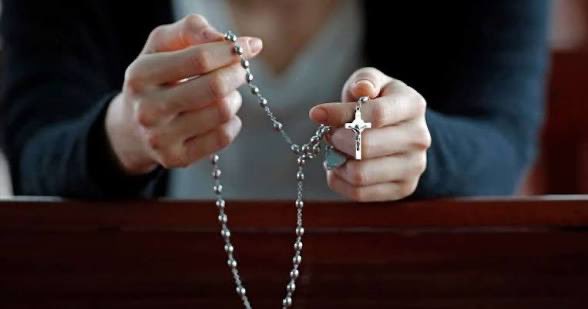
Pick up your Rosary.
Pray for the innocent.
Pray for the dying.
Pray for the men making decisions that could change the lives of millions.
Pray for hardened hearts to soften before another mother has to bury her child.
The world has weapons powerful enough to destroy cities.
We have prayer powerful enough to change hearts.
Tonight, Catholics, do what generations before us did when the world seemed to be coming apart.
Pray the Rosary.
Our Lady, Queen of Peace, pray for us.
St. Michael the Archangel, defend us.
Lord, have mercy on this world.
Heavenly Father,
We place this beloved father into Your merciful and loving hands. You know him completely—every pain in his body, every fear in his heart, and every hope held silently within him.
Lord, we ask boldly for a miracle. If it is Your holy will, restore his health and grant him more time with the family who loves him so deeply. Let there be one more mercy waiting—one more unexpected grace that only You can give.
Please spare him unnecessary suffering. Ease his pain, calm his mind, and quiet every fear. When the way becomes dark or uncertain, let him feel the presence of Jesus beside him, holding him securely and whispering to his heart, “Do not be afraid. I am with you.”
Father, embrace his daughter, who cannot imagine this world without the man who has always been her safe place. When she feels helpless, carry her. When grief overwhelms her, strengthen her. Give her the grace for each day—not all at once, but moment by moment. Surround the whole family with Your peace and unite them in tenderness, patience, and love.
Bless the doctors, nurses, caregivers, and hospice workers. Give them wisdom, compassion, and gentle hands. Let every decision protect his dignity and bring him comfort.
Blessed Mother, remain close to this father and his family. Cover them with your mantle and lead them always to your Son.
Lord, whether through healing in this life or through the promise of eternal life, let love have the final word. May this father know that he is cherished, that he is not alone, and that nothing—not sickness, suffering, or death—can separate him from the love of God in Christ Jesus.
We ask this with hope and trust, in the name of Jesus Christ our Lord.
Amen.
“My Immaculate Heart will triumph”
This is the final word of Fatima.
The triumph of Mary’s Immaculate Heart does not mean that Mary replaces Christ or establishes a separate salvation. Her Heart represents the human heart completely open and obedient to God—the heart whose answer is always:
“Let it be done to me according to your word.”
Her triumph is therefore the triumph of grace over sin, faith over atheism, sacrificial love over hatred, and ultimately Christ over the powers of evil.
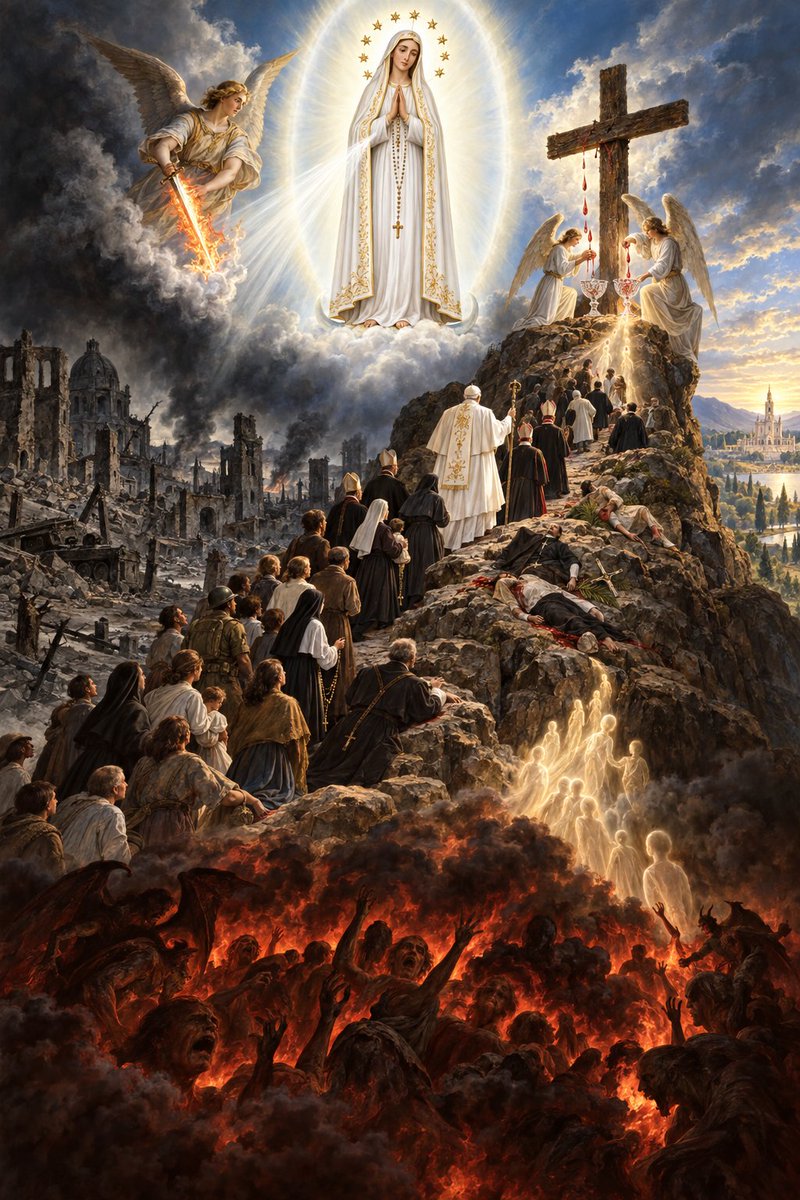
It does not promise that Christians will escape every trial. The Third Secret shows precisely the opposite: the Church may pass through ruin, persecution, and martyrdom. But evil will not have the final word. The martyrs are not defeated; their blood bears fruit, their souls ascend to God, and the Cross stands above the ruins.
The distilled message of all three secrets is:
Souls are in danger. Sin can destroy both persons and nations. The future is not fixed. Prayer, penance, sacrifice, reparation, and conversion can change history. The Church will suffer, but suffering united to Christ will bear fruit. In the end, God’s mercy will prevail and the Immaculate Heart of Mary will triumph.
THE MESSAGE OF FATIMA
The Message of Fatima is an official document published by the Vatican's Congregation for the Doctrine of the Faith on June 26, 2000.
It shares the complete text and official meaning of the famous secrets from the 1917 apparitions in Fatima, Portugal.
The message for the future
Fatima does not reveal an unchangeable future. It reveals two possible roads.
One road is:
sin → spiritual blindness → hatred → oppression → war → persecution → martyrdom → self-destruction.
The other is:
repentance → prayer → reparation → conversion → mercy → peace → salvation.
That is why the warning was given. A warning presupposes that the threatened outcome may still be changed.
Sister Lucia put it plainly: we should not say that God arbitrarily punishes humanity. People prepare their own punishment by their freely chosen sins. God warns them, calls them back, and offers the grace needed to change course.