where four different populations of NGFR-positive HEK293T cells with varying levels of GFP expression were simultaneously isolated for downstream applications. (3/3)
The FACSMelody cell sorting system enables simultaneous isolation of up to four different fluorescently labeled cell populations.
It utilizes the fluorescent signals emitted by various cells to accurately identify and isolate them.
(🧵1/3)
The FACSMelody uses the fluorescence of a labelled population to identify and sort cells accurately. Being able to sort distinct cell types is useful in many applications including, drug screening, immunophenotyping and transcriptomic assays.
The FACSMelody cell sorter housed within the QuIPS platform enables the efficient isolation of a specific cellular population from complex mixture of cell types.🧵1/3
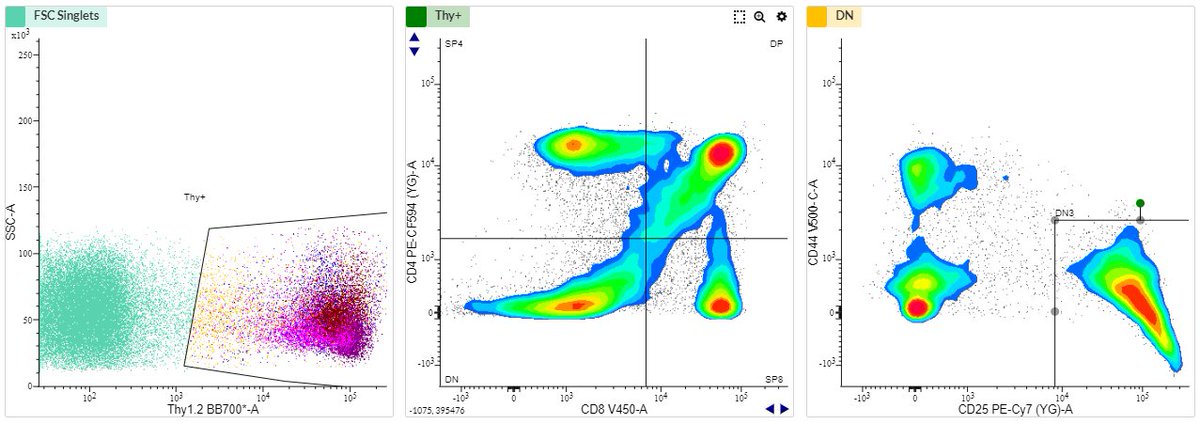
The accompanying image presents some of the work performed by the Tremblay Lab (@Tremblay_Lab) at the Paul Albrechtsen Research Institute to isolate a T cell population from a mixture of cells for downstream analysis.
The FACSMelody uses the fluorescence of a labelled population to identify and sort cells accurately. Being able to sort distinct cell types is useful in many applications including, drug screening, immunophenotyping and transcriptomic assays.
The accompanying image presents some of the work performed by the Tremblay Lab (@CedricSTremblay) at the Paul Albrechtsen Research Institute to isolate a T cell population from a mixture of cells for downstream analysis.
The QuIPS Platform at the Paul Albrechtsen Research Institute provides leading-edge technologies & services for researchers within the Institute, the University of Manitoba and academic and industrial partners.
Please contact us for more information about our services. 🧵1/2
The QuIPS Platform features two IN Carta Analysis workstations designed to handle the heavy lifting of image analysis, allowing users to focus on their research.
IN Carta Analysis Software equipped with SINAP (Segmentation Is Not A Problem) deep learning modules employs advanced artificial intelligence to transform images into data that can be easily quantified and interpreted.
🧵1/4
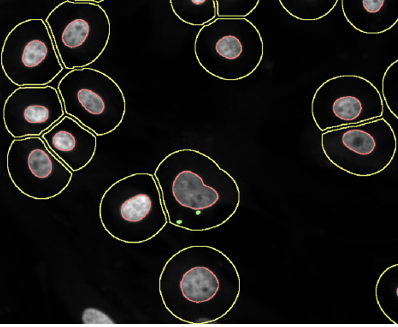
The Nuclei module segments cells based on nuclear DAPI staining (green mask) paired with a 15 um collar (yellow mask) to approximate the cell boundary, while the Organelle module identifies micronuclei within the cell boundary (red mask).
The BD FACSMelody within the QuIPS platform can sort or enrich specific cell populations based on their fluorescence intensities using Fluorescence Activated Cell Sorting technology.
🧵1/4
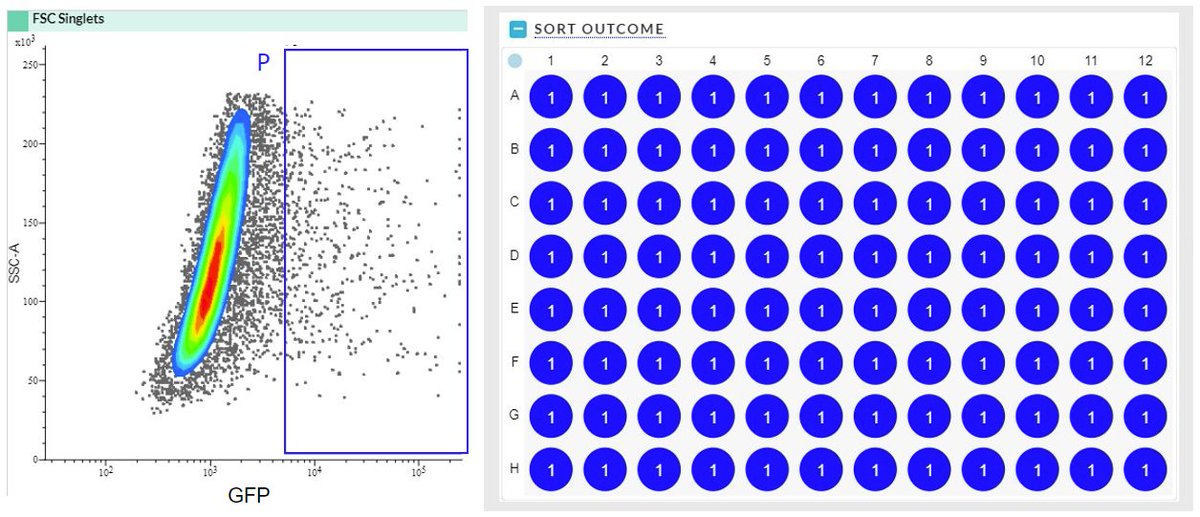
In this experiment, individual cells expressing green fluorescent protein were sorted into each well of a 96-well plate to ultimately generate CRISPR knockout clones. FACS based cell isolation is an efficient and accurate way to isolate single cells for downstream applications.
By combining the transmitted light microscope and 40X objective with auto-stitching capabilities, the PhenoImager captures high-dimensional images of tissues and allows users to visualize their entire slide in one image file.🧵1/3
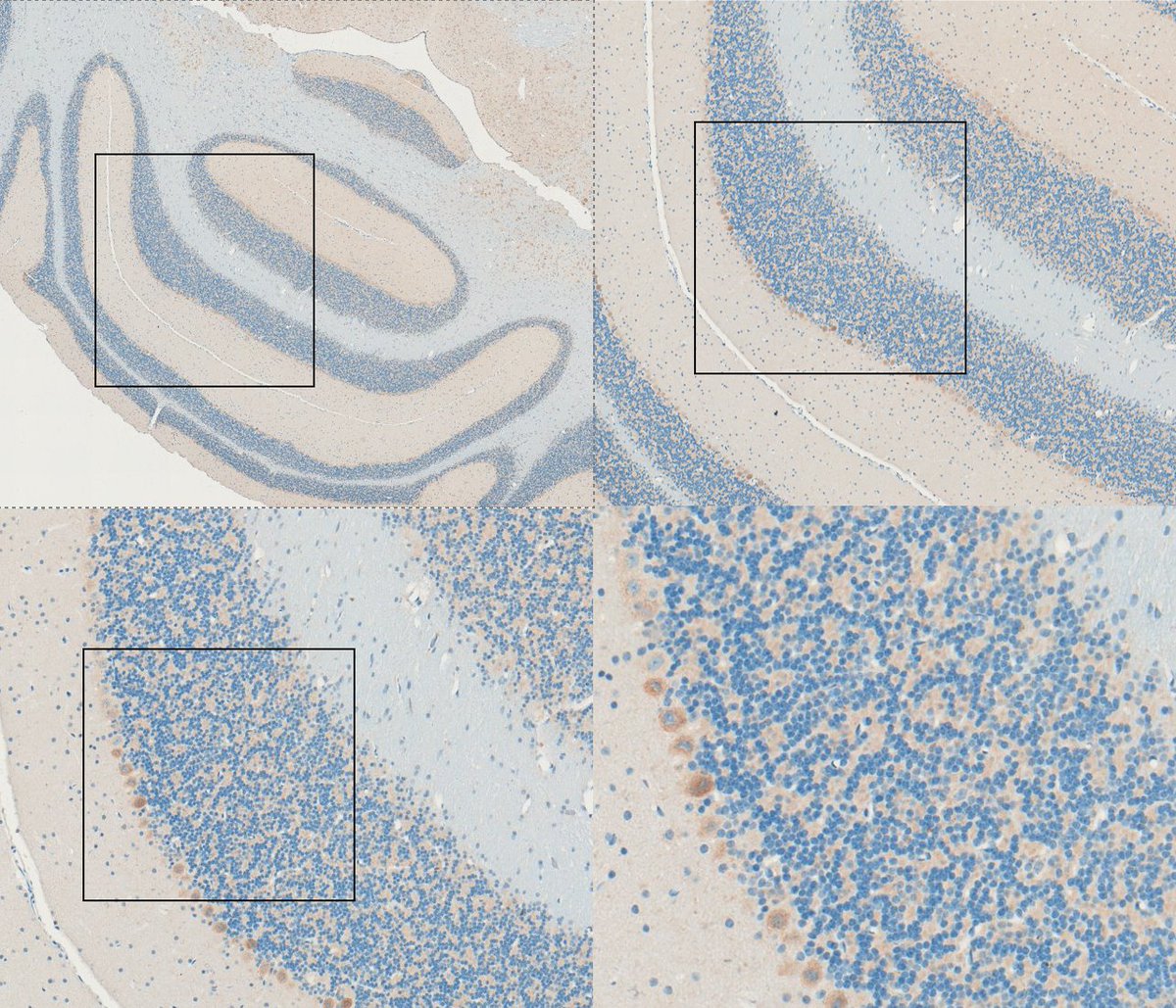
Shown is a DAB-stained mouse brain from the Sharif Laboratory (@SharifLab) at the University of Manitoba zoomed in to 4x, 10x, 20x, 40x magnification.
Images like these can be studied to enhance their understanding of brain cancers including medulloblastoma and glioblastoma.