When we talk about airway quality, it’s easy to focus on the moment of intubation.
The collaborative showed something important:
The best airway outcomes started long before the 1st attempt.
Pre-oxygenation. Positioning. Role assignment. Equipment readiness. Shared team plan.
A snapshot from today's NEMSQA Board of Directors meeting.
Always valuable to come together, share ideas, and keep moving quality improvement forward.
Want to get involved? Learn more here: https://t.co/ZdgI29JeQ9
#NEMSQA#EMSQuality#EMSLeadership
Measure twice, cut once.
Taking the time to get it right upfront prevents bigger problems later.
In EMS, the same idea applies.
Thorough assessment, clear communication, and careful decision-making early in a call often shape everything that follows.
After a call, ask your partner one question:
“What went well?”
Not what went wrong.
Not what could be better.
Start with what worked.
It shifts the tone, builds confidence, and reinforces good care.
In professional sports, teams review film after every game.
What worked.
What didn’t.
What could be done better next time.
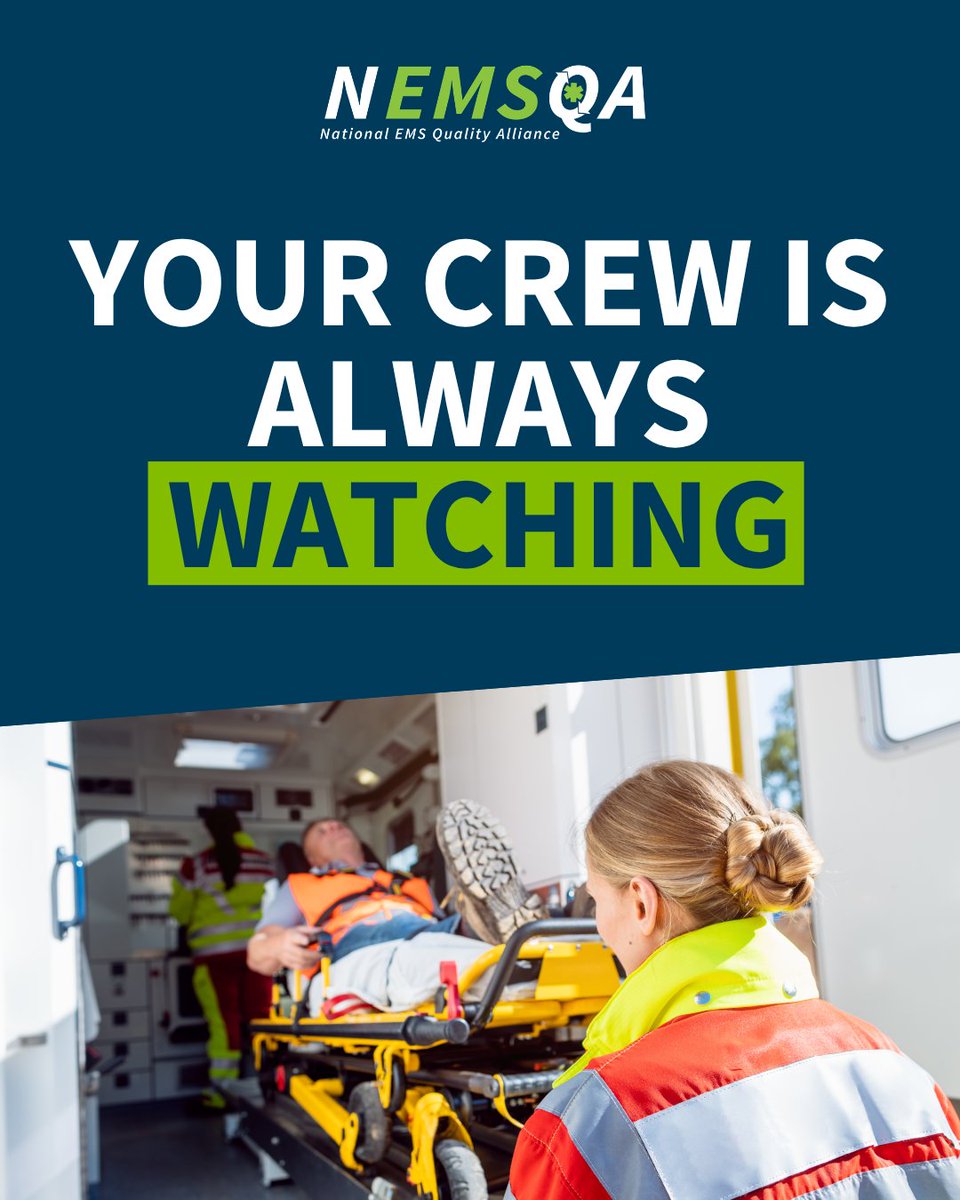
EMS quality works the same way. Reviewing calls is not about criticism. It is about learning and getting better for the next one.
Here are 5 things you can start doing today:
➡ Ask one more question during a call review
➡ Share one example of something that went well
➡ Clarify one expectation with your team
➡ Look for one pattern, not one mistake
➡ Follow up on one previous improvement
In aviation, pilots are trained to talk openly about mistakes.
Not to assign blame, to understand what happened and prevent it from happening again.
That kind of safety culture didn’t happen overnight. It was built through trust, structure, and a shared commitment to learning.
Complex quality programs often struggle to gain traction.
Clear priorities, simple measures, and focused goals are easier for teams to understand and apply.
Clarity creates consistency. And consistency is what improves care over time.
Compliance is not the same as quality.
Meeting requirements does not always mean care is improving.
Real quality work goes deeper. It looks at outcomes, systems, and whether patients are actually better off.
Documentation is not just a requirement.
It is how the next provider understands the patient.
How the hospital prepares.
How the system learns.
Clear documentation supports better care beyond the scene.
Patients deserve the same level of care, no matter who responds.
Consistency across crews, shifts, and teams is what makes that possible.
Quality improvement helps align practice so care is not dependent on who happens to be on shift.
Feedback should not stop at review.
It should come back to the people doing the work.
What changed?
What improved?
What did we learn?
Closing the loop builds trust and keeps quality from feeling one-sided.
When something doesn't go as expected, the first question matters.
Not “Who made the mistake?”
But “Why did this happen?”
Asking better questions leads to better understanding.
And better understanding leads to better systems.
#qualityimprovement#healthcarequality#NEMSQA https://t.co/mACZKO632z
Quality improvement rarely happens all at once.
It takes testing.
Feedback.
Adjustment.
And patience.
Small, steady progress is what builds lasting change in EMS systems.
#qualityimprovement#EMSLeadership#healthcarequality
Have an idea to improve something in your system?
Start with the problem, not the solution.
Be clear about what you are seeing on the ground.
Share how it impacts patients or crews.
Offer a realistic next step.
Good leaders want to hear thoughtful ideas grounded in experience.
Quality improvement ideas do not only come from within your agency.
They show up in journals.
Case studies.
Conference presentations.
Peer discussions.
Staying curious and reading what others are doing helps bring new ideas back to your system.
Some of the best ideas in EMS quality are already out there.
Another agency has tested it.
Refined it.
Learned what works and what doesn’t.
Seeking out how others approach quality is not copying. It is learning faster and improving sooner.
Learn more https://t.co/ZdgI29JeQ9
EMS is always evolving.
New evidence.
New tools.
New approaches.
Staying open to change is what allows systems and clinicians to keep improving over time.
Learn more: https://t.co/ZdgI29JeQ9
Conferences aren't just about sessions & agendas.
They're about conversations in hallways.
Hearing how another agency solved a problem you're still working through.
Asking questions you don't get to ask during shift.
Those moments often shape how quality work evolves back home.