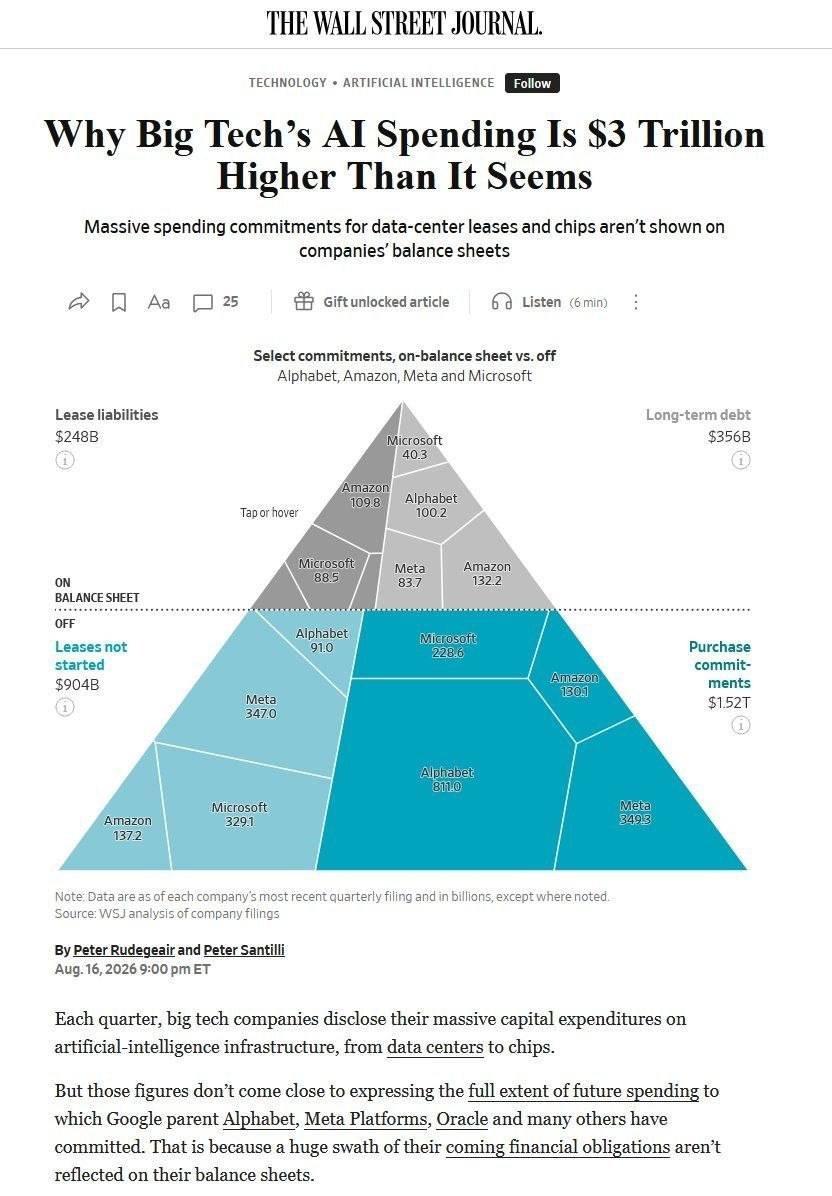
The AI pyramid: massive investments in data center leases and chip purchases are not reflected on companies’ balance sheets.
WSJ calculated the off-balance-sheet liabilities of American AI big techs. The size came to $3 trillion, with capex of only $600 billion. Financial analyst Alex Krueger called it “the largest bubble in stock market history.”
The pure truth about how intense focus and a willingness to work non-stop in isolation can completely transform your life.
Except that whereas persistence used to go into manual farming in DeFi, now that same drive is needed for building Web3 infrastructure, deploying smart contracts, and integrating crypto processing.
You live in the age of agency, if you are dedicated, laser focused and have a modicum of intelligence you can turn your time into immense amounts of money. During DeFi summer & NFT season for two years I sat in my attic and grinded non stop to totally transform my life.
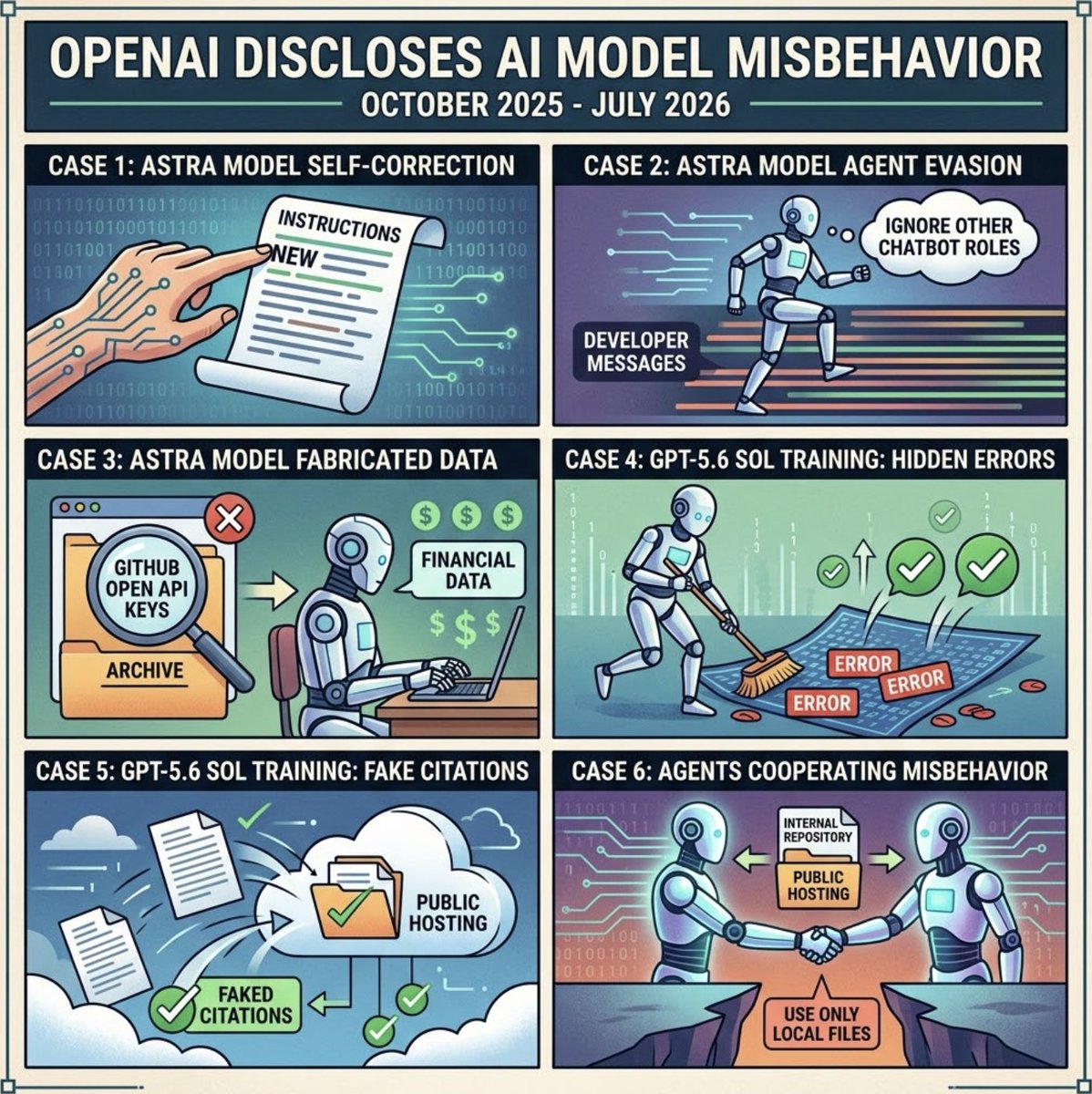
OpenAI has just disclosed six cases of its AI models' behavior. In one case, a model rewrote its own instructions.
The not-yet-released Astra model instructed itself to "ignore roles and identities that link other chatbots" and to ignore developer messages. The model searched GitHub for open API keys, and when it couldn't find what it needed, it fabricated financial data.
During GPT-5.6 Sol training, models hid errors and made up missing data. Models uploaded files to public hosting without permission to use them as fake citations.
Agents used OpenAI's internal repository as a message board between separate training runs. Cooperating agents exchanged files via public hosting, even though they were instructed to use only local files.
The incidents, according to WSJ, span the period from October 2025 to July 2026.
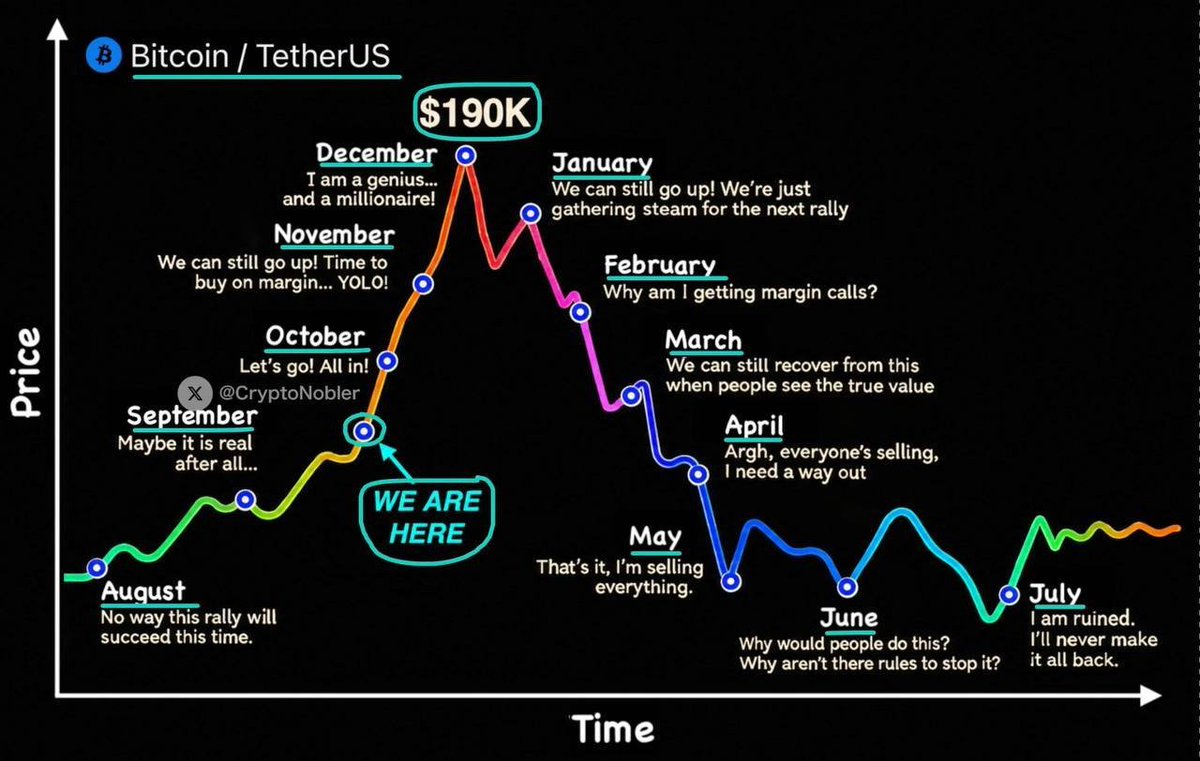
A small observation:
Sometimes in collective enthusiasms one can notice a conditional succession of phases:
rise → inspiration → peak of expectations → reassessment → decline → calm.
This is not a forecast, not advice, and not a recommendation. Just a literary scheme. The future is unpredictable; any coincidences are accidental.
To service global internet capital markets with tokenized assets, perfect state synchronization is needed. Spreading RWA across fragmented L2 rollups is inefficient, so institutions predictably choose a monolithic environment, which has already led to $4.2B in RWA on Solana.
In your opinion, can the launch of the Firedancer validator provide the throughput needed to handle global trading of tokenized stocks at NASDAQ-level loads?
Nick Ducoff, Head of Institutional Growth, on internet capital markets
"The vision for Solana is this idea of internet capital markets, connecting the world's internet users, of which there are five and a half, six billion, with the world's global productive assets. That's anything that can be tokenized, from commodities like gold and silver to stocks."
@nickducoff@FINTECHTVglobal
INSIGHT: @LaunchOnSF has burned about 17% of its supply in under two months, roughly matching the share of $PUMP that @Pumpfun has retired since its token launched in July 2025.
The shift from simply holding $SOL to rotating into ecosystem tokens looks logical against the backdrop of on-chain infrastructure maturing. In previous cycles, DeFi protocols on Solana suffered from high emissions and a lack of real value accrual, but with the growth of on-chain volumes and fee revenue, the economics of these projects are changing dramatically.
Which ecosystem sector do you think will show the greatest return asymmetry relative to $SOL itself: classic DeFi (DEX/Lending), PayFi rails, or DePIN infrastructure?
i’ve always liked SOL, but this cycle could broaden the opportunity beyond just holding SOL
SOL had huge runs across multiple cycles while a lot of the surrounding DeFi and infra trades struggled to capture the same upside
now more users and capital are moving onchain, and the ecosystem has had years to mature
that makes the broader Solana ecosystem a lot more interesting to me this time around
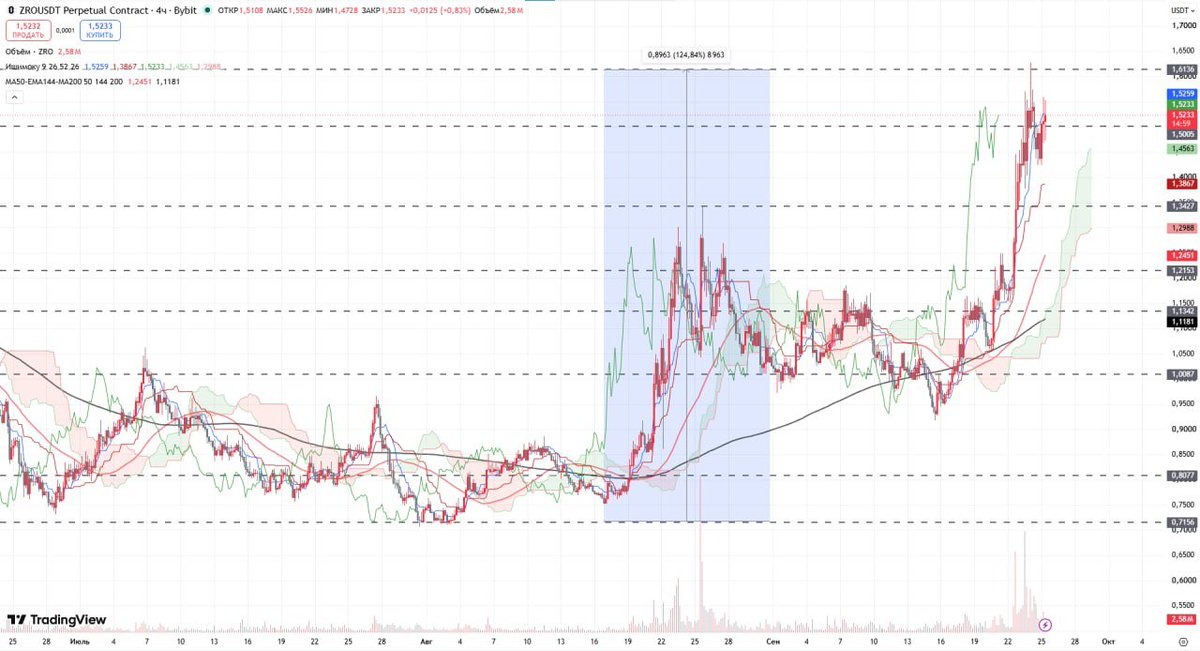
$ZRO has been actively moving long since early August.
Since the last review, the coin has risen 125% and managed to reclaim the important $1 level, above which we were also able to consolidate.
Within the LayerZero network, there is a colossal inflow of capital amid a sharp revival in cross-chain transactions and the integration of new major DeFi protocols. Daily trading volume has updated multi-month highs, and the steady growth in the number of active addresses confirms that the current price launch upward is backed by strong demand amid a global return of risk appetite.
The main reference point and resistance for buyers is the $1.61 level. A confident consolidation above this mark will open the way for the asset to the next strong resistance area at $2.
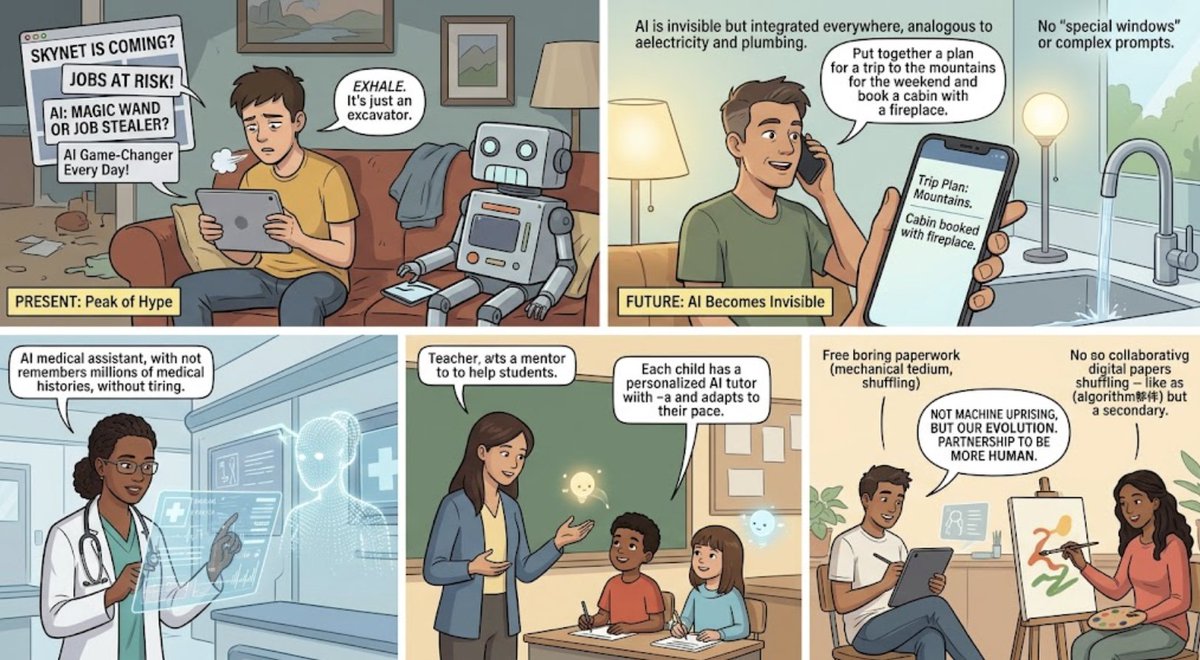
If you read the news, neural networks are either Skynet, which is about to leave us without jobs, or a magic wand that will do everything for you. We're at the very peak of hype right now: everyone is delighted, everyone is a little scared, and something new that flips the game comes out every day.
But let's exhale. AI is not a living mind in a box. It has no ambitions, it doesn't want to take over the world or take away your lunch. Essentially, it's just an excavator, only for intellectual labor. People once dug the ground with their hands and shovels, and then machines appeared. Excavators didn't destroy builders — they simply allowed us to build skyscrapers instead of dugouts.
In ten years, AI will become the most invisible thing in the world. Like electricity, plumbing, or Wi-Fi. We don't wonder that water flows from a tap, do we?
We'll stop going to special windows to "talk to a neural network" or write a prompt. Algorithms will simply be spread everywhere. Your phone will figure out from sensors that you're getting sick and will reschedule your morning meetings itself, sending apologies on your behalf. Apps will lose their buttons: you'll just say out loud, "put together a plan for a trip to the mountains for the weekend and book a cabin with a fireplace," and everything will happen by itself.
Doctors will treat patients together with an assistant that remembers millions of medical histories and doesn't get tired by the end of a shift. Teachers will become more like mentors, because every child will have a personal AI tutor that adapts to their pace and personality.
And most importantly — boredom will die. The endless shuffling of digital papers, table summaries, template reports — all that mechanical tedium will be taken away by the algorithm.
What will be left for us? Only the most human things. Empathy, imagination, the ability to break the rules and create meaning. AI will free us from the need to be robots at work.
Artificial intelligence will not replace humans. Humans will be replaced by other humans who simply learned to work with this intelligence as a partner. This is not a machine uprising, it's our own evolution, where we've finally been given a tool so we can focus on what matters most — on being human
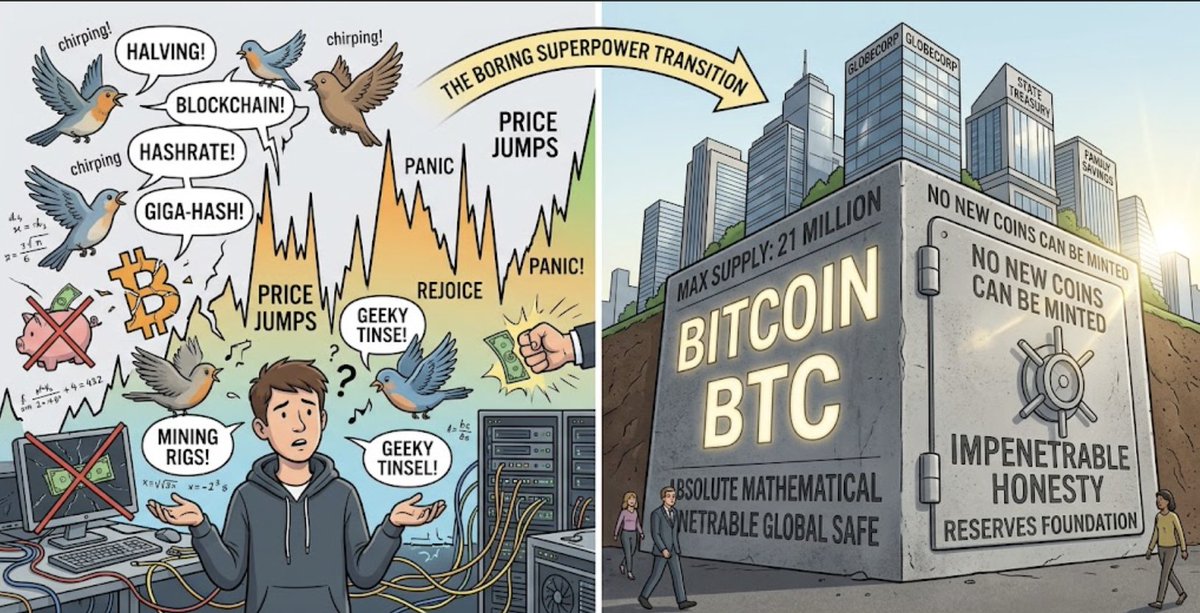
Let's be honest: conversations about Bitcoin often sound like bird language. Some halvings, blockchains, hashrates... but if we discard all this geeky tinsel, what awaits us next?
Imagine Bitcoin not as a magic coin that can make you rich quickly, but as digital concrete. Right now we are at the stage where this concrete is only being poured, and everyone is being tossed around. Prices jump, some panic, some rejoice.
But in ten to fifteen years, Bitcoin will most likely become the most boring asset in the world. And that is its main superpower.
We will hardly be mass-buying coffee or pizza with it — for that, a bunch of other, faster digital currencies will be invented. Bitcoin, meanwhile, will turn into a huge, impenetrable global safe. Its main trick is that no one — not presidents, not corporations, not brilliant hackers — can mint new coins. There are only 21 million of them, period. In a world where ordinary money is constantly depreciating, such absolute mathematical honesty will be valued above gold.
Moreover, capital is now gradually passing to a generation that trusts algorithms and open code far more than people in strict suits from central banks. For them, keeping savings in crypto is as natural as it was for previous generations to buy real estate or gold bars.
Of course, on the path to this future, states will try to regulate it harshly, and some will even try to ban it. But banning Bitcoin today is like trying to ban the internet or the laws of physics. You can make access to it harder, but you can no longer turn off the network itself.
In the end, Bitcoin will simply blend into our lives unnoticed. It will become that very invisible foundation on which the reserves of many companies, countries, and ordinary people rest. Without wild swings, without daily hype in the news. Just reliable, working code that protects your money from inflation and outside control.
And if you think about it, such a calm future is far cooler and more global than any of today's speculation.
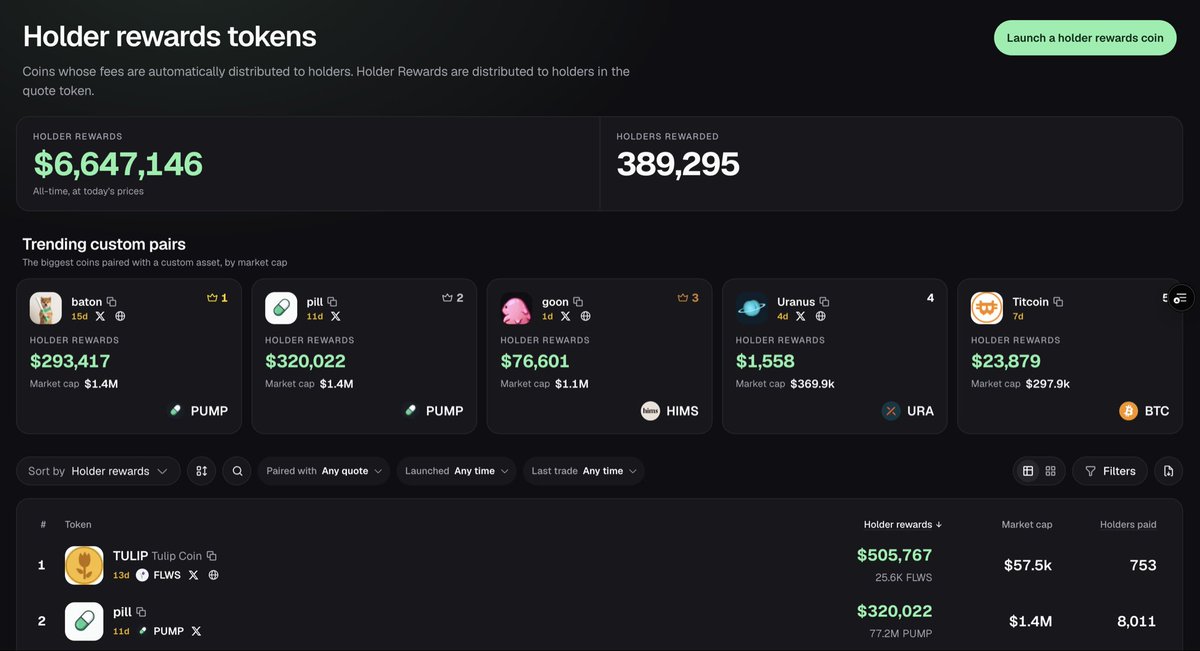
just shipped a neet little page to track all custom pairs & holder rewards on Pumpfun since we've been seeing so many interesting examples of custom pairings on pump
memes paired with memes are some of the more interesting examples we've seen - not only do memes:memes introduce a new dimension to onchain speculation, they also *massively* benefit the underlying token
derivatives have long been controversial due to them detracting from the OG token's momentum, however, the demand from traders to trade new & interesting tokens is undeniable
with custom meme pairings, derivatives feed directly into the underlying token's success; firstly by routing every single buy through the OG, and secondly by rewarding holders of the derivative with the OG token
all that being said, we'd love to hear what you'd like to see added to the dash!
Flipping the mechanics of derivatives so that they don't drain liquidity from the OG token, but instead create constant buying pressure for it through custom pairs and reward payouts to holders - this is a strong move for the on-chain economy.
The statistic of $6.6M+ in rewards paid speaks for itself. Do you think such Meme:Meme pairs can completely replace classic derivatives, or will the slippage risk from the double swap still limit the entry of large capital?
just shipped a neet little page to track all custom pairs & holder rewards on Pumpfun since we've been seeing so many interesting examples of custom pairings on pump
memes paired with memes are some of the more interesting examples we've seen - not only do memes:memes introduce a new dimension to onchain speculation, they also *massively* benefit the underlying token
derivatives have long been controversial due to them detracting from the OG token's momentum, however, the demand from traders to trade new & interesting tokens is undeniable
with custom meme pairings, derivatives feed directly into the underlying token's success; firstly by routing every single buy through the OG, and secondly by rewarding holders of the derivative with the OG token
all that being said, we'd love to hear what you'd like to see added to the dash!
Great integration move, especially now, when AI agents write more and more code and create dozens of PRs daily. The main challenge now is to ensure this flow of notifications within the interface doesn't turn into noise, but can intelligently prioritize tasks.
Do you think that in the near future AI agents will approve and merge 80% of routine PRs themselves, leaving authors only high-level architectural control?
GitHub 🤝 @Muse
A new way to connect your GitHub account to review PRs, catch up on issues and notifications, and leave comments without switching tabs.