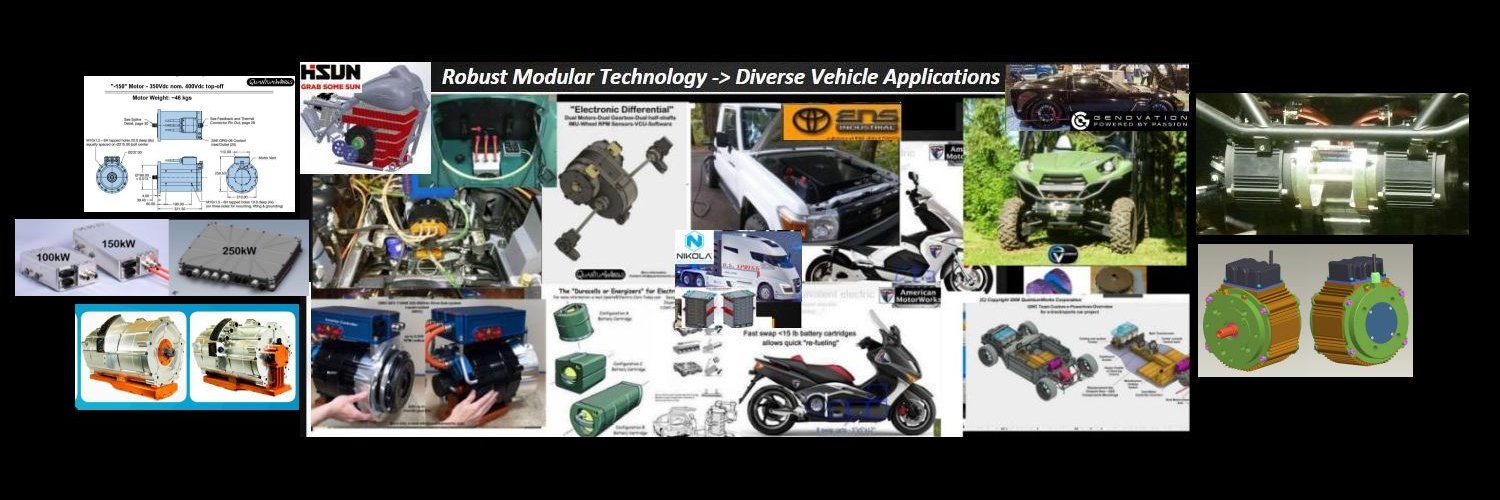
Nice job .. an intro to the highlights of the next generation of amphibious recreational vehicles in 3 minutes!
#amphibiouslifestyle
https://t.co/utwPJwl8SO
Our lead founder, Steve Tice gives a 3 min pitch on our fund raise and the opportunity to own a piece of a truly unique Greenfield niche of the electric marine/vehicle space.
(More info - https://t.co/ibpfR5WidQ - raising $2M prefer SAFE on a $10M val cap)
The documentary The Age of Disclosure is being favored by UAP experts over Steven Spielberg's blockbuster Disclosure Day due to its reliance on firsthand, on-record testimony from intelligence & military insiders. While Spielberg's film is an emotional, speculative narrative.
AI auto driving for autonomous vehicle edge cases... Launching and beaching, when no boat ramps are available...
https://t.co/tSIeKWGnqG
#tridentls1#amphibiouslifestyle
@elonmusk We are the only investor in @poseidonamphibs because we believe in an unpopular amphibious lifestyle vision by most typical investors, perhaps you might if you take a look...
A farmer walks through his field at sunrise and sees nothing unusual.
The crops look healthy, the leaves look green, and everything appears normal.
Hundreds of kilometers above him, however, a satellite may already know that a part of the field is under stress.
Not because it has a better zoom lens or because it captures sharper images, but because it can see something that the human eye simply cannot.
This capability comes from a technology called a Hyperspectral Camera, and it may quietly become one of the most important technologies in the future of Earth observation.
Most cameras, including the one in your smartphone, see the world through three channels:
🔴 Red
🟢 Green
🔵 Blue
A hyperspectral camera works very differently. Instead of capturing information across three bands of light, it captures data across hundreds of spectral bands simultaneously.
At first glance, that sounds like just a cool technical upgrade.
In reality, it represents a fundamentally different way of observing the world.
Every material on Earth interacts with light differently.
Healthy crops, diseased crops, copper-bearing rock formations, methane, vegetation, water bodies, and even man-made structures all leave behind unique spectral signatures.
Many of these differences are invisible to us, but they are clearly visible to a hyperspectral imaging system.
As a result, two agricultural fields that appear identical to a farmer can look completely different to a hyperspectral camera.
One field may be healthy, another may be suffering from nutrient deficiency, while a third may already be showing early signs of disease long before those symptoms become visible on the ground.
The same principle extends far beyond agriculture.
A mining company looking at a barren landscape may see little of interest. A hyperspectral camera may identify geological signatures associated with valuable mineral deposits.
An operator inspecting a pipeline may see nothing unusual, while a hyperspectral imaging system may detect methane emissions that would otherwise go unnoticed.
The implications of this are profound because these systems are doing far more than capturing images.
They are converting the physical world into data.
And once something becomes data, it can be measured, analyzed, modeled, and ultimately monetized.
That, in my view, is the real story behind hyperspectral imaging.
The image itself is often not the product.
The image is merely the raw material.
The real product is the intelligence extracted from it.
In many ways, hyperspectral satellites are helping create a searchable layer for the physical world.
They transform vast amounts of physical information into something that can be queried, analyzed, and acted upon.
This is one of the reasons companies around the world are investing billions of dollars into Earth observation infrastructure.
They are not building satellites simply to take pictures from space.
They are building systems that convert physical reality into actionable intelligence.
The opportunity created by this shift extends far beyond the space industry itself.
Agriculture, mining, defense, energy, environmental monitoring, and infrastructure are some of the largest industries in the world.
Every one of them becomes more valuable when decisions are based on better data.
This is where things start to get interesting from an investment perspective.
When people think about the space economy, they usually think about rockets. Rockets are important, but they are only the beginning of the story.
A more useful way to think about the value chain is:
🚀 Rocket → 🛰 Satellite → 🔭 Sensor → 📡 Data → 💡 Intelligence
The rocket launches once.
The satellite may operate for years.
The sensor generates data every day.
The intelligence derived from that data can continue creating value long after the launch itself has been forgotten.
In many cases, the most valuable part of a satellite is not the satellite itself. It is the decisions made because of the information that satellite collects.
This is why the sensor layer is so important.
Without the sensor, there is no data.
Without data, there is no intelligence.
Without intelligence, there is no value creation.
Every day, Earth observation satellites generate enormous amounts of information. As advances in AI and geospatial analytics improve our ability to interpret that information, the value of high-quality sensor data is likely to increase significantly.
The bottleneck may no longer be collecting data, but collecting the right data.
This is where an interesting Indian angle begins to emerge.
Most investors look at Paras Defence and see a defense company.
Look a little deeper and another story starts to appear.
Over the years, the company has built capabilities in precision optics, space-grade mirrors, diffractive gratings, optical payloads, and electro-optical systems.
These are not commodity products that can be manufactured by hundreds of suppliers. They are highly specialized technologies that sit at the heart of advanced imaging systems used in some of the most demanding applications.
Building a hyperspectral camera is not simply about assembling a sensor and attaching it to a satellite. It requires the ability to design, manufacture, calibrate, and qualify highly precise optical systems capable of separating and measuring hundreds of spectral bands with extraordinary accuracy.
The tolerances are in microns. The qualification cycles are long. The barriers to entry are significant.
Paras has also disclosed the development of an indigenous hyperspectral camera for space and defense applications.
That was what initially caught my attention.
Because if Earth observation becomes one of the most important segments of the space economy over the coming decade, then companies that build the sensors could occupy a very interesting position in the value chain.
After all, every Earth observation satellite needs eyes.
And not all eyes are created equal.
As India expands its presence in space and the number of satellites in orbit continues to rise, investors will spend a lot of time discussing who launches those satellites.
The more interesting question may be who builds the technologies that make those satellites useful.
That may ultimately prove to be the bigger opportunity.
"We already have the means to
travel among the stars, but these technologies are locked up in black projects, and it would take an act ofGodto ever get them out to benefit humanity."
- Ben Rich, Second Director
of Lockheed's Skunk Works
@elonmusk
Covenant Logistics has completed two weeks of @Tesla Semi testing. They were blown away by its capabilities.
"We were amazed at the performance of the Tesla Semi and felt a level of confidence that was hard to match in a diesel truck.
As one of our final runs we tackled a section of I-5 between Santa Clarita and the San Joaquin Valley over the Tejon Pass - famously known as "The Grapevine" - a lane critical to trucks hauling cargo from the ports in Oakland, Los Angeles, and Long Beach. "The Grapevine" sits at an elevation of 4,160 feet and represents the highest point on I-5 in California. The northbound descent from Tejon Summit drops 2,613 feet over 11.6 miles, with the steepest section — known as the Grapevine Hill — running about 6% grade for 5 miles.
Running the Grapevine with a loaded trailer is about as demanding a real-world test as you could design for any truck. Running Northbound - lose momentum on a steep grade with a heavy load can be stressful as speed drops fast and recovering on that grade is challenging. Running Southbound requires attention to braking and heat management (which isn't a problem for an EV when you've got regenerative braking doing most of the work)."
PROPOSED MOTORCYCLE DEFINITION CHANGE IN U.S. IS CANCELLED
You may have seen In the last Switchblade Newsletter, where we talked about an effort to change the definition of a motorcycle, and how that might affect U.S. registration of the Switchblade.
Congratulations! 👏🍻#dualmediumvehicles rock!
Highway legal airplane, smart decision to go three wheels.
Take a look, finally the dream is here! #tridentls1 is also dual medium, electric highway legal car and smooth electric hydrofoil boat.
Samson Sky has signed a Memorandum of Understanding (MOU) with International Development Consultant Bakhtiyor Bahodurov to bring Samson Sky’s Switchblade flying car operations to Tajikistan.
The whole range of hydrofoil enabled marine vehicles are needed to use water routes to offload soul-sucking crowded road routes. At the other end of the range of solutions is @poseidonamphibs#Tridentls1
This Memorial Day weekend, imagine skipping the traffic entirely.
While millions of Americans sit in bumper-to-bumper highway gridlock, we're building a future where those same trips take a fraction of the time
⚓ Providence to Martha's Vineyard in 35 min.
🌴 Miami to West Palm Beach in 40 min.
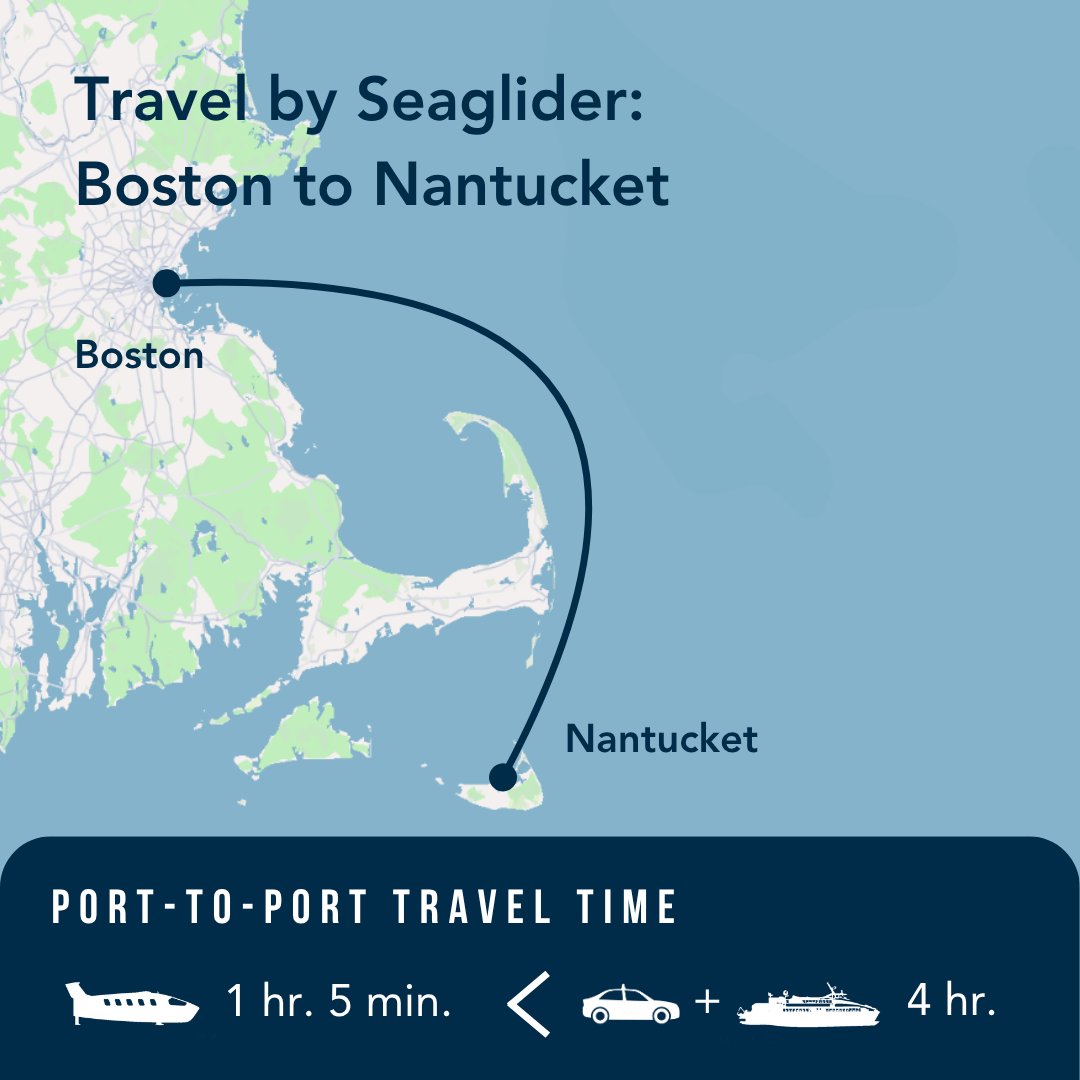
🦞 Boston to Nantucket in 1 hr. 5 min.
🏖️ Manhattan to Montauk in 1 hr. 15 min.
@regentcraft Seagliders aren't just faster; they're a fundamentally different way to travel. Imagine relaxing in a spacious cabin, open water and coastline gliding past outside large windows, and arriving refreshed and recharged — all while the cars are still merging onto the interstate.
The routes that define summer in America were made for Seagliders. Who’s ready to step onboard?