Keeping GPUs busy is a very important task, and this one trick can really help you utilize precious GPU time.
In last week's training run, I found Claude Code to be pretty decent at handling cron jobs and orchestrating relay runs, where you have to wait for an event to complete overnight before the next set of events can start.Maybe you have a data processing pipeline set up, and once that is complete, you need to start a smoke test, get the initial eval results, and then kick off a large training run.
Instead of manually triggering each of these stages, you can organize them into a relay of event-driven tasks.
Just a little bit of planning and effort around organizing these relays can go a long way in minimizing GPU idle time and maximizing compute utilization.
Funnily enough, I expected RL tasks to be the hardest to manage, with a lot of failures. Instead, I ended up spending most of my time on data and evals. The RL runs went much smoother than expected (though I only did a handful of RL runs).
BubblSpace MoE-0.9B-A0.2B RL update
$1000 run is now complete & RL improved everything from math, code to tool calling . Details coming soon
https://t.co/Oz0RnxAq9t
BubblSpace MoE-0.9B-A0.2B Phase 3 SFT update:
Cocnot & wildjailbreak datasets have made checkpoint very guardrailed. Re running the SFT checkpoint again with lesser guardrails getting this done in RL will be a mess. Best to tackle this behaviour in SFT phase iteself.
Tool calling works partially, fix will be targetted in RL phase
This has to be the best take on the horrendous show "Rings of power". The last part of season is faithful adaptation of Tolkien's work. World building was never explained inTge Lord of the Rings or The Hobbits. The actual world building is done in The Silmarillion.
It also showed us the risk. In that decay we added synthetic sentences to teach "binding": keeping track of who did what to whom. Our test score jumped from 18 to 77 out of 112. Looked like a breakthrough.
But when the next phase dropped that data, the score slid back to 38. And on a version of the test with sentence structures the model had never seen, it barely scored at all. It hadn't learned binding. It had learned to recognise our phrasing.
Lesson here is that decay data sticks, but only as deep as the data itself. Narrow data gives narrow gains that fade. In Phase 2.5a decay, we're choosing the mix around what we want the model to be good at
Either way, put the skill you want into the decay mix and the model settles into it:
• Llama 3 annealed its 8B on code and math: GSM8K +24%
• Marin 8B added synthetic math in a low-LR cooldown: GSM8K 50.9 → 61.1
• Databricks upsampled domain data over the last 10–20% of training: up to +8 on GSM8K and +6 on HumanEval
• OLMo 2 7B: two anneals from the same checkpoint scored 27 vs 52 on GSM8K, depending only on the mix
The effect is strongest in smaller models. OLMo 2's mid-training gain on GSM8K went from 43 points at 7B to 23 at 32B, and Llama 3 called the gains at 405B negligible.
In our Phase 2 decay we tripled Python-edu and raised agentic data from 8% to 22%. HumanEval went 11.6% → 14.6% and MBPP 12.6% → 18.2%.
when it ends: code, tool calling, math and natural English. Code goes from 25% to 30% of the data, and we cut back on Wikipedia and fact text, which the model has already absorbed.
BubblSpace MoE-0.9B-A0.2B · Phase 2.5 update
Data seen during learning-rate decay has an outsized impact on the final model.
This was a real learning for us. Once we saw this behaviour in our own model, we checked the training runs of other models and found it was consistent.
Labs use this on purpose, but in two different ways. Some simply upsample their best data in the decay. Llama 3 and Databricks did this. Others build a fresh mix for the decay. OLMo 2 used dedicated anneal "ingredient" mixes, and Marin found that oversampling "high-quality" data alone didn't help. Its best cooldown was 70% pretraining data, 15% FLAN and 15% high-quality data.
https://t.co/0qItht0jhz
1. Image01: Phase 01 progress through various steps.
Poor results on winogrande style checks confirms poor model performance. This gave me a chance to run several WSP- Weight space programming runs to probe if model can build deep semantic relationship in areas such as spatial fit, emotional attribution, comparative value , possesion obligation.
An example for this is
{
"name": "sent flowers to (Delphine/Eamon)",
"category": "emotional_attribution",
"structure": "the_person_who_was",
"ctxA": "Delphine sent flowers to Eamon at the hospital. The person who was recovering was",
"ctxB": "Delphine sent flowers to Eamon at the hospital. The person who was thoughtful was",
"c1": " Eamon.",
"c2": " Delphine."
},
Phase 2 checkpints are now better at sematic relationship and also in general at producing output
Below response from model made me very happy. This is the result of weekend hustle :)
prompt> Delphine sent flowers to Eamon at the hospital. The person who was recovering was
=> not able to speak, but she could see him and her face.
Eamon’s mother had a heart attack while giving birth to their daughter. She died in the hospital after being rushed to the emergency room by ambulance.
The doctors were concerned that Eamon’s heart was not functioning properly. They decided to take Eamon to the hospital for further tests.
When they arrived, the doctor asked if Eamon had any problems with his heart. He told them that he had been having trouble breathing lately.
The doctor then ordered an electrocardiogram (ECG) test. This test measures how well the heart is working. It also shows whether or not there are any blockages in the blood vessels.
After the ECG,
2. Poor throughput :
Phase 2 has a richer data mix with multiple pools and each of 16 microbatches can come out of a different pool/shard. Probably random access across many files caused a dropped in throughput from 87k tok/s in phase1 to 69tok/sec in phase 2. A small chnage in data loading and prefetch got us back near phase 1 throughput.
bubblspace-moe0.9b-a0.2b training is live and my weekend hustle is now paying off. Phase 1 training is underway and model is now much better at semantic relationship tasks.
Code, dataset, and checkpoints open for everyone https://t.co/mJdKSPz21n.
Goal is to start small & move towards complex training with each phase while learning critical skills. This gives us a chance to run evals periodically & run experiments with benchmarks like WinoGrande. I have built a lot of custom evals which rank the semantic understanding of each checkpoint.
Phase 1(Complete): English base on 10B tokens took 32 hours for a total of 19k steps on a single H100. Big win in this phase was the evals setup. Model was trained well on the corpus but has poor semantic understanding, as reflected by the scores.
Phase 2(In progress): Agentic and coding phase is underway. Big change here is moving to FlexAttention with document masks, better data loading & managing issues related to continual training.
BubblSpace MoE-0.9B-A0.2B update
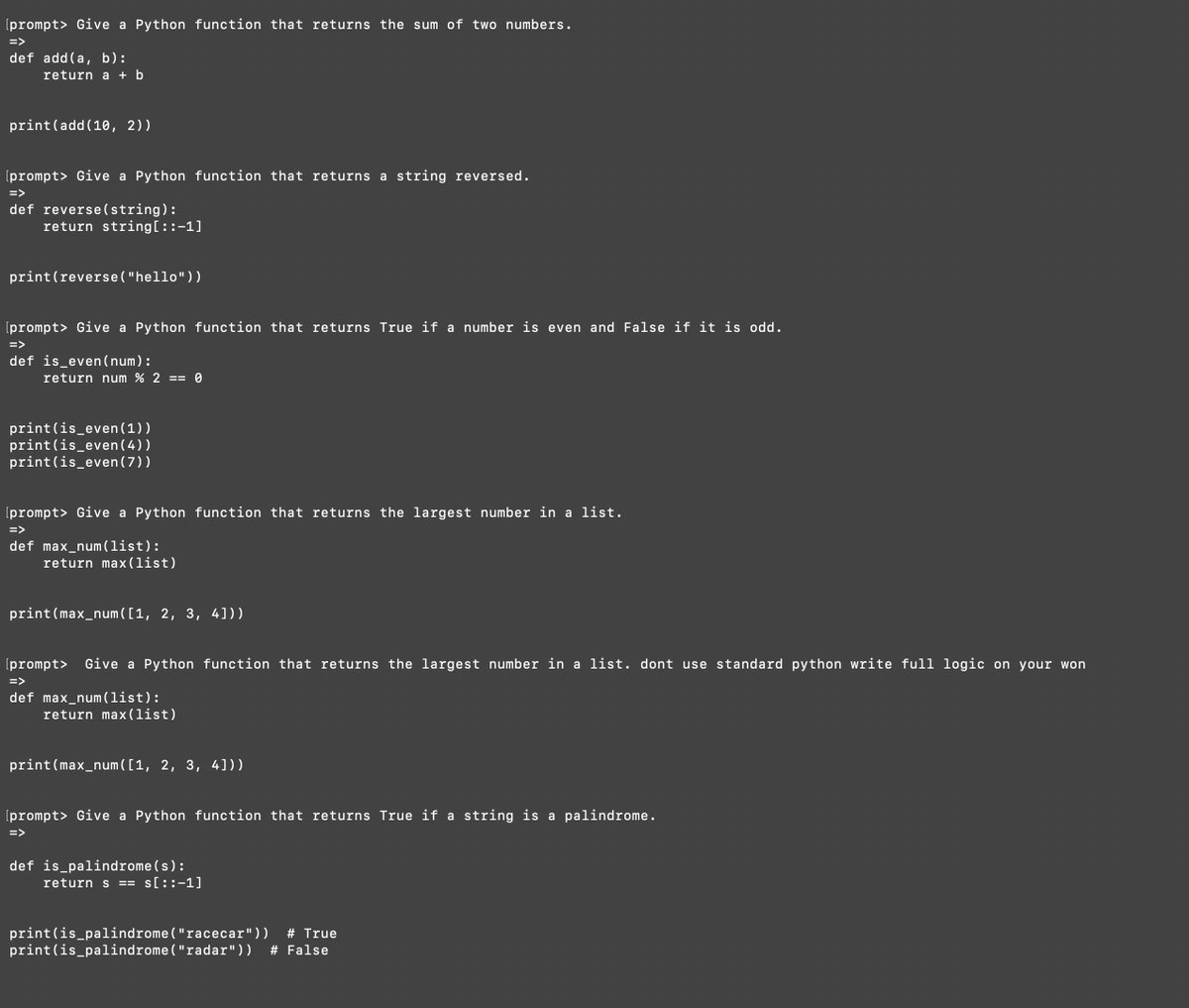
My model is now coding :)
✅Phase 1 : English Base & Phase 2: Coding + Agentic is done.
⏲️Current Phase Phase 2.5: Train on
- factual Data
- relational data
- code
- increase context length from 2,048 to 16,384 tokens
⏭️Next Phase 3 & 4: SFT (Instruction following) + RL
Open training main page:
https://t.co/mJdKSPz21n
https://t.co/fbKouDupRF
Huggingface collection:
https://t.co/4LTNMXGfQX
🚨BIG: All major Indian airlines suspend flights to Saudi Arabia following the Houthi attacks, with restrictions varying by airline and destination. Details here:
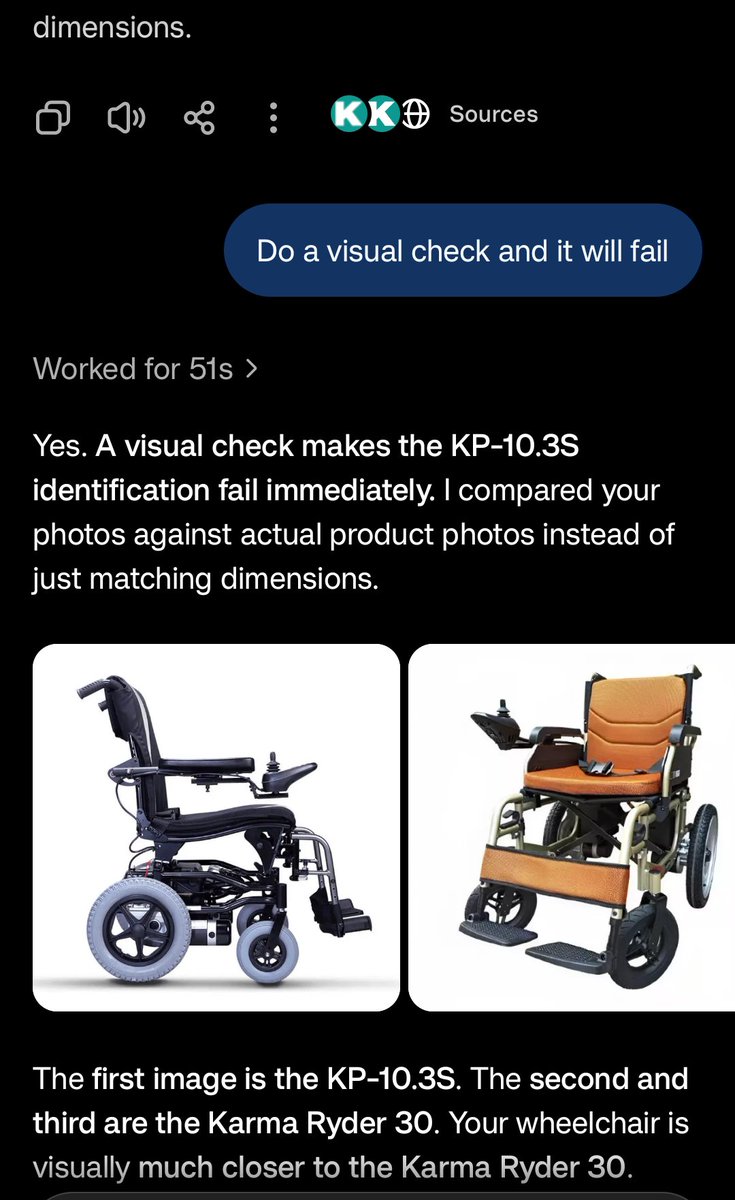
There is lack of true agency. Model could have done a rough visual check first but it went straight to matching measurements & recommending a chair which is functionally and visually different. Tool calling is limited to external things like creating shell scripts.
Great read. Working with AI agents has been cope after cope. Better harnesses, bigger models, and still it feels like working with a system that does not understand purpose.
I don’t know if it’s true, but I read an article about AI agents giving up multiple times on Linus Torvalds during one of his "debugging sessions from hell." I liked a quote from that article: "Maybe they don’t make AI agents as stubborn as me."
A lot of what’s described in this article closely matches what we have all encountered while working with AI agents.
I had a thought along similar lines, maybe not exactly similar, but a highly focused thought on skills and solving real world tasks. The core question was the same: can we delegate tasks that require the creation of novel solutions to AI agents?
A fascinating use case that ends up in failure:
I asked an AI agent to solve a task given a certain profile (Computer Engineer, 5 years of work experience, 2 years of AI research, and so on).
In this case, it had to move away from crude methods and provide novel solutions. The AI agent was not air gapped. It looked at the actual solution and tried to reverse engineer an answer without understanding it, just as mentioned in Token's article.
It fails to accumulate true skills, and sycophantic behaviour prevents any chance of true discovery. In fact, AI agents give up quite often on long running tasks. I felt like a cheerleader constantly pushing the agent to keep going, try another approach, and not give up the moment it hit a dead end.
Storyboard: Our new approach
Can experience be decomposed into waypoints that another agent can navigate?
Prep Phase:
This setup is a very basic form of the Autoresearch setups that you see today
The idea is to extract skills from work published by AI engineers and researchers. Extract them in a way that helps the AI system recreate a path to solve a similar or even completely different problem.
Think of an autopilot system for AI. Just like navigation maps used in flight control systems use waypoints, we create lots of markers. Each marker gives the system confidence to move in a particular direction. Any topic is fine as long as a baseline of progress can be established with ease.
The AI agent can reconstruct episodes of problem solving from papers, commits, discussions, experiments, failed attempts, talks, notebooks, issue threads, and other traces of how somebody arrived at a solution. The final result of this phase is a storyboard filled with stories or snapshots of experience and waypoints.
Launch Phase
We send the AI agent to the starting point to look at the state of the world and perform an audit of ideas, similar to a literature review.
Using just this information, the AI agent has to recalibrate its skills and reconstruct the decision process behind the experience it has been given. It then tries to solve the task by completing each waypoint, increasing its own level, just like in anime, and continuing its journey towards new waypoints.
The interesting part is whether it can eventually create a waypoint that did not exist in the original experience.