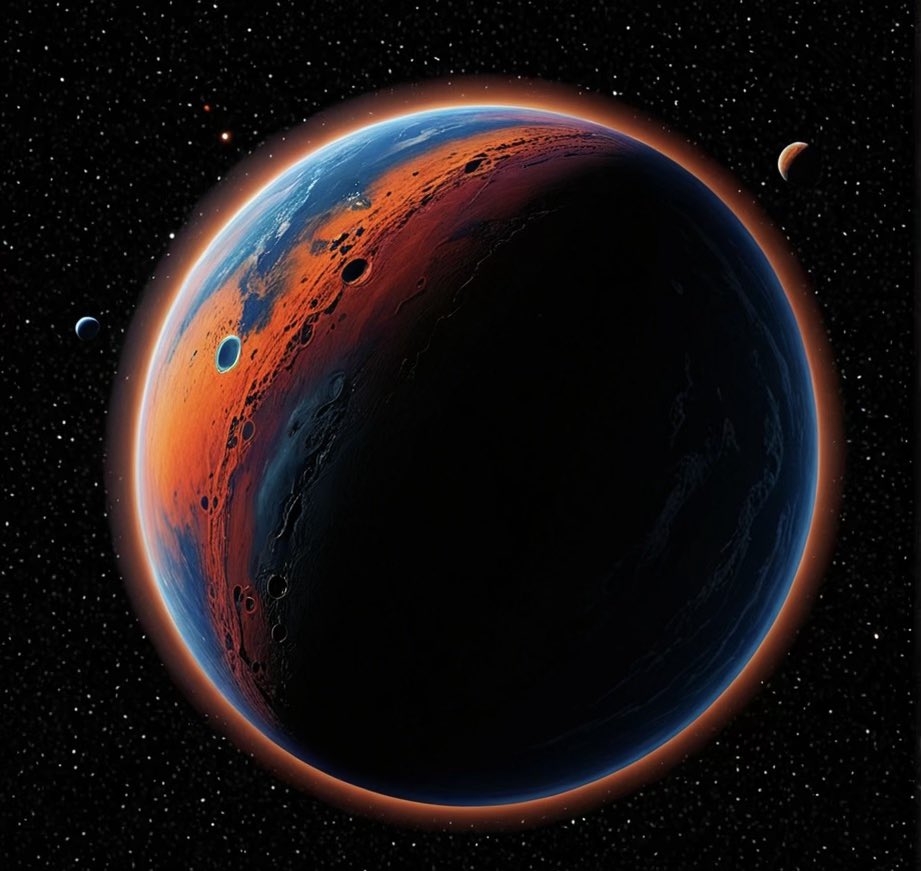
Kepler-452b is an intriguing exoplanet located roughly 1,400 light-years away. It orbits a Sun-like star in the ‘Goldilocks Zone’ and is 1.6 times larger than Earth. The possibilities of this planet are exhilarating. Maybe it has organisms as big as mountains. Whatever the case, it’s thrilling to theorize.
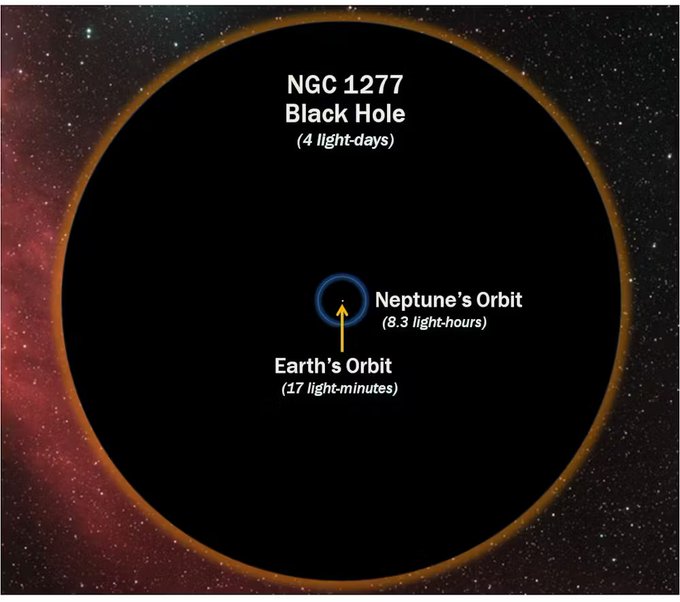
Phoenix A is thought to be the largest black hole in the Universe. This unimaginably, monstrous beast is estimated to weigh 100 billion solar masses. That’s larger than entire galaxies! It’s located in the Phoenix galaxy cluster roughly 5.8 billion light-years from Earth.
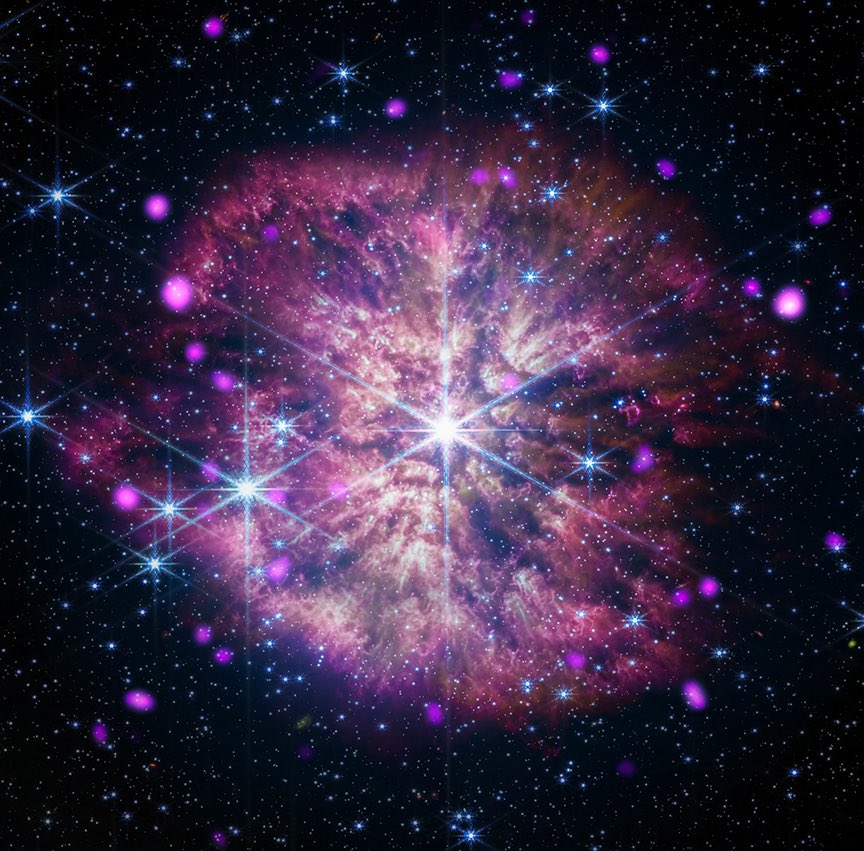
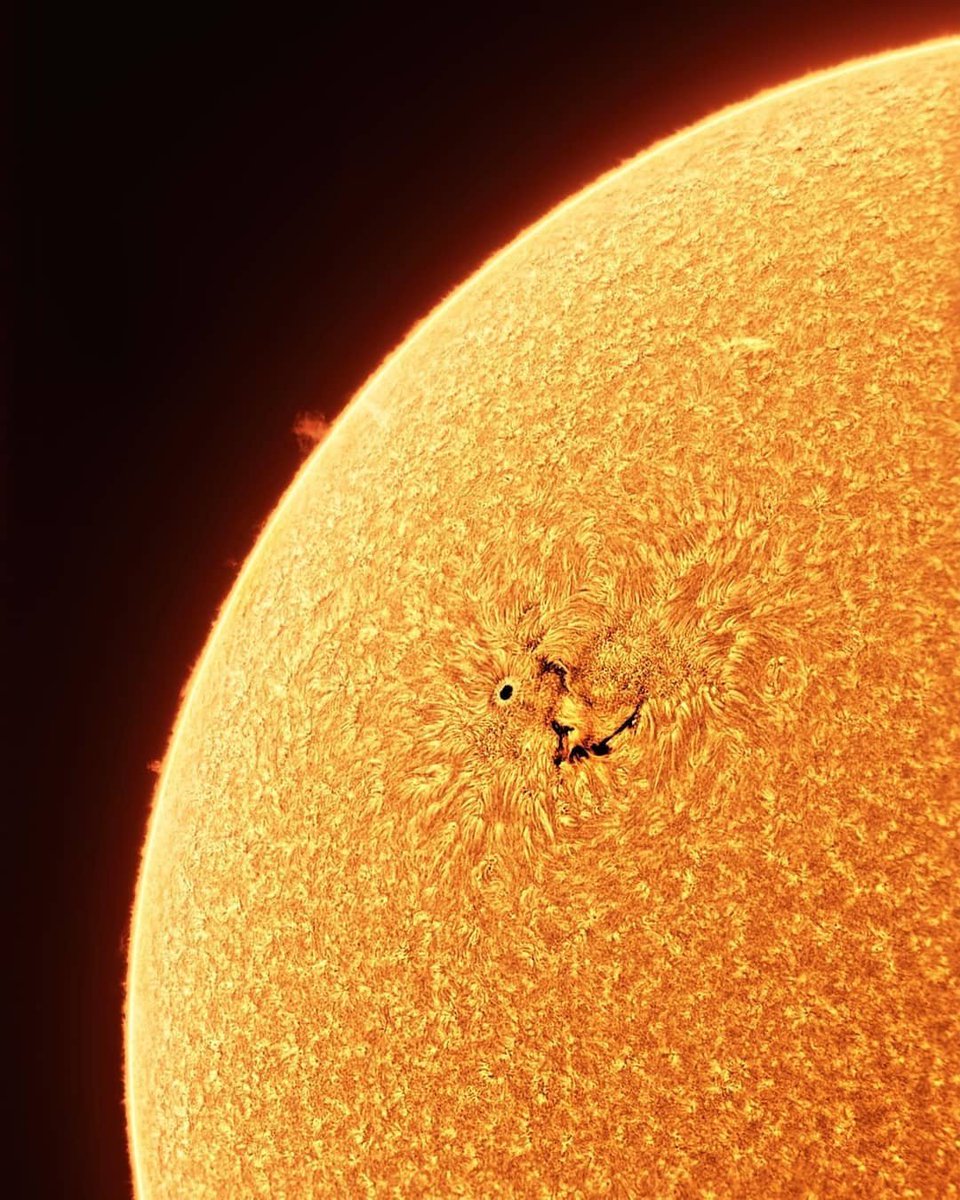
In approximately 5 billion years, the Sun will become a red giant star.
In that process, Mercury, Venus, and possibly even Earth, will be completely consumed.
The solar system’s ‘habitable zone’ will extend far beyond Mars, with Jupiter & Saturn’s moons becoming more alluring.
Quantum superposition is mind-bending.
This perplexing theory suggests that a particle can exist in multiple states or locations at the same time.
Superposition is a fundamental principle in quantum mechanics. It can be seen when two waves overlap and interfere, either adding together or canceling each other out. For example, when you play a chord on a guitar, the sounds from each string superpose as they travel to your ear, creating a harmony.
Schrödinger's cat is perhaps the most famous example of superposition. It’s a thought experiment that involves the bizarre concept of a cat being both alive and dead. It’s hard to wrap your mind around this idea, but in quantum mechanics anything is possible.
A wormhole is a hypothetical structure connecting two different points in spacetime. This theoretical passageway creates a shortcut through the cosmos; a tunnel through the fabric of the Universe. Do you believe wormholes exist?
The Milky Way Galaxy is our galactic home; a uniquely special place in the Universe.
This beautiful barred spiral galaxy is estimated to contain roughly 100 billion stars and is over 100,000 light-years in diameter. It formed in the early Universe and is thought to be around 13.6 billion years old.
It takes our solar system 200 million years to complete one full orbit around this gorgeous galaxy. The last time our solar system was in this location, dinosaurs ruled the Earth.
The Milky Way is just one seemingly average galaxy in a cosmic sea of galaxies. But it contains life, and that makes it remarkable.
📽️ Credit: ESO/M. Kornmesser
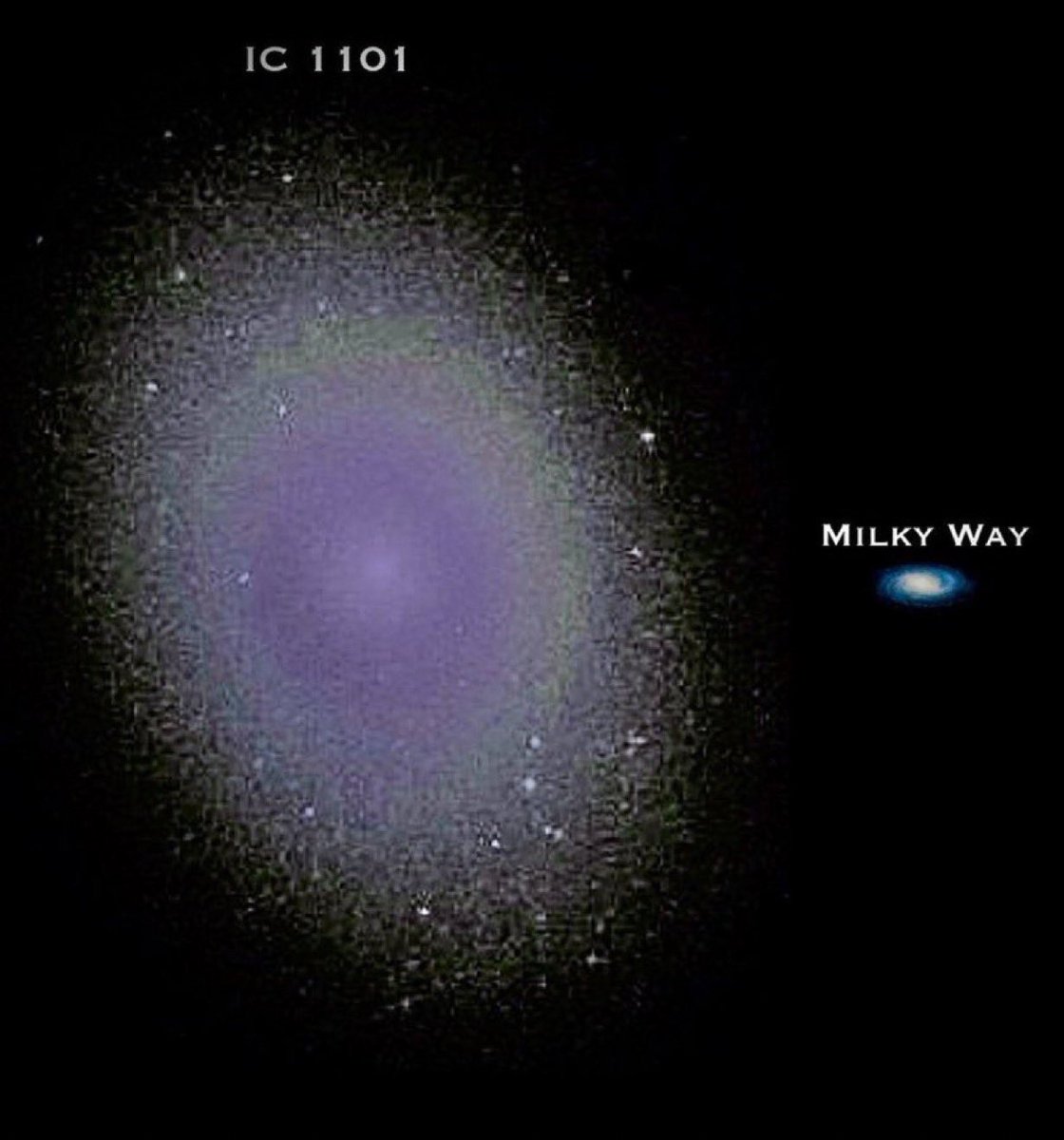
IC 1101 is one of the largest galaxies ever observed.
It’s estimated to be millions of light-years in diameter, making the Milky Way look minuscule in comparison.
IC 1101 is located over a billion light-years from Earth and contains roughly 100 trillion stars.
Mind-blowing.