4.80. Type "la" in the description and pick Latte. Starbucks and Eating Out fill themselves in.
Quidough remembers what a description carried last time, so a repeat transaction is the amount and two or three letters. Adding things by hand is only slow the first time.
You will never see a total Quidough isn't sure of.
If an exchange rate is missing, that amount is left out, and Quidough says so, rather than folding a guess into your figures. Rates update daily, so it rarely comes up.
Marking an account as yours does not lock your partner out of it.
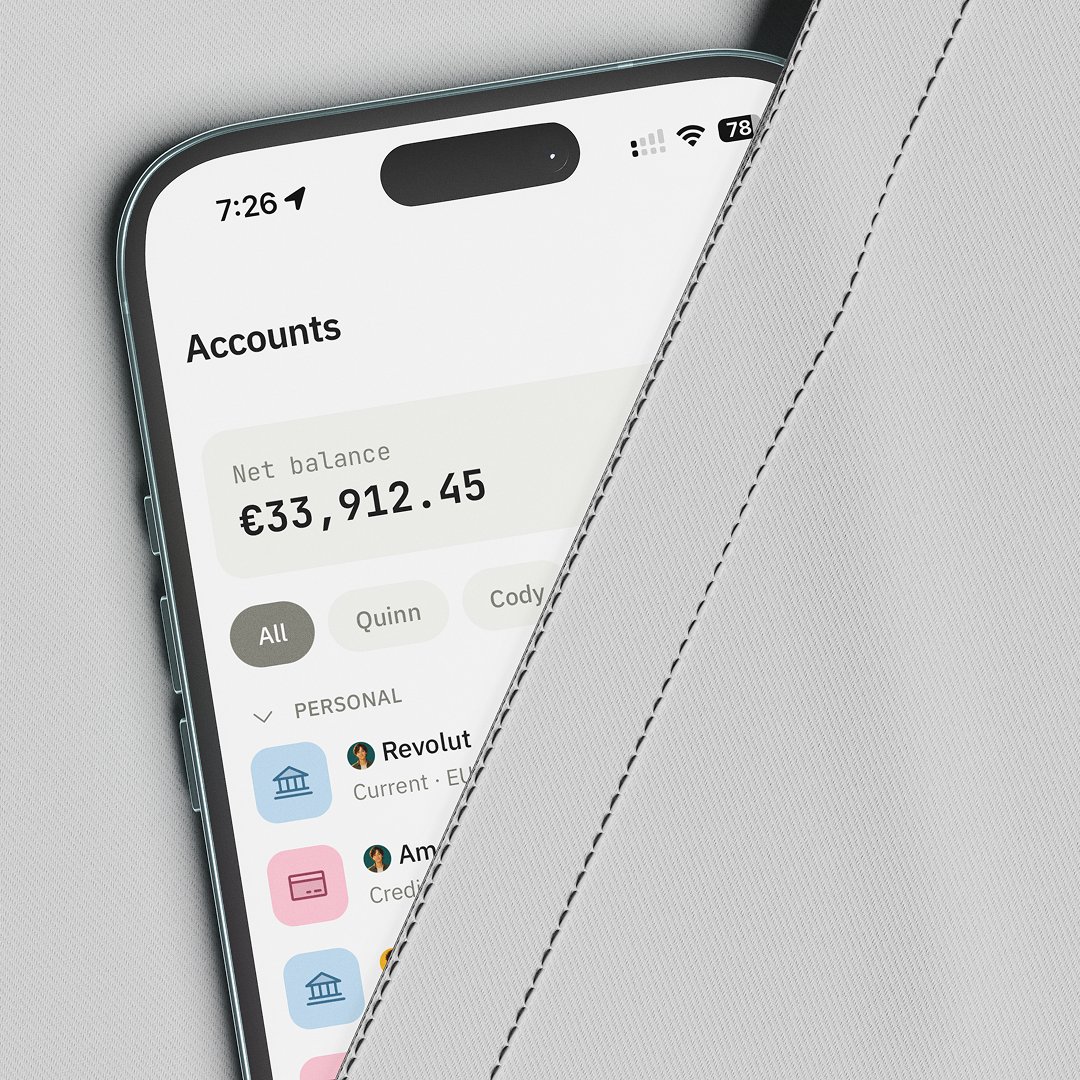
Everyone in a Quidough household can see and edit every account, no matter who owns it. The owner label shows whose account it is, not who can access it.
Your savings line dipped this month, and you did not take anything out.
The line is what your savings are worth. The bars are what you moved. If some of it sits in another currency, rates move the line and leave the bar alone, because drift is nobody's deposit.
A record you can edit backward is not a record.
Budgets used to store a single cap, so changing it rewrote every month that had already happened. Caps are dated now: each month holds the one that was actually in force, and a change starts this month or next.
Your partner's rent is three days overdue. Quidough shows you and gives you no button to tick it off.
Recording a payment really confirms that it left an account. You cannot confirm what you have not seen, so the button belongs to whoever holds the account.
Moved country and your main account is in the wrong currency?
Archive it, empty or not. Its history stays where it is and still counts. Make a new account in the right currency, and Quidough flags the schedules that pointed to the old one until you repoint them.
Quidough asks for a name so it has something to put at the top of your screen. It does not ask for yours.
Put a nickname, a handle, whatever you would recognize. There is no surname field at all.
Open Quidough for the first time, and there is no graph of a month you have not lived yet, and no row of empty widgets.
There is one prompt. Record anything at all, and the dashboard becomes itself. It is the first thing you see and the last time you see it.
@CricTalk29 Quidough. For the two-people-one-set-of-accounts problem: both of you careful, both surprised at the end of the month, because neither ever saw the whole picture.
Multi-currency household finance, invite-only for now. https://t.co/wZSHnuqV9v
@CricTalk29 This week: what a budget cap should say about a month that's already gone. Raise your groceries cap in June and last March shouldn't quietly change with it. Caps carry their own history, which makes every report query more interesting than expected.
https://t.co/wZSHnuqV9v
@anupamrjp Quidough. Built for the two-people-one-set-of-accounts problem: both of you careful, both surprised at the end of the month, because neither saw the whole picture.
Multi-currency, budgets as monthly caps. Invite-only, waiting list: https://t.co/wZSHnuqV9v
@lightsilver323 Quidough. Household finance for people who share money with someone else. Multi-currency, budgets as monthly caps rather than envelopes, shared with no member cap, works offline.
Invite-only for now, waiting list: https://t.co/wZSHnuqV9v
Nobody wants a finance app. They want to stop wondering where things stand.
A joint account, one yours, one theirs, one in euros. Quidough holds it all in one view.
It is opinionated, and that will irritate you. It will not make you better with money, just stop you guessing.