Best line in the Hermes Security plugin docs is a warning: its test reproductions run as your user in a temp copy. "A convenience, not a sandbox."
Your code also goes to the model provider. And only you can let it test a live app; the agent can't grant itself that. Right shape.
Hermes Agent can now review your codebase for security bugs with the new official Security plugin by @mark_s.
Hermes first maps what an attacker could reach and which inputs it trusts. It splits the code across parallel subagents, checks every candidate finding against the code, and traces whether an attacker can actually exploit it.
Turn on test confirmation and Hermes writes a small reproduction for each finding and runs it in a temporary copy of the repo. Each report records the evidence and the findings Hermes ruled out, and exports to SARIF for your existing tools.
Run it from chat, the CLI, or the Security page in Hermes Desktop.
Tesla's Cybercab just got its second city.
@robotaxi says Cybercab has arrived in Dallas, with public rides now open after Austin.
The Dallas cars carry Starlink on the back, per @SawyerMerritt.
No steering wheel, no pedals, now in two Texas cities.
$40B of GPU financing for SpaceX, and none of it sits on SpaceX's balance sheet.
Semafor reports Apollo is lending close to $20B upfront through a special-purpose vehicle that rents the GPUs back to SpaceX.
$35.5B of the seven-part deal is priced at 7.75% to 8.3%.
Meta has used the same playbook for its AI build-out.
via Semafor: https://t.co/KrHD9kVi37
Tesla wants to make the silicon for its own solar cells.
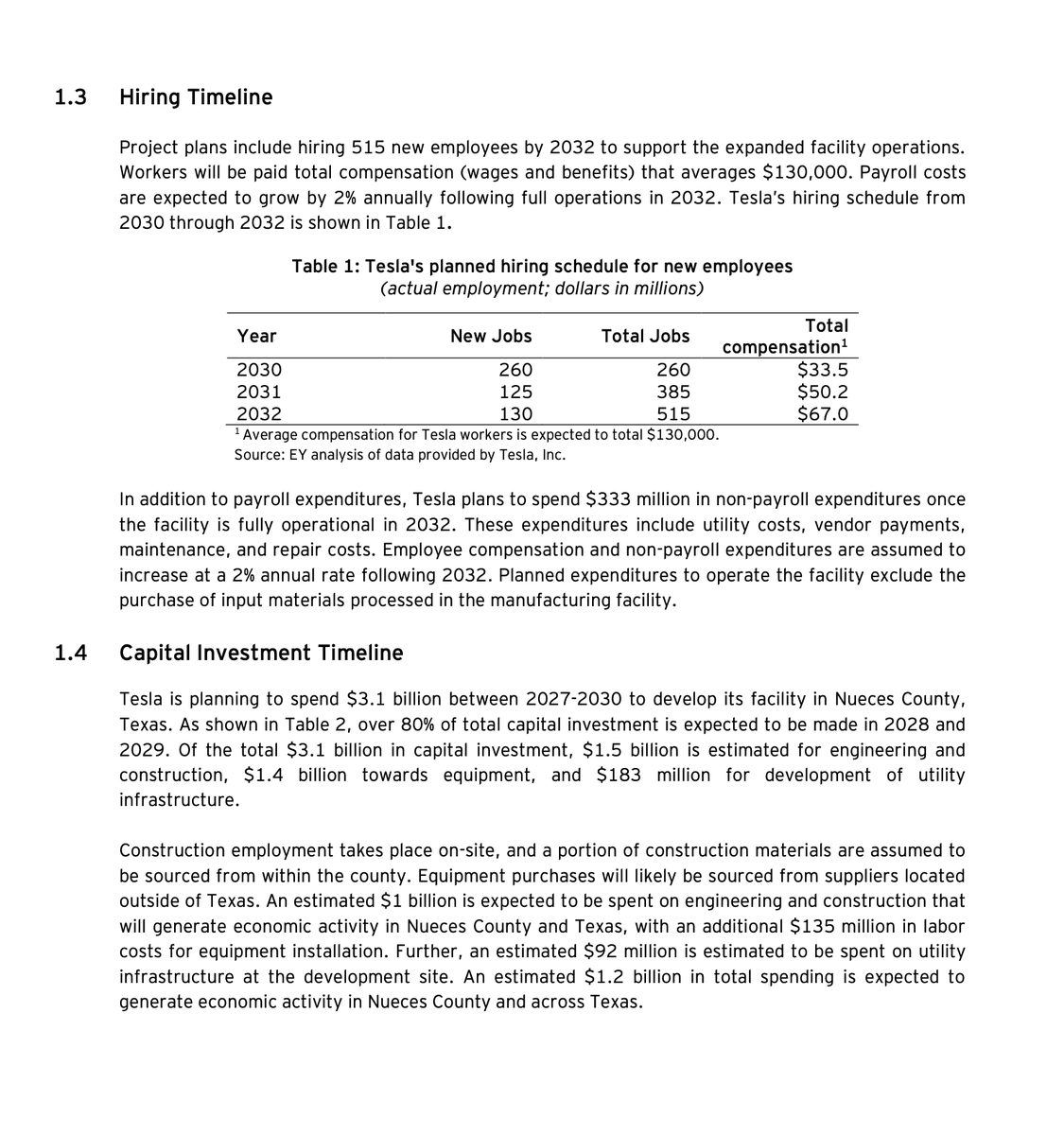
$3.1B polysilicon refinery proposed in Texas, operations targeted for 2030, 515 jobs.
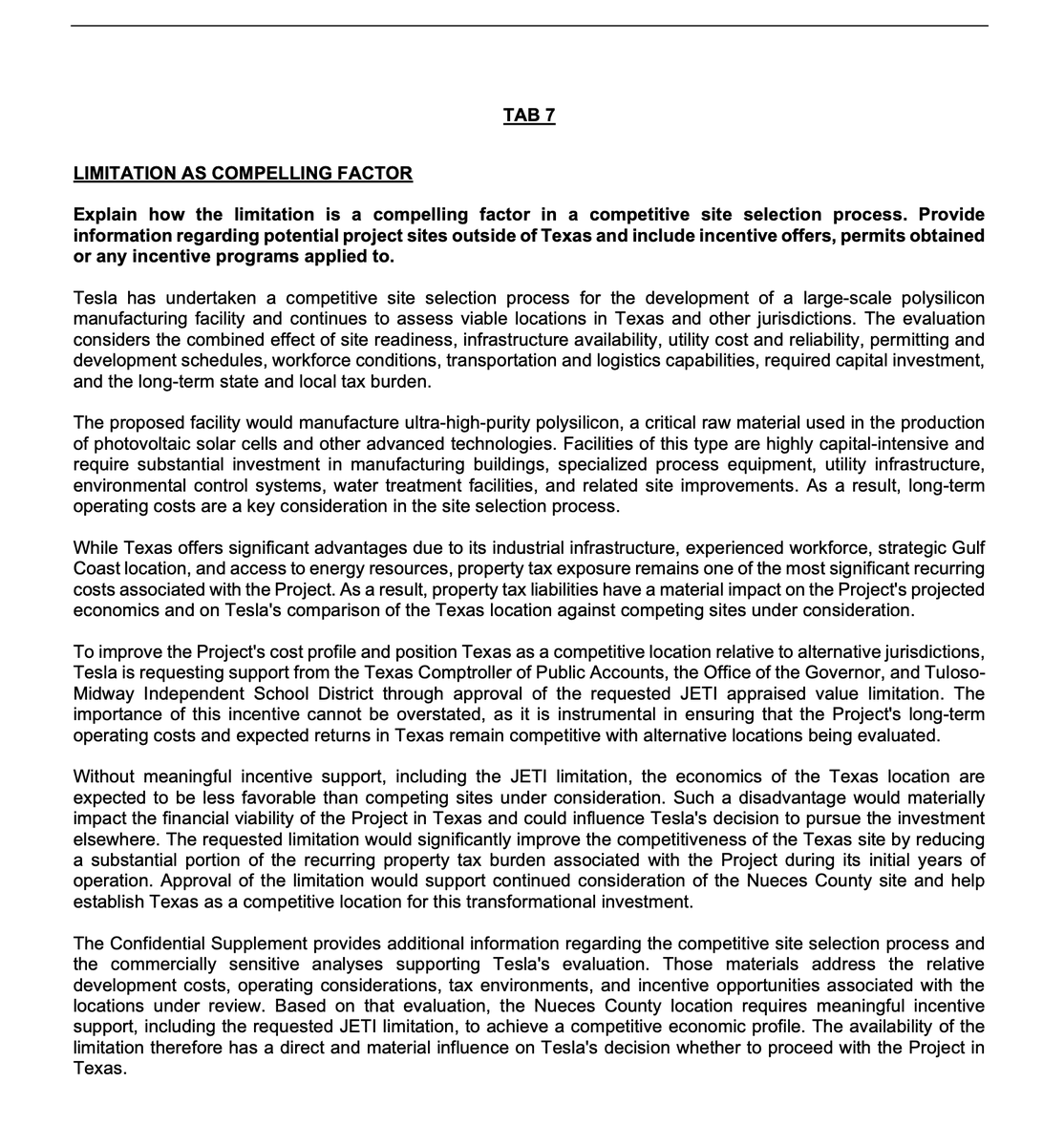
That's about a third of the $10.1B Tesla filed for its Texas solar-cell factory in August.
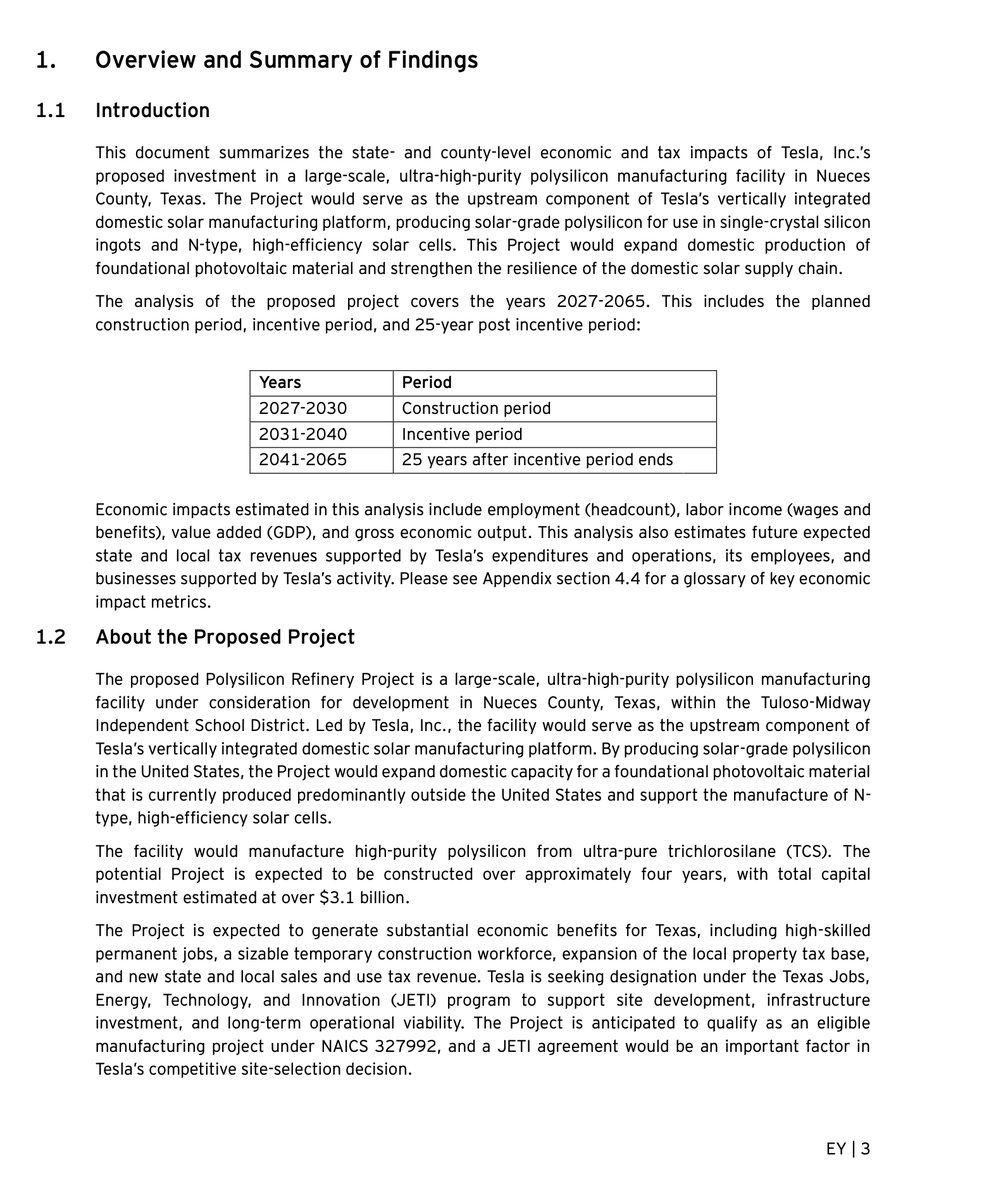
Tesla is planning to build a massive $3.1 billion polysilicon refinery in Nueces County, Texas, according to a new filing.
The facility would produce ultra-high-purity polysilicon used to manufacture high-efficiency solar cells, helping Tesla build a vertically integrated solar manufacturing supply chain in the U.S.
Details:
• $3.1 billion in planned investment from 2027–2030
• Construction expected to begin in 2027
• Commercial operations targeted to start in 2030
• 515 permanent jobs by 2032
• Approximately 1,770 jobs supported annually across Texas during construction
• Estimated $63.5 billion in total economic output across Texas through 2065
Tesla in the filing: "The facility would serve as the upstream component of Tesla’s vertically integrated domestic solar manufacturing platform. By producing solar-grade polysilicon in the United States, the project would expand domestic capacity for a foundational photovoltaic material that is currently produced predominantly outside the United States and support the manufacture of N-type, high-efficiency solar cells.
The facility would manufacture high-purity polysilicon from ultra-pure trichlorosilane (TCS). The potential Project is expected to be constructed over approximately four years, with total capital investment estimated at over $3.1 billion. The project is expected to generate substantial economic benefits for Texas, including high-skilled permanent jobs, a sizable temporary construction workforce, expansion of the local property tax base, and new state and local sales and use tax revenue."
One hour to find it. Two more to weaponise it. Under $200.
That's what a no-login takeover of Java servers cost this week.
Patch windows used to be measured in weeks.
Now they're measured in lunch breaks.
‼️ UPDATE: Security firm Calif says it took over Jira, Confluence, Jenkins and Keycloak servers with Java4Shell, without even logging in.
The flaw sits in the code Java uses to decode Base64, a common way to send data as text. A short malformed string makes it write past the end of its memory.
Calif's researcher says OpenAI's Codex helped him find the bug in an hour and build a working exploit in two more, for under $200 in AI costs.
Oracle shipped a patch tonight. Calif is holding back its exploits until people have patched.
SpaceX's CFO just put dates on data centres in space: first orbital compute satellites in 2027, meaningful compute in orbit by 2029.
The Starship catch was the unlock.
Tesla's solar customers now generate more than twice the electricity Tesla's entire global operations use in a year.
On paper, the energy side covers the company's power bill twice over. https://t.co/f31jTwSjDL
Transformers have barely changed since the 1890s: copper coils in a tank of oil.
Batteries, solar and compute run on DC. The grid runs on AC. Bridging the two has meant inverters plus transformers.
Powercore is a solid-state transformer, breaker and inverter in one box. Finally, one conversion and about half the losses.
Hats off to the Tesla power electronics engineers!
Tesla just put a transformer, an inverter and a breaker in one box.
Powercore: 7.4 MW, solid-state, built for data centres that run fully off-grid.
Source: https://t.co/81jjcbTQ4Q
A fix from July took down Microsoft 365 in November. The bug only showed under heavy load, and lab machines were too weak to catch it. Failover spread it: 80% of gateways froze in under 2 hours. Your test rig is part of your blast radius.
Got off a call with the an MS team lead who was on the bridge for this incident on what exactly happened in the outage:
1. This was a "latent bug" - a commit going in ~4 months ago to a Windows build, that only activated much later. Super hard to spot
2. Zero AI, this code was human written + committed
3. Machines got saturated and unreachable at a result
4. So many other things went wrong during this outage: a series of unlucky events
5. It was a dev who found the root cause, poking around and seeing a dump that reminded them of an error seen here. AI diagnostic tools were used and helped progress with the outage
A detailed, public postmortem is on its way. MS wants to make sure they have everything patched globally before the postmortem. I'll add my two cents when it's out, and those details will be VERY educational
Introducing Powercore
Solid state medium voltage transformer, inverter and breaker – reliable, safe and secure
7.4 MW/9 MVA continuously at 34.5 kVac w/ grid-forming support for 10MVA of peak power
Made in America. Operating 2027
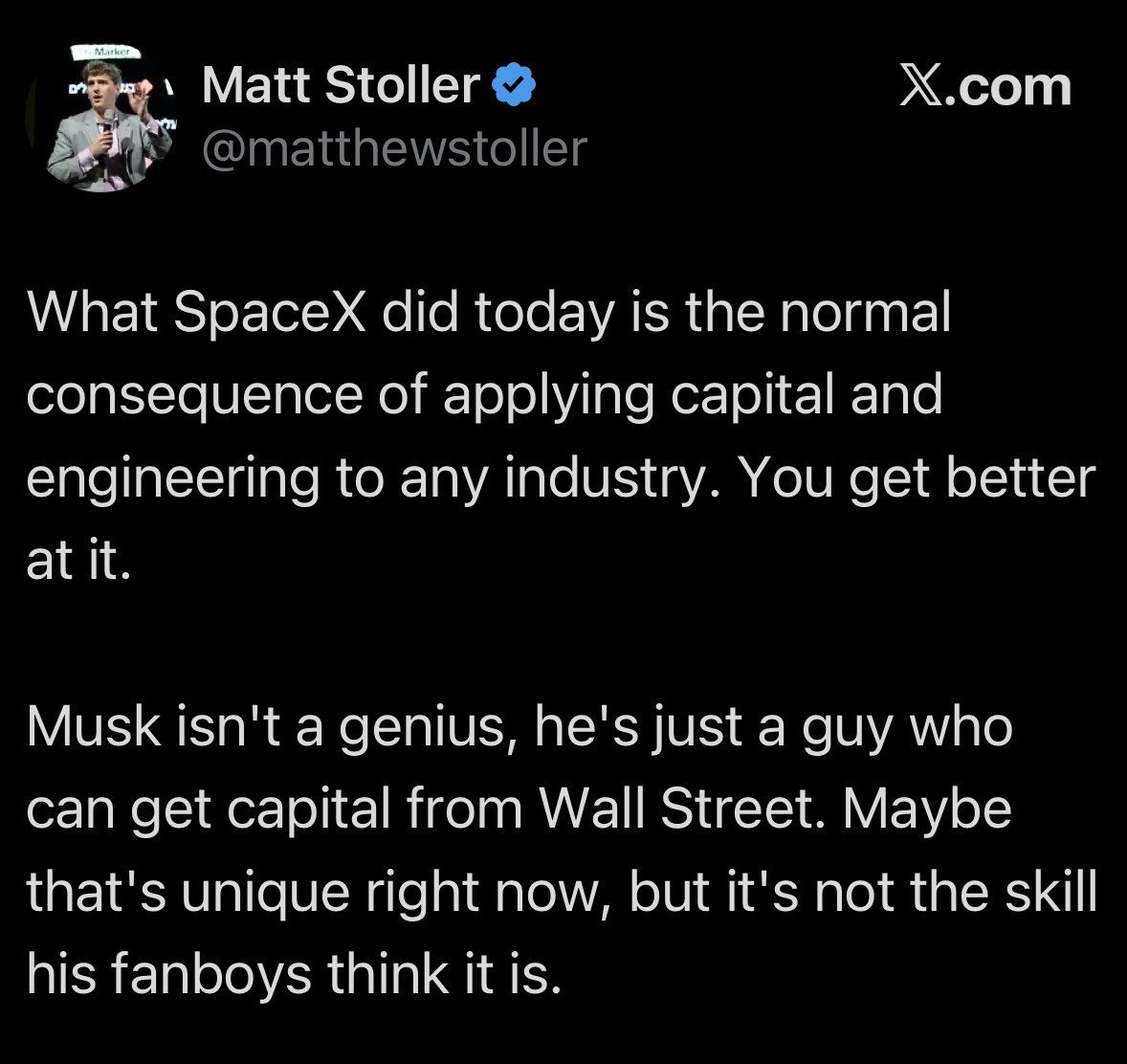
Jeff Bezos applied capital and engineering to the same industry with Blue Origin, starting in 2000, 2 years before Elon founded SpaceX. He was wealthier for most of that time, with better access to Wall Street.
The industry incumbents were around much longer than both, applying capital and engineering to the space industry.
Elon’s results with SpaceX are far above normal. He raised most of his capital from Silicon Valley, not Wall Street.
Criticizing Elon is not the skill his haters think it is.
One demo, 71% success. @nvidia's new GR00T 2 robot model hit that average across 50 tasks, and 95% with five demos. Isaac Lab 3.0 with Newton also trained at up to 2.5x the throughput of 2.3 with PhysX in one benchmark, per Nvidia.
Meet GR00T 2, our most advanced, open System One model for robotics research. It learns skills from human demonstrations and predicts how its actions will change the physical world.
Those skills can carry across different robot bodies, reducing the need to teach each robot every task from scratch.
Watch GR00T 2 put that research into motion. 🧵
Six open models from DeepSeek, Moonshot AI, MiniMax and Ant Group, including DeepSeek-V4 and Kimi K3, carry Nvidia Blackwell fingerprints in their published weights. @willdepue's report says the traces show the hardware that started them, not proof of an export-rule breach.
I have a major result to share.
I’ve found conclusive forensic evidence that the top 4 Chinese AI labs—DeepSeek, Moonshot, MiniMax and Ant Group—have built their newest models on NVIDIA’s most advanced Blackwell chips, which are barred from export to China.
This sounds insane, but I discovered that almost every AI model carries a hidden signature of the GPU that trained it. When a model is first set up, the starting values of its weights are laid out in a pattern that depends on the exact GPU. Each combination of GPU and seed number produces a unique pattern—a sort of fingerprint of the hardware used to create the model. Traces of that pattern survive training into the published model.
Again, this evidence isn’t based on any insider information or leaking. It’s based on a forensic analysis of the model weights released by the companies themselves.
I searched more than six trillion combinations of chip layout and seed number and matched them to open-weights models. In doing so, I found conclusive evidence that six Chinese AI models—including DeepSeek-V4-Pro, Kimi K3, and MiniMax-M3—were initialized on NVIDIA Blackwell systems. Four of the models match Grace Blackwell, the GB200 and GB300 parts in NVIDIA’s flagship liquid-cooled rack-scale systems.
I then verified these results on real hardware. Running unmodified PyTorch with the seeds I’d recovered, a Blackwell B300 reproduced DeepSeek-V4-Flash’s untouched starting weights bit for bit, and a rented GB200 reproduced Kimi K3’s to a correlation of 0.999995. A Hopper H100 reproduced none of DeepSeek-V4-Flash’s, and changing the seed by one broke the match. (DeepSeek’s seed is 953049583 by the way.) The method also was verified to match 24 known open-weights models to the hardware that developers said they used.
It is exceedingly unlikely that these results are a coincidence. Across six trillion combinations, the best accidental match should reach only about 8 sigma (i.e., eight standard deviations above what random chance would produce). The real matches range from 49 to 1,385 sigma, and even the weakest single test hits 20.
These were data-center-scale training runs. With some analysis of release schedules and model details, I estimate that the largest, Kimi K3 and DeepSeek-V4-Pro, used 2,000 to 3,000 Blackwell GPUs each. Clusters of this size cost on the order of $150 to $200 million each to buy, and across these labs alone would add up to more than half a billion dollars of export-controlled GPUs, not counting experimental compute or otherwise. It’s quite likely that we see multi-billion dollar expenditure on export-controlled GPUs.
I am highly confident in this result, and it has been independently verified by senior researchers at OpenAI and Anthropic. You can read the full report at https://t.co/YOtzND0Jqk.
There is much more I’ve identified about these models through other forms of checkpoint forensics like this, and will have more to share soon.
Claude now joins the Google Meet as a visible participant and starts the docs and whiteboards while you talk. @AnthropicAI has Claude Meetings in beta on Team and Enterprise. The notes get written in the meeting, not after it.
A lot of getting good work out of Claude now is just finding the context it’s missing and figuring out how to close that gap
Claude Meetings is one way to bring in the remaining slices and has proved very useful internally
26,502 AI bug alerts. 621 with proof. 59 real Linux kernel bugs, one hiding for 21 years. That's 1 real bug for every ~450 flags. Finding bugs is no longer the hard part. Having people who can check them is.
‼️ One Microsoft researcher and an intern used AI to find 59 security bugs in the Linux kernel. One had gone unnoticed for at least 21 years.
Microsoft's agentic system MDASH flagged 26,502 possible flaws in about two weeks. Only 621 came with proof, and the team reported 59.
33 got CVEs, 24 of them rated High. For eight, the team built working exploits in the lab that turn an ordinary user into root.
38 fixes have landed so far. Microsoft says finding bugs and fixing them are "drastically out of balance."
UK power emissions are down 82% since 1990. Transport is down just 9% and is now the biggest source at 31%. The grid got clean; the cars didn't. https://t.co/RylM3chM85