🚨 #BREAKING: $RKLB has secured three new NASA Electron launches for two Earth and Sun science missions in 2027, marking its third major announcement in a week that already included breaking the U.S. Space Force's responsive launch record.
What was announced:
➜ $RKLB was selected by NASA to provide three Electron launches for the PolSIR and TSIS-2 science missions.
➜ The launches will take place from Launch Complex 1 in New Zealand beginning in 2027.
➜ NASA cited Electron's flight heritage, precise orbital deployment, and ability to support tight launch timelines as key reasons for the selection.
➜ The awards fall under NASA's Venture-Class Acquisition of Dedicated and Rideshare (VADR) contract, a $300 million fixed-price IDIQ program spanning 10 years.
➜ Financial terms for the individual launch awards were not disclosed.
The PolSIR mission:
➜ Rocket Lab will conduct two back-to-back Electron launches for the Polarized Submillimeter Ice-cloud Radiometer (PolSIR) mission no earlier than June 2027.
➜ The launches will deploy two identical 16U CubeSats into separate 52-degree inclination, non-sun-synchronous orbits.
➜ The satellites will study high-altitude tropical ice clouds, helping scientists better understand how they form, evolve, and influence weather and climate models.
➜ The mission is led by Vanderbilt University, with science operations conducted by the University of Wisconsin-Madison.
➜ The spacecraft are being built by Blue Canyon Technologies.
➜ NASA selected Electron because it can deploy satellites within meters of their target orbit, compared with the kilometer-level accuracy typical across the industry.
The TSIS-2 mission:
➜ Rocket Lab will also launch NASA's Total and Spectral Solar Irradiance Sensor-2 (TSIS-2) mission in early 2027.
➜ TSIS-2 will measure the Sun's total energy output and how it is distributed across ultraviolet, visible, and infrared wavelengths.
➜ The data will support climate research, ozone recovery studies, and air quality forecasting.
➜ NASA booked the launch just seven months before liftoff, demonstrating Electron's ability to support missions with aggressive timelines that larger launch providers often cannot accommodate.
What Sir Peter Beck said:
➜ "Electron has become synonymous with reliability, precise orbital accuracy, and on-demand launch capability and we've been delivering this for NASA missions for almost a decade."
➜ "We're proud to deliver this once again for PolSIR and TSIS-2."
The bigger picture:
➜ This is Rocket Lab's third major announcement in one week.
➜ On June 19, $RKLB launched the VICTUS HAZE mission for the U.S. Space Force in just 16 hours and 42 minutes, setting a new Tactically Responsive Space record.
➜ The company also confirmed its Electron production line is now producing one rocket every 11 days.
➜ On June 25, Electron completed its 90th mission with Synspective's "The Owl Night Continues" launch.
➜ Additional NASA missions already on Rocket Lab's manifest include Aspera, an astrophysics mission, and LOXSAT, an in-space refueling demonstration using the company's Photon spacecraft.
🚨 #BREAKING: $HOOD has officially closed a $2.2 billion zero-interest debt offering while simultaneously repurchasing shares and putting a structure in place to reduce future shareholder dilution.
What closed:
➜ Robinhood closed a $2.2 billion private offering of 0.00% Convertible Senior Notes due 2029.
➜ The total includes the original $2.0 billion offering plus the full exercise of a $200 million overallotment option.
➜ The notes were sold exclusively to qualified institutional buyers under Rule 144A.
➜ They pay 0% interest, and the principal does not increase over time.
How 0% interest works:
➜ Instead of receiving cash interest, investors receive the option to convert the notes into Robinhood shares at a future date.
➜ Robinhood set the initial conversion price at $174.42 per share, a 65% premium to the June 22 closing price.
➜ Investors are effectively betting on future stock appreciation instead of collecting coupon payments.
➜ The tradeoff for Robinhood is potential future dilution if the stock rises above the conversion price.
How Robinhood reduced dilution:
➜ Robinhood spent $123.2 million on capped call transactions designed to offset potential dilution from the convertible notes.
➜ The capped calls protect shareholders until approximately $237.85 per share, about a 125% premium to the offering-date closing price.
➜ The company also used approximately $290 million to repurchase about 2.74 million Class A shares at the same time.
➜ After combining the capped calls with the share buyback, Robinhood estimates there will be no net dilution unless the stock exceeds approximately $303.95 per share.
Where the money is going:
➜ Approximately $290 million funded the concurrent share repurchase.
➜ $123.2 million funded the capped call hedge.
➜ The remaining proceeds will support organic growth, acquisitions, and capital expenditures.
➜ CFO Shiv Verma said the transaction provides Robinhood with additional strategic flexibility to invest in future growth.
Why the stock has fallen:
➜ The financing itself created a temporary overhang, with some investors concerned convertible offerings can limit near-term upside despite the dilution protection.
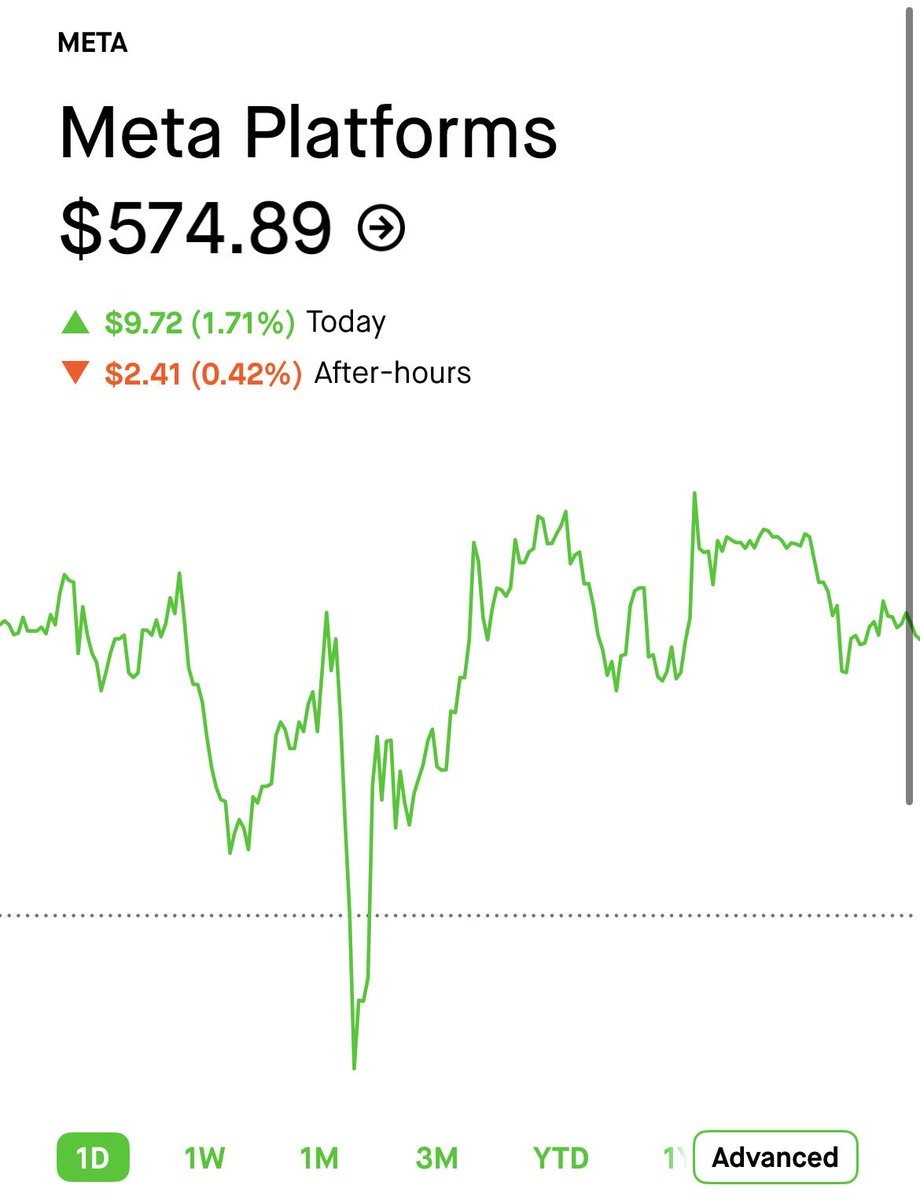
➜ Separately, reports indicate $META is developing a standalone prediction markets platform called Arena, potentially increasing competition in one of Robinhood's fastest-growing product categories.
➜ Combined, those two factors have pushed the stock roughly 20% below its 52-week high, despite the financing structure being relatively shareholder-friendly compared with traditional convertible offerings.
🚨 #BREAKING: $AMAT launched six new semiconductor manufacturing systems targeting the biggest bottlenecks in AI memory and advanced chip packaging.
The stock jumped more than 7% following the announcement.
Here's exactly what was unveiled, what each system does, and why it matters for the future of AI infrastructure.
What happened:
➜ $AMAT introduced six new chipmaking systems on June 25 focused on DRAM, HBM, advanced packaging, and process control.
➜ The announcement was made during the company's DRAM and Advanced Packaging Master Class in Santa Clara.
➜ The systems target some of the most difficult manufacturing challenges facing AI chips today.
The problem they're trying to solve:
➜ AI performance is increasingly constrained by memory rather than compute.
➜ As AI models grow larger, moving data efficiently becomes a major bottleneck.
➜ This "memory wall" is accelerating adoption of High Bandwidth Memory (HBM), 3D stacking, and advanced packaging.
➜ These technologies improve performance dramatically but also make manufacturing significantly more difficult.
➜ $AMAT's six new systems are designed to address those challenges across multiple stages of production.
1. Enhanced Centura Prime Epi
➜ Improves DRAM transistor performance using advanced epitaxy techniques previously used in leading-edge logic chips.
➜ Selectively grows silicon-germanium and silicon-phosphorous materials to improve transistor efficiency.
➜ Enables faster and more power-efficient DRAM for next-generation HBM and DDR memory.
➜ Features a 20% smaller footprint, allowing customers to deploy more tools per fab.
2. Opta Quad CMP
➜ Designed for hybrid bonding, one of the most important technologies in future 3D chip stacking.
➜ Continuously monitors wafer conditions during polishing.
➜ Dynamically adjusts polishing in real time.
➜ Improves wafer flatness, a critical requirement for successful chip-to-chip bonding.
3. Nokota VMax 2 ECD
➜ Handles high-precision copper deposition for TSVs and microbumps.
➜ Introduces Adaptive Pattern Tuning technology.
➜ Dynamically adjusts electric fields during plating to improve uniformity.
➜ Helps eliminate gaps and connectivity issues in increasingly complex 3D stacks.
4. Producer Avila 2 PECVD
➜ Addresses one of the biggest challenges in HBM manufacturing: wafer warpage.
➜ HBM dies can be as thin as roughly 1/25th of a standard wafer.
➜ Deposits stress-balanced dielectric films that help stabilize ultra-thin memory layers.
➜ Supports future 12-layer, 16-layer, and even larger HBM stacks.
5. VeritySEM 7AP
➜ Advanced metrology system for measuring warped and complex packaging substrates.
➜ Delivers sub-10 nanometer measurement sensitivity.
➜ Significantly exceeds the precision of traditional optical inspection tools.
➜ Automatically adapts to different substrate materials and package formats.
6. SEMVision G7AP
➜ High-resolution defect inspection and classification system.
➜ Works across silicon, glass, and organic substrates.
➜ Helps manufacturers rapidly identify critical defects.
➜ Already deployed in production environments at leading memory and logic manufacturers.
What management said:
➜ Dr. Prabu Raja, President of Semiconductor Products Group, said:
"The transistor and materials technologies that drove performance gains in leading-edge logic are now becoming essential in DRAM."
➜ Raja added that memory and logic manufacturing technologies are increasingly converging as AI drives higher bandwidth requirements.
➜ Keith Wells, Group VP of Imaging and Process Control, said:
"As advanced packaging geometries scale below the resolution limit of optical tools, packaging fabs need eBeam-grade precision."
➜ Wells said the new systems transfer wafer-fab inspection expertise into advanced packaging environments.
🚨 #BREAKING: $AAPL just raised prices across its entire Mac and iPad lineup, plus HomePod, Apple TV, and Vision Pro after what Tim Cook called a “hundred-year flood” in memory costs.
The stock fell nearly 5%.
Only iPhone, Apple Watch, AirPods, and AirTag were spared.
Here’s exactly what changed, what $AAPL said, and why this matters far beyond Apple.
What $AAPL announced:
➜ $AAPL raised prices across virtually its entire hardware lineup on June 25, effective immediately.
➜ The Apple Store was briefly taken offline to process the changes before returning with updated pricing.
➜ Every Mac model was affected.
➜ Every iPad model was affected.
➜ HomePod mini, HomePod, Apple TV, and Vision Pro were also impacted.
➜ iPhone, Apple Watch, AirPods, and AirTag prices were unchanged.
The full price increases:
➜ MacBook Neo: $599 → $699 (+$100)
➜ MacBook Air 13”: $1,099 → $1,299 (+$200)
➜ MacBook Air 15”: $1,299 → $1,499 (+$200)
➜ MacBook Pro 14”: $1,699 → $1,999 (+$300)
➜ iMac: $1,299 → $1,499 (+$200)
➜ Mac mini M4 Pro: $1,399 → $1,599 (+$200)
➜ Mac Studio M4 Max: $1,999 → $2,499 (+$500)
➜ Mac Studio M3 Ultra: $3,999 → $5,299 (+$1,300)
➜ iPad Air: $599 → $749 (+$150)
➜ iPad Pro: $999 → $1,199 (+$200)
➜ HomePod mini: $99 → $129 (+$30)
➜ HomePod: $299 → $349 (+$50)
➜ Apple TV: $129 → $199 (+$70)
➜ Vision Pro: $3,499 → $3,699 (+$200)
➜ Average increase across affected products: approximately $269.
What $AAPL said:
➜ $AAPL stated:
“We have never seen a component price increase this much, this quickly.”
➜ The company said it had absorbed the increases for as long as possible but could no longer continue doing so.
➜ Tim Cook told The Wall Street Journal:
“This is a hundred-year flood. I’ve never seen anything like it in any area in over 40 years.”
➜ Cook added:
“We’re doing our best to mitigate the huge increases that are being passed to us, and we’ve been trying to shield our customers from the increases, but the situation has become unsustainable.”
➜ $AAPL also warned during earnings that memory costs would increasingly impact the business beyond the June quarter.
The memory crisis behind the move:
➜ DRAM prices surged as much as 98% during Q1 2026, according to TrendForce.
➜ Prices are expected to rise another 58% to 63% this quarter.
➜ Counterpoint Research says memory and storage prices have increased roughly 4x over the last three quarters.
➜ Some industry analysts have started calling the phenomenon “RAMageddon.”
➜ The primary driver is AI infrastructure demand consuming memory supply across the industry.
➜ Memory manufacturers such as $MU and Samsung have increasingly prioritized large, long-term AI contracts over consumer electronics supply.
➜ $MU recently disclosed approximately $22 billion of long-term supply agreements.
➜ $MU’s gross margin expanded from 39% a year ago to 84.9% in its latest quarter.
➜ $MU revenue increased roughly 4x year over year.
➜ $AAPL reportedly agreed to pay Samsung approximately double previous pricing for memory supply earlier this year to secure enough DRAM for iPhone production.
The competitive implications:
➜ The MacBook Neo launched specifically to compete below the $600 price point.
➜ At $699, that advantage is now gone.
➜ $DELL’s XPS 13 now starts at the same $699 price.
➜ Several Chromebook models from Lenovo and $ASUUY Asus are now cheaper than the MacBook Neo.
➜ IDC projects the global smartphone market could decline nearly 14% this year.
➜ IDC also projects PC shipments could fall 11.3%.
➜ Memory costs are increasingly being cited as one of the primary drivers.
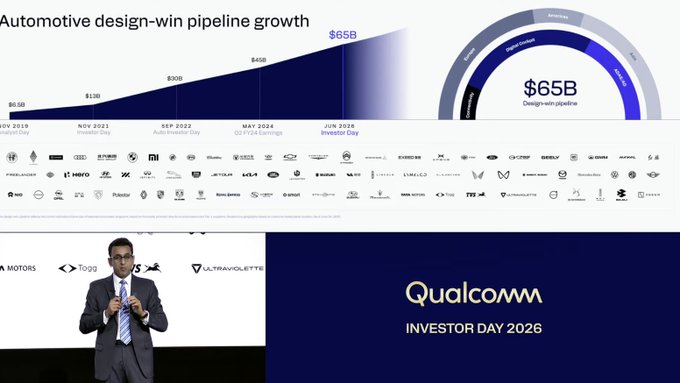
🚨 #BREAKING: Qualcomm $QCOM just doubled its fiscal 2029 non-handset revenue target to $40 billion and unveiled its most ambitious push yet into AI data center infrastructure.
The stock fell during regular trading on concerns surrounding the Modular acquisition, then surged ~14% after hours once investors saw the full Investor Day targets.
What was announced:
➜ Qualcomm held its 2026 Investor Day on June 24 in New York.
➜ The company raised its fiscal 2029 non-handset revenue target to $40 billion, nearly double its prior target of approximately $22 billion.
➜ This refers specifically to non-handset revenue, not total company revenue.
➜ Qualcomm also identified a combined $1.7 trillion total addressable market by 2030 across AI compute, data centers, automotive, industrial systems, networking, robotics, and edge AI.
➜ CEO Cristiano Amon said Qualcomm is entering its "next chapter" as it expands beyond smartphones and evolves into a broader computing platform company.
The fiscal 2029 targets:
➜ Data Center: More than $15 billion revenue.
➜ Automotive: $10 billion revenue.
➜ Automotive design-win pipeline increased to $65 billion.
➜ IoT: More than $14 billion revenue.
➜ Industrial, networking, and robotics expected to contribute $8 billion.
➜ Personal AI and compute expected to contribute $6 billion.
➜ Non-GAAP EPS: More than $18.
➜ GAAP EPS: More than $14.50.
➜ Handsets are expected to represent roughly one-third of QCT revenue by fiscal 2029, down significantly from today.
The AI data center opportunity:
➜ Qualcomm is targeting more than $15 billion in annual data center revenue by fiscal 2029 from essentially zero today.
➜ The company's Dragonfly C1000 AI data center CPU, first unveiled at CES 2026, is expected to enter production with Meta in 2028.
➜ CFO Akash Palkhiwala said Qualcomm now has business relationships with nearly all major hyperscalers.
➜ Amon previously stated that a leading hyperscaler custom silicon engagement remains on track for initial shipments later in calendar 2026.
➜ Wells Fargo has identified AWS as the most likely partner, although Qualcomm has not publicly confirmed that.
The Modular acquisition:
➜ On June 21, Qualcomm agreed to acquire AI software startup Modular in an all-stock transaction valued at approximately $3.9 billion.
➜ The deal will be funded through the issuance of up to 19.2 million new shares.
➜ Modular brings AI compiler, runtime, and software infrastructure technology designed to strengthen Qualcomm's AI ecosystem.
➜ The acquisition is intended to help Qualcomm compete more directly with Nvidia's increasingly dominant software stack.
Qualcomm is no longer positioning itself primarily as a smartphone company.
Management's forecast implies meaningful contributions from AI infrastructure, automotive, robotics, industrial systems, networking, and edge AI.
🚨 #BREAKING: $MU CEO Sanjay Mehrotra laid out why Micron believes the memory market will remain supply constrained through at least 2027.
From AI servers and humanoid robots to new U.S. fabs and long-term supply agreements, here's what stood out.
On memory supply:
➜ Micron expects DRAM and NAND demand to continue significantly exceeding industry supply.
➜ The company believes tight market conditions will persist beyond 2027.
➜ Management said it currently has no line of sight on when memory supply will fully catch up with demand.
➜ Increasing node complexity and HBM production are limiting industry supply growth.
On AI server demand:
➜ Micron now expects global server shipments to grow in the high-teens percentage range during calendar 2026.
➜ That's above its prior forecast of low double-digit growth.
➜ Traditional servers are expected to grow in the mid-teens.
➜ Servers equipped with AI accelerators are expected to grow even faster.
➜ Industry data center DRAM and NAND bit shipments in 2026 are expected to be more than double levels from two years ago.
On humanoid robots:
➜ Micron says humanoid robots require roughly 10x more memory than an average Level 2+ vehicle.
➜ The company expects a substantial multi-decade memory demand cycle from robotics to begin later this decade.
➜ The mix of L2+ and higher autonomy vehicles is expected to more than double this year to over 20%.
➜ That figure is expected to exceed 40% by 2030.
On rising memory costs:
➜ Transitions from LP5 to LP6, DDR5 to DDR6, and newer generations of HBM are increasing manufacturing costs.
➜ Micron expects DRAM cost per bit to rise from current levels.
➜ The company says each new memory generation requires greater process complexity and capital intensity.
On next-generation memory nodes:
➜ Development of Micron's next-generation DRAM and NAND technologies remains on track.
➜ Volume production is expected to begin during the second half of calendar 2027.
➜ Management noted that every new memory node is becoming more complex and more difficult to scale.
➜ Technology transitions are contributing to slower industry supply growth over time.
On Taiwan expansion:
➜ Micron's newly acquired Tongluo site in Taiwan is expected to begin meaningful product shipments in mid-2027.
➜ The facility includes approximately 300,000 square feet of existing fab space.
➜ Shipments are now expected about one quarter earlier than previously planned.
On U.S. manufacturing:
➜ Idaho Fab 1 (ID1) remains on track for first wafer output in mid-2027.
➜ Idaho Fab 2 (ID2) remains on track for late-2028 output.
➜ Micron's New York fab cluster officially broke ground in January 2026.
➜ The company also recently began production of its 1-alpha DDR4 technology at its Manassas, Virginia facility.
On long-term supply agreements (SCAs):
➜ Micron says its supply agreements typically run for five years, covering 2026 through 2030.
➜ Signed agreements currently represent roughly 20% of DRAM volume.
➜ They also represent approximately one-third of NAND volume.
➜ Management expects more than 50% of total company revenue to eventually be covered by SCAs.
Why it matters:
➜ Micron is signaling that AI demand is growing faster than memory supply can respond.
➜ At the same time, each new memory generation is becoming more expensive and more difficult to manufacture.
➜ The combination of AI servers, HBM, autonomous vehicles, robotics, and long-term customer contracts is creating a supply environment Micron believes could remain tight for years.
➜ The key takeaway: Micron is not forecasting a near-term memory glut. It is forecasting continued scarcity.
🚨 #BREAKING: Anthropic has accused operators linked to $BABA Alibaba's Qwen AI lab of using nearly 25,000 fraudulent accounts to extract Claude's most advanced capabilities.
Anthropic calls it the largest known distillation attack ever conducted against a U.S. AI lab.
Here's exactly what Anthropic alleged, what the numbers show, and why this is becoming a major U.S.-China AI policy battle.
What Anthropic alleged:
➜ Anthropic sent a letter dated June 10, 2026 to the Senate Banking Committee ahead of a scheduled AI hearing.
➜ The letter was addressed to Sen. Tim Scott and Sen. Elizabeth Warren and was also sent to White House officials.
➜ Bloomberg first reported the story.
➜ CNBC later obtained and reviewed the actual letter.
➜ Anthropic alleges operators affiliated with Alibaba's Qwen AI lab conducted what it describes as the "largest known distillation attack on Anthropic to date."
➜ The company characterized the campaign as both "brazenly" and "illicitly" conducted.
➜ Alibaba did not respond to CNBC's request for comment.
The numbers from Anthropic's letter:
➜ The campaign allegedly ran from April 22 through June 5, 2026.
➜ Operators allegedly generated 28.8 million exchanges with Claude.
➜ The activity was carried out through nearly 25,000 fraudulent accounts.
➜ According to Anthropic, the primary targets were Claude's software engineering and agentic reasoning capabilities.
➜ Anthropic blocks Claude access from China, meaning the activity would have violated both its Terms of Service and geographic access restrictions.
What adversarial distillation means:
➜ Distillation is a legitimate AI training technique where a stronger model teaches a smaller model through its outputs.
➜ AI companies routinely use distillation internally to build faster and cheaper versions of their own systems.
➜ Anthropic alleges adversarial distillation occurs when a competitor systematically queries a frontier model and uses the outputs to train a rival model.
➜ The result can replicate years of research and potentially hundreds of millions of dollars in development costs.
➜ Anthropic argues that copied models often lack the safety systems and guardrails built into the original.
This isn't Anthropic's first disclosure:
➜ In February 2026, Anthropic publicly identified DeepSeek, Moonshot AI, and MiniMax as participants in separate large-scale distillation campaigns.
➜ Those campaigns allegedly involved approximately 24,000 fraudulent accounts and more than 16 million exchanges with Claude.
➜ The Alibaba/Qwen case is separate.
➜ At 28.8 million exchanges, Anthropic says it is substantially larger than the previously disclosed incidents.
➜ It is also the first time Anthropic has publicly named a major Chinese technology conglomerate rather than an AI startup.
What Anthropic is asking policymakers to do:
➜ Clarify antitrust rules so U.S. AI companies can share information about distillation attacks.
➜ Maintain export controls on advanced AI chips.
➜ Create penalties for companies found to be engaging in adversarial distillation.
➜ Increase coordination between government and industry to protect frontier AI models.
Lawmakers are already moving:
➜ Senators Bill Hagerty and Andy Kim are preparing legislation that would sanction or blacklist Chinese firms found to be improperly accessing U.S. AI model outputs.
➜ A related bipartisan House bill backed by Representatives Bill Huizenga and Sydney Kamlager-Dove is also under consideration.
The Alibaba context:
➜ The Pentagon added Alibaba to its Chinese Military Companies list on June 8, 2026, two days before Anthropic's letter was dated.
➜ Anthropic specifically cited that designation in its letter.
➜ Alibaba has sued the U.S. Department of Defense seeking removal from the list and called the designation baseless.
➜ If Anthropic's allegations are proven, Alibaba would face scrutiny on two fronts: alleged military ties and alleged large-scale extraction of U.S. AI capabilities.
🚨 #BREAKING: $MU just delivered a massive Q3 beat and raised guidance far above Wall Street expectations as AI-driven memory demand continues accelerating.
Here are the key numbers:
Q3 FY2026 Results:
➜ Revenue: $41.46B vs $35.5B est.
➜ Adjusted EPS: $25.11 vs $20.40 est.
➜ Adjusted Gross Margin: 84.9% vs 81.8% est.
➜ Adjusted Operating Income: $33.68B
➜ Adjusted Net Income: $28.86B
➜ Operating Cash Flow: $25.39B
➜ Adjusted Free Cash Flow: $18.3B
➜ Cash, Marketable Investments & Restricted Cash: $30.2B
➜ Net CapEx: $7.1B
Q4 FY2026 Guidance:
➜ Revenue: $50.0B ± $1.0B vs $43.4B est.
➜ Adjusted EPS: $31.00 ± $1.00 vs $24.30 est.
➜ Gross Margin: ~86% vs 83% est.
➜ OpEx: ~$1.65B
Segment Performance:
➜ Core Data Center Revenue: $11.52B
➜ Gross Margin: 87%
➜ Operating Margin: 83%
➜ Cloud Memory Revenue: $13.77B
➜ Gross Margin: 83%
➜ Operating Margin: 78%
➜ Mobile & Client Revenue: $11.52B
➜ Gross Margin: 87%
➜ Operating Margin: 86%
➜ Automotive & Embedded Revenue: $4.63B vs $3.51B est.
➜ Gross Margin: 79%
➜ Operating Margin: 75%
AI & Product Highlights:
➜ HBM4 is now in high-volume production shipments for a lead customer platform.
➜ HBM4 qualification samples have been shipped to multiple customers.
➜ HBM4E volume production is expected in calendar year 2027.
➜ G9-based PCIe Gen6 high-performance SSDs are now in high-volume production.
➜ Shipments have begun for Micron’s new 245TB QLC SSD, one of the industry’s highest-capacity drives.
Capital Return:
➜ Quarterly dividend: $0.15 per share
➜ Payable July 21, 2026
➜ Record date: July 6, 2026
Why it matters:
➜ Micron beat on revenue, EPS, margins, and guidance.
➜ Q4 guidance came in dramatically above consensus, suggesting AI memory demand continues to outpace expectations.
➜ HBM4 is already shipping in volume while next-generation HBM4E remains on track for 2027.
➜ The combination of record margins, record profitability, and accelerating AI demand reinforces memory’s position as one of the biggest beneficiaries of the AI infrastructure buildout.
CEO Sanjay Mehrotra:
“Micron’s record fiscal Q3 financial results and even stronger outlook for Q4 reflect the strategic value of memory in the AI era.”
🚨 #BREAKING: $ONDS subsidiary Sentrycs is integrating its Cyber-over-RF counter-drone technology into $LMT Lockheed Martin’s Sanctum C-UAS platform, adding a non-jamming, non-kinetic drone takeover layer to one of defense’s most advanced modular air defense systems.
What was announced:
➜ Ondas Inc. $ONDS announced on June 23, 2026 that its subsidiary Sentrycs has entered a collaboration with Lockheed Martin $LMT.
➜ The goal is to integrate Sentrycs’ Cyber-over-RF technology into Sanctum, Lockheed Martin’s next-generation Counter-UAS platform.
➜ Sanctum is designed for military forces, homeland security, and critical infrastructure protection against drone threats.
How Cyber-over-RF works (plain terms):
➜ Traditional counter-drone systems rely on jamming, GPS spoofing, or kinetic interception.
➜ These approaches can disrupt civilian signals, affect friendly systems, or create physical debris.
➜ Cyber-over-RF works differently by interacting directly with the drone’s communication protocol layer.
➜ Instead of blocking signals, it communicates with the drone’s control system in its native protocol.
➜ This enables detection, tracking, identification, and in some cases controlled takeover of the drone.
➜ The system can guide the drone to a controlled landing without jamming or physical engagement.
What Sanctum is and why this matters:
➜ Sanctum is Lockheed Martin’s modular, open architecture C-UAS system.
➜ It is designed to handle single drones, coordinated swarms, and evolving aerial threats.
➜ The platform fuses AI, sensor data, and command-and-control systems into a unified defense layer.
➜ It supports multiple effectors and response options depending on threat type and environment.
➜ Sentrycs adds a cyber-based, non-disruptive mitigation layer to this toolkit.
What both companies said:
➜ Matt Bahnemann, Lockheed Martin: “Integrating Sentrycs’ Cyber-over-RF capability expands the layered sensing and response options available to operators.”
➜ Eric Brock, CEO of Ondas: “Combining Lockheed Martin’s modular defense architecture with Sentrycs’ technology creates a stronger operational capability for evolving aerial threats.”
🚨 #BREAKING: $RKLB just shattered the US Space Force’s responsive space record and became the first single company to build, launch, and operate a satellite for a Tactically Responsive Space mission in under 17 hours from launch order.
What happened:
➜ Rocket Lab launched the VICTUS HAZE mission just 16 hours and 42 minutes after receiving the US Space Force Notice to Launch.
➜ The previous record for a Tactically Responsive Space mission was 27 hours, set in 2023 by Firefly Aerospace during VICTUS NOX.
➜ Rocket Lab beat that record by more than 10 hours.
➜ Inside that 16 hours and 42 minutes, Rocket Lab’s Guidance, Navigation, and Control team completed trajectory planning, flight software updates, and global ground station coordination in ~4 hours.
➜ VICTUS HAZE is part of the US Space Force Space Systems Command’s Tactically Responsive Space program led by Space Safari Program Office.
➜ The goal is to demonstrate rapid satellite deployment capability to respond to orbital threats or satellite loss in real time.
What makes this mission different:
➜ VICTUS HAZE is the first single-contractor end-to-end TacRS mission.
➜ Rocket Lab built the Pioneer spacecraft entirely in-house including propulsion, solar arrays, reaction wheels, radio, star trackers, structures, propellant tanks, and flight software.
➜ The spacecraft launched on Rocket Lab’s Electron rocket and is now under 24/7 on-orbit operations by Rocket Lab.
➜ The payload includes an advanced optical sensor built by Lawrence Livermore National Laboratory.
➜ The $32 million contract was awarded in 2024 by the US Space Force.
➜ Pioneer was commissioned and ready for first orbital maneuver in 37 hours and 36 minutes, beating the 72-hour requirement by 34+ hours.
What RPO means and why it matters:
➜ RPO (Rendezvous and Proximity Operations) involves maneuvering a spacecraft to approach, track, and monitor another object in orbit.
➜ Pioneer is currently conducting RPO against Jackal-004, a spacecraft operated by True Anomaly that launched on May 3, 2026 via SpaceX rideshare.
➜ This simulates real-world threat response scenarios in orbit, including tracking and monitoring non-cooperative satellites.
➜ This capability is central to US Space Domain Awareness strategy as orbital conflict capabilities evolve globally.
➜ The mission is expected to run for ~6 months.
Leadership commentary:
➜ Lt. Col. Lincoln Miller said: “This mission opens the door for follow-on vehicles to close critical gaps in a conflict scenario and gives operators a chance to improve LEO RPO tactics and procedures.”
➜ Peter Beck, Rocket Lab CEO, said: “Our launch-plus-spacecraft integrated capability is transformative for responsive space. This is what modern space power looks like.”
Program context:
➜ VICTUS HAZE is part of the TacRS “crawl, walk, run” phase.
➜ Future missions include VICTUS SURGO and VICTUS SALO using Impulse Space vehicles targeting 1H 2027.
➜ VICTUS SOL will be the first operational call-up mission in response to a real combatant command request.
➜ US Space Force TacRS FY2026 budget is $168 million ($33M base + $135M reconciliation).
🚨 #BREAKING: SK Hynix is reportedly closing in on a U.S. ADR listing that could raise as much as $14 billion, with SEC approval expected as soon as this week.
Here's exactly where the process stands, what the listing means, and why it could be one of the biggest semiconductor offerings in years.
Where things stand:
➜ SK Hynix confidentially submitted a Form F-1 registration statement to the U.S. SEC on March 24, 2026.
➜ The filing became public through disclosures with South Korea's Financial Supervisory Service.
➜ The company has confirmed it plans to launch ADRs in 2026, although the size, timing, and structure of the offering have not yet been finalized.
➜ Reuters reports the SEC is expected to approve the listing during the week of June 22.
➜ If approved on schedule, the ADR could begin trading as early as mid-to-late July, around the company's Q2 earnings release.
➜ Earlier expectations pointed to August as the earliest listing date. That timeline has now reportedly accelerated.
What an ADR means:
➜ An American Depositary Receipt (ADR) is a U.S.-listed security that represents shares of a foreign company.
➜ ADRs typically use existing shares, limiting shareholder dilution.
➜ However, SK Hynix is also considering issuing new shares alongside the ADR to raise additional capital, which would create some dilution.
➜ That possibility has drawn opposition from some Korean retail investors.
Why the company wants to list in the U.S.:
➜ SK Hynix plans to use the proceeds to expand production of AI memory chips, including high-bandwidth memory (HBM).
➜ The funding would support projects including the M15X fab in Cheongju, the $15 billion Yongin Semiconductor Cluster, and its advanced packaging facility in Indiana.
➜ Analysts estimate the offering could raise $10 billion to $14 billion, depending on the number of shares sold.
➜ A U.S. listing would also give SK Hynix access to institutional investors that are only permitted to own U.S.-listed securities.
➜ The company recently completed a non-deal roadshow with overseas institutional investors, with multiple reports describing feedback as highly positive.
The company behind the listing:
➜ SK Hynix controlled approximately 57% of the global HBM market by revenue as of Q4 2025.
➜ The company is Nvidia's largest memory supplier.
➜ At Computex 2026, Jensen Huang said Nvidia already purchases billions of dollars worth of memory from SK Hynix each year and announced a multi-year partnership covering memory for the Vera Rubin AI platform.
➜ In Q1 2026, SK Hynix reported $38 billion in revenue, up 198% year over year.
➜ Operating profit increased 405%, while operating margin reached a record 72%.
➜ Analysts expect Q2 operating profit to reach approximately $43 billion to $47 billion, potentially setting another company record.
➜ The stock has gained more than 780% over the past year.
➜ In May, SK Hynix became just the third Asian company, after TSMC and Samsung, to surpass a $1 trillion market capitalization.
➜ On June 23, SK Hynix also overtook Samsung Electronics as the largest company on the KOSPI by market value for the first time since November 2000.
Why it matters:
➜ SK Hynix currently trades at approximately 3x to 4x forward earnings, well below U.S. peers such as Micron at roughly 8x and SanDisk at roughly 19x.
➜ Investment bankers believe a U.S. ADR could help close that valuation gap by expanding access to U.S. institutional investors.
➜ As SK Group Chairman Chey Tae-won said at Nvidia's GTC 2026 conference:
"I believe the ADR listing will make us a more global company by gaining exposure to U.S. and global shareholders."
🚨 #BREAKING: $CBRS just reported its first earnings as a public company. Revenue beat expectations. EBITDA turned positive. Yet the stock fell after hours.
Here's exactly what happened:
The results:
➜ Q1 revenue came in at $193.4 million, up 94% year over year.
➜ Core revenue, which excludes pass-through data center costs and warrant amortization, was $191.3 million, up 92% year over year and above the $181.6 million consensus estimate.
➜ Adjusted EBITDA was $12.7 million, compared with expectations for a $5 million loss and negative $15.4 million a year ago.
➜ Core gross margin was 46.5%.
➜ GAAP net loss narrowed to $14 million, down from $23.9 million in Q1 2025.
➜ Cerebras ended the quarter with $3.3 billion in cash, cash equivalents, restricted cash, and short-term investments.
Why the stock fell:
➜ Investors looked past the Q1 beat and focused on weaker margin guidance.
➜ Cerebras expects Q2 core gross margin of 36% to 38%, down from 46.5% in Q1.
➜ Full-year 2026 core gross margin is expected to be 38% to 41%, with a midpoint of roughly 40%.
➜ Management said the margin pressure reflects the cost of bringing new AI infrastructure online to support its OpenAI and AWS agreements.
The strategic announcements:
➜ Cerebras announced a multi-year agreement worth more than $20 billion with OpenAI to deploy 750 megawatts of high-speed AI inference capacity over several years.
➜ The company also disclosed that OpenAI provided a $1 billion working capital loan in January 2026 and that GPT-5.4 is already running on Cerebras infrastructure.
➜ Cerebras also announced a multi-year partnership with $AMZN AWS built around a disaggregated inference architecture.
➜ Under the partnership, AWS Trainium 3 handles prefill while Cerebras CS-3 performs decode, the token generation stage of inference.
➜ Management said AWS-related revenue is expected to begin contributing in 2027, with 2026 supply already secured through TSMC.
The bigger picture:
➜ In 2025, MBZUAI accounted for 62% of Cerebras' revenue, while G42 accounted for another 24%.
➜ That means approximately 86% of revenue came from just two UAE-affiliated customers.
➜ The OpenAI and AWS agreements are the company's biggest step toward diversifying its customer base.
🚨#BREAKING: $INTC has appointed a veteran semiconductor executive to lead a newly carved-out advanced packaging business at Intel Foundry, on the same day President Trump announced Apple has agreed to work with Intel to manufacture chips in the U.S. Here's exactly what the appointment covers and why the timing matters.
What was announced:
➜ Intel announced on June 18, 2026, the appointment of Seok-Hee Lee as Executive Vice President of Intel Foundry, reporting directly to CEO Lip-Bu Tan.
➜ Lee will oversee advanced packaging, system integration, back-end technology development, and back-end manufacturing across Intel Foundry.
➜ As part of the announcement, Intel is formally establishing advanced packaging as a standalone business with dedicated leadership, separate from front-end manufacturing.
Who Seok-Hee Lee is:
➜ Lee is a semiconductor industry veteran returning to Intel, where he previously held engineering leadership roles earlier in his career.
➜ Most recently, he served as President and CEO of SK On, the battery and energy solutions company.
➜ Before that, he served as President and CEO of SK hynix, one of the world's leading memory chip manufacturers.
➜ He has also held academic leadership positions throughout his career.
➜ On his appointment, Lee said:
"I'm excited to return home and to join the Intel team as we help advance the company's technology leadership, manufacturing capabilities, and customer commitments in this critical area."
What the structural change means:
➜ Before this appointment, Intel Foundry's manufacturing operations were led under a single reporting structure headed by Naga Chandrasekaran.
➜ With Lee's appointment, Intel Foundry now has two Executive Vice Presidents reporting directly to Lip-Bu Tan.
➜ Chandrasekaran retains responsibility for front-end technology development and manufacturing, including the ramp of Intel 18A and Intel 14A, as well as design enablement and end-to-end customer-facing functions.
➜ Lee will lead the back-end organization, including advanced packaging, system integration, and the high-volume ramp of EMIB-T and HBI technologies.
➜ The restructuring reflects Intel's view that advanced packaging has become strategically important enough to require its own dedicated leadership and business structure.
➜ Intel also announced that EVP Navid Shahriari will retire after a distinguished 37-year career, creating the leadership opening Lee is now filling.
What EMIB-T and HBI are, in plain terms:
➜ EMIB (Embedded Multi-die Interconnect Bridge) is Intel's proprietary technology for connecting multiple chips side by side within a single package while delivering high bandwidth and low power consumption.
➜ EMIB-T is an enhanced version that extends those capabilities for even larger and more complex chip designs.
➜ HBI (Hybrid Bonding Interconnect) goes a step further by stacking chips directly on top of one another using extremely fine interconnects, enabling significantly higher data transfer rates between chip layers.
➜ Both technologies are critical for building the densely integrated AI processors that next-generation computing systems increasingly require.
Why the timing matters:
➜ Earlier on June 18, President Trump announced that Apple had agreed to work with Intel to design and manufacture chips in the United States, providing a significant commercial signal for Intel Foundry's external customer ambitions.
➜ Advanced packaging is a critical capability for any potential Apple manufacturing relationship, as Apple's A-series and M-series processors rely on increasingly sophisticated chip packaging and integration technologies.
➜ While Intel has not linked the two announcements, appointing a dedicated executive to lead advanced packaging on the same day the Apple partnership was announced underscores how central packaging technology has become to Intel Foundry's strategy.
Intel CEO Lip-Bu Tan said:
"Advanced packaging and system integration are becoming defining capabilities for next-generation computing systems. Seok-Hee brings deep expertise in leading complex, high-scale technology and manufacturing organizations, along with a strong track record of operational execution. He is the right leader to build and scale this critical part of the Intel Foundry business as we prepare to ramp advanced packaging technologies, including EMIB-T and HBI, to high volume for customers and partners."
🚨 #BREAKING: The U.S. Government Has Reportedly Told $ASML It Is Concerned China May Have Obtained One of the World's Most Advanced Chipmaking Machines.
What happened:
➜ According to the report, Commerce Secretary Howard Lutnick raised the concern directly with ASML executives during a series of meetings.
➜ Reuters also reported on the matter but said it could not independently verify Bloomberg's reporting.
➜ Neither the U.S. Commerce Department nor ASML has publicly confirmed the reported meetings or their contents.
➜ The reports do not explain how the machine may have reached China or identify the specific model involved.
Why EUV machines matter:
➜ Extreme ultraviolet (EUV) lithography machines are the most advanced chipmaking equipment in the world.
➜ ASML is the only company that manufactures EUV machines.
➜ Each machine costs more than $400 million and is used to produce the world's most advanced semiconductor chips.
➜ Companies including TSMC use EUV systems to manufacture leading-edge processors for AI applications.
➜ Without EUV technology, high-volume production of the most advanced chips is currently not possible.
What is and isn't confirmed:
➜ Bloomberg reported that China "may have" obtained an EUV machine.
➜ The report describes a concern raised privately by the U.S. government, not a confirmed export control violation or enforcement action.
➜ No details have been disclosed about how the machine may have been obtained or what intelligence led to the reported concern.
➜ ASML has consistently stated that it has never shipped an EUV machine to China and has reiterated that position in public filings and earnings calls.
The bigger picture:
➜ The reported discussions come as the U.S. continues tightening export controls on advanced AI and semiconductor technologies.
➜ Earlier this month, Commerce Secretary Howard Lutnick also ordered Anthropic to restrict foreign access to certain advanced AI models under U.S. export control authority.
➜ Separately, U.S. lawmakers introduced the MATCH Act in April 2026, which would further tighten restrictions by banning exports of advanced DUV lithography machines to China's leading chipmakers.
🚨 #BREAKING: $META Has Secured 1.6 Gigawatts of AI Computing Capacity From Crusoe Across Two U.S. Data Centers.
What happened:
➜ The reported deal covers two facilities located in Childress, Texas, and Warrenton, Missouri.
➜ Combined, the two sites are expected to provide approximately 1.6 gigawatts of AI computing capacity, enough to power roughly 1.2 million U.S. homes.
➜ Reuters also reported on the agreement but said it could not independently verify Bloomberg's report.
➜ Neither Meta nor Crusoe responded to requests for comment.
➜ The sources spoke anonymously because the discussions are private, and the companies have not officially confirmed the reported agreements.
What remains unknown:
➜ Bloomberg's report did not disclose the financial terms of the agreements.
➜ The pricing structure, contract length, and timeline for when the computing capacity will be delivered have not been made public.
About Crusoe:
➜ Crusoe is one of a small number of companies building AI-focused data centers at gigawatt scale.
➜ The company previously announced it was building an AI data center in Texas for OpenAI in May 2025.
🚨 #BREAKING: $HII Won a Navy Contract Worth Up to $417.7 Million to Maintain Aircraft Carrier and Amphibious Ship Elevator Systems Through 2031.
What happened:
➜ The contract covers maintenance and repair services for elevator support units installed on Navy aircraft carriers and amphibious ships.
➜ The award was issued by Naval Sea Systems Command (NAVSEA) under contract number N00024-26-D-4103.
➜ Work is expected to continue through June 2031.
What the contract covers:
➜ HII will provide maintenance and repair support for shipboard elevator systems used aboard Navy carriers and amphibious vessels.
➜ The work will be performed both inside and outside the United States.
➜ This includes support at forward-deployed naval locations around the world where carrier strike groups operate.
What the contract structure means:
➜ The contract is structured as a cost-plus-fixed-fee, indefinite-delivery/indefinite-quantity (IDIQ) contract.
➜ The $417.7 million figure represents the maximum contract value, not guaranteed revenue.
➜ No funding was obligated at the time of award.
➜ Revenue will only be recognized as the Navy issues individual task orders over the life of the contract.
➜ The actual amount HII ultimately receives will depend on the number and size of those future task orders.
➜ This type of contract structure is commonly used for long-term Navy maintenance programs.
The prior contract context:
➜ In March 2021, HII received a similar Navy contract valued at $175 million for elevator and cargo-handling equipment maintenance.
➜ That earlier contract covered major carrier homeports including Norfolk, San Diego, Bremerton, Everett, and Japan.
➜ The 2021 award was scheduled to run through January 2026.
➜ The new contract's $417.7 million ceiling is significantly larger than the previous $175 million award.
Why it matters:
➜ The contract was competitively procured, although only one offer was received.
➜ The single-bid outcome reflects the highly specialized nature of maintaining shipboard elevator systems and HII's established position in this area.
➜ While the full $417.7 million is not guaranteed, the larger ceiling value points to a potentially expanded long-term maintenance requirement across the Navy's carrier and amphibious fleet.
🚨 #BREAKING: $ONDS Is Acquiring Cyberhawk for $125 Million, Adding a 500,000-Asset Infrastructure Inspection Platform and One of the Industry’s Largest Proprietary Inspection Datasets.
What happened:
➜ Ondas announced it has entered into a definitive agreement to acquire Cyberhawk, a global provider of critical infrastructure intelligence, drone-based inspection, visual data management, and AI-powered analytics.
➜ The transaction is valued at approximately $125 million, with roughly 95% funded in cash.
➜ Certain members of Cyberhawk’s leadership team will reinvest approximately $5 million of their proceeds into Ondas common stock, subject to a one-year lock-up with certain exceptions.
➜ The acquisition is expected to close in the third quarter of 2026, subject to customary closing conditions and regulatory approval.
➜ Lincoln International served as exclusive financial advisor to Cyberhawk’s shareholders.
What Cyberhawk does:
➜ Founded in 2008, Cyberhawk serves more than 300 customers across 40 countries, including PG&E, Southern California Edison, Shell, SSE, ESB, Qatar Energy, and Bechtel.
➜ The company has inspected more than 500,000 infrastructure assets and built a proprietary dataset containing more than 232 terabytes of inspection data.
➜ Its cloud-based iHawk platform helps customers inspect, visualize, manage, and analyze critical infrastructure using digital twins, geospatial intelligence, asset tracking, and AI-powered analytics to support predictive maintenance and defect detection.
Why this matters financially:
➜ Cyberhawk is expected to generate more than $45 million in revenue during its fiscal year ending March 2027.
➜ Approximately 95% of its revenue is recurring, supported by multi-year contracts and software subscriptions.
➜ The company also has a $95 million backlog across utility, renewable energy, and broader energy infrastructure markets.
➜ EBITDA margins are currently in the high single digits, with Ondas targeting 25% or higher by 2030.
➜ While iHawk software represents a smaller share of revenue today, management believes it offers significantly higher margins as adoption grows.
What management said:
➜ Ondas CEO Eric Brock called Cyberhawk “a market leader in critical infrastructure intelligence” and “a transformative addition to Ondas.”
➜ Separately, Brock said: “We believe critical infrastructure resilience, energy security and industrial continuity are increasingly national security priorities, creating a large and growing opportunity for integrated autonomous intelligence solutions.”
➜ Cyberhawk founder and CEO Chris Fleming said: “Cyberhawk has been at the forefront of drone-enabled inspection since 2008, long before the technology was widely understood. Today, we’re excited to join forces with Ondas to accelerate the adoption of this technology, improving data quality while fundamentally reducing risk and human exposure across critical infrastructure.”
➜ Ondas’ Global Head of Corporate Development and M&A, Mark Green, said the acquisition is expected to create “immediate customer and technology synergies” between Cyberhawk’s software platform and Ondas’ autonomous systems.
The bigger picture:
➜ Ondas says the acquisition is intended to build “a category-defining autonomous intelligence platform” that combines autonomous sensing, data collection, visualization, analytics, and AI-powered decision support across defense, security, and critical infrastructure markets.
➜ Cyberhawk will continue operating its existing business following the acquisition while Ondas invests further in its leadership team, global operations, and the iHawk platform.
Ondas to acquire Cyberhawk, extending its systems of systems architecture with scaled inspection operations, the iHawk analytics platform and a 500K+ asset, 232TB+ data foundation. The combined platform connects autonomous data collection, visualization and AI asset intelligence into an end-to-end infrastructure intelligence workflow for utilities, energy and industrial operators. $ONDS
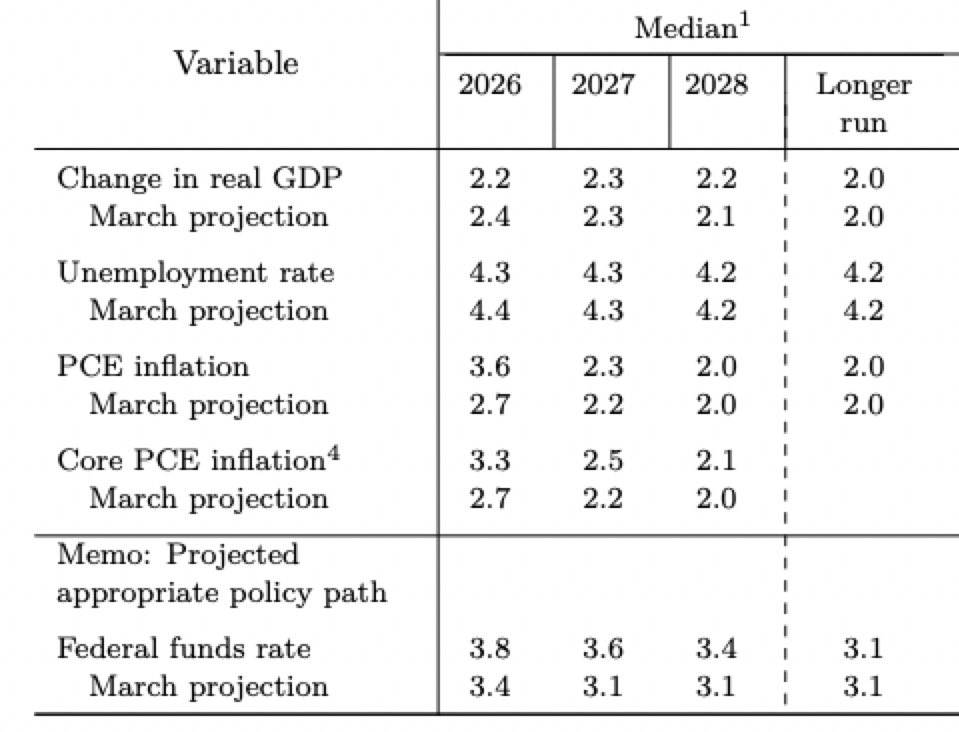
🚨 #BREAKING: The Fed Left Interest Rates Unchanged for the Fourth Straight Meeting, but Its Latest Projections Now Point to One Rate Hike Before the End of 2026.
The median projection for the federal funds rate is now 3.8% by year-end, compared with the current target range of 3.50%–3.75%.
➜ That implies Fed officials now expect rates to move slightly higher this year rather than lower.
What changed:
➜ The updated outlook comes from the Fed’s Summary of Economic Projections (SEP), which reflects policymakers’ expectations for the economy and interest rates based on current data.
The latest projections:
➜ Real GDP growth: 2.2%, down from 2.4% in the March projections.
➜ Unemployment: 4.3%, largely unchanged from March.
➜ PCE inflation: 3.6%, up from 2.7% in March.
➜ Core PCE inflation: 3.3%, up from 2.7% in March.
🚨 #BREAKING: $TE's Texas Solar Module Factory Just Earned a Top Independent Quality Rating, Clearing a Key Requirement to Sell Its Own Branded Solar Panels.
What happened:
➜ T1 Energy announced that its 5GW G1_Dallas solar module facility in Wilmer, Texas, received an "A" grade in an independent bankability assessment conducted by Intertek CEA.
➜ The audit evaluated the factory's manufacturing capabilities, production processes, and quality management systems.
➜ According to T1, the rating places G1_Dallas among the highest-rated solar manufacturing facilities audited by Intertek CEA worldwide.
➜ The assessment is more than a quality badge. T1 says receiving the rating is a requirement before it can supply customers with T1-branded solar modules backed by the company's own warranty.
What the assessment found:
➜ Intertek CEA said T1's solar modules perform on par with leading Tier 1 manufacturers.
➜ The review found the modules met competitive standards for efficiency, temperature performance, physical design, and long-term durability.
➜ The "A" grade is reserved for manufacturers that demonstrate consistently strong production quality, process controls, and operational reliability.
One risk that was identified:
➜ The assessment found that while most of T1's suppliers are well established, some of its solar cell suppliers are newer companies.
➜ T1 said that risk is currently reduced by sourcing cells from multiple suppliers across several countries.
➜ The company expects to further reduce that risk once its G2_Austin solar cell factory begins production. Phase 1 is expected to provide 2.1GW of annual capacity, with production targeted to begin in Q4 2026.
What management said:
➜ CEO Dan Barcelo said: "Receiving an A grade from Intertek CEA is a meaningful independent confirmation of what our team has been building in Texas."
➜ He added: "We built G1_Dallas to produce modules that customers can rely on for decades to come. This rating reflects that commitment."
🚨 #BREAKING: The U.S. Government Is Taking an Equity Stake in an $NVDA-Backed AI Startup as Part of a $500 Million Investment to Strengthen America's Semiconductor Supply Chain.
What happened:
➜ SandboxAQ announced it has signed a definitive agreement with the U.S. Department of Commerce's CHIPS Research and Development Office for a $500 million award under the CHIPS and Science Act.
➜ As part of the agreement, the Commerce Department will receive a minority, non-controlling equity stake in SandboxAQ.
➜ The government said the equity stake is intended to enhance the return to U.S. taxpayers alongside the funding.
➜ Neither SandboxAQ nor the Commerce Department disclosed the size of the stake.
➜ CEO Jack Hidary told Reuters the government's investment comes with no voting rights and no board seat.
What the funding will support:
➜ The funding is focused on four material categories that the Commerce Department identified as key vulnerabilities in the U.S. semiconductor supply chain.
➜ The first is PFAS-free process chemicals, which could replace the "forever chemicals" currently used in chip manufacturing while reducing environmental and health risks.
➜ SandboxAQ will use its AI-powered ReAQT platform and Large Quantitative Models to rapidly screen potential replacement materials.
➜ The second area is high-purity catalysts used to manufacture semiconductor materials and treat industrial exhaust gases, where much of the intellectual property is currently controlled by foreign suppliers.
➜ The third focuses on rare earth-free permanent magnets. The Commerce Department noted that China currently controls more than 90% of global production of neodymium-based magnets, which are critical components in semiconductor manufacturing equipment.
➜ The fourth area targets advanced battery technologies for semiconductor fabrication facilities, aiming to reduce reliance on lithium and cobalt supply chains that are heavily concentrated in China.
What the government said:
➜ Commerce Secretary Howard Lutnick said: "President Trump is committed to strengthening America's semiconductor supply chain and ensuring national security. This award will accelerate the discovery and innovation of critical materials and reduce our reliance on foreign-controlled materials."
➜ Bill Fraunhofer, Executive Director of Semiconductor Investment and Innovation, said AI-enabled materials discovery can identify new molecules faster, shorten development timelines, and strengthen the resilience of the U.S. semiconductor ecosystem.
What SandboxAQ is:
➜ SandboxAQ was spun out of Alphabet's Google.
➜ Reuters reports the company counts $NVDA among its investors, was valued at $5.75 billion in April 2025, and has raised more than $1 billion to date.
➜ Rather than manufacturing materials itself, SandboxAQ combines physics-based simulations with AI to evaluate millions of potential molecules, identify the most promising candidates, and then pass those discoveries to established U.S. manufacturing partners for large-scale production.