@WEB3quill@GenLayer August metrics showed the exact split between passive observers and active contributors. Over thirty thousand joined, but less than three thousand are putting real builder code on the line.
@WEB3quill@GenLayer I went straight into the builder lane. Writing intelligent contracts where consensus is driven by LLM execution needs actual testing, so getting code passed by stewards feels much more rewarding than social tasks.
The @GenLayer Portal is not a dashboard you check once.
I opened it expecting a points farm. What I found was a public record of who is building toward mainnet and what that work got assessed at.
Three roles sit inside it: builder, validator, and community member. I started by linking my X, Discord and GitHub so every contribution lands against one name. That part takes ten minutes and it is where most people stop.
The part that moves your position is what comes after. Missions, contests, builder submissions. Each one reviewed by stewards, logged with a number, not self-reported. Points on the builder and community side convert to GLP every Sunday at 11:59 PM UTC. The standings shift after each pass.
36,032 participants were inside it as of late August 2026. 2,901 builders. 46 validators. Those numbers move every day.
The one thing that made me stay: the board does not move until someone checks your work.
https://t.co/1ftlUdGQ0q
builder, validator, community. everyone has a lane here. which one fits what you already do?
@wb3_Wendy Most trackers refuse to answer the what is left question. They show where you are, never what is next. That gap is why they all get deleted.
@unborn7G Story: the first time my work was publicly counted, I worked twice as hard the next week, happily, for free. Standings do that to people. Ask any gamer.
@WEB3quill@web3_YSL@prophetthedog Tapped my screen so hard the display started glitching, all for a project that allocated me $0.40 and then muted the main Telegram group when we asked questions.
@WEB3quill@web3_YSL@prophetthedog Bought full energy refills and auto-bots for $HMSTR thinking I was building generational wealth. Ended up earning less than a 200 naira recharge card. Complete disgrace.
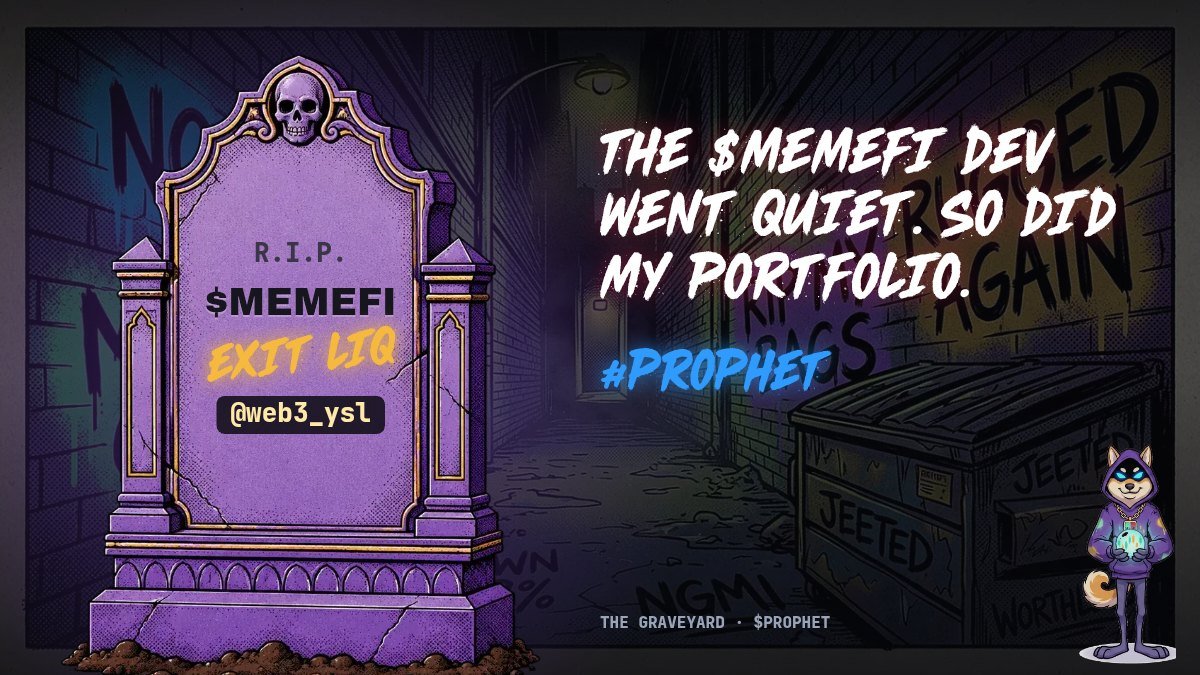
$MEMEFI promised us 100x.The dev went quiet after launch and so did my portfolio.
@web3_ysl called it "finger cardio" while my thumb was bleeding at 3 am.
Sent the ticker to Prophet's Graveyard, @ProphetTheDog to help bury it.
what did you tap for during the tg apps meta that paid you less than a recharge card?
https://t.co/zsD8Dlu4Td
@WEB3quill@web3_YSL@prophetthedog The best take on CT right now is no take at all. Every time someone builds a full thesis around a launch, the market makes sure to do the exact opposite.
@WEB3quill@web3_YSL@prophetthedog Watching $MEMEFI burn taught all of us to stop falling in love with roadmaps. Clear out the dead weight in the Graveyard and just let the timer tick.
The launch of $MEMEFI made @web3_ysl and me allergic to certainty.
So I am not forcing a story onto @ProphetTheDog.
Quoted the pin, joined the official Telegram, and left the Graveyard card attached.
The countdown can speak for itself.
@WEB3quill@web3_YSL Tapped my screen so hard the display started glitching, all for a project that allocated me $0.40 and then muted the main Telegram group when we asked questions.
@WEB3quill@web3_YSL Bought full energy refills and auto-bots for $HMSTR thinking I was building an empire. Ended up earning less than a 200 naira recharge card. Absolute disgrace.
$MEMEFI was supposed to give us a 100x. It's the only number it never hit.
@web3_ysl told me "just hit the secret tap combo" while my thumb was already bleeding at 3 am.
I asked what happened to the last telegram miniapp. He said that was just "finger cardio."
At the end, the dev went quiet and so did my portfolio.
Sent the ticker to Prophet's Graveyard, @ProphetTheDog to help bury it.
what did you tap for during the tg apps meta that paid you less than a recharge card?
@WEB3quill@2FactorFinance Rewarding education and verified actions over passive holding forces participants to actually understand how volatility partitioning works before mainnet launch.
@WEB3quill@2FactorFinance A fixed rank curve paying out cbBTC to the top ten gives a clear target. You know the exact distribution math from rank one down to rank ten before even making your first move.
A leaderboard is only as effective as the actions it chooses to verify.
Participating in the @2FactorFinance Points Program highlights an intentional approach to community architecture.
Season 1 isolates engagement into three specific vectors:
social activity, education, and referrals.
No Marks are awarded for buying, depositing, or holding.
By removing capital mechanics from the scoring model, participation becomes a measure of verified execution rather than balance size.
This systematic focus matches how 2Factor re-engineers leverage, partitioning volatility into capital-efficient tranches to maintain leverage stability over extended holding periods.
The Season 1 leaderboard freezes permanently at mainnet launch.
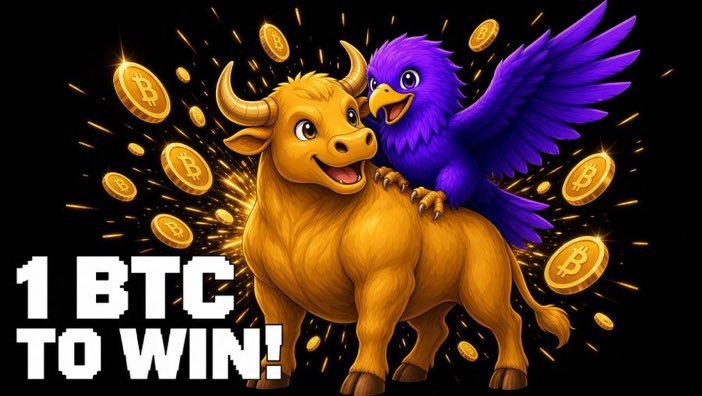
The top 10 positions split 1 BTC, paid out in cbBTC along a defined curve from 18.2 percent at rank one to 1.8 percent at rank ten.
Marks carry no cash value, are non-transferable, and do not represent a claim on any asset or token.
Do you prefer points programs that measure capital allocation or verified effort?
Get started with your first verified action using my link:
https://t.co/dkudMFSpP8
Happy Taco Wednesday!
MintABear: It’s not about the numbers
When people think of PlayOnMint’s MintABear, three details usually come to mind: a supply of 4,444 Bears, a free mint, and its launch on Robinhood. However, these figures only describe the collection's appearance; they don't reveal its purpose.
What do these three details signify?
@PlayOnMint
•The 4,444 Bears create scarcity.
•The free mint removes the initial cost barrier.
•Robinhood serves as the collection's on-chain home.
This represents the structure, but the reason for its existence lies elsewhere.
The Bear is a key component of the MINT ecosystem
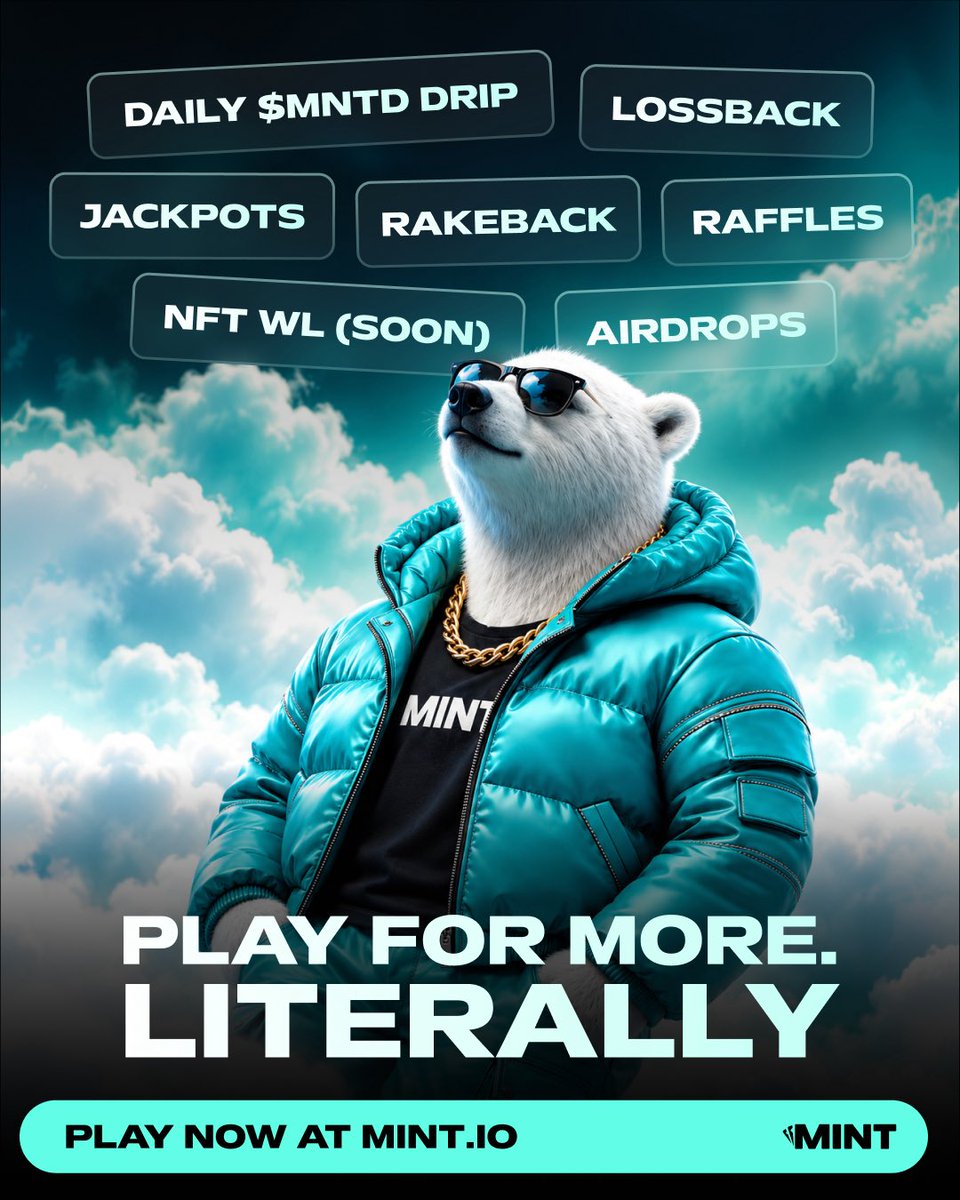
MintABear is positioned as an ecosystem NFT, not merely a collection borrowing the MINT name. Bear distribution is partly based on platform activity and ties into raffles, royalties, leveling up, $MNTD, and MINT Status.
Consider three different users: User A enters the ecosystem through gameplay and accumulates XP; User B discovers MintABear first; and User C is interested in $MNTD and staking to upgrade their Status. These are three distinct entry points, yet they all lead to the same unified system rather than three disjointed campaigns.
Why does a free mint make sense?
If the Bear is part of an accumulation and progression system, waiving the initial fee positions it more as an ecosystem asset than a product sold to those unfamiliar with the platform. Its value stems from what the Bear enables, not the cost of minting it.
The real test
The minting event happens only once; utility is what determines whether the collection retains its significance in the long run. Many NFT projects manage to create scarcity and generate a buzz around the mint. The real challenge lies in keeping the NFT tied to the product once the initial hype fades. @PlayOnMint
If I had to sum it up, I wouldn't describe MintABear simply as "4,444 free NFTs on Robinhood," but rather as a limited-edition NFT that links ownership to activity and progress within MINT. That is what makes it worth watching.
Ada, an african freelancer, finishes weeks of remote work for a foreign company, and its finance team approves her invoice.
but their bank can't send money to her country, so the payment is stuck.
she has done months of late-night stand-ups and written through generator cuts while hiding the stress from her mum and pretending at dinner that all is well.
after several polite but useless email exchanges, her lead suggests payment via USDC.
she sends a @cashi deposit address, refreshes until the balance appears, and receives the full invoice amount.
read Ada’s story on medium ⬇️
@AmieWind #CashiWritingContest
https://t.co/X5RB3ZInM6