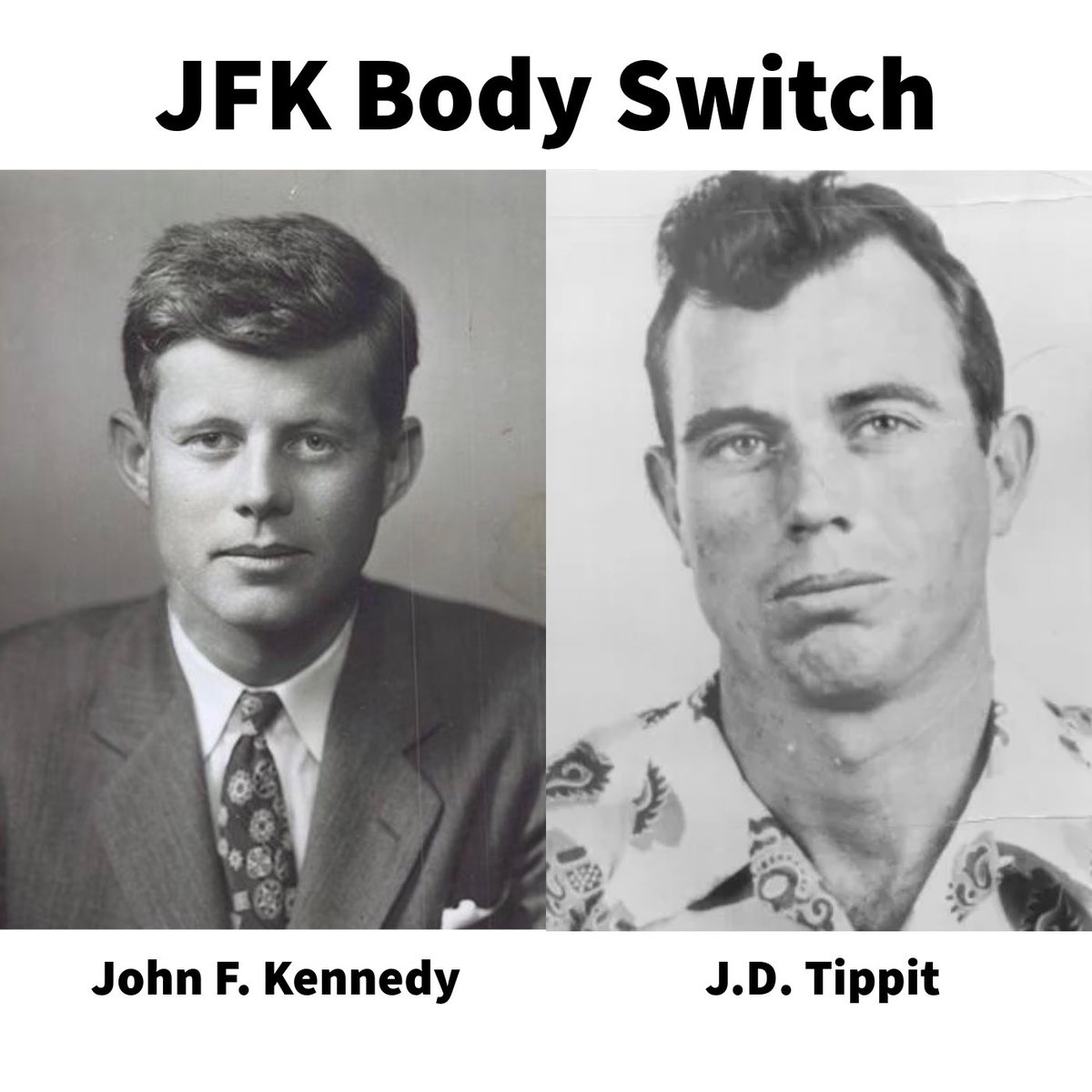
On November 22, 1963, two assassinations took place in Dallas just 45 minutes apart. One was President John F. Kennedy. The other was Dallas police officer J.D. Tippit.
But an online investigative theory suggests their deaths were no coincidence—and that both men may have played a role in something far more sinister.
According to the theory, Tippit bore such a striking resemblance to President Kennedy that fellow officers allegedly nicknamed him “JFK.” The resemblance becomes particularly interesting when comparing photographs of the two men together.
Then there’s the disturbing coincidence surrounding their injuries, on the same day. Tippit was shot in the exact same areas as Kennedy, including the head, neck, and back.
When Lee Harvey Oswald was apprehended inside the Texas Theatre, he was initially arrested in connection with the murder of Officer J.D. Tippit, not formally charged with Kennedy’s assassination yet.
The man who would become the most infamous presidential assassination suspect in American history was first taken into custody over the killing of a Dallas police officer that looked identical to JFK and was nicknamed JFK.
Oswald denied the allegations of assassinating the president and the police officer during every press meeting.
What if Tippit wasn’t simply another victim that afternoon? What if his body was intended to replace Kennedy’s?
Supporters connect this possibility to longstanding disputes surrounding Kennedy’s autopsy, the transportation of his remains, and conflicting witness accounts at Bethesda Naval Hospital.
And then there’s the extraordinary coincidence that Oswald was accused of murdering both men on the very same afternoon.
On March 14, 1967, nearly four years after JFK’s assassination, his casket was quietly moved from its original grave at Arlington Cemetery under the cover of darkness. Officials called it a routine relocation to a permanent gravesite.
Some speculate that this was the moment JFK’s actual remains were finally placed inside his casket, replacing J.D. Tippits body after the assassination.
@vishalpchheda@patcummins30 Umpires didn’t think there was anything wrong with the ball. No damage. Cameraman was tipped off about it otherwise no one would have seen anything.
In 2020 The National Film and Sound Archive of Australia (@NFSAonline) released a colour film from the Kippax-Oldfield testimonial match between AL Hassett's XI v AR Morris' XI in Sydney between February 25th and March 1st 1949. It may be the only film of Don Bradman batting in colour in what was his penultimate first-class innings