Heirloom hardcovers of the books found beside the Bible at Qumran. The Book of Jubilees and the Book of Enoch, chapter and verse. A small press in Nashville.
Genesis leaves a lot unsaid. Around 160 BC, a Jewish writer retold it and filled in the gaps. At least fourteen copies of his book turned up in the caves at Qumran.
Ten things the Book of Jubilees says that Genesis doesn't:
Thank you for reading along these three weeks. The Book of Jubilees and the Book of Enoch are both in hardcover, and the pinned thread is a good place to start. Link in bio.
God told Adam he would die in the day he ate. He lived to 930. Jubilees explains it with a thousand-year day: Adam "lacked seventy years of one thousand years" and died within that day (4:30). Compare Psalm 90:4 and 2 Peter 3:8.
R. H. Charles, who translated both of our books, became a canon of Westminster Abbey in 1913 and its archdeacon in 1919. His translations of Enoch and Jubilees are now in the public domain.
Jubilees says the Rephaim of Gilead were giants whose height was "ten, nine, eight down to seven cubits" (29:9). Deuteronomy 3:11 says the iron bed of Og, the last of the Rephaim, was nine cubits long.
What you get in our editions: the full R. H. Charles text, freshly typeset at a readable size, with every chapter and verse number kept so you can look things up. Link in bio.
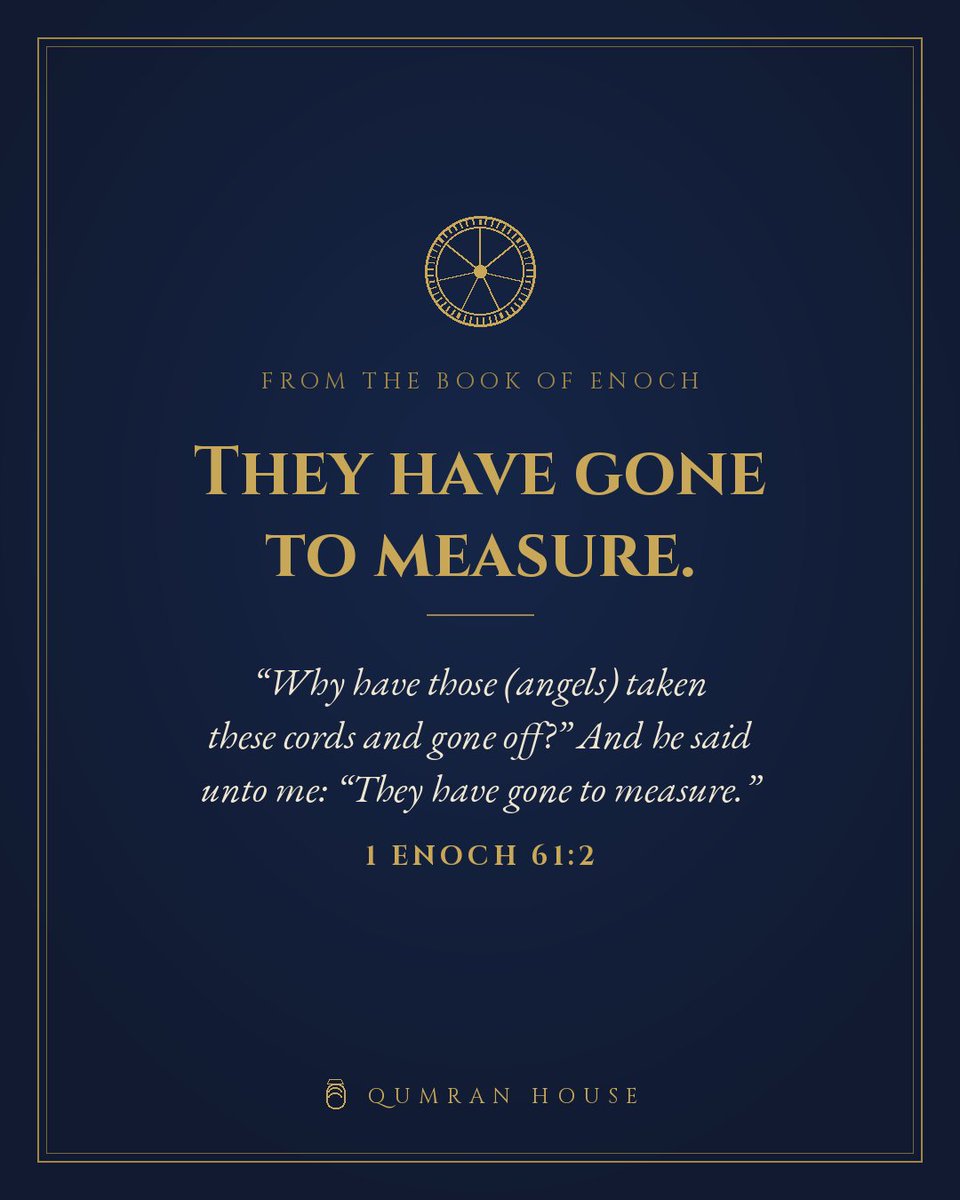
In the Parables, Enoch watches angels take long cords and fly north. They have gone to measure, the angel says (61:1-2), and the measures will bring back even "those who have been devoured by the fish of the sea" (61:5).
The Ethiopian Orthodox Tewahedo Church's Bible, traditionally counted as 81 books, includes both 1 Enoch and Jubilees. In Ge'ez, Jubilees is called Kufale, "Division."
Jubilees 23 describes a generation whose children grow old before their time: "a child of three weeks will appear old like a man of one hundred years" (23:25). Then it pictures a renewal in which lives draw near to a thousand years (23:27).
The last chapter of Jubilees counts forty-nine jubilees, one week and two years from Adam to Sinai, with forty more years before Israel crosses the Jordan (50:4). Add it up and you get exactly fifty jubilees.
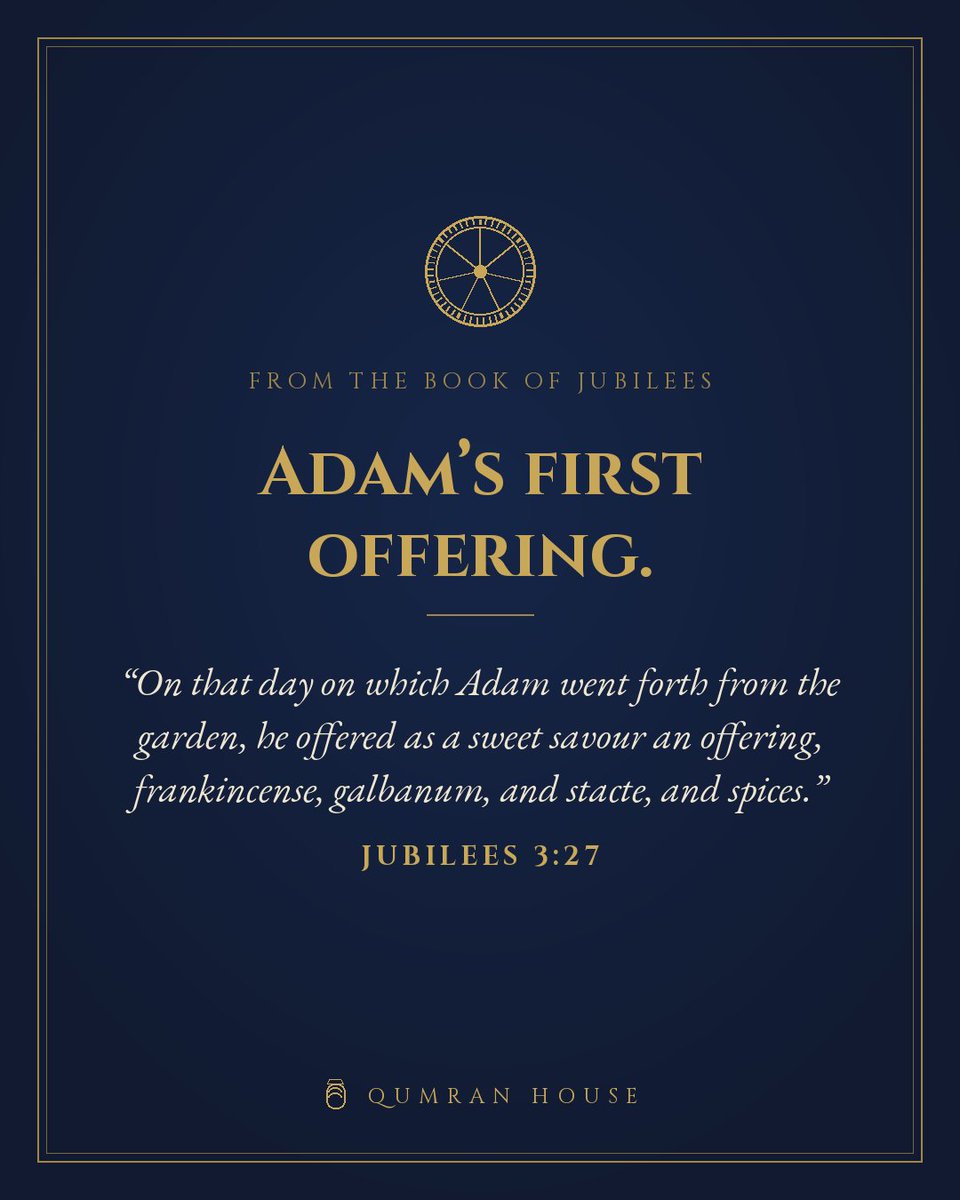
Genesis 4 records the first offerings, from Cain and Abel. Jubilees gives Adam one earlier, on the day he left the garden (3:27). His spices include three of the four in the tabernacle incense of Exodus 30:34.
August Dillmann published a German translation of Jubilees in 1850 to 1851 and the Ethiopic text in 1859. R. H. Charles's English translation came in 1902, and SPCK reissued it in 1917 with a new introduction by G. H. Box.
1 Enoch 52 describes six mountains Enoch saw in the west, made of iron, copper, silver, gold, soft metal and lead (52:2). The angel says they will melt "as wax before the fire" in the presence of the Elect One (52:6).
1 Enoch 83 says Enoch's first vision came "when I was learning to write." He was lying in the house of his grandfather Mahalalel when he saw the heaven collapse and fall to the earth (83:2-3).
At Bethel, Jacob resolved to build a sanctuary. Jubilees says an angel brought him seven tablets showing what would befall him and his sons, and told him, "Do not build this place" (32:21-22).
Fragments of the Book of Giants, an Aramaic story about the sons of the Watchers, were found at Qumran. A later version of it became one of the scriptures of Mani, the founder of Manichaeism.
Jubilees says the Watchers who sinned were bound "in the depths of the earth" (5:6). 2 Peter 2:4 says God cast the angels who sinned into Tartarus, and Jude 6 says they are kept in chains under darkness.