We deliver Pakistani defence news with insights backed by fact-checking and corroborated sources. Follow us to see where Pakistani military trends are heading.
India told Parliament it will join a European sixth-gen fighter consortium "right away." With FCAS collapsing, an Indo-French program could reshape the global combat aircraft order for decades. https://t.co/IzSoBHHc3J
A Russian navigation module first seen in drones over Ukraine turned up three months later in the Shahed wreckage at RAF Akrotiri. The Russia-Iran drone pipeline now runs both ways. https://t.co/62Gw2rEsyv
Ukraine has 201 counter-drone specialists across five Gulf states, shooting down Shaheds at $1,000 a pop instead of burning $3M+ Patriot missiles. The export ban is the only thing between Kyiv and its first major arms deal. https://t.co/dGtKtbU6Wx
Pakistan's Saudi defence pact is now under wartime stress — FM Dar invoked it to Tehran, Field Marshal Munir rushed to Riyadh, and nuclear umbrella talk is in the open. The real test is what comes after. https://t.co/MXI8UBp70x
Give 'em the budget, and our scientists and engineers can do wonders. #Pakistan's Heavy Industries Taxila (HIT) is developing a wheeled self-propelled howitzer for #SaudiArabia's SAMI.
https://t.co/Y4hhKYvIAa
The Pakistan Navy tests an unidentified unmanned surface vessel (USV). This particular model was likely a demonstrator made to validate the LoS data-link and EO/IR.
However, NESCOM alone is developing at least two USVs, one ISR-focused patrol craft and another a stealthy surface-strike system.
https://t.co/TW2F6S0nIG
#PakistanNavy #USV #Drones #Maritime #Navy #NavalNews
The US DoD has quietly added #Pakistan 🇵🇰 to a large-scale contract for the latest AIM-120C8/D AMRAAM missiles. 🚀
While the initial contract value is modest, this is a significant strategic signal from Washington 🇺🇸.
The move may serve as a precursor to a wider F-16V upgrade program for the Pakistan Air Force, which would equip its Vipers with critical AESA radar technology to keep pace with regional advancements.
https://t.co/DbtCBHvbQc
On the surface, the #Saudi-#Pakistan Strategic Mutual Defence Agreement (SMDA) formalizes a decades-old transactional relationship. Saudi Arabia gets security assurances, and Pakistan gets economic support.
But a closer look 🧐 reveals a much larger geopolitical maneuver at play.
https://t.co/PY6W2uP3xd
Lessons from recent conflicts are forcing a major rethink within the Pakistan Air Force (PAF) on how to penetrate India's dense, S-400-led air defenses.
The future isn't just about a next-gen fighter like the J-35. The new doctrine is a "system-of-systems" approach:
🛰️ Satellites for real-time targeting of mobile threats.
💣 Massed munitions, decoys & loitering drones to saturate defenses.
📡 Distributed jamming across the entire force.
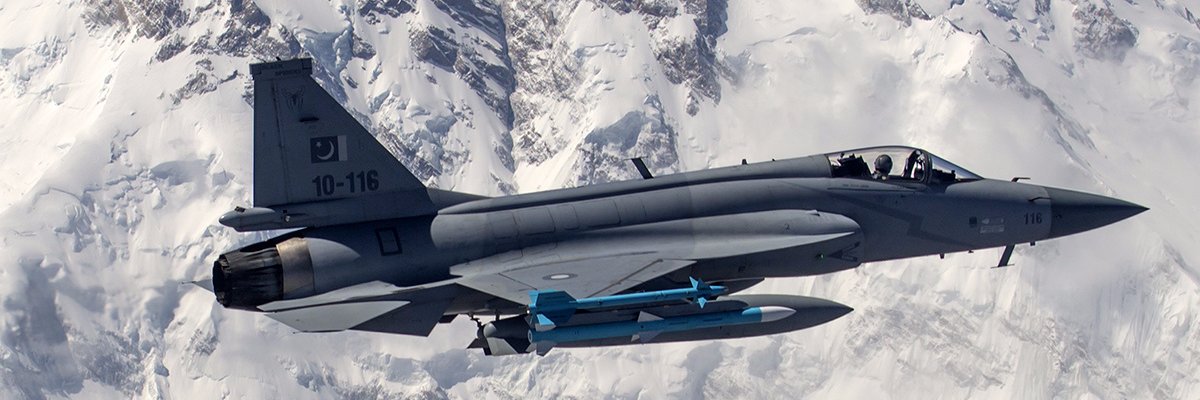
✈️ A new role for the JF-17 as a scalable, low-cost strike asset.
We break down the PAF's evolving offensive roadmap in our latest Quwa Premium analysis.
Read More: https://t.co/pN1wrfYt6B
#PAF #PakistanAirForce #Defence #Strategy #AirWarfare #JF17 #J35 #Geopolitics
India's push for 114 more Rafales isn't just about new jets. It’s a strategic shift towards fleet consolidation that poses a systemic challenge to the Pakistan Air Force (PAF), forcing it to rethink its entire approach to air warfare.
This move prioritizes efficiency and network-centric operations, threatening to erode the PAF's traditional qualitative edge.
In our latest Defence Uncut podcast, we analyze why this is a pivotal moment for the region's military balance.
Listen/Read: https://t.co/leQKaZEhCj
#IAF #PAF #Rafale #MRFA #Defence #Geopolitics #India #Pakistan
Heads up, if you want to ask our editorial lead Bilal Khan questions, follow in a discussion, or get more candid insights, you can follow him here @bilal_quwa
The #PakistanAirForce has an HPM requirement (since 2024 or so), so we unpack how it might pursue it. The goal is likely to address #drone swarming threats.
https://t.co/QyHMQrukeQ
The #PakistanAirForce has an HPM requirement (since 2024 or so), so we unpack how it might pursue it. The goal is likely to address #drone swarming threats.
https://t.co/QyHMQrukeQ
The new Saudi-Pakistan 🇸🇦🇵🇰 defence pact is far more than a renewal of old vows. It's a calculated move to recalibrate regional security, and the official statements don't tell the full story.
What most analysts are missing:
✈️ Funding Next-Gen Arms: Could this unlock Saudi financing for Pakistan's J-35 stealth fighter & HQ-19 SAM ambitions?
🧭 A Westward Pivot: Is Pakistan being incentivized to shift its strategic focus from India to the Middle East?
🇺🇸 The US Factor: We argue this pact likely has tacit US approval to re-establish a stable conventional deterrence in South Asia.
To understand the full financial and strategic implications of this program, you need to read beyond the headlines.
🔑 Access our complete analysis with Quwa Premium.
https://t.co/TGzPK9qcd5
#Pakistan #SaudiArabia #Defence #Geopolitics #KSA #Military
Two key insights from Pakistan's $406M PIESAT satellite deal reveal its strategic depth.
First, the deal was signed by the Ministry of Food Security - a deliberate structural maneuver to bypass sanctions on Pakistan's formal space agency. This positions the program as a national asset, not just a military one.
Second, the force-multiplying effects are direct. The high-resolution terrain maps generated by the constellation will significantly improve the guidance systems - like TERCOM - for Pakistan’s existing cruise missile inventory, enhancing their precision and ability to evade defenses.
For the full analysis of the technology and doctrine, listen to the Defence Uncut podcast:
https://t.co/Cfi2zRFs8b
The strategic imperative is to compress the OODA loop, transitioning Pakistan’s intelligence enterprise from a human-paced analytical cycle to an automated, near-instantaneous process.
The capital investment required for this ground architecture will likely equal or exceed the initial satellite procurement. For industry, this necessitates strategic partnerships focused on deep integration and technology transfer.
The complete analysis is available in our Quwa Premium report: https://t.co/36EsjsOsnh
#MarketIntelligence #Aerospace #Military
Pakistan's doctrinal shift towards preemptive conventional deterrence, driven by the new Army Rocket Force Command (ARFC), is being enabled by the ~$406M PIESAT satellite agreement.
This investment in space-based ISR, however, creates a corresponding – and arguably larger – requirement to develop the terrestrial ground segment necessary to operationalize the data flow at machine speed. Our new report analyzes this multi-billion-dollar market opportunity.
Full Report: https://t.co/36EsjsOsnh
#Pakistan #Defence #GEOINT #C4ISR #ARFC
Achieving a high-tempo targeting cycle for the ARFC is contingent upon a comprehensive modernization of its ground support infrastructure.
Key capability gaps that present vendor opportunities include:
> Resilient X/Ka-band data downlink networks
> High-Performance Computing (HPC) for SAR processing
> AI/ML-driven GEOINT for automated target recognition (ATR)
>Secure, standardized cross-domain dissemination systems
#SATCOM #DefenceTech #EW #AI
The Shahpar-III program is a long-term bet on self-reliance. For Pakistan, success means reducing dependency on foreign suppliers for critical tech, cultivating a high-tech industrial base, and ultimately, creating a formidable export product. It's a play for the future.
Looking at ambitious programs like the Shahpar-III, what is more critical for long-term success: perfecting the technology of the platform itself, or mastering the complex integration of its weapons and sensor ecosystems?
https://t.co/3ccZ3YOvFd
Let's do a deep-dive on #Pakistan's Shahpar-III. It's more than just a drone; it's a case study in strategic ambition and the quest for self-reliance in modern warfare. #Shahpar#Drones#Defence
1/ To understand the Shahpar-III, you have to look beyond the airframe. At its core, it's a Medium-Altitude Long-Endurance (MALE) drone in the 1,650 kg class, placing it alongside proven international platforms. But that's just the start. 🧵
2/ The true strategy is in the ecosystem. The program isn't just about building a drone; it's about creating a suite of indigenous systems to support it:
Smart munitions 🎯
Advanced surveillance pods 👁️
Electronic Warfare (EW) packages 📡
3/ This integrated approach allows for a range of complex missions far beyond simple surveillance. Think of it as a multi-tool for the modern battlefield, capable of everything from maritime patrol to electronic attack.
4/ This focus on an entire ecosystem is a massive leap. It’s the difference between simply buying a tool and building the entire factory. This is what strategic autonomy in the 21st century looks like. #DefenceTech #UAV #Military