Upcoming R3i Webinar | Save the Date!
Join us on June 22 at 2:00 PM GMT for a live discussion on: "Incretin Mimetics in Cardiometabolic Disease: How Far Can They Go in Addressing Residual Risk?"
Incretin-based therapies are transforming the management of obesity, diabetes, and cardiovascular disease. Join Prof. Michel Hermans and Prof. Peter Libby as they explore recent advances in the field and their potential implications for reducing residual cardiovascular risk.
The webinar will be available in English, Spanish and Japanese.
Unable to attend live? Register and watch on demand.
📅 June 22, 2026
🕑 2:00 PM GMT
Register here ⬇️
🇬🇧 English: https://t.co/CT9I5NCS5j
🇪🇸 Spanish: https://t.co/YXVoIdXsJt
🇯🇵 Japanese: https://t.co/erHwwqBrPD
#R3iFoundation #ResidualRisk #Diabetes #CardiometabolicHealth #IncretinTherapies
Join Prof. Michel Hermans and Prof. Peter Libby for a discussion on the evolving role of incretin mimetics in cardiometabolic disease and their potential impact on residual cardiovascular risk.
📅 June 22, 2026
🕑 2:00 PM GMT
Unable to attend live? Register and watch on demand.
Register here ⬇️
🇬🇧 English: https://t.co/CT9I5NCS5j
🇪🇸 Spanish: https://t.co/YXVoIdXsJt
🇯🇵 Japanese: https://t.co/erHwwqBrPD
#R3iFoundation #ResidualRisk #Diabetes #CardiometabolicHealth #IncretinTherapies
Can incretin-based therapies help address residual cardiovascular risk beyond their effects on glucose control and weight?
Join Prof. Michel Hermans and Prof. Peter Libby for a live discussion of the latest evidence and its implications for cardiometabolic disease management.
📅 June 22, 2026
🕑 2:00 PM GMT
Unable to attend live? Register and watch on demand.
Register here ⬇️
🇬🇧 English: https://t.co/CT9I5NDpUR
🇪🇸 Spanish: https://t.co/YXVoIdY0z1
🇯🇵 Japanese: https://t.co/erHwwqBZFb
#R3iFoundation #ResidualRisk #Diabetes #CardiometabolicHealth #IncretinTherapies
Individuals with both high lipoprotein(a) and high BMI (>30 kg/m²) face a two-fold higher relative risk for ASCVD. ⚠️
Including lipoprotein(a) in treatment decisions could help identify high-risk individuals who would benefit most from novel weight-lowering pharmacotherapies.
Learn more: "Consider lipoprotein(a) when deciding treatment options for individuals with high body mass index" ➡️ https://t.co/LE06pKh3ZJ
#MedicalResearch #Cardiovascular #CardiovascularRisk #LipoproteinA #ASCVD
Dementia is an umbrella term for cognitive and behavioral symptoms caused by specific diseases, with Alzheimer’s disease being the most common. 🧬
Growing evidence suggests that cardiovascular and metabolic risk factors may also contribute to cognitive decline and dementia risk.
Visit https://t.co/GWOAH6026d to explore the latest R3i content on Alzheimer’s disease, dementia, vascular health, and brain health.
#AlzheimersAndBrainAwarenessMonth #AlzheimersDisease #Dementia #BrainHealth #ENDALZ
Upcoming R3i Webinar | Save the Date!
Join us on June 22 at 2:00 PM GMT for a live discussion on: "Incretin Mimetics in Cardiometabolic Disease: How Far Can They Go in Addressing Residual Risk?"
Incretin-based therapies are transforming the management of obesity, diabetes, and cardiovascular disease. Join Prof. Michel Hermans and Prof. Peter Libby as they explore recent advances in the field and their potential implications for reducing residual cardiovascular risk.
📅 June 22, 2026
🕑 2:00 PM GMT
Sign up here! ➡️ https://t.co/We0xBcsFvR
#R3iFoundation #ResidualRisk #Diabetes #CardiometabolicHealth #IncretinTherapies
Higher remnant cholesterol is significantly associated with higher rates of ischemic stroke in patients with atrial fibrillation (AF). 📈
This risk persists even when LDL-C is well controlled and despite standard anticoagulation. Managing lipid profiles beyond LDL-C is important for mitigating stroke risk.
Learn more: "Remnant cholesterol and residual stroke risk in atrial fibrillation" ➡️ https://t.co/LE06pKh3ZJ
#MedicalResearch #RemnantCholesterol #AtrialFibrillation #CardiovascularHealth
Alzheimer’s disease and other forms of dementia affect millions of people worldwide, highlighting the urgent need for better prevention strategies.🌏
While there is no cure, current treatments can temporarily slow symptom progression and improve quality of life for patients and caregivers. Early intervention remains our best tool.
New research suggests that elevated remnant cholesterol may be associated with a higher risk of all-cause dementia, Alzheimer’s disease, and vascular dementia, particularly in individuals with type 2 diabetes.
Read more about the study, "Study links high remnant cholesterol with dementia risk" ➡️ https://t.co/LE06pKh3ZJ
#AlzheimersAndBrainAwarenessMonth #AlzheimersDisease #Dementia #CardiovascularHealth #ENDALZ
New insights from the Essence-TIMI 73b substudy: Despite substantial reductions in triglycerides with olezarsen, coronary plaque progression was not significantly different from placebo over 12 months.🔬
A neutral effect on plaque progression does not rule out potential cardiovascular benefit. Further clinical outcomes studies are essential to determine the drug's true impact.
Learn more about the results of this study on our website. ➡️ https://t.co/Pmbpaod1M2
#MedicalResearch #ClinicalTrials #Cardiovascular #CVD #Olezarsen
June is Alzheimer’s and Brain Awareness Month. 🧠
Dementia is the 7th leading cause of death worldwide, with 57 million people currently affected. There is an urgent need to advocate for better prevention strategies, especially in low- and middle-income countries.
Visit https://t.co/GWOAH60zVL to explore the latest R3i content on Alzheimer’s disease, dementia, vascular health, and the connection between cardiovascular risk and brain health.
#AlzheimersAndBrainAwarenessMonth #AlzheimersDisease #Dementia #DementiaCare #ENDALZ
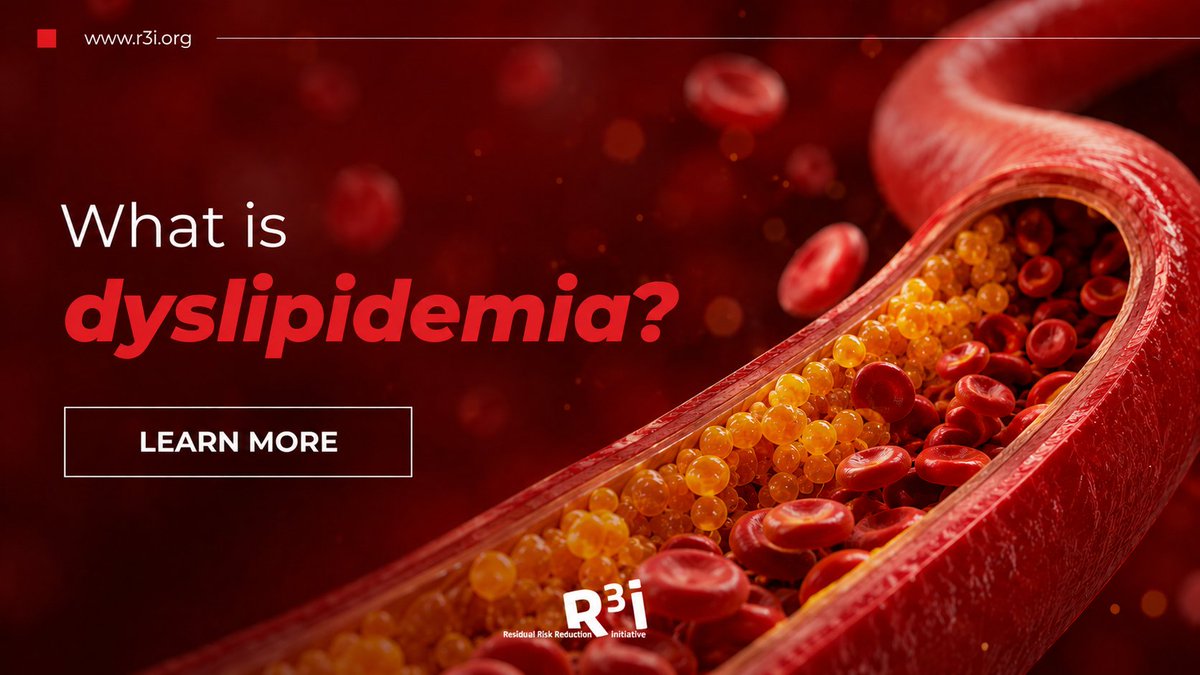
Many people are unaware they have dyslipidemia as it often lacks obvious symptoms until complications arise. ⚠️
Severe cases may present unusual signs like Xanthomas or Arcus senilis, but routine blood tests remain the best tool for discovery. Managing high LDL cholesterol levels is critical to preventing Coronary Artery Disease.
Find more relevant information and recent medical research about dyslipidemia on our website. ➡️ https://t.co/GWOAH6026d
#Dyslipidemia #CardiovascularRisk #CardiovascularDisease #CAD #PAD
The Ez-PAVE trial reaffirms the importance of intensive LDL-C lowering in ASCVD patients.
Targeting an LDL-C level of <55 mg/dL significantly reduced the rate of major cardiovascular events by one-third. Intensive combination therapy is vital for patients at very high risk of recurrent events.
Learn more: "Ez-PAVE demonstrates cardiovascular benefit of lower LDL-C target" ➡️ https://t.co/LE06pKhBPh
#MedicalResearch #Cardiovascular #ASCVD #CardiovascularDisease #CVD #Dyslipidemia
Dyslipidemia is generally divided into primary (inherited) and secondary (acquired) types. 🧬
From Familial Hypercholesterolemia to obesity-related causes, these conditions impair how the body metabolizes LDL cholesterol or triglycerides. Early classification is key to addressing the specific nature of lipid dysregulation.
Find more relevant information and recent medical research on dyslipidemia on our website. ➡️ https://t.co/GWOAH60zVL
#Dyslipidemia
Failure to achieve non-HDL-C targets is associated with significantly higher residual cardiovascular risk, even when LDL-C is well controlled.
The Gulf CALLS cohort showed that patients reaching non-HDL-C goals had a 25% lower risk of CV events. We must look beyond LDL-C to address the impact of elevated triglycerides on residual risk.
Learn more: "Insights into residual cardiovascular risk in the Arabian Gulf region" ➡️ https://t.co/LE06pKhBPh
#MedicalResearch #Cardiovascular #CardiovascularRisk #ResidualCardiovascularRisk
Dyslipidemia is a major risk factor for cardiovascular disease and complications such as atherosclerosis.
Management requires an individualized approach targeting specific lipid abnormalities while also considering comorbidities. A multidisciplinary approach is essential for comprehensive patient care and optimal cardiovascular health.
Find more relevant information and recent medical research on dyslipidemia on our website. ➡️ https://t.co/GWOAH60zVL
#Dyslipidemia #Cardiovascular #CardiovascularHealth #CardiovascularDisease #CVD
Guidelines have moved beyond cholesterol to encompass other key lipids, notably triglycerides and Lp(a).
There is now global alignment on a lower LDL-C goal of <55 mg/dL for secondary prevention. Achieving this requires combining non-statin options with maximally tolerated statin therapy. Implementation in routine clinical practice remains the major challenge.
Read the complete editorial on our website: "US and European guidelines on dyslipidemia align" ➡️ https://t.co/wsGSFKCGs0
#R3i #ResidualRisk #MedicalResearch #ClinicalTrials #Dyslipidemia
The R3i is a global academic non-profit addressing the high residual risk of vascular complications in patients with atherogenic dyslipidemia. Our multidisciplinary team of 43 experts works to redefine care beyond current standards.
Learn more ➡️ https://t.co/GWOAH6026d
#R3i #ResidualRisk #ResidualRiskReduction #MedicalResearch #AtherogenicDyslipidemia
Stroke survivors have the power to reduce their risk of a second event. 🛡️
Identifying the underlying cause and personal risk factors is the first step. Monitoring blood pressure, maintaining a healthy diet, and staying active can make a meaningful difference in long-term recovery.
Find more relevant information and recent medical research about cardiovascular and brain health on our website. ➡️ https://t.co/GWOAH6026d
#AmericanStrokeAwarenessMonth #StrokeMonth #Stroke #Cardiovascular #CardiovascularHealth
Residual stroke risk increases when both hypertriglyceridemia and inflammation are present.
Data from the Tokyo Women’s Medical University Stroke Registry shows that TG ≥150 mg/dL and IL-6 ≥4.0 pg/mL are cumulative risk factors, even when LDL-C is controlled. These results support the need to target both pathways for effective secondary prevention.
Learn more about the results of this study on our website. ➡️ https://t.co/tK6J91OMrJ
#MedicalResearch #ClinicalTrials #Cardiovascular #Hypertriglyceridemia #StrokeRisk
Prof. César Rodríguez Gilabert discusses if changes in lifestyle can impact residual vascular risk. ➡️ https://t.co/BP7S0IETR3
Visit https://t.co/OS9JVVGWLy for more info.
#R3i#ResidualRisk#ResidualVascularRisk#MedicalResearch