The physics of resonance is poetry in motion.
f = (1 / (2π)) * √(k / m)
Energy transfer isn't about how hard you hit; it’s about how well you match. When the driving frequency aligns with the system’s natural frequency, the amplitude peaks and the magic happens.
In the first half, 412Hz and 512Hz are out of phase—silence. In the second, 412Hz meets its match and the ping pong ball dances.
A perfect reminder that the universe only listens when you're on the right wavelength.
Faraday's Law of Induction ✍️
It describes the phenomenon of how a changing magnetic field around a wire can "force" electricity along its length. As the magnet is moved up and down through the wire coil, the magnetic flux (the number of lines of force) is constantly changing. This constant change leads to an electromotive force (EMF), which behaves like a battery, providing the necessary power for electrons to flow and generate electrical current. The video demonstrates that electricity is not produced simply by placing a magnet near the wire but rather by moving the magnet. The rate at which the magnet is moved dictates how much electricity is created. Nevertheless, as seen from the chart, the movement of electricity ceases completely when the magnet remains stationary, regardless of whether it is inside the coil.
Video 📸: py6cj
Los ositos de gominola son los protagonistas de una experiencia de cátedra de Física y Química para abordar reacciones químicas que no dejará indiferente a nuestro alumnado. Para saber más: https://t.co/5rYATfmXFw
Un artículo publicado en Journal of Chemical Education aborda los ensayos a la llama con disoluciones de sales metálicas, un experimento habitual en Física y Química, señalando algunos aspectos de interés para mejorar la explicación y comprensión de su fundamento teórico.
Según se aborda en el artículo, las transiciones electrónicas generalmente responsables del color característico de la llama no se producen en los cationes del elemento metálico, sino en los átomos neutros excitados del mismo en fase gas, los cuales se forman in situ en la llama a partir de los correspondientes cationes presentes en disolución. Entre los procesos que tienen lugar se incluye la transferencia electrónica del anión al catión, que puede no ser total, con lo que también pueden intervenir cationes con menor carga que la que tienen en disolución.
Además, el artículo recomienda el uso de la base de datos Atomic Physics del @NIST, donde se puede encontrar interesante información al respecto: https://t.co/o6s1xYUw3f
El artículo, de gran interés para el profesorado de Física y Química, está disponible en libre acceso en:
https://t.co/AqEv0sSsjT
¿Y si recorremos la historia de la física y la química experimentando? Ya disponible la reseña de algunas de las actividades didácticas que hemos realizado este curso en la sede Capital 1 del Programa de Enriquecimiento Educativo para Alumnado con Altas Capacidades de la Comunidad de Madrid. Ante el estimulante desafío docente que supone tratar de catalizar el talento científico de nuestros jóvenes, la historia de la ciencia y la experimentación son dos valiosas aliadas: https://t.co/8cdztbMB9w #PEAC #CREACIM
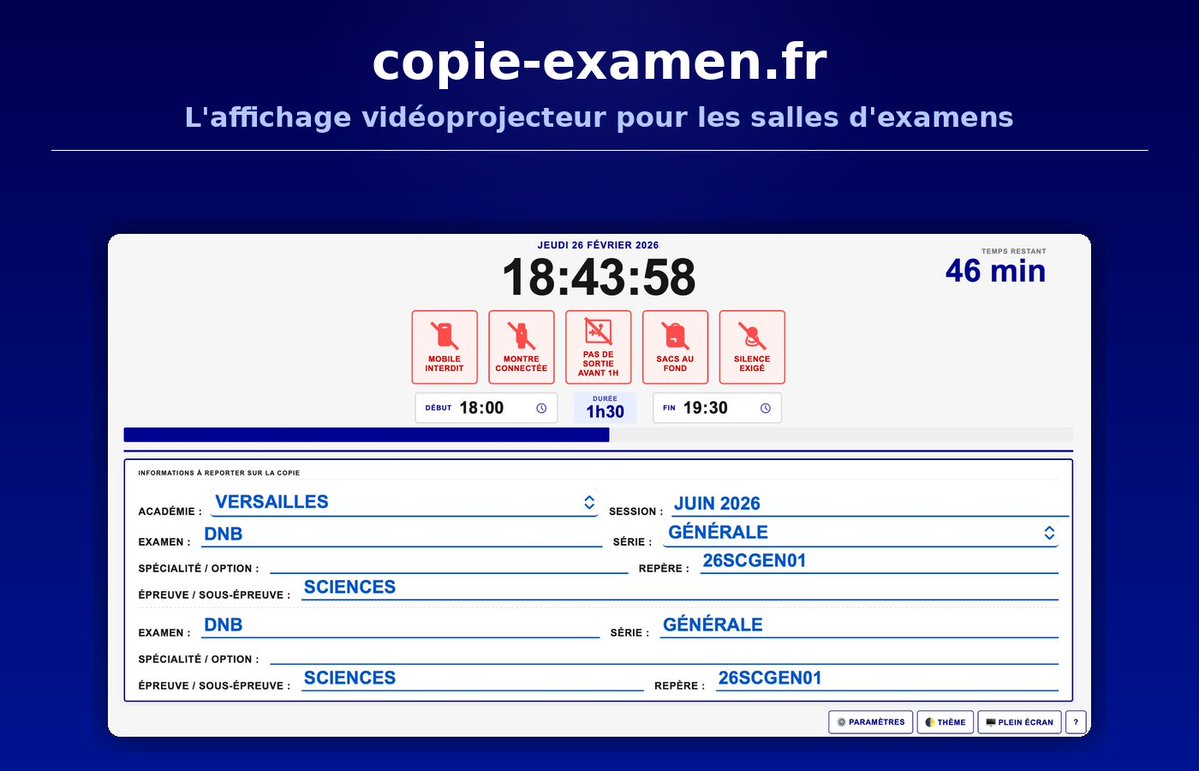
J'ai créé un outil gratuit pour les salles d'examen 🎓
https://t.co/wcUL7XrruK affiche sur vidéoprojecteur :
🕐 L'heure + temps restant
📋 Les infos à reporter sur la copie
🚫 Les consignes
Sans installation. Sans compte.
👉 https://t.co/ReLgVE3X0P
#Bac2026#Brevet2026
[#MardiEDD]🌍 Cet article proposé par l'@HG_acVersailles propose une série de ressources pédagogiques pour travailler sur les ODD
👉https://t.co/8gr4ghu8lb
#ChemDoodle v12.10 includes a much more powerful & easy to use Templates widget and system, an updated UNO plugin for round-trip editing with the latest #LibreOffice builds on Windows, macOS & Linux, & new settings for finer control over drawing functions. https://t.co/JcXxK8ufVS
Laboratorio virtual de equilibrio químico. Simulador interactivo para analizar cómo cambia un sistema al variar concentración, presión o temperatura, priorizando el razonamiento con Q frente a reglas automáticas. https://t.co/45P1v17OT1
#Química#Bachillerato
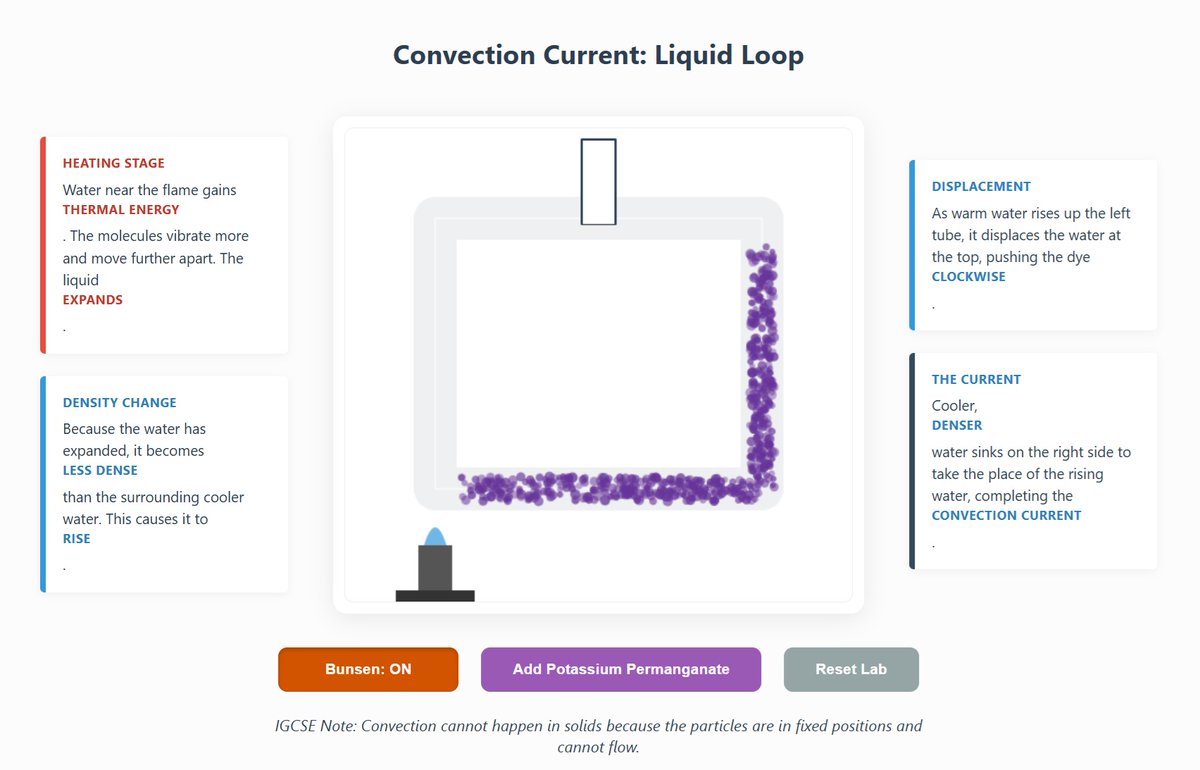
Hi all. I have made a simulation to show convection in liquids. It is the classic potassium permanganate demo. I hope you find it useful 🙂
https://t.co/UDcQlKlzWJ
🔴 FLASH | SALOPARD GENIAL 🧠
Un jeune a installé une caméra dans une calculatrice, l'a connectée à ChatGPT lui permettant d'avoir systamétiquement la bonne réponse.
https://t.co/JjTOsAcou5
#Santé🩺| 📍 En immersion au CEA, découvrez aujourd’hui le Laboratoire d’Architecture des Systèmes Photoniques, basé sur le centre @cea_grenoble. Ici, on développe les détecteurs à rayons-X et rayons gamma qui équiperont les hôpitaux de demain.
Oriane vous fait visiter !👇
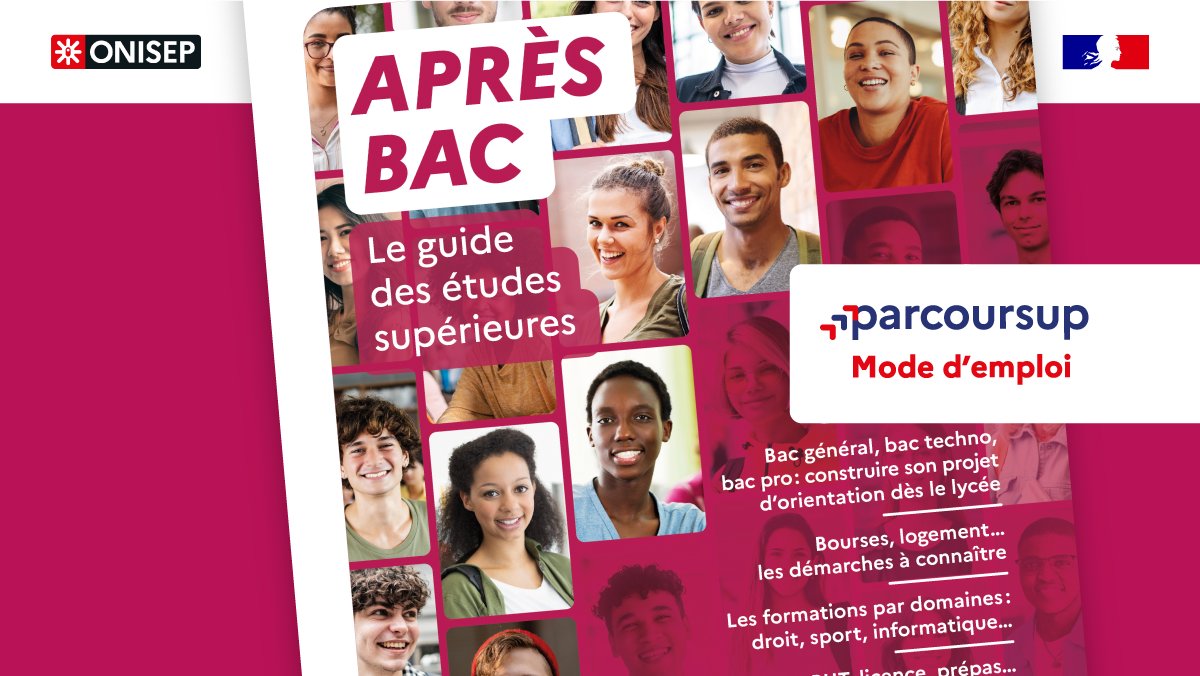
📢« APRÈS BAC », coll. #DossiersOnisep vient de paraître !
➡️ Pour permettre aux futurs bacheliers de faire leurs choix : les formations de l'#enseignementsup classées par domaine, un dossier #Parcoursup et des infos sur la vie étudiante 👉https://t.co/SZw5B5xW8p
#orientation
📐Les fiches de géométrie sont celles qui m'ont demandé le plus de travail. Pas évident de trouver un format synthétique qui soit en accord avec la mise en page choisie.
Très content du résultat !
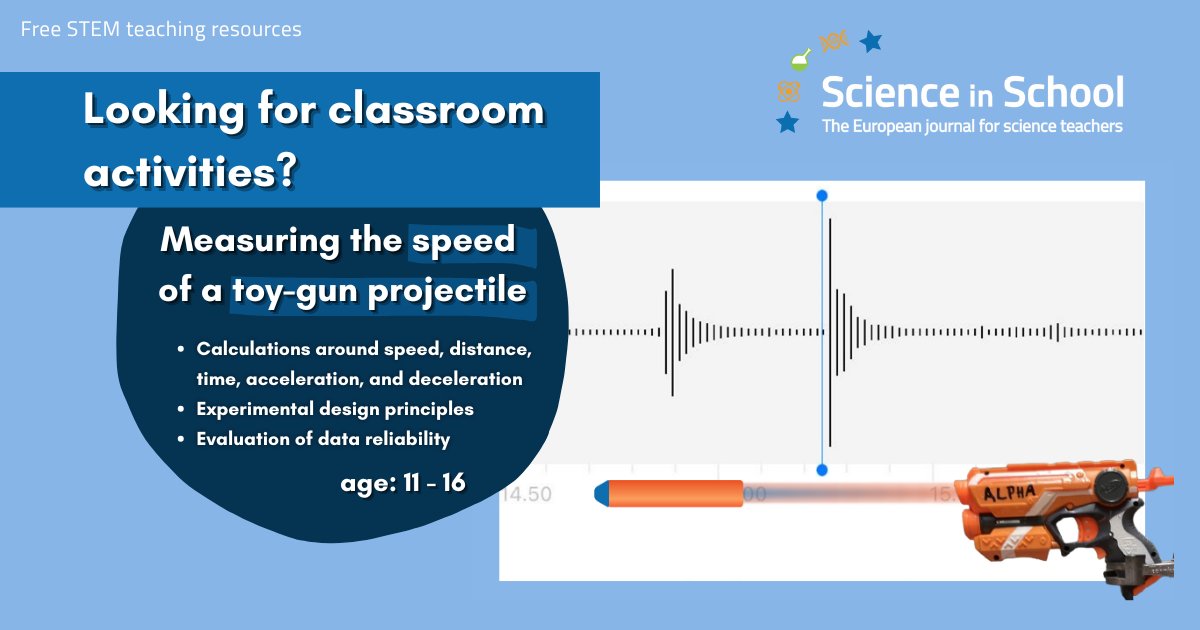
Teach speed, distance & time calculations the fun way!
All you need: a toy gun with foam projectiles, a target, and a voice recorder app on your phone.
The full teaching resource: https://t.co/VMier0aZXF
🚀 Et si chaque enseignant créait son propre chatbot pédagogique?
Didak’Bot : configurable, simple, éthique et pensé pour la classe.
Une innovation approuvée par notre équipe IA.
Notre article:
👉 https://t.co/XzcNcRCQGQ
@DANE_971@AcGuadeloupe#IA
Radioactivity experiments: safe, hands-on, and low-cost!
Use potassium-40 − an isotope naturally found in potassium carbonate (potash) − and a G-M pancake detector to explore radioactivity in the classroom. 🤩
👉https://t.co/sbAJO3MjU8
#ScienceInSchool#STEMeducation




![histgeo_edu_num's tweet photo. [#MardiEDD]🌍 Cet article proposé par l'@HG_acVersailles propose une série de ressources pédagogiques pour travailler sur les ODD
👉https://t.co/8gr4ghu8lb https://t.co/rx7ckadgdd](https://pbs.twimg.com/media/HAexRrAWAAAfE9D.jpg)