.Christian.Husband.Father.Engineer.Technical Book Author.Trump 2020 Electoral College.Omni-Conservative.Director-NHCRWA. Fmr US Congressional Candidate. No DMs.
The US Dept of Energy has a budget of roughly $49,000,000,000 (that's billions). It started as a temporary agency under President Carter.
That is roughly the same as it would take to drill and complete 327 DEEPWATER EXPLORATION wells.
You choose. A $billion bureaucracy or more oil? @SecretaryWright@ChrisAWright_
Bats are absolute proof of God.
Evolution could never engineer the systems Bats use every day to stay alive.
Only a Supreme Intelligence could design this.
Thread👇
Oil price projections depending on various scenarios for re-opening the Straight of Hormuz. $80+ pricing (paper) is here through the rest of the year, no matter what. Note that "front month" or "wet" barrels (not paper) are significantly higher.
Hot off the (Claude) press June 2 2026--we'll see how it 'ages'. #EnergyMatters @JoeSquawk #Oil #StraightofHormuz
252 years ago today, the British Empire closed the busiest port in North America to teach one colony a lesson, and accidentally turned thirteen colonies into one country.
On December 16, 1773, a few dozen Bostonians had thrown 342 chests of East India Company tea into the harbor. The damages came to roughly £9,659. Lord North, the Prime Minister, decided to make an example. Parliament passed the Boston Port Act. King George III signed it on March 31, 1774. It took effect at dawn on June 1.
The Royal Navy moved warships into Boston Harbor and dropped anchor. Every dock was sealed. No ship could enter or leave. Not a barrel of flour, not a load of firewood, not a letter. The port would stay closed until Boston paid the East India Company in full and promised to behave.
The intent was to isolate Massachusetts and force her neighbors to watch her starve.
What happened instead is one of the strangest political miracles in modern history.
Down in Williamsburg, a 31 year old burgess named Thomas Jefferson and a few friends, including Patrick Henry and Richard Henry Lee, pulled a dusty old book off the shelf of the House of Burgesses library, a record of how the Long Parliament had once handled a tyrant, and proposed that the entire colony of Virginia observe June 1, 1774 as a day of "fasting, humiliation, and prayer" in solidarity with Boston.
The Royal Governor, Lord Dunmore, dissolved the House two days later for treason. The burgesses simply walked across the street to the Raleigh Tavern and kept meeting.
June 1 came. In Virginia, every Anglican church was draped in black. The bells tolled all day. Plantation owners shut their doors. Jefferson wrote later that "the effect of the day through the whole colony was like a shock of electricity."
The same shock ran through every colony south of New England. Wagon trains of food started rolling toward Boston from as far away as Charleston. The Marblehead fishermen offered to give the Boston merchants the use of their docks for free. A Quaker miller in Pennsylvania sent a hundred barrels of flour. Israel Putnam personally drove a herd of sheep from Connecticut to feed the city.
Three months later, 56 delegates from twelve colonies sat down together in Philadelphia. It was called the First Continental Congress. None of them had ever met under one roof before.
Parliament wanted to punish a city. It created a nation.
252 years ago today, in a harbor full of Royal Navy frigates, the American Revolution stopped being a Massachusetts problem.
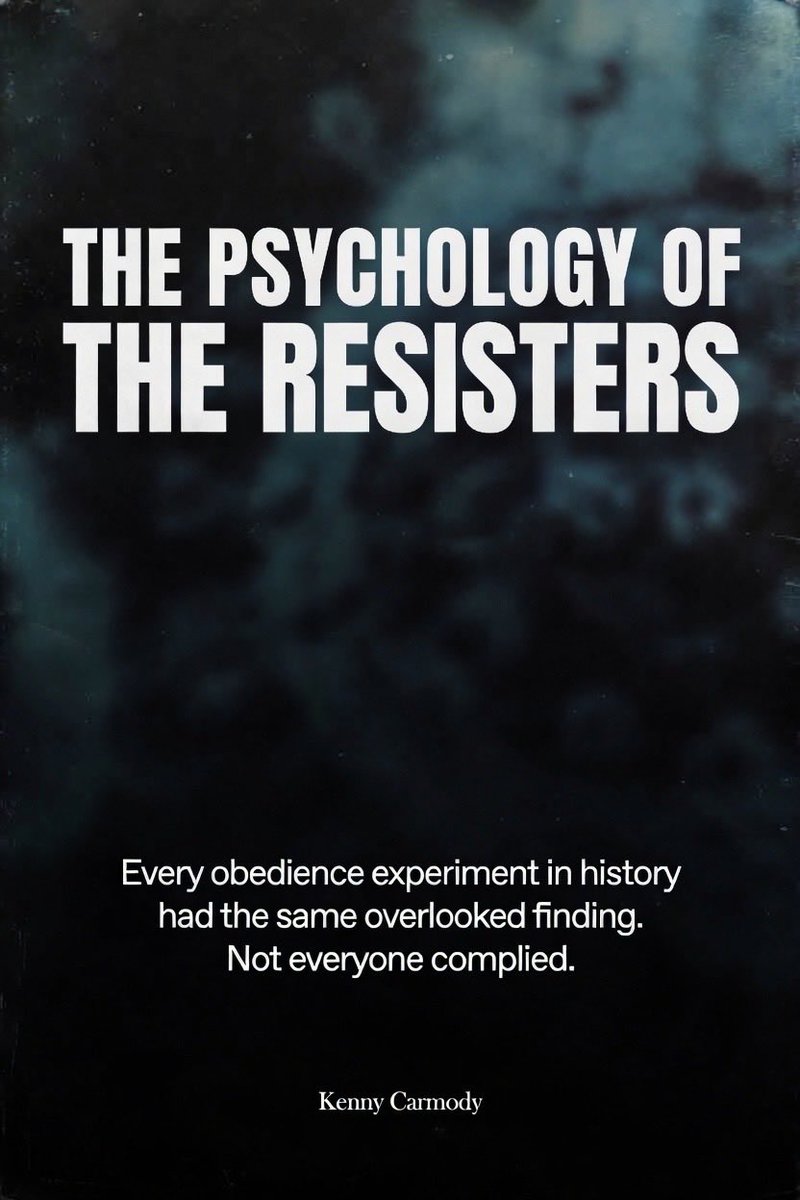
Every obedience experiment in history had the same overlooked finding.
Not everyone complied.
In Milgram’s lab, 35% refused to deliver the final shock. In Asch’s line experiments, 25% never conformed, not once, across any trial. In Zimbardo’s prison, at least one guard refused to dehumanize. One prisoner demanded a lawyer instead of a doctor and broke the psychological frame entirely.
We spent decades studying the ones who obeyed.
We barely asked what made the others different.
That question matters more now than it ever has.
The resisters in the COVID era were not difficult to find. Physicians who filed exemptions and lost their licenses. Nurses who walked away from careers rather than mandate patients into decisions they hadn’t genuinely chosen. Scientists who published contrary data knowing what it would cost them. Parents who stood alone at school board meetings. Ordinary people who simply said, quietly, without drama , no.
What made them different?
Research consistently identifies a cluster of factors. Not personality traits you either have or don’t. Situational and cognitive patterns that can be cultivated.
First: prior reflection on authority. The resisters had usually thought, before the crisis, about the limits of institutional trust. They weren’t cynics. They were people who had already asked the question “under what conditions would I refuse?” before anyone was asking them to comply.
Second: a concrete reference point outside the consensus. A value, a principle, an oath, a relationship that existed independently of the institutional structure demanding compliance. Something the system couldn’t reach.
Third: at least one other person. Milgram found that a single dissenting confederate reduced compliance dramatically. The resisters rarely stood entirely alone. They found each other. Sustained each other. Gave each other permission.
Fourth: the willingness to tolerate social pain. Not immunity to it. Tolerance of it. They felt the pressure. They felt the exclusion. They chose the discomfort of integrity over the comfort of belonging.
None of this is innate. All of it is learnable.
The most important thing Milgram, Asch, and Zimbardo taught us is not how fragile conscience is.
It’s that conscience can hold, if you’ve trained it, named its limits, and found even one other person willing to hold theirs beside you.
Build that now. Because the experiment is always running.
Until then stay humble.
Ça fait un moment que je me pose des questions sur le bilan (provisoire) de Milei en Argentine. On lit tout et son contraire. Alors j'ai arrêté de lire les commentaires et j'ai regardé les chiffres bruts.
L'Argentine, c'est l'expérience grandeur nature que les économistes attendaient depuis 50 ans. Même pays. Même peuple. Même culture. On change UNE variable : la méthode économique.
Avant : des décennies de gestion étatiste et péroniste, "redistributive". Le résultat concret ? 211% d'inflation, 42% de pauvreté, un État en déficit permanent qui finance son train de vie en faisant tourner la planche à billets.
Puis arrive Milei. Méthode inverse, brutale, assumée : on coupe, on déréglemente, on arrête d'imprimer.
Deux ans plus tard (photo à son arrivée (fin 2023) vs aujourd'hui) :
Inflation annuelle : 211% → 31%
Inflation mensuelle : 25% → ~2%
Déficit public : −5% du PIB → +1,8% (excédent)
Croissance : −1,6% → +4,4%
Pauvreté : 42% → 28%
Sans débat. Jugez par vous-mêmes.
Et le point essentiel : ces gains ne vont pas "aux riches" ou "aux marchés". Ils vont d'abord aux plus pauvres.
L'inflation est l'impôt le plus injuste qui existe — elle frappe ceux qui n'ont aucun actif pour se protéger. La diviser par 7, c'est rendre du pouvoir d'achat à ceux d'en bas. Et 14 points de pauvreté en moins, ce sont des millions de gens, pas une ligne Excel.
Pendant un siècle, on a expliqué aux Argentins que l'État les protégerait en dépensant toujours plus. Résultat : un des pays les plus riches du monde en 1910, ruiné. On vient d'inverser la méthode. Regardez le résultat.
À un moment, il faut accepter ce que les faits racontent : sur le terrain économique, la méthode libérale a livré en deux ans ce que des décennies de socialisme avaient promis sans jamais tenir. Et ça profite d'abord aux plus modestes.
On peut détester le style de Milei — la tronçonneuse, l'outrance, les sorties improbables, il n'a rien d'un homme d'État classique. Mais on ne juge pas une politique économique au style de celui qui la mène. On la juge à ce qu'elle fait à la vie des gens.
Et les chiffres ont parlé.
“They will put you out of the synagogues; yes, the time is coming that whoever kills you will think that he offers God service.”
John 16:2 NKJV
https://t.co/oU4wg5AMOg
To paraphrase Voltaire, those who believe in absurdities can commit atrocities without ever thinking they’re doing anything wrong.
What would happen if there were an omnipotent AI that was trained to believe absurdities?
Grok is the only AI that is laser-focused on truth.
Wars and rumors of wars. Cease-fires. MOUs (unsigned). Red Lines. Additional IRGC attacks and responses. "Peace" when there is no peace.
Two things matter.
1) Today's 45 and under generations HAVE NEVER HAD gasoline lines in their lifetimes. Two weeks and they will +/-. (Older gens are retiring.)
2) Straight of Hormuz (SoH) remains closed.
EVERYTHING ELSE IS JUST NOISE.
@CNBC@JoeSquawk
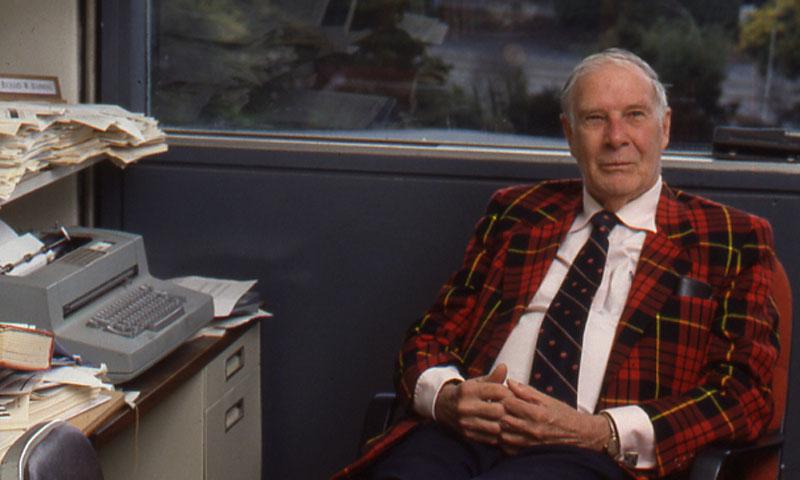
A mathematician at Bell Labs noticed that the scientists who won Nobel Prizes and the ones who never amounted to anything were equally smart, equally hardworking, and equally credentialed, and the only thing that separated them was a single question almost nobody is brave enough to ask themselves before they die.
His name was Richard Hamming.
He spent 30 years at Bell Labs, in the same building as John Tukey, Walter Brattain, and a long list of physicists who took home Nobel prizes for work they did down the hall from his office, including the legendary Claude Shannon.
His invention of error-correcting codes made modern computing possible. He has won the Turing Award. And all the while he was creating his own legacy he was secretly doing a study on the people around him.
The study was straightforward. 2 Teams. The legends and the lost. Same I.Q.s. Degrees same. Same desk hours. Same access to the world’s best resources.
And yet, at the end of 40 years in their careers, one group had changed entire fields, and the other group could not be remembered by their own colleagues five years after retirement. He wanted to discover what the actual difference was.
In March 1986, he stood before 200 researchers in a Bellcore auditorium and told them what he had seen.
He said it all came down to one question. And hardly anyone he ever met was willing to ask it directly.
He called it the Friday-afternoon ritual. He spent years blocking out his Friday afternoons and not doing anything productive with them every week. No experiments. No meetings. No deliverables.
He called it Great Thoughts Time. He sat down with a notebook and asked himself a couple of questions in order. What are the most relevant problems in my discipline? And why I am not working on either of them.”
Most weeks, the answer was the same, he said. For a week now he had marched confidently in a direction he did not think was the most important direction. He was a goer. He worked a bit. He was getting clean results that would publish in respected journals. (
And for five days straight he'd been lying to himself about whether any of it mattered.
The reason almost nobody does this ritual is because the honest answer is unbearable. The thing is that if you sit down on a Friday afternoon and say out loud that you are not working on the most important problem in your field, now you have to do something about it.
You have an immediate change in direction, or you have to keep lying to yourself every week from that point on. Most people choose the lie.
In the short term it’s cheaper, but over a career it’s more expensive.
Hamming took the ritual a step further in the Bell Labs cafeteria. He began approaching scientists he barely knew, asking them what they thought the most important problems in their field were.
A week later he would ask them why they had not worked on these problems. Eventually people wouldn't have lunch with him. “I had to keep finding new tables,” he said.
Nobody had a good answer for that, and being around someone who kept asking it made every meal feel like a performance review.
The line that broke me is the line that most people skim over in the transcript. His words: If you do not work on an important problem you are unlikely to do important work.
That’s not motivational line. It is a rational one. You cannot make a great result from a problem that does not matter. Input restricts the output. The choice of the problem is the ceiling of the career.
The transcript has been freely available on the internet for almost 40 years. Stripe Press published the complete lectures as a book. Naval Ravikant quotes it all the time. It’s still given out to new hires at every serious engineering lab in Silicon Valley.
Most people will not run the ritual this Friday. They will be busy. They always are.
I am voting for Mayes Middleton for Attorney General.
It’s been a long time since I’ve endorsed anyone in a race, but this one matters too much to stay silent.The Attorney General is one of the most important offices in Texas. It is the chief law enforcement officer of the state and the primary defender of our liberties. This race is critical.
I personally know and respect both candidates. I’ve worked with both and spoken to them directly about this race. So let me tell you why I’m supporting Mayes Middleton.
I met Mayes over 13 years ago. He was one of the very first people to financially support my campaigns. He never wanted to run for office himself, he was content using his own resources to help others fight for liberty. His donation record shows a consistent, decades-long commitment to conservative causes.
Mayes has always been willing to take heat for what he believes. In a world where conservative donors are attacked and punished, he never flinched. Many of us in elected office today simply wouldn’t be here without his support.
When he finally ran for the Texas House, he defeated a longtime RINO incumbent and delivered exactly what he promised. His signature fight: Ending taxpayer-funded lobbying was one of the boldest stands I’ve ever seen. He went straight at the heart of the establishment’s power. No one else had the courage to file that bill. Mayes didn’t just file it, he made it a public fight, took the incoming fire, and forced the issue into the open. That took real guts.
Mayes isn’t flashy or as charismatic like me, he doesn’t crave the spotlight or put on a show. He’s steady, strategic, calm under pressure, and fearless when it counts. He needs nothing from anyone, and he cannot be bought.
His conservative principles have never wavered, and he has proven he will fight for them no matter who is on the other side.
Texas needs an Attorney General who is a selfless leader, a strong manager, a constitutionalist, and a shrewd strategist. Mayes has all of those qualities. I know it firsthand.
The attacks claiming he supports Islam or Sharia Law are false and ridiculous. Mayes, his wife Macy, and their children are strong, God-fearing people who have sacrificed for this fight. They deserve our gratitude, not smears.
This endorsement isn’t about tearing down my friend Chip Roy. I’ve supported him for Congress and I still do. But I believe Mayes Middleton is the stronger candidate for Attorney General.
I have nothing to gain from saying this. I’m endorsing Mayes because I’m convinced he is the right man for the job at this moment for Texas.
I hope you’ll join me in voting for Mayes Middleton for Attorney General.
-Jonathan Stickland