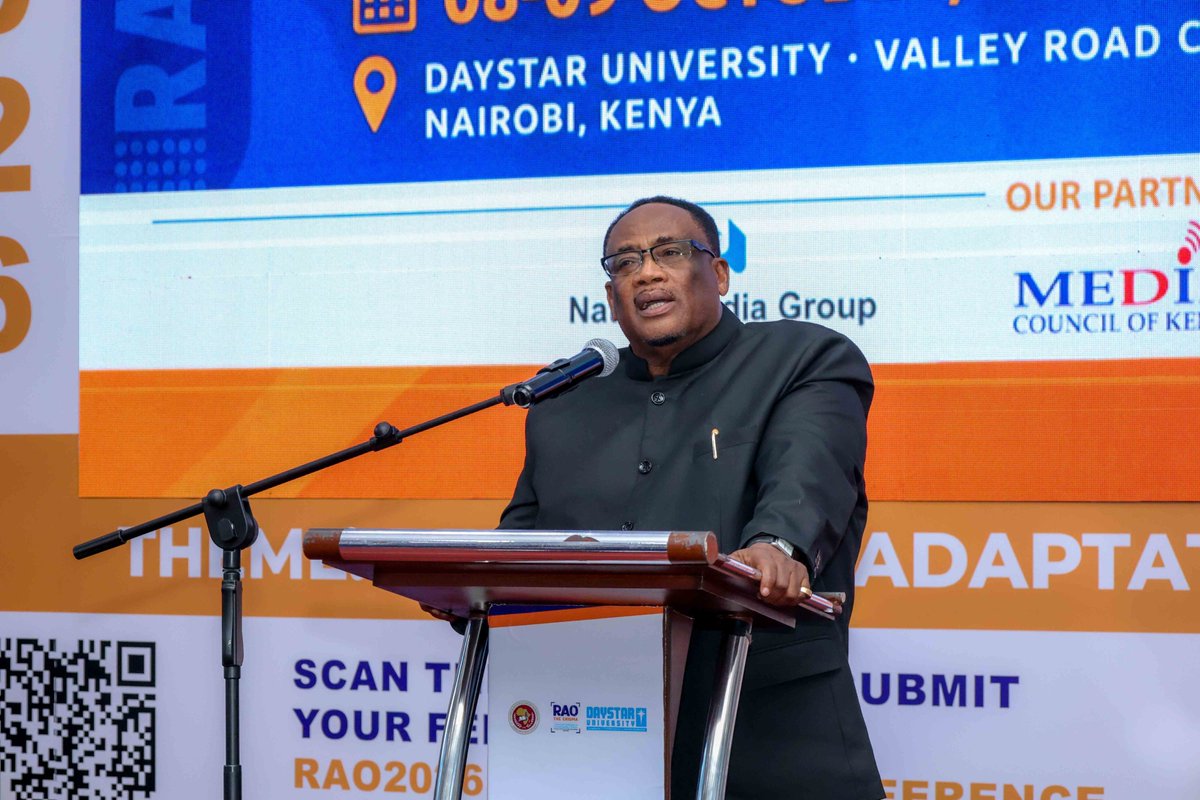
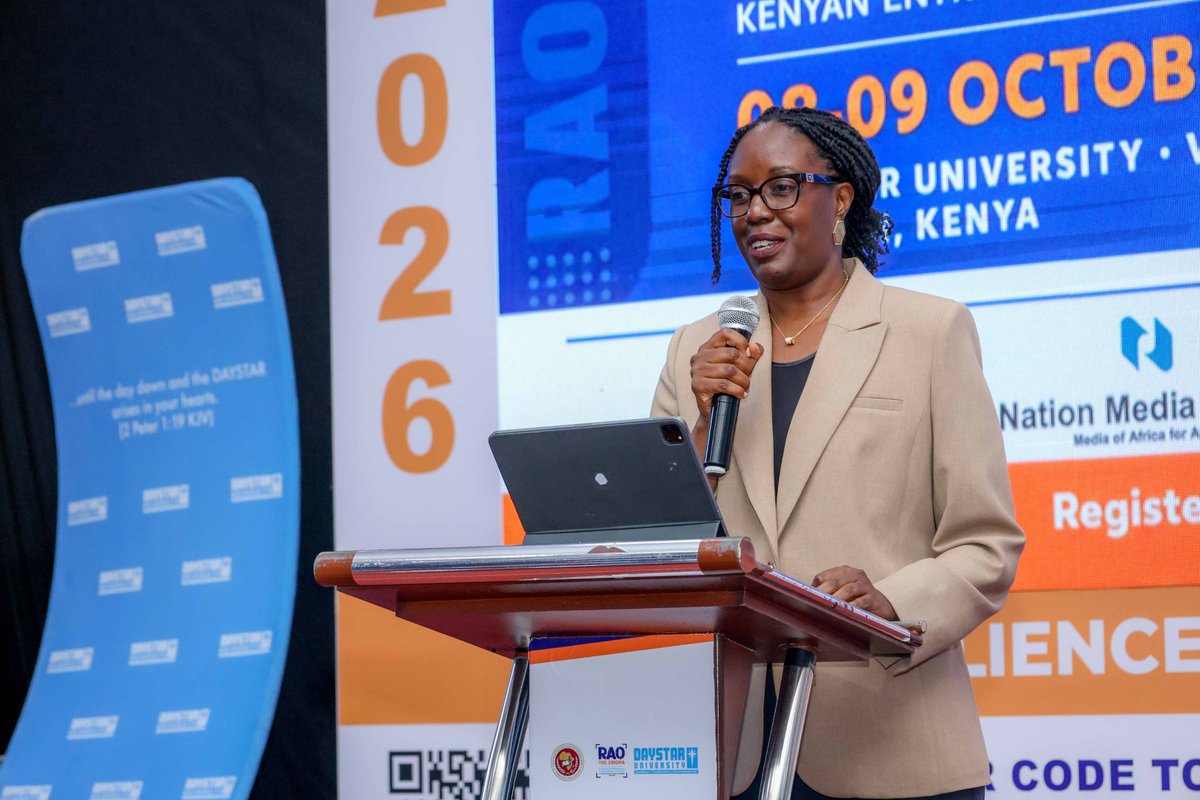
Dr. Agnes Salome Owuor, from the Office of Dr. Canon Ida Betty Odinga, reflected on Raila’s legacy and the responsibility of carrying his vision forward. She described Canaan as an aspiration for a Kenya built on dignity, justice, prosperity and democracy.
#RAO2026
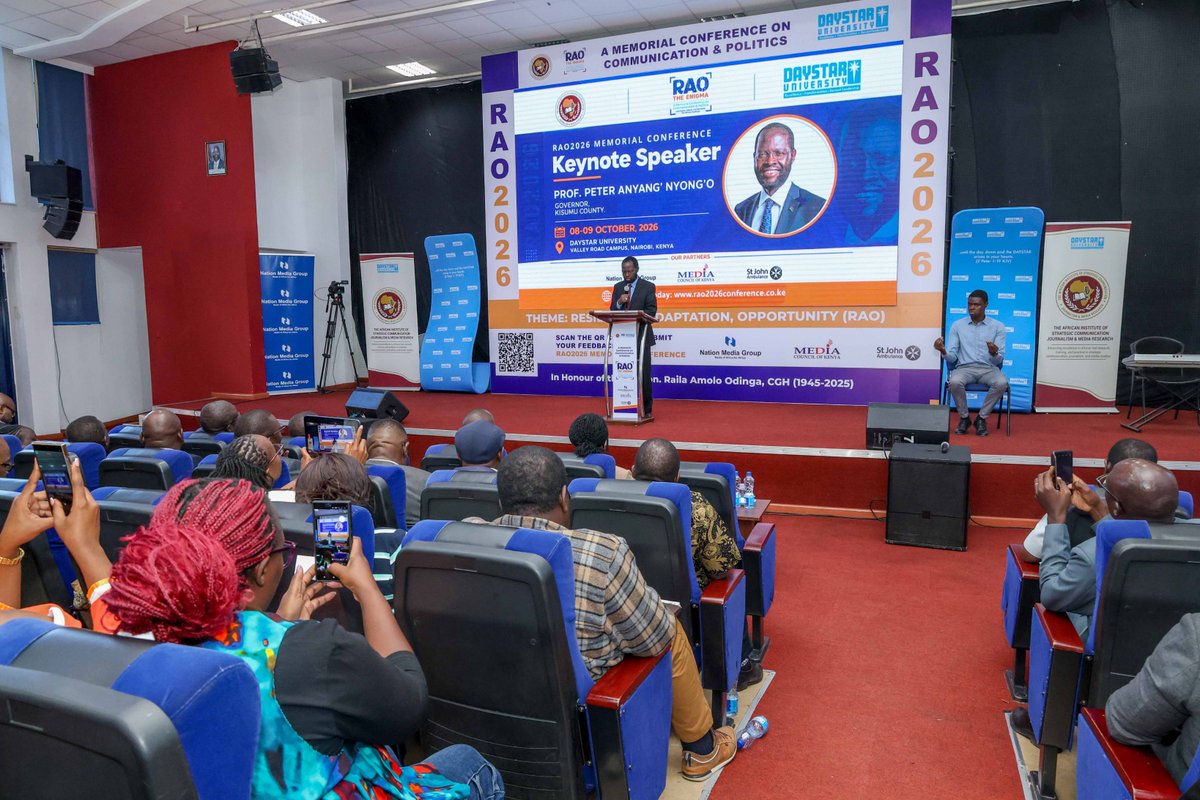
Prof. Anyang’ Nyong’o, examined Raila’s intellectual legacy and the unfinished work of democracy. He challenged Kenyans to ask whether power has truly been democratized. He also called for stronger institutions, practical African integration and economic dignity.
#RAO2026
Day 2 of the #RAO2026 Conference continues at Daystar!
Today’s discussions examine Raila’s legacy, his influence on democracy and political communication, and the work left for future generations.
Join the conversation live on YouTube: https://t.co/muSoG70ChS
Geoffrey Odundo, Group MD & CEO - Nation Media Group: Raila was a person who we could not ignore. His public life intersected with moments that entered our homes, shaped our conversations and influenced how many Kenyans imagined their future.
It is only when a frog dies and stretches out that you see its full length.
Prof. Nana K. A. Busia, Jr., of the School of Advanced Study, University of London, opened his #RAO2026 plenary with this saying from his home community in Ghana. Almost a year after Raila Odinga’s passing, he said, Africa is only now grasping the full magnitude of the man. Having worked across some 35 African countries, Prof. Busia had yet to meet another figure like him: a Pan-Africanist and a Kenyan of real consequence, whose stature reached far beyond Kenya’s borders.
His lecture examined Kenya’s electoral paradox: how a system that kept declaring Raila the “loser,” a word he would put in quotation marks, became a source of his legitimacy and popularity. His argument was that a flawed electoral system ended up legitimising Raila’s politics. Each time he was declared the loser, he claimed a moral victory. Being the official loser turned him first into a political force, then into a symbol of a system’s victims, and finally into an arbiter of national politics.
At the heart of it, Prof. Busia said, is a simple truth. Legitimacy does not come from official instruments or legal authority alone. It comes from public trust. Whenever the electoral commission, from the ECK to the IEBC, announced results that large parts of the country saw as opaque or manipulated, Raila’s standing as a victim of an unfair state paradoxically deepened his bond with the people. He came to symbolise the struggle against institutions that were not transparent, and through it all, he held Kenya together.
How did a dissident become one of the architects of Kenya’s Constitution? The panel on Constitution, Reform and the Long Struggle took up that question at #RAO2026.
Moderator Ms. Michelle Ngele set the tone. To her, Raila’s political life was a paradox. He was a dissident who eventually became part of government, a man who spent years confronting the political establishment yet repeatedly negotiated with it.
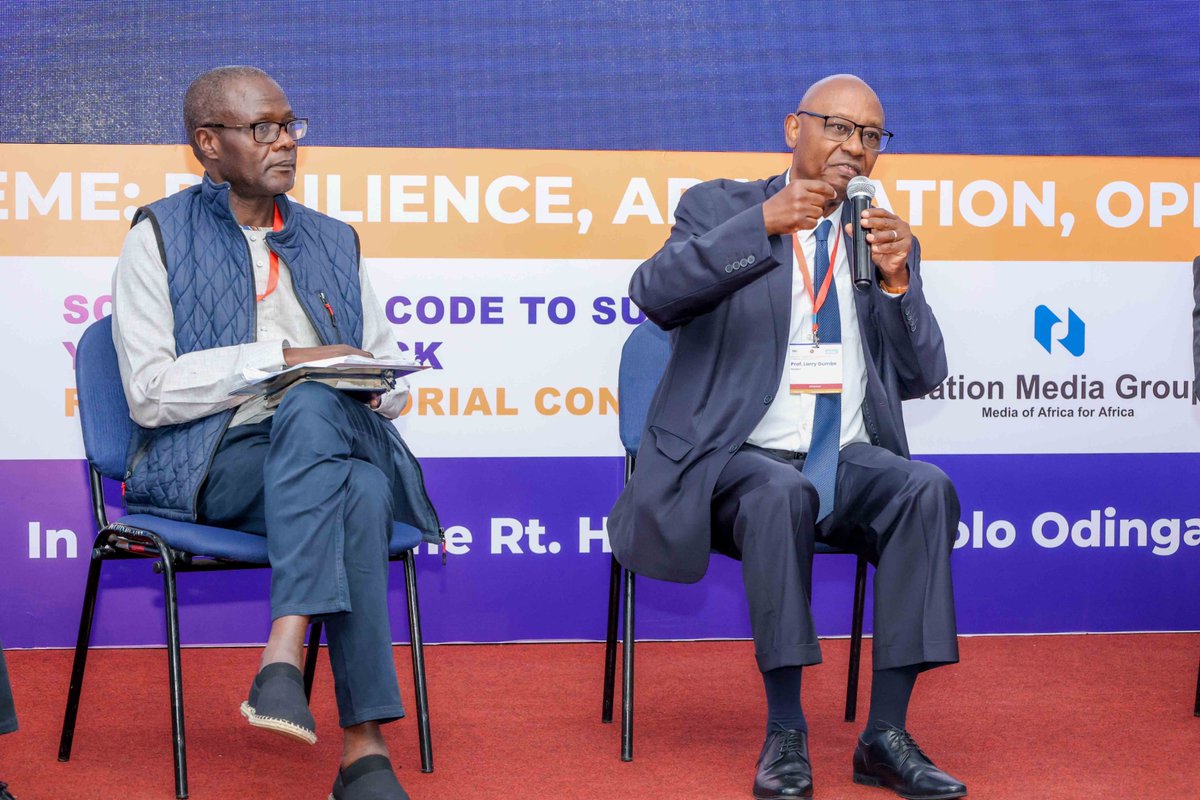
Prof. Larry Gumbe reminded us that leaders make history, but history also makes leaders. Raila was born into a struggle that was already under way: the push against colonial rule from the 1920s, the organising of the late 1940s, the Mau Mau uprising of the 1950s and the fight for independence in the early 1960s.
Dr. Maurice Awuor explained why the reform struggle mattered. A constitution should be homegrown, and the independence constitution was not. It was written largely to protect the interests of departing Europeans, and repeated amendments after independence concentrated power in the executive and eroded fundamental rights. Raila spoke directly to that loss. As Dr. Awuor put it, where there is no liberty, there can be no dignity.
Prof. Ben Sihanya outlined the three concerns that drove Raila and those who worked with him: the Bill of Rights, the structure of government and devolution. Raila himself had suffered the loss of liberty, and he was passionate about empowering women and other marginalised groups. Kenya has achieved real reform, Prof. Sihanya said, and the task now is implementation and further reform.
Dr. Martin Oloo closed on Raila’s pragmatism. Baba never held a rigid position; he moved when compromise offered a way forward. When the 2010 draft was altered before the referendum, he accepted it, because an imperfect constitution was better than what Kenya had. He took the same view after disputed elections: better a country with bad leadership than no country at all. That belief, Dr. Oloo said, defines his legacy.
Kenya knew him at the microphone, addressing crowds and debating the future of the country. His family knew him in ways no crowd ever could.
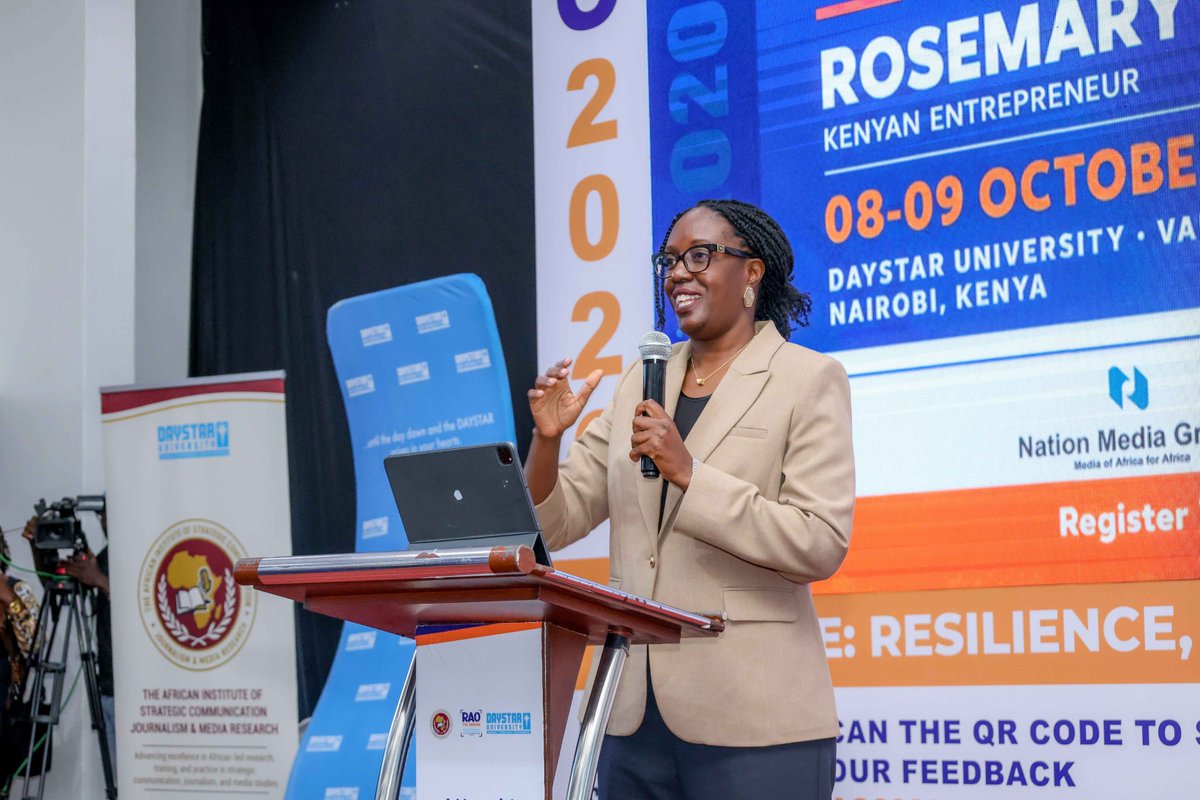
Speaking on behalf of her mother, Dr. Canon Ida Betty Odinga, Rosemary Odinga gave #RAO2026 its most personal moment.
She told us that wherever you go in Kenya, even to the local shopping centre, everyone has a story about her father. Over time she came to see that each person knew a different part of him, and every shared memory handed the family a small piece of him they might never have known otherwise.
Mama Ida knew him for more than 50 years. She carried hope, raised a family and lived through seasons that asked for great courage. She understood both the public responsibility he bore and its private cost: the worry, the absences and the uncertainty about tomorrow.
Through it all, their life together was held in friendship and in the ordinary business of being a family. The family’s hope is that remembering Baba will keep bringing people together to share stories, ask honest questions and consider what each of us can contribute.
Rosemary was especially grateful that his memory encourages young people to learn, to serve and to keep trying.
Few people can tell Raila Odinga’s story from the inside the way Hon. John Kiarie Waweru, MP for Dagoretti South, can.
At #RAO2026, KJ began by thanking Mama Ida and the Odinga family for sharing Baba with the Daystar University family and with the nation. He has left us, he said, but being the enigma he was, he remains a subject of conversation.
He then took us back to 2007. KJ was in his 20s, a young Kikuyu man asking for votes in the larger Dagoretti constituency on an ODM ticket, Raila’s party. That campaign challenged deeply rooted political beliefs and taught him how powerful the ethnic labels attached to parties are in this country. It also earned him the name “Kijana Obama” and led him to become the first president of the ODM Youth League, the first youth league of any major political party in Kenya.
He called that candidacy, and the support Raila gave it, a turning point in his life.
Speaking as a performer, KJ observed that Raila understood political communication was as much about what he did as what he said. He also knew when a moment called for one decisive declaration, as he showed in the 2002 election.
To millions, he was simply “Baba.” That name carried affection and trust, but also great expectation and responsibility.
Raila carried the opposition politics of this country on his back. He could mobilise people against a political order and later ask them to accept a negotiation within it, as he did with the 2008 coalition and the 2018 handshake. Some saw statesmanship in those choices; others asked what had become of the struggle.
Through it all, Raila was bold enough to walk with his convictions.
RAO Memorial Conference 2026: Leaders, scholars, and media practitioners gather to reflect on Raila Odinga’s legacy
#Rao2026#PositivelyInfluencingSociety
Have we democratised power, or have we only democratised the competition for power?
That was the question Prof. Peter @AnyangNyongo, Governor of Kisumu County, put to the nation as he delivered the first Raila Odinga Memorial Lecture at #RAO2026. He believes it is the question Raila himself would be asking if he were here today.
Prof. Nyong’o reminded us that Raila belonged to a generation for whom democracy was never an academic position. It was a revolutionary undertaking. The freedoms Kenyans enjoy today were not donated; they were won.
The 2010 Constitution, he said, is one of the most important outcomes of that long national journey. It affirmed the sovereignty of the people, entrenched fundamental rights, strengthened institutions and introduced devolution as a new way of sharing power and opportunity. Having walked that road with Raila, he saw in him a man who understood that democratic reform is not a sprint but a marathon, run as a relay across generations.
That is why, he said, a conference like this should not stop at celebrating what has been achieved. It must also ask what remains to be done. For the ordinary mwananchi, the question is simple: what has democracy changed about my economic life? A nation can post positive GDP growth while its young people queue for opportunities that do not exist. It can build impressive infrastructure while whole communities remain on the margins. It can become statistically richer while growing socially poorer. That, Prof. Nyong’o said, cannot be the true meaning of development in a democratic republic.
RAO Memorial Conference 2026: Leaders, scholars, and media practitioners gather to reflect on Raila Odinga’s legacy
#Rao2026#PositivelyInfluencingSociety
Raila's Press Freedom Legacy:
Nation Media Group CEO Geoffrey Odundo says Raila’s public life was impossible for the media to ignore, as it intersected with many of the moments that shaped the national conversation and influenced how citizens viewed their future.
#NTVTonight@Ben_Kitili
Have we democratised power, or have we only democratised the competition for power?
That was the question Prof. Peter @AnyangNyongo, Governor of Kisumu County, put to the nation as he delivered the first Raila Odinga Memorial Lecture at #RAO2026. He believes it is the question Raila himself would be asking if he were here today.
Prof. Nyong’o reminded us that Raila belonged to a generation for whom democracy was never an academic position. It was a revolutionary undertaking. The freedoms Kenyans enjoy today were not donated; they were won.
The 2010 Constitution, he said, is one of the most important outcomes of that long national journey. It affirmed the sovereignty of the people, entrenched fundamental rights, strengthened institutions and introduced devolution as a new way of sharing power and opportunity. Having walked that road with Raila, he saw in him a man who understood that democratic reform is not a sprint but a marathon, run as a relay across generations.
That is why, he said, a conference like this should not stop at celebrating what has been achieved. It must also ask what remains to be done. For the ordinary mwananchi, the question is simple: what has democracy changed about my economic life? A nation can post positive GDP growth while its young people queue for opportunities that do not exist. It can build impressive infrastructure while whole communities remain on the margins. It can become statistically richer while growing socially poorer. That, Prof. Nyong’o said, cannot be the true meaning of development in a democratic republic.