True @IDC is expanding its data center footprint in Thailand with a seventh facility in northern Bangkok, designed for AI, hyperscale computing, and liquid cooling as regional digital infrastructure demand continues to grow. https://t.co/VXvmJgwVz8
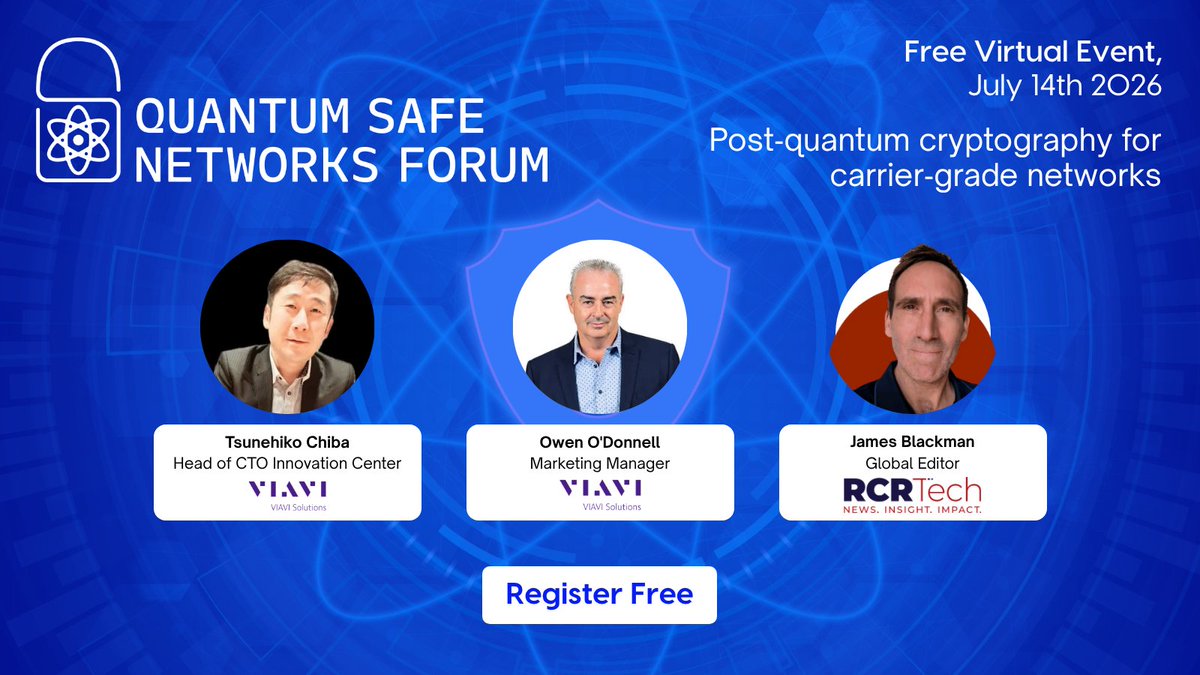
Preparing carrier-grade networks for the quantum era starts with understanding the technologies driving quantum-safe security.
Join industry experts as they discuss post-quantum cryptography, quantum key distribution, hybrid testing frameworks, and the latest PQC test results that are shaping future network deployments.
Speakers:
• Tsunehiko Chiba, Head of CTO Innovation Center, @ViaviSolutions
• Owen O'Donnell, Marketing Manager, @ViaviSolutions
• James Blackman, Global Editor, RCRTech
📅 Free Virtual Event | July 14th
👉 Register today and be part of the conversation: https://t.co/OYY6nCZ8eV
Oxmiq Labs is licensing CUDA-compatible GPU and AI chip architectures rather than building chips itself, courting governments and chipmakers who want their own compute without a GPU design team. https://t.co/PWFRfUO6m7
@Samsung has restarted commercialization of its 1.4nm chip process, now targeting 2029 mass production — two years later than originally planned, as TSMC and Intel push similar advanced nodes. https://t.co/KiyhBA73Fw
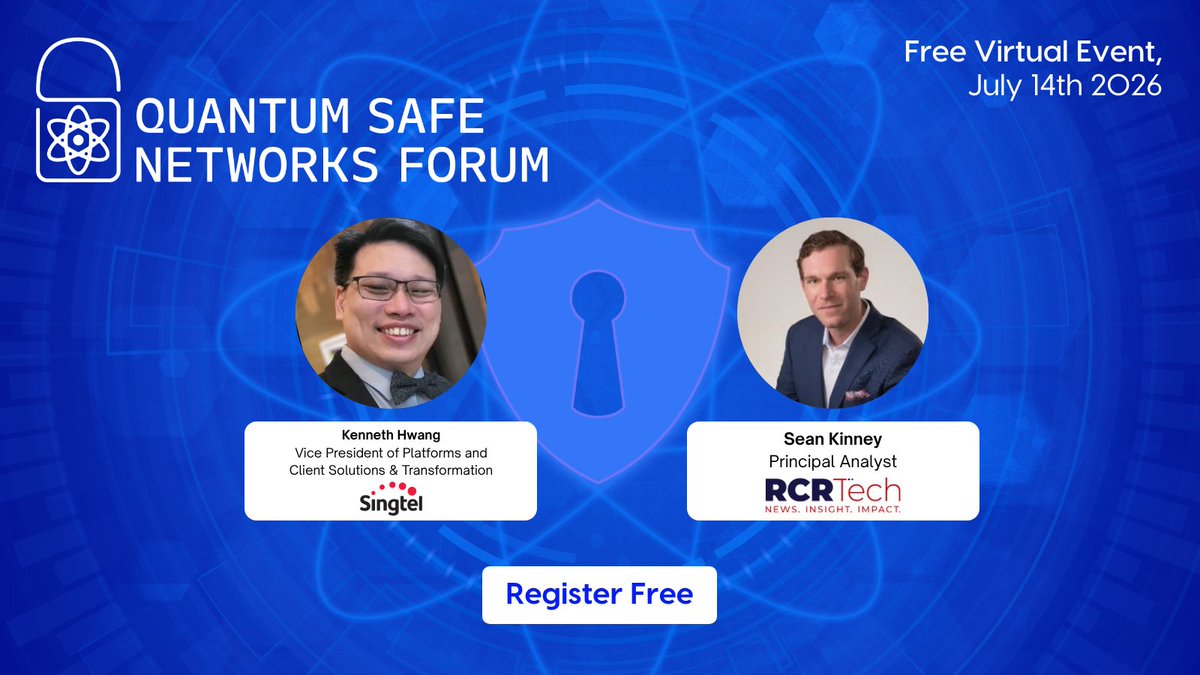
Join us at the Quantum Safe Networks Forum to explore the emerging security challenges facing 5G networks, from vulnerabilities across the core, RAN, and transport layers to protecting multi-vendor, multi-layer architectures against future quantum threats.
Speakers:
• Kenneth Hwang, Vice President of Platforms and Client Solutions & Transformation, @Singtel
• Sean Kinney, Principal Analyst, RCRTech
📅 Free Virtual Event | July 14th
➡️ Register now and stay ahead of the evolving security landscape: https://t.co/PAWHXaSVl0
The FCC faces a spectrum balancing act: strengthen GPS resilience without disrupting a thriving 900 MHz unlicensed ecosystem powering critical IoT, smart infrastructure, and billions in economic value across the U.S. Olivier Beaujard at Semtech explains how. https://t.co/nz3YtMYlNl
The journey to quantum-safe networks starts with understanding today's biggest challenges.
Discover how telecom leaders are approaching quantum readiness, safeguarding long-term data, closing skills gaps, and preparing their organizations for the next generation of cybersecurity.
Speakers:
• Frank de Jong, Quantum Safe Network Lead and Program Director of Edge Computing, @orangebusiness
• Ed Fox, CTO, MetTel
• Keith Leong, Chief Customer Officer, Enterprise, @Singtel
• Ricky Tsui, Global Director, Secure Routing & SDWAN Product Management, @Cisco Systems
• Stéphane Téral, Founder & Chief Analyst, Téral Research
📅 Free Virtual Event | July 14th
👉 Register now and be part of the discussion: https://t.co/traTLxJA5C
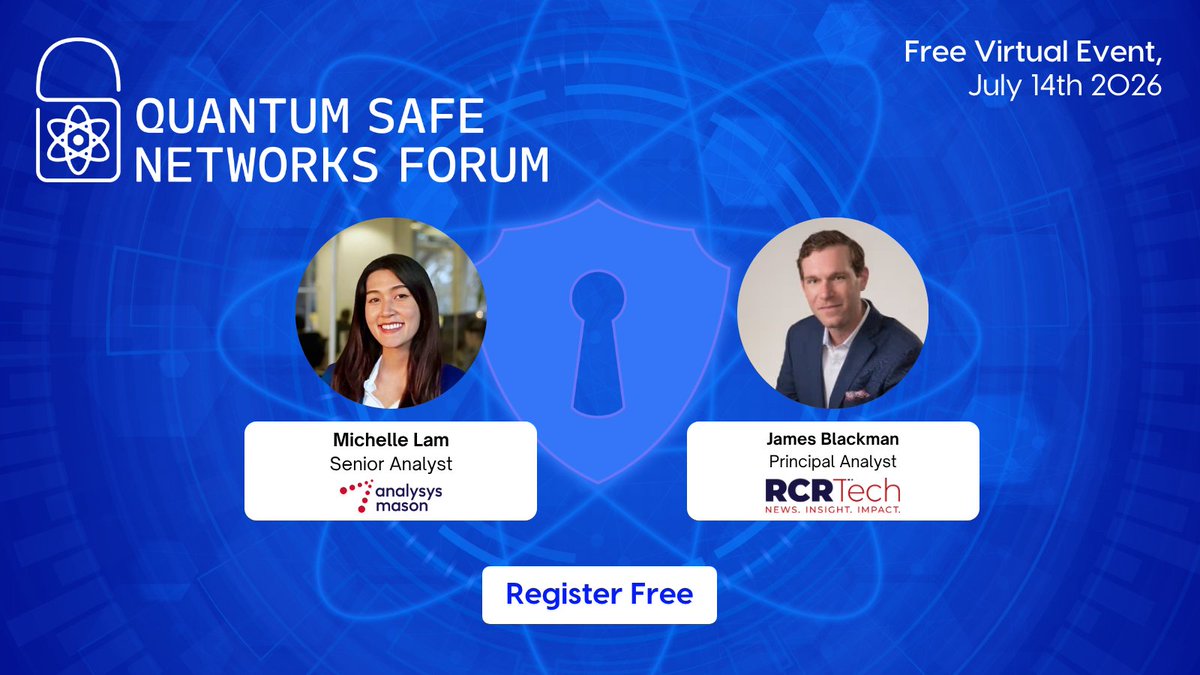
How close are we to the quantum era, and what does it mean for telecom?
Join this analyst briefing at the Quantum Safe Networks Forum and discover what organizations need to know about quantum-safe networking and the future of telecom security.
Speakers:
• Michelle Lam, Senior Analyst, @AnalysysMason
• Sean Kinney, Principal Analyst, RCRTech
📅 Free Virtual Event | July 14th
➡️ Be part of the conversation and register today! https://t.co/IiAA1zKbK3
@nvidia still dominates AI compute, but @Microsoft, @Google, @amazon, @Meta, @OpenAI, and @AnthropicAI are all building custom chips to cut their Nvidia dependence, especially for inference workloads. https://t.co/428InJbkmc
What does the rise of quantum computing mean for telecom networks?
Kick off the Quantum Safe Networks Forum with a keynote exploring the challenges and opportunities facing operators as they prepare for a quantum-safe future. Discover why securing data and critical infrastructure has never been more important.
Speakers:
• Simon Müller, Senior Technology Strategy Manager, @Telefonica
• James Blackman, Global Editor, RCRTech
📅 Free Virtual Event | July 14th
👉 Reserve your spot today: https://t.co/NqD7l15vwW
ANDREW CTO Pedro Torres discusses the future of 5G networks, highlighting smarter, AI-enabled infrastructure, antenna innovation, sustainability, and the need for efficient, adaptable solutions to meet growing connectivity demands.
Read more here: https://t.co/1ts3IGbl4F
@nttdata_inc Global Data Centers models three AI data center growth scenarios through 2030, concluding that power, supply chains, and infrastructure constraints—not demand—will determine whether AI capacity can keep pace. https://t.co/p8s0c5J3UD
@AnthropicAI is reportedly in exploratory talks with @Samsung to build a custom AI chip on a cutting-edge 2nm process — a move that would loosen its dependence on @nvidia. https://t.co/3jXx3PPKVS
Elisa told RCR that AI automation has reduced network incidents by more than 80% as the operator expands 5G monetization through premium services, network slicing, FWA, and private networks. https://t.co/4hcyjESwOf
Irish private cellular specialist @druid_software has acquired Munich-based Node-H to simplify the integration of private 4G/5G systems and broaden the channels through which they are sold – including operators. Founder and chief executive Liam Kenny says the deal is about making private cellular easier to deploy, easier to manage, and easier to scale – from factories to utilities, public safety networks, and even emerging satellite-based services. https://t.co/EKyLjlAovP
Buying doors is easy; stitching networks together is not. Consolidation creates scale on paper. Whether it creates a better operator depends on something far less glamorous: whether the buyer can stitch the networks it acquires into a single network. This final part is about the work on the technology stack behind the hardware and the plumbing underneath, and why it determines who actually wins. https://t.co/iesQCvLJGO
@Huawei said during MWC Shanghai that AI will reshape telecom monetization by changing how operators build networks, combining connectivity and computing while prioritizing low latency, uplink capacity, and AI-oriented transport architectures. https://t.co/bKnvuCmzm8
@Samsung's AI RAN optimizer ran live on KDDI's commercial 5G network for months, boosting peak downlink speeds 31% across greater Tokyo and up to 52% in dense urban cells. https://t.co/VB6clDKXsA
Early 6G standardization decisions point to a pragmatic migration path, while new work on spectrum, sensing and distributed compute could unlock fundamentally new use cases https://t.co/3c4nCXtvlg
@Qualcomm’s Agentic RAN Management Service links near-term opex efficiency with long-term 6G autonomy, using AI agents, digital twins and controlled automation to optimise complex RAN operations while preserving deterministic telecom reliability and operator trust. https://t.co/q216vGRHwl