Revista científica arbitrada, indizada, de acceso abierto, gratuito del DCEE-UCLA, Barquisimeto, Venezuela.
PP-199502LA1016-1317-6099
ppi201502LA4585-2477-9725
Agradecemos al Profesor Joel Pacheco por su valioso apoyo a la Revista Científica Compendium
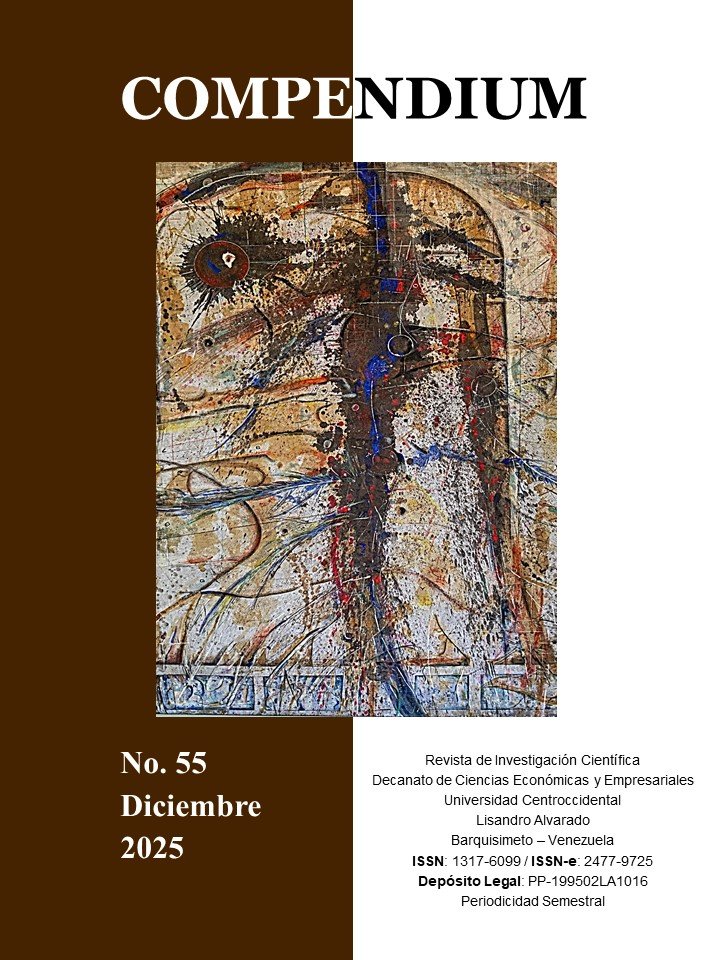
Portada Compendium No. 55:
Autor: Joel Pacheco
Título: Pájaros al amanecer
Técnica: Mixta
Tamaño: 222 x 151 cm
Año: 2024
Agradecemos al Profesor Pedro Rodríguez por su valioso apoyo a la Revista Científica Compendium
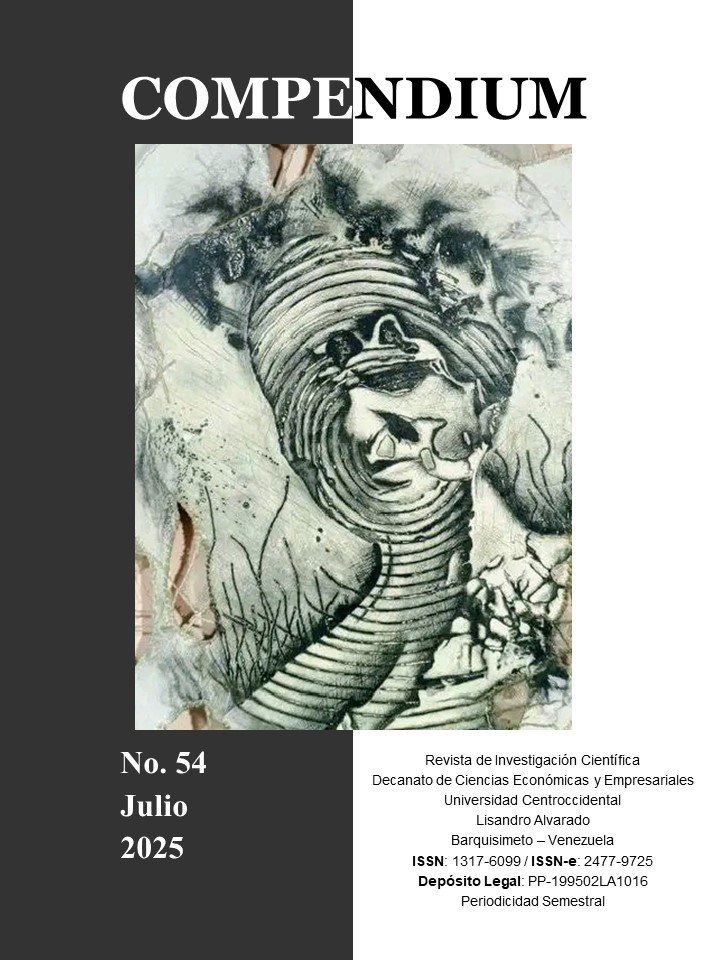
Portada Compendium No. 54:
Autor: Pedro Rodríguez
Título: Añoranza
Técnica: Grabado (punta seca)
Medidas: 75cm x 55 cm
Año: 2015
Using @retractionwatch and @Scopus as sources, this is the percentage of retracted output by country and region. It must be fantastic to be a researcher or editor in scientific domains where almost no one ever makes a mistake.🙋
🔓#OAWeek2025
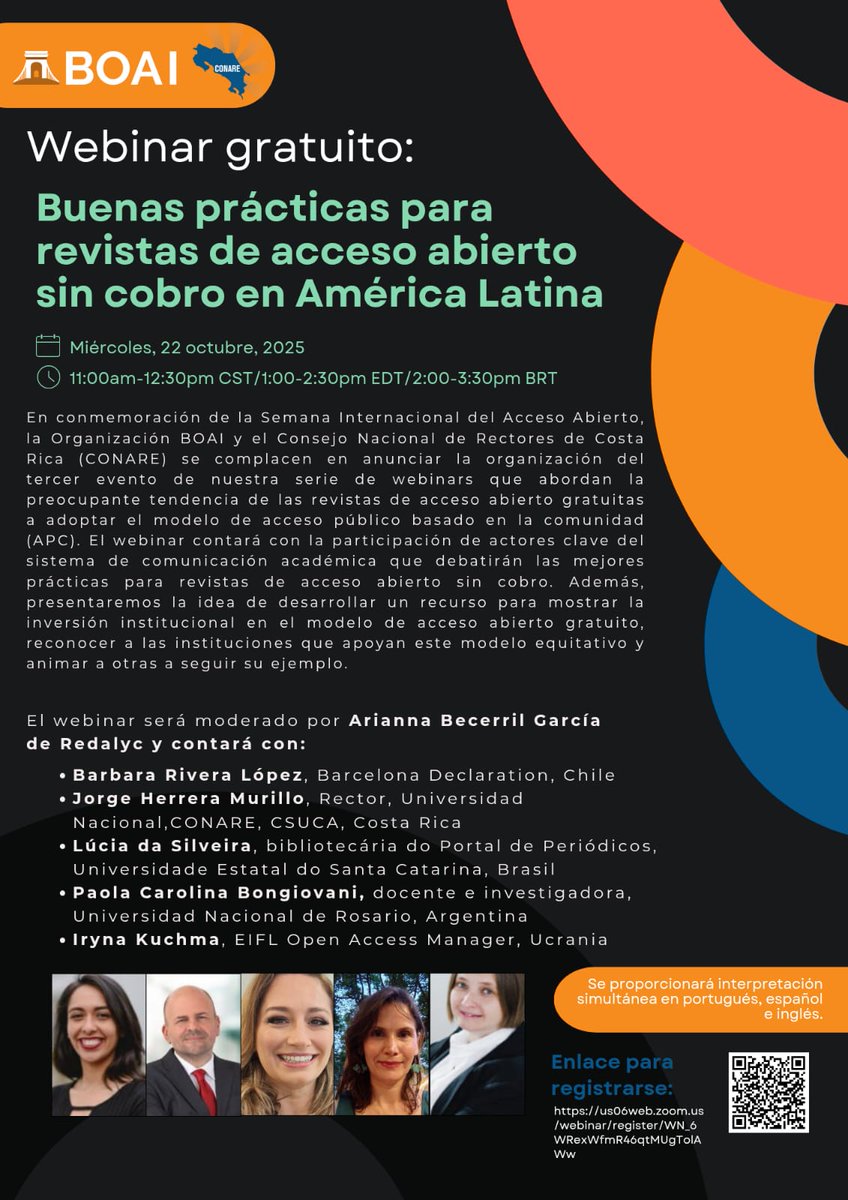
Únete al webinar gratuito: Buenas prácticas para revistas de #AccesoAbierto sin cobro en América Latina.🌎
🗓22 octubre de 2025
⏰11:00 am CST | 1:00 pm EDT | 2:00 pm BRT
Org. @TheBOAI y #CONARE
🔗 Inscríbete: https://t.co/Ku5qmCcRDl
🎧 Transmisión simultanea
¡Feliz Día Internacional del Editor de Revistas!
El 2 de julio se conmemora el Día Internacional del Editor de Revistas, una fecha para reconocer la labor fundamental de estos profesionales en la gestión y dirección de publicaciones periódicas.
¡Un aplauso a todos los editores!
"Manual de corrección y estilo del español donde se muestra la evolución que en los últimos años han experimentado ciertas cuestiones gramaticales, ortográficas y léxicas, con especial atención a la escritura digital" (RAE, 2025).
https://t.co/ceRfrhGQQ5
📣 Editorial CSIC publica su nueva Política sobre uso de Inteligencia Artificial en el ámbito editorial.
Tomando como principal referencia las recomendaciones del Committee on Publication Ethics (COPE).
Consulta: https://t.co/fgo5LVmpnk
¿Están capacitadas las herramientas de inteligencia artificial generativa para responder a preguntas de referencia en bibliotecas?
Publicado por Universo Abierto
https://t.co/cB9P2fEmRo
¿Cuánto son los costes reales por procesamiento de artículo (APCs) de la publicación académica?
Publicado en blog Universo Abierto
https://t.co/OIy01rullm
Penabad et al. (2024). Declaración de Heredia
Principios sobre el uso de inteligencia artificial en la edición científica. Revista Electrónica Educare, Vol. 28, Nº. Extra. https://t.co/Bkw3ixuzSI
La inteligencia artificial (IA) es el epicentro de la Transformación Digital a nivel mundial 🌍, brindando grandes oportunidades para abordar desafíos relacionados con los objetivos de desarrollo sostenible y la inclusión social en América Latina y el Caribe.
Conscientes de esta realidad y de los impactos que la IA genera en diferentes ámbitos de la vida, la Dirección de Transformación Digital de @AgendaCAF ha estado apoyando a los gobiernos de ALC en el diseño de políticas públicas para promover el uso estratégico de esta tecnología y así generar valor social 👥 y económico📈.
Descarga aquí la #GuíaPráctica “Diseño de políticas públicas de inteligencia artificial. Desarrollo de los habilitadores para su implementación en América Latina y el Caribe":
https://t.co/Ho0rDCI87B
🚨BREAKING: the @royalsociety publishes "Science in the Age of AI - How AI is changing the nature and method of scientific research," and it's a must-read for everyone interested in AI & science. Important information:
➡️According to the official release, the report addresses the following questions:
➵ How are AI-driven technologies transforming the methods and nature of scientific research?
➵ What are the opportunities, limitations, and risks of these technologies for scientific research?
➵ How can relevant stakeholders (governments, universities, industry, research funders, etc) best support the development, adoption, and uses of AI-driven technologies in scientific research?
➡️Some of the key findings are:
"Beyond landmark cases like AlphaFold, AI applications can be found across all STEM fields, with a concentration in fields such as medicine, materials science, robotics, agriculture, genetics, and computer science. The most prominent AI techniques across STEM fields include artificial neural networks, deep learning, natural language processing and image recognition"
-
"China contributes approximately 62% of the patent landscape. Within Europe, the UK has the second largest share of AI patents related to life sciences after Germany, with academic institutions such as the University of Oxford, Imperial College, and Cambridge University featuring prominently among the top patent filers in the UK. Companies such as Alphabet, Siemens, IBM, and Samsung appear to exhibit considerable influence across scientific and engineering fields."
-
"Interdisciplinary collaboration is essential to bridge skill gaps and optimise the benefits of AI in scientific research. By sharing knowledge and skills from each other’s fields, collaboration between AI and domain subject experts (including researchers from the arts, humanities, and social sciences) can help produce more effective and accurate AI models. This is being prevented, however, by siloed research environments and an incentive structure that does not reward interdisciplinary collaboration in terms of contribution towards career progression."
➡️Link to the full report below.
➡️To stay up to date with the latest developments in AI policy & regulation, subscribe to my weekly newsletter (link below).
El exceso de palabras como “encomiable” y “meticuloso” sugiere el uso de ChatGPT en miles de estudios científicos https://t.co/jvTNDrWFyO a través de @el_pais