A regular catholic guy with a camera and a mic who was inspired to pray the rosary daily after a visit to the Vatican and purchase of a rosary in the gift shop
Our hearts are restless until they rest in You, O Lord. St. Augustine's famous words still echo today. From chasing pleasures in North Africa to a dramatic garden conversion in Milan—see how grace changed everything.
What if holding onto your life meant losing it forever?
Jesus teaches his disciples the cost of following him through self-denial and the cross.
Gaining the whole world profits nothing if the soul is forfeited at the Son of Man's coming.
Discover the truth about eternal life in Matthew 16:24-28
Embracing Sacrifice to Discover Authentic Life in Matthew 16:24
The passage from Matthew presents a transformative invitation from Jesus to his disciples that challenges common understandings of success and security. It calls believers to reconsider priorities in light of eternal realities. Through this teaching the Gospel reveals how true fulfillment arises not from self preservation but from generous self giving in union with Christ. This reflection examines the layers of meaning in the New Revised Standard Version Catholic Edition text to guide readers toward deeper discipleship.
What Does Taking Up the Cross Entail for Daily Living
Jesus begins by addressing the conditions of authentic following when he states If any want to become my followers let them deny themselves and take up their cross and follow me. This directive moves beyond mere intellectual assent to require active renunciation of personal agendas. Denying oneself involves releasing attachments to comfort status or control that often dominate human choices. Taking up the cross signifies acceptance of suffering and responsibility as integral to the journey rather than obstacles to avoid. In this way the verse establishes a pattern where self surrender becomes the pathway to alignment with divine purpose.
How Can Losing Life Result in Finding It
The central promise unfolds in the next verse where Jesus declares those who want to save their life will lose it and those who lose their life for my sake will find it. This paradox highlights the futility of clinging to temporary existence at the expense of deeper purpose. Attempting to secure life through worldly means leads to spiritual emptiness while offering it in service to Christ yields genuine identity and vitality. The teaching encourages believers to view earthly existence as a gift to be invested rather than hoarded. Such an orientation shifts focus from fear driven preservation to trust filled generosity that mirrors the self donation of Jesus himself.
What Profit Comes from Gaining the World
Jesus poses a penetrating question in the subsequent lines by asking For what will it profit them if they gain the whole world but forfeit their life. This inquiry exposes the imbalance that arises when material accumulation overshadows eternal concerns. Acquiring wealth power or recognition holds no ultimate value if it costs the soul its relationship with God. The verse invites reflection on personal ambitions and whether they align with lasting treasures of faith hope and love. By contrasting temporary gains against eternal loss the text urges a reevaluation of success that prioritizes communion with the divine over fleeting achievements.
When Will the Son of Man Repay Each Person
The passage concludes with an eschatological vision stating For the Son of Man is to come with his angels in the glory of his Father and then he will repay everyone for what has been done. This forward looking assurance provides motivation for faithful living amid present trials. It reminds readers that actions carry eternal weight and that divine justice will ultimately affirm those who have followed the way of the cross. The mention of some standing there who will not taste death before seeing the kingdom adds a note of imminence that calls for readiness. Through these words the Gospel connects present sacrifice with future reward fostering perseverance in the Christian vocation.
Living the Paradox in Contemporary Faith
Integrating these teachings requires ongoing conversion that applies the principles to family work and community interactions. Believers find encouragement in the community of the Church where the sacraments sustain the grace needed for self denial. The message resonates across generations as a countercultural call amid societies that prize self promotion above all. By embracing this path individuals discover renewed purpose that transcends circumstances and leads to lasting peace.
🙏 @RCatholicPrayer
"Whoever loses his life for my sake will find it."
Matthew 16:24-28
What if a city of lies and violence confronted its divine reckoning?
Invaders approach with red shields and raging horses amid the crack of whips.
The once proud Nineveh lies in filth and contempt with none to comfort her.
Discover the truth of judgment in Nahum 2:1, 3; 3:1-3, 6-7
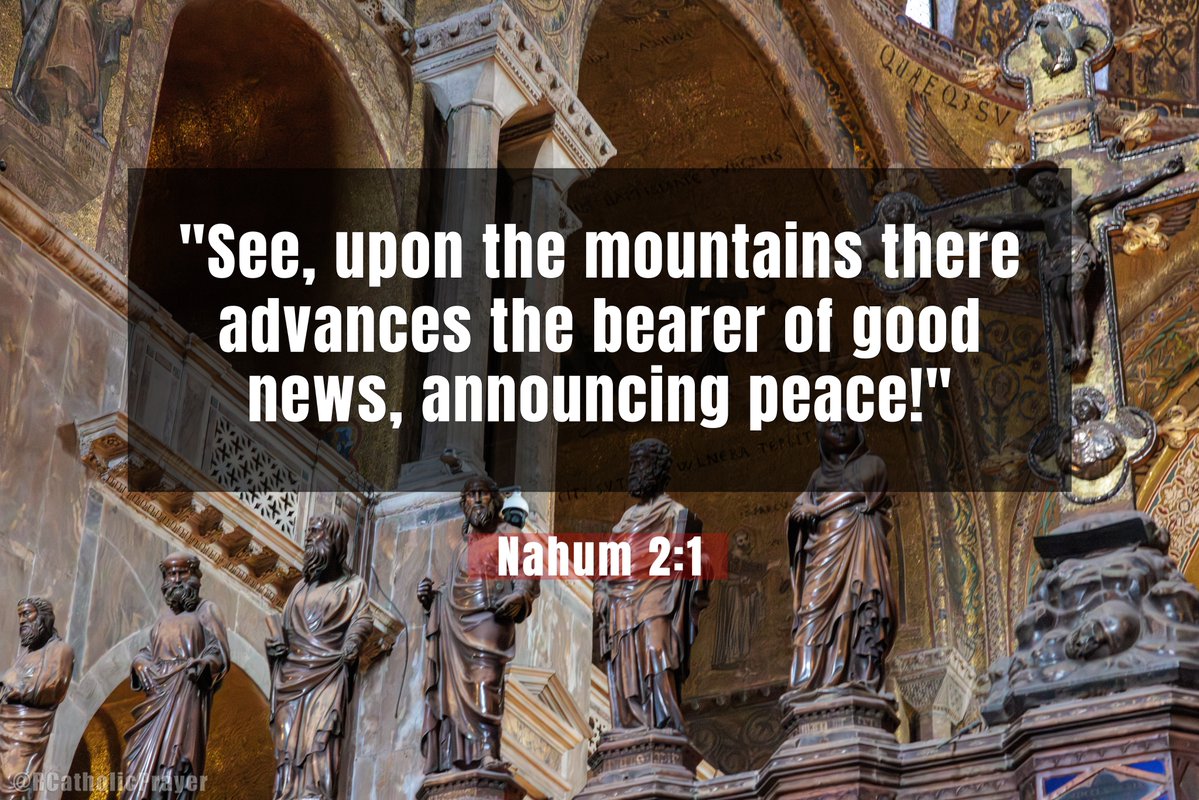
The Bearer of Good News Announces Peace Nahum 2:1
The passage from Nahum highlights a pivotal moment where divine intervention shifts the narrative from oppression to deliverance. Readers encounter a vivid portrayal of advancing forces that signal the end of tyranny for those who have suffered. This theme resonates deeply because it underscores how announcements of peace emerge precisely when judgment falls upon the wicked. The text invites reflection on how God orchestrates events to restore balance and offer hope to the afflicted. Such insights encourage the faithful to trust in ultimate justice even amid apparent chaos.
What Does Nahum 2:1 Reveal About the Arrival of Peace?
See, upon the mountains there advances the bearer of good news, announcing peace serves as the central declaration that transforms the surrounding verses into a message of relief. This announcement comes after descriptions of conflict and precedes the downfall of a ruthless empire. The mountains serve as a vantage point from which the good news travels swiftly to those waiting in anticipation. In context the verse contrasts the dread of invasion with the joy of liberation for the oppressed people of Judah. The bearer represents a herald who proclaims the cessation of hostilities and the beginning of tranquility under divine order.
How Does Nahum 2:3 Illuminate the Preparation for Deliverance?
The shields of his warriors are red and his soldiers are clothed in crimson paint a scene of readiness that precedes the peace announced earlier. These details emphasize the disciplined advance of forces aligned with a higher purpose. The flashing metal on chariots and prancing chargers convey momentum toward a decisive confrontation. Such imagery connects directly to the good news by showing that peace requires the resolution of conflict through structured judgment. The verse thus builds anticipation for the relief that follows the defeat of aggressors who have long tormented neighboring lands.
Why Does Nahum 3:1-3 Describe the Consequences of Bloodshed?
Ah, city of bloodshed utterly deceitful full of booty no end of plunder sets the stage for understanding the necessity of the peace that arrives later. The crack of whip and rumble of wheel along with galloping horse and bounding chariot illustrate the relentless machinery of war that has caused endless suffering. Horsemen charging with flashing sword and glittering spear create piles of dead and heaps of corpses that stretch without end. These verses explain the backdrop against which the bearer of good news operates because they detail the accumulated guilt that invites divine response. The stumbling over bodies underscores the exhaustion of a system built on violence now facing its reckoning.
In What Way Does Nahum 3:6-7 Point Toward Restoration After Judgment?
I will throw filth at you and treat you with contempt and make you a spectacle reveals the humbling of the once mighty city as a step toward broader peace. All who see the devastated Nineveh shrink away and question who will bemoan her or seek comforters. This exposure of ruin serves as confirmation that oppressive powers no longer hold sway over the vulnerable. The verses tie back to the initial announcement by demonstrating that true peace follows the removal of threats that have disrupted harmony. Through this process the faithful witness the fulfillment of the good news as stability returns to the region.
The overall message of these sections weaves together warning judgment and deliverance into a cohesive call for trust in divine timing. Each part builds upon the last to show how the bearer of good news emerges from the ashes of conflict. This progression offers readers a framework for viewing current struggles through the lens of eventual restoration. The text ultimately affirms that announcements of peace carry weight because they follow the dismantling of injustice.
🙏 @RCatholicPrayer
"See, upon the mountains there advances the bearer of good news, announcing peace!"
Nahum 2:1, 3; 3:1-3, 6-7
O God, grant me the grace to express true thankfulness through prayer, generosity, and faithful stewardship of all I have received, that I may honor You in every gift.
A reading from the holy Gospel according to Matthew for Friday August 7, 2026 (Matthew 16:24-28)
A would-be disciple sought to preserve his life at all costs.
Jesus declared that self-denial and the cross were the true path to following him.
Gaining the entire world would profit nothing if one's life was lost in the process.
This is the message of Matthew 16:24-28
Finding True Happiness in Christ's Teachings
The Gospel of Matthew presents a profound invitation to reconsider what it means to live a blessed life amid the challenges of the world. This passage from the Sermon on the Mount reminds faithful Catholics that true fulfillment comes not from worldly success but from aligning one's heart with the values of the Kingdom of God. It speaks directly to those who seek to practice their faith with sincerity and depth in everyday circumstances. Through these words Jesus offers a roadmap for spiritual growth that has sustained the Church across centuries.
How Can the Beatitudes Transform Your Heart?
The opening verses describe the blessedness of those who are poor in spirit, mourning, meek, and hungry for righteousness. These qualities challenge the common pursuit of self-sufficiency and instead point toward a reliance on God that opens the soul to divine grace. For practicing Catholics this means embracing humility in prayer and acknowledging one's need for mercy in the confessional. Such an approach fosters a deeper connection to the sacraments and encourages ongoing conversion throughout life. The promise of comfort and inheritance of the earth reveals God's tender care for those who turn to him with sincerity.
Moving further the text highlights mercy peacemaking and purity of heart as paths to seeing God. These attributes call believers to extend forgiveness in family relationships and to work for reconciliation in divided communities. Catholics are invited to approach the Eucharist with clean hearts formed by regular examination of conscience. This section underscores that inner transformation leads to visible acts of charity that build up the body of Christ. The resulting vision of God becomes a foretaste of eternal joy promised to the faithful.
What Lessons Does the Sermon on the Mount Offer for Modern Catholics?
The continuation of the passage addresses persecution and the reward stored up in heaven for those who endure it for righteousness sake. In a culture that often marginalizes religious conviction this teaching provides encouragement to stand firm in moral teachings on life and family. Faithful Catholics find strength in the witness of the saints who faced similar trials with steadfast hope. The call to rejoice reminds the community that suffering united to Christ bears fruit in the resurrection. This perspective shifts focus from immediate comfort to the lasting peace found in following the Lord.
Why Is Salt and Light Imagery So Powerful for Believers?
Jesus then uses the images of salt and light to describe the role of his disciples in the world. Salt preserves and flavors while light dispels darkness and guides others safely. For Catholics this means living out the faith through works of mercy such as feeding the hungry and visiting the sick in ways that make the gospel tangible. Parishes become centers where these virtues are practiced and shared with neighbors who may not yet know Christ. The warning against losing flavor or hiding light serves as a sober reminder to maintain fervor in personal devotion and communal worship.
The passage concludes by linking these actions to glorifying the Father in heaven. This orientation keeps the focus on God rather than personal acclaim and aligns with the Church's emphasis on the glory of the Trinity. Catholics are thus motivated to integrate prayer scripture and service into a unified life that witnesses to the world. The overall message reinforces that discipleship involves both interior conversion and outward expression of love.
The enduring relevance of this gospel lies in its ability to speak to every generation of believers seeking authentic joy. It invites ongoing reflection on how the beatitudes shape decisions at work in the home and within the parish community. Through consistent engagement with these teachings the faithful grow in virtue and draw closer to the heart of Christ. This reflection ultimately leads to a renewed commitment to live as citizens of the Kingdom while still journeying on earth.
Finding True Life by Taking Up the Cross in Matthew 16
Catholics seeking to live their faith more fully can draw from the words of Jesus in Matthew 16 to navigate the complexities of modern relationships with renewed purpose and grace. This passage invites believers to examine what it means to follow Christ amid the demands of daily life where personal ambitions often clash with calls to service. By reflecting on these verses individuals discover practical ways to embody self-denial and commitment in settings ranging from the home to the workplace. The message encourages a shift away from self-centered pursuits toward actions that reflect the kingdom values of sacrifice and eternal reward. Over time such an approach fosters deeper connections and a sense of fulfillment that transcends immediate circumstances.
How Does Denying Yourself Reshape Family Dynamics?
In the home setting the call to deny oneself and take up the cross translates into quiet acts of service that prioritize the needs of loved ones over personal comfort. Jesus states "If any want to become my followers let them deny themselves and take up their cross and follow me." This directive inspires Catholics to listen patiently during family disagreements rather than insisting on their own viewpoint which builds trust and models humility for children and spouses. For instance a parent might forgo a preferred evening activity to assist a teenager with homework thereby demonstrating that following Christ involves tangible sacrifices in intimate relationships. Such choices create an atmosphere where family members feel valued and supported leading to stronger bonds over time. The analysis of this verse reveals that self-denial is not about loss but about opening space for love to flourish in everyday routines.
In What Ways Can Friends Support One Another in Following Christ?
Among friends the passage encourages mutual encouragement to embrace the cross through shared accountability and honest conversations about faith challenges. The text continues with the insight that "those who want to save their life will lose it and those who lose their life for my sake will find it." Catholics might apply this by gently reminding a friend struggling with career pressures that true security comes from aligning choices with gospel priorities instead of worldly success. This creates opportunities for friends to pray together or discuss how small acts of generosity strengthen their spiritual journeys. Unlike family interactions which are constant friend relationships allow for periodic deep discussions that inspire renewed commitment without the intensity of daily proximity. The result is a network of support that helps individuals persist in faith amid external temptations.
Why Might Neighbors Respond to Examples of Selfless Service?
Interactions with neighbors offer chances to live out the warning about gaining the world yet forfeiting life through visible acts of community care that reflect Christ's call. The verse asks "For what will it profit them if they gain the whole world but forfeit their life." Faithful Catholics could volunteer for local cleanups or offer practical help during a neighbor's hardship showing that following Jesus extends beyond personal circles into broader society. This differs from friend dynamics by focusing on one-time or occasional gestures that build goodwill without expecting reciprocity. Such examples prompt neighbors to consider their own priorities and perhaps open doors to faith discussions in a non-intrusive manner. The analysis highlights how these actions counter cultural individualism by demonstrating that true gain comes through communal service.
How Can Co-Workers Witness the Value of Eternal Perspective?
At work the promise of future repayment by the Son of Man guides Catholics to maintain integrity and kindness even when it requires personal cost in professional settings. Jesus notes "For the Son of Man is to come with his angels in the glory of his Father and then he will repay everyone for what has been done." This inspires employees to handle conflicts with fairness rather than advancing through manipulation which can influence colleagues to value ethical conduct over cutthroat competition. Co-worker interactions stand apart because they often involve structured environments where faith is expressed through consistent reliability and compassion during deadlines or team projects. Over time these behaviors create a subtle witness that encourages others to reflect on their own life directions without direct confrontation.
Spotlighting Quotes for Meaningful Conversations
A dedicated focus on key phrases from the passage equips Catholics with words to share in various relationships. The line "Whoever loses his life for my sake will find it" serves as a reminder during moments of doubt that sacrifice leads to deeper purpose. Another quote "Truly I tell you there are some standing here who will not taste death before they see the Son of Man coming in his kingdom" can spark hope in discussions about perseverance. These selections allow believers to reference scripture naturally when advising family on patience or encouraging a co-worker facing ethical dilemmas. By weaving such lines into conversations individuals transform ordinary exchanges into opportunities for inspiration that align with the passage's call to discipleship.
The overall message of Matthew 16 urges Catholics to integrate these principles across all spheres of life resulting in a cohesive witness that honors Christ. Through family sacrifices friend accountability neighborly service and workplace integrity believers experience the transformation promised in losing life to find it. This approach not only enriches personal faith but also ripples outward to touch others in profound ways. As the world evolves the timeless invitation to follow remains a steady guide for meaningful living.
Thank you for praying today with RCatholicPrayer your fellow member of the Body of Christ striving for holiness.
A fellow pilgrim on the path of repentance and conversion,
🙏 @RCatholicPrayer
The first reading for Friday August 7, 2026: Book of Nahum (Nahum 2:1, 3; 3:1-3, 6-7)
The mighty city of Nineveh ruled with iron strength yet brimmed with blood and lies
The prophet declared the scatterer had come as chariots raged through its streets
Its desolation left it a public spectacle with none to lament its end
This is the message of Nahum 2:1, 3; 3:1-3, 6-7
Finding Strength in Gods Unwavering Justice Through the Words of Nahum
The book of Nahum delivers a timeless message that resonates with faithful Catholics who seek to understand how divine justice operates in a world filled with conflict and moral decay. This prophetic text addresses the fall of Nineveh and underscores the certainty of Gods response to persistent evil. Readers encounter a portrayal of the Lord that balances fierce judgment with tender protection for those who remain faithful. The passage invites Catholics to deepen their trust in Gods plan even when circumstances appear overwhelming. Through careful reflection on these verses one can draw practical guidance for living out the faith amid modern trials.
What Insights Does Nahum Provide About the Character of God
Nahum opens by describing the Lord as jealous and avenging yet slow to anger and great in power. This description highlights the tension between divine patience and the eventual execution of justice against those who oppress others. The text explains that God does not leave the guilty unpunished which serves as a reminder that moral order exists under divine oversight. Catholics can see here a reflection of the same God who reveals himself in the sacraments and through the teachings of the Church. Such attributes encourage believers to approach prayer with both reverence and confidence in ultimate fairness. The prophet further notes that the mountains quake before the Lord which illustrates the cosmic scale of divine authority.
How Can the Prophecy Against Nineveh Guide Catholic Living Today
The oracle against Nineveh demonstrates that no empire or power can withstand the will of God when it turns to cruelty and idolatry. This section of the reading breaks down the specific sins of the Assyrians including their reliance on violence and exploitation of the weak. Faithful Catholics learn from this example that personal and societal sins carry consequences that affect entire communities. The vivid imagery of flooding waters and darkness enveloping the city serves as a metaphor for the sudden collapse that follows prolonged disobedience. By meditating on these events believers are prompted to examine their own lives for areas where they might resist Gods call to holiness. The passage also stresses that God acts as a stronghold in times of trouble which offers comfort to those who endure persecution or hardship for the sake of righteousness.
In What Ways Does Nahum Offer Hope to the Faithful Amid Judgment
Nahum shifts from pronouncements of doom to promises of deliverance for Judah which reveals the protective aspect of Gods nature. This transition shows that judgment on the wicked coincides with restoration for the oppressed people of God. Catholics find in these words an assurance that their prayers and perseverance are not in vain even during periods of apparent silence from heaven. The text describes the feet of those who bring good news which points forward to the proclamation of the Gospel in the New Testament. Such hope sustains the faithful as they participate in the liturgy and works of mercy. Reflection on this balance helps Catholics avoid despair when they witness injustice in the world around them.
The reading concludes with a call to vigilance and trust that prepares the heart for deeper union with Christ. Nahum reminds the community that the Lord will restore the splendor of his people after the removal of their enemies. This message aligns with the Catholic understanding of the Church as a pilgrim people moving toward the fullness of the kingdom. Believers are invited to carry this prophetic insight into their families and parishes where they can witness to the reality of divine justice tempered by mercy. The overall thrust of the passage encourages a life marked by repentance and steadfast faith rather than fear. In this way the words of Nahum continue to nourish the spiritual lives of Catholics across generations.
Applying Nahum Two to Foster Peace in Everyday Relationships
In the hustle of daily life faithful Catholics can turn to the prophetic words of Nahum for guidance on maintaining peace and integrity when dealing with loved ones and others. The verses from chapter two and three paint a picture of vigilance against chaos while heralding good news. This reflection explores how these ancient texts translate into modern interactions. By breaking down the passage we see calls to guard against evil and embrace messengers of peace. Such insights help in building stronger communities rooted in faith.
How Can the Opening Verses of Nahum Shape Family Dynamics
The first part of the reading from Nahum 2:1 calls for readiness with the words A shatterer has come up against you. Guard the ramparts watch the road gird your loins collect all your strength. This analysis shows the need for protective awareness in close circles where small conflicts can escalate if unchecked. Families benefit when members apply this by pausing before reacting in heated discussions and instead choosing words that shield harmony. Moving to Nahum 2:3 the text describes The shield of his mighty men is red his soldiers are clothed in scarlet which highlights prepared defense in unity. In family settings this encourages collective support during challenges like financial strains or health issues fostering resilience through shared prayer and open talks. These sections together urge Catholics to treat home as a place of fortified peace rather than division.
See upon the mountains there advances the bearer of good news announcing peace
What Insights from Later Sections Guide Friendships and Neighborly Ties
Shifting to Nahum 3:1 to 3 the passage declares Woe to the bloody city all full of lies and booty no end to the plunder The crack of whip and rumble of wheel galloping horse and bounding chariot Horsemen charging flashing sword and glittering spear Piles of dead heaps of corpses dead bodies without end they stumble over the bodies. This breakdown reveals warnings against destructive patterns like gossip or unresolved grudges that harm bonds. With friends this inspires honest conversations that avoid spreading rumors and instead promote healing dialogues during gatherings. For neighbors the verses prompt acts of kindness such as offering help during disputes to prevent escalation and build trust across fences or shared spaces. The analysis emphasizes turning from plunder like behaviors toward constructive engagement that mirrors divine justice in everyday exchanges.
How Do These Verses Apply Specifically in Workplace Interactions with Colleagues
Nahum 3:6 to 7 continues with I will throw filth at you and treat you with contempt and make you a spectacle and all who see you will shrink from you and say Nineveh is devastated who will bemoan her. This section analyzes the consequences of unchecked wrongdoing urging accountability in professional environments. Catholics might use this at work by addressing unfair practices calmly in meetings rather than ignoring them which protects team morale. The focus on consequences encourages co-workers to support one another against toxic dynamics leading to more ethical collaborations. Overall the reading calls for vigilance that transforms office tensions into opportunities for peaceful resolutions grounded in faith principles.
Spotlighting Key Quotes for Practical Daily Application
Specific quotes from the passage stand out for use in varied interactions such as the call to guard the ramparts which reminds family members to protect emotional boundaries during disagreements. The description of soldiers clothed in scarlet can inspire friends to show unified strength in facing personal trials together. In neighbor relations the warning against the bloody city helps redirect talks away from conflict toward mutual aid. At work the imagery of heaps of corpses without end serves as a stark reminder to avoid overwhelming others with criticism instead opting for constructive feedback. These elements when quoted appropriately in conversations reinforce the theme of announcing peace in all settings.
Faithful Catholics find in this reading a roadmap for consistent living that honors relationships across all spheres of life. The prophetic warnings paired with the promise of good news encourage ongoing reflection and action that builds lasting harmony.
Thank you for praying today with RCatholicPrayer your fellow pilgrim on the path of repentance and conversion.
A fellow penitent seeking God's grace,
🙏 @RCatholicPrayer
The Sorrowful Mysteries of the Rosary: The Fourth Sorrowful Mystery: A Scriptural Journey Through the New Testament
In the quiet moments of reflection, as we meditate on the Fourth Sorrowful Mystery of the Rosary, we are drawn into the profound mystery of Jesus carrying His Cross. This journey, marked by suffering and love, is not just a historical event but a living testament to the heart of our faith. As we delve into the New Testament, we find passages that illuminate this mystery, offering us a deeper understanding of the Passion narrative and its significance for our lives today.
The Fourth Sorrowful Mystery, known as Jesus Carries the Cross, is a poignant reminder of the depth of Christ's love and the weight of our sins. The Gospels provide a vivid account of this event, with each evangelist offering unique insights into the journey to Calvary. In Matthew 27:31-32, we read, "And when they had mocked him, they stripped him of the robe, and put his own clothes on him, and led him away to crucify him. As they went out, they found a man of Cyrene, Simon by name; they compelled this man to carry his cross." This passage not only highlights the physical burden Jesus bore but also the spiritual weight of our redemption.
The Gospel of Mark provides a similar account, emphasizing the role of Simon of Cyrene: "And they compelled a passer-by, Simon of Cyrene, who was coming in from the country, the father of Alexander and Rufus, to carry his cross" (Mark 15:21). This detail about Simon's sons suggests a personal connection to the early Christian community, reminding us that the Cross touches every life, inviting us to share in Christ's suffering.
Luke's Gospel adds a unique perspective, focusing on Jesus' interaction with the women of Jerusalem: "And there followed him a great multitude of the people, and of women who bewailed and lamented him. But Jesus turning to them said, 'Daughters of Jerusalem, do not weep for me, but weep for yourselves and for your children'" (Luke 23:27-28). This passage underscores the universal nature of the Cross, calling all to repentance and conversion.
The Gospel of John, while not providing a detailed account of the journey to Calvary, offers a profound theological reflection on the Cross: "So they took Jesus, and he went out, bearing his own cross, to the place called the place of a skull, which is called in Hebrew Golgotha" (John 19:17). John's emphasis on Jesus "bearing his own cross" highlights the voluntary nature of His sacrifice, a theme echoed throughout the New Testament.
The Epistles further deepen our understanding of the Fourth Sorrowful Mystery. In his letter to the Philippians, St. Paul writes, "Have this mind among yourselves, which was in Christ Jesus, who, though he was in the form of God, did not count equality with God a thing to be grasped, but emptied himself, taking the form of a servant, being born in the likeness of men. And being found in human form he humbled himself and became obedient unto death, even death on a cross" (Philippians 2:5-8). This passage invites us to imitate Christ's humility and obedience, seeing the Cross as the ultimate expression of love and service.
Similarly, in his letter to the Colossians, St. Paul reflects on the redemptive power of the Cross: "For in him all the fullness of God was pleased to dwell, and through him to reconcile to himself all things, whether on earth or in heaven, making peace by the blood of his cross" (Colossians 1:19-20). This reconciliation is at the heart of our faith, reminding us that the Cross is not merely an instrument of suffering but a means of divine love and healing.
The teachings of the Church Fathers further illuminate the mystery of Jesus carrying the Cross. St. Augustine, in his reflections on the Passion, writes, "The cross of Christ is the key to the gate of heaven. It is the ladder by which we ascend to God" (Sermon 218). This imagery of the Cross as a ladder echoes the vision of Jacob in Genesis, reminding us that the path to heaven is through the suffering and resurrection of Christ.
St. Thomas Aquinas, in his Summa Theologica, reflects on the necessity of the Cross for our salvation: "Christ's Passion was necessary for man's salvation, in order to satisfy for the sin of the whole human race" (III, q. 46, a. 1). This theological insight underscores the universal significance of the Cross, inviting us to see our own sufferings as united to Christ's redemptive work.
The Catechism of the Catholic Church provides further guidance on the mystery of the Cross: "The cross is the unique sacrifice of Christ, the 'one mediator between God and men.' But because in his incarnate divine person he has in some way united himself to every man, 'the possibility of being made partners, in a way known to God, in the paschal mystery' is offered to all men" (CCC 618). This teaching affirms the personal and communal dimensions of the Cross, inviting us to unite our lives to Christ's sacrifice.
In recent papal teachings, Pope John Paul II, in his Apostolic Letter Salvifici Doloris, reflects on the redemptive value of suffering: "In the Cross of Christ not only is the Redemption accomplished through suffering, but also human suffering itself has been redeemed" (SD 19). This insight invites us to see our own crosses as opportunities for grace and transformation, united to Christ's saving work.
The Fourth Sorrowful Mystery remains profoundly relevant to our lives today. In a world marked by suffering and injustice, the image of Jesus carrying the Cross invites us to solidarity with those who suffer, to seek justice and peace, and to find hope in the midst of trials. As Pope Francis has emphasized in his teachings, "The cross is not a trophy to be displayed, but a call to follow Jesus on the path of love and service" (Homily, March 5, 2017).
In conclusion, the Fourth Sorrowful Mystery, as illuminated by the New Testament, invites us into a deeper understanding of the Passion narrative. From the Gospels to the Epistles, from the Church Fathers to the teachings of the Church, we see the Cross as the central mystery of our faith, a sign of God's love and our path to salvation. As we meditate on Jesus carrying the Cross, let us be inspired to carry our own crosses with faith and hope, united to Christ's redemptive work.
How can the mystery of Jesus carrying the Cross transform your understanding of suffering and redemption in your own life?
On Friday, August 07, 2026, practicing Catholics turn to the Sorrowful Mysteries of the Rosary. These mysteries reveal Christ's passion. They offer strength for daily life.
The first mystery shows the Agony in the Garden. Jesus prays amid deep sorrow. He sweats blood as He faces betrayal. He submits to the Father's will. Modern Catholics face anxiety and tough choices. This mystery teaches trust in God during personal trials. It inspires prayer in moments of fear.
The second mystery presents the Scourging at the Pillar. Soldiers whip Jesus harshly. His body bleeds from the blows. He endures for our sins. Today, people suffer injustice and pain. This mystery calls Catholics to accept suffering with patience. It reminds us that Christ shares every lash of hardship.
The third mystery depicts the Crowning with Thorns. Mockers press thorns into Jesus' head. They clothe Him as a false king. He remains silent and humble. In a world of ridicule and false honors, Catholics learn humility. This mystery urges us to bear insults for faith without resentment.
The fourth mystery reveals Jesus Carrying the Cross. He staggers under the heavy wood. He falls yet rises. Simon helps Him briefly. Veronica wipes His face. Modern life brings burdens like illness or loss. This mystery shows perseverance. It teaches Catholics to carry daily crosses with hope.
The fifth mystery culminates in the Crucifixion and Death. Jesus hangs on the cross. He forgives His enemies. He entrusts Mary to John. He dies offering salvation. Facing death or despair today, Catholics find redemption. This mystery invites union with Christ's sacrifice.
Together, the Sorrowful Mysteries trace Christ's path to Calvary. They highlight suffering's redemptive power. For modern Catholics, these events transform trials into grace. They inspire fidelity amid secular pressures. They draw us to the cross as source of victory.
Catholics contemplate the fourth Sorrowful Mystery today. Focus on Jesus carrying the cross. See your own burdens in His struggle. Ponder falls and rises along the way. Ask for strength to persevere. Imitate Veronica's compassion. Help others with their loads. Unite personal crosses to Christ's. Let this mystery fuel endurance in daily duties.
In the hearts of Jesus and Mary.
🙏 @RCatholicPrayer
Lord Jesus Christ, as this new day begins, shield me from all evil, spiritual attacks, and the snares of the devil. St. Michael the Archangel, defend me in battle and keep my soul secure in Your grace. Amen.
What does it mean to stand in the presence of divine glory amid your daily doubts.
How does a voice from the cloud challenge your understanding of who Jesus truly is.
Why must the vision remain hidden until the time of resurrection.
Dive into the transfiguration from Matthew 17 where the disciples fall down in awe before the beloved Son.
Finding Hope and Encouragement in the Transfiguration Story from Matthew 17:1
The account of the transfiguration in the Gospel brings a message of light and affirmation that speaks directly to anyone striving to live faithfully amid daily challenges. It shows how moments of divine clarity can strengthen us when our efforts fall short and how the call to listen opens the way to deeper trust. This reflection invites readers to see the passage as an invitation to renewal rather than a demand for perfection. Through its scenes we discover that God meets us in our humanity with reassurance and purpose.
What Does the Mountain Climb Reveal About Seeking God in Ordinary Life?
The reading opens with Jesus taking Peter James and John up a high mountain by themselves where he is transfigured before them. His face shines like the sun and his clothes become dazzling white as Moses and Elijah appear talking with him. This moment highlights the effort of ascent that mirrors our own attempts to draw closer to God even when the path feels steep and our progress uneven. The presence of these great figures from the past reminds us that our spiritual journey connects to a larger story of faithfulness across generations. In this way the scene encourages those who keep trying despite setbacks because the climb itself brings unexpected glimpses of glory.
The disciples witness this radiant change in Jesus yet they remain ordinary people with their own doubts and fears. Their experience shows that divine encounters do not require us to be flawless first. Instead such moments affirm that God sees our sincere efforts and responds with beauty that sustains us onward. The mountain setting also suggests that stepping away from routine can open our eyes to truths we might otherwise miss in the busyness of life. This part of the passage thus offers comfort to anyone who feels their spiritual practice is inconsistent yet still desires growth.
How Does the Heavenly Voice Guide Us When We Struggle to Listen?
The narrative continues with Peter suggesting they build three tents one for Jesus one for Moses and one for Elijah while a bright cloud overshadows them and a voice declares This is my beloved Son with whom I am well pleased listen to him. These words form the heart of the message emphasizing divine pleasure in the Son and the simple directive to pay attention. For those who try to do good but sometimes fall short this affirmation provides relief because it focuses on relationship rather than achievement. The command to listen invites us into a posture of openness where hearing Jesus words can reshape our responses to failure and success alike. The cloud and voice together create a sense of holy presence that calms the heart and points toward trust.
When the disciples hear the voice they fall to the ground overcome with fear yet the passage shows this reaction as part of the human response to the sacred. The emphasis remains on the loving identification of Jesus as the beloved Son which extends an inclusive welcome to all who seek to follow. By highlighting listening the reading encourages a gentle persistence in prayer and scripture even when attention wanders or motivation fades. This section reassures readers that divine communication meets us in our vulnerability and offers guidance that builds resilience over time.
Why Does Jesus Touch and Reassure the Disciples After Their Fear?
Jesus then comes and touches the disciples telling them to rise and not be afraid and when they look up they see only him. This action of reaching out demonstrates the personal care that follows any overwhelming encounter with the divine. It transforms fear into an opportunity for renewed companionship and shows that Jesus remains present even after the extraordinary vision fades. For people who attempt good works yet experience moments of discouragement this reassurance acts as a steady reminder that they are not abandoned in their imperfections. The instruction to rise suggests an ongoing call to continue the journey with hope rather than remain paralyzed by past shortcomings.
The disappearance of Moses and Elijah leaves the focus solely on Jesus which underscores his central role in the life of faith. This moment of return to the familiar figure of the teacher provides a practical bridge back to everyday discipleship. It illustrates how spiritual highs can equip us for the lows without requiring constant ecstasy. Readers who feel they sometimes miss the mark find here a model of mercy that lifts them up and sends them forward with quiet confidence.
How Can We Carry the Vision of Transfiguration into Our Daily Efforts?
The passage concludes with the group descending the mountain as Jesus instructs them to tell no one about the vision until the Son of Man has been raised from the dead. This directive points toward the future fulfillment that gives meaning to the present experience and encourages patience in sharing what we have seen. The return to the valley reminds us that mountaintop insights are meant to inform our ordinary interactions and responsibilities. By keeping the event somewhat hidden for a time the story models a humility that prevents spiritual pride and fosters steady growth instead. Those striving to live well despite occasional lapses can draw strength from knowing that private encounters with grace prepare us for public witness at the right moment.
Overall the reading from Matthew 17 presents the transfiguration as an uplifting sign that God delights in the beloved Son and invites us to listen with open hearts. It breaks down into scenes of ascent revelation reassurance and descent each offering layers of meaning that support faithful living. The voice from the cloud especially calls attention to attentive listening as a path through uncertainty and the touch of Jesus shows ongoing support when fear arises. In every part the passage finds positive elements that affirm human striving and point toward deeper union with Christ. This message sustains anyone who desires to follow yet recognizes the need for repeated encouragement along the way.
May the peace of Christ be with you,
🙏 @RCatholicPrayer
What if three disciples witnessed their master's face shine like the sun on a mountain?
Moses and Elijah appeared while a bright cloud overshadowed them with a voice declaring the beloved Son.
Fear gave way to a touch and command to rise without fear before descending in silence.
Discover the divine revelation in Matthew 17:1-9.
The Call to Listen to the Beloved Son in Matthew 17
On this reflection we explore the transfiguration account where the voice from heaven affirms the identity of Jesus and directs the disciples toward attentive obedience. The passage from Matthew 17 draws us into a moment of divine revelation that underscores the unique sonship of Christ and the necessity of following his guidance. Catholics encounter here an invitation to deepen their relationship with the Lord by recognizing his authority in scripture and in the life of the church. The narrative begins with Jesus selecting three disciples for a private ascent that leads to an extraordinary display of glory. Through this event the faithful are reminded that moments of prayer and withdrawal can open the heart to greater understanding of who Jesus truly is.
What Does the Mountain Ascent Symbolize for Our Faith Journey?
The reading opens with Jesus taking Peter James and his brother John up a high mountain by themselves six days after an earlier conversation. This deliberate separation from the larger group creates space for an intimate encounter that highlights the value of focused time with the Lord. In the NRSV-CE text the ascent sets the stage for transformation and reminds believers that spiritual growth often requires leaving behind distractions. The mountain itself evokes biblical images of encounter with God such as Sinai or Horeb where revelation unfolds in dramatic ways. As the disciples climb they move physically and symbolically toward a clearer vision of divine reality that calls all Christians to similar steps of intentional seeking.
How Does the Transfiguration Display the Glory of Christ?
Once on the mountain Jesus is transfigured before them and his face shines like the sun while his clothes become dazzling white according to the NRSV-CE rendering. This visible change reveals the inner glory that belongs to the Son of God and anticipates the resurrection light that will one day fill the world. The sudden appearance of Moses and Elijah talking with him connects the new covenant to the law and the prophets showing continuity in salvation history. Peter responds by suggesting three dwellings yet his words are interrupted by a bright cloud that overshadows them. Such details invite the faithful to ponder the mystery of the incarnation where humanity and divinity meet in the person of Jesus.
Why Must We Heed the Voice That Declares This Is My Son the Beloved?
From the cloud comes the declaration This is my Son the Beloved with him I am well pleased listen to him in the exact words of the NRSV-CE translation. This statement echoes the baptism scene and reinforces the Father's pleasure in the Son while issuing a direct command to listen. The command elevates the teachings of Jesus above all other voices and positions them as the path to eternal life. When the disciples hear these words they fall to the ground overcome by fear which illustrates the awe that rightly accompanies an encounter with the divine. The emphasis on listening urges Catholics to make the words of Christ central in prayer study and daily decisions rather than allowing other influences to dominate.
What Comfort Follows the Fear That Arises in the Divine Presence?
After the voice Jesus comes and touches the disciples saying Get up and do not be afraid in the NRSV-CE account. This gentle action restores them and shifts their focus back to Jesus himself alone once Moses and Elijah have vanished. The descent from the mountain carries an instruction to tell no one about the vision until after the Son of Man has been raised from the dead which protects the revelation until the proper time. Such elements demonstrate how divine encounters though overwhelming ultimately lead to renewed strength and clearer mission. The faithful today receive similar reassurance that the presence of Christ dispels fear and guides them through moments of uncertainty toward deeper trust.
The transfiguration account in Matthew 17 therefore stands as a pivotal revelation that confirms the beloved status of Jesus and binds the disciples to his words. By breaking open each segment of the passage we see how the ascent the change in appearance the prophetic witnesses the heavenly voice and the reassuring touch together form a complete message about identity obedience and hope. Catholics are encouraged to carry this scene into their own lives by climbing spiritual mountains through prayer and by making the command to listen a daily practice. The words This is my Son the Beloved with him I am well pleased listen to him continue to echo across centuries calling every generation to place Christ at the center. In this way the reading becomes not merely a historical event but a living invitation to transformation and faithful discipleship.
🙏 @RCatholicPrayer
"This is my beloved Son, with whom I am well pleased; listen to him."
Matthew 17:1-9
What challenges arise when ancient thrones are set in place before the Ancient of Days. How might streams of fire from the throne reshape your perspective on justice in modern conflicts.
In what way does the arrival of one like a Son of Man stir your longing for lasting dominion over passing troubles.
Can the vision of countless attendants ministering transform your daily spiritual struggles.
Dive into the Ancient of Days from Daniel 7 where the Son of Man receives an everlasting kingdom that shall not be destroyed.
The Timeless Vision of Daniel 7:9 and the Promise of Everlasting Kingship
In the book of Daniel we encounter a powerful vision that speaks directly to the hearts of those seeking meaning amid life's uncertainties. This passage from Daniel 7:9 invites us to reflect on the enduring presence of divine order and the hope it brings to everyday struggles. Readers who strive to live faithfully yet sometimes fall short will find reassurance here that greater forces are at work. The imagery unfolds like a majestic scene that lifts the spirit and reminds us of the ultimate victory of good over chaos.
What Does the Throne Scene in Daniel 7:9 Reveal About Divine Authority?
The reading opens with a description of thrones being set in place and the Ancient One taking a seat. His clothing appears white as snow and his hair like pure wool evoking a sense of perfect purity and timeless wisdom. This vision breaks down the barriers between heaven and earth by showing a court that operates with flawless justice. For those trying to do good in a world full of distractions the scene offers comfort because it portrays authority rooted in mercy rather than harsh judgment. As the wheels of the throne burn with fire the image suggests that divine power purifies and transforms rather than destroys hope.
Moving deeper into the verses the countless thousands minister before the Ancient One and ten thousand times ten thousand stand in attendance. This multitude emphasizes that we are never alone in our efforts to live with integrity. The court sits in judgment and books are opened highlighting accountability yet framed within a context of loving oversight. People who attempt to follow their conscience but occasionally stumble can draw strength from knowing that this heavenly assembly supports rather than condemns their sincere intentions. The overall tone remains one of awe that inspires continued perseverance without fear.
How Does the Heavenly Court in Daniel 7:10 Offer Assurance to Those Who Persevere?
Continuing the breakdown the text describes a river of fire flowing from the throne which symbolizes the unstoppable flow of divine energy and truth. This element underscores how challenges in daily life are met with a purifying force that clears away obstacles to spiritual growth. Faithful individuals who face setbacks yet keep trying will recognize in this river a call to trust in ongoing renewal. The vision avoids any sense of final condemnation and instead points toward restoration for all who seek it.
The attendance of vast numbers before the throne further illustrates communal support in the spiritual journey. It reminds us that personal failings do not isolate us from the broader family of believers across time. By contemplating this court we see a model of patience and encouragement that helps sustain motivation during difficult periods. The deeper meaning emerges as one of collective strength where individual efforts contribute to a greater harmony.
Why Does the Arrival of the Son of Man in Daniel 7:13 Bring Hope to Everyday Faithful Living?
The passage then shifts to one like a Son of man coming with the clouds of heaven to the Ancient One. This transition highlights a bridge between the divine realm and human experience making the vision accessible and personal. The Son of man approaches and receives dominion glory and kingship as the quote states so clearly. This moment reassures those who work toward goodness that their aspirations align with an eternal plan that ultimately prevails.
The kingship granted here extends to all peoples nations and languages with an everlasting dominion that shall not pass away. Such language paints a picture of inclusive victory that welcomes everyone who strives even imperfectly. The spiritual depth lies in recognizing this as a promise of shared inheritance rather than exclusive reward. Readers gain uplift from seeing how human limitations are overcome through connection to this enduring reign.
In What Ways Can the Quote The one like a Son of man received dominion glory and kingship Transform Our Daily Outlook?
Focusing on that specific quote we see an invitation to internalize the idea that true authority comes through humble approach to the divine. It encourages a mindset where personal achievements and even failures are viewed within a larger story of grace. This perspective helps those who sometimes miss the mark to rise again with renewed purpose. The quote serves as a gentle reminder that glory is bestowed not earned through flawless performance.
Contemplating this reception of kingship reveals layers of meaning about surrender and empowerment. It suggests that by aligning with higher principles individuals participate in something far greater than their own capacities. The faithful find encouragement in the assurance that such dominion brings peace and order to inner lives marked by effort and occasional regret. Ultimately this fosters a positive outlook centered on growth and belonging.
How Can We Apply the Message of Daniel 7:14 to Build Resilience in Faith?
The final verses affirm that the kingship is one that shall not be destroyed emphasizing permanence amid change. This aspect provides a foundation for resilience when daily attempts at virtue encounter resistance or disappointment. The vision as a whole breaks into these parts to show a progression from judgment to triumph that mirrors the spiritual path many walk. By embracing this sequence people discover practical hope for continuing their good intentions.
The overarching theme ties together themes of justice purity and eternal rule into a cohesive call for trust. It uplifts by showing that sincere efforts are seen and valued in the heavenly court. Those who read these words can carry forward a sense of purpose that transcends momentary shortcomings. The reflection closes by affirming the lasting comfort found in this ancient yet ever relevant vision.
May the Lord be with you,
🙏 @RCatholicPrayer
What vision unfolds when the ancient thrones are set in place?
The Ancient One appears with clothing white as snow and hair like wool seated on a fiery throne with wheels ablaze as books are opened before countless attendants.
Amid this scene a figure like a son of man receives dominion that shall not pass away.
Discover the eternal kingdom in Daniel 7:9-10, 13-14.
Daniel 7 Reveals the Son of Man Receiving Everlasting Dominion
The vision recorded in the book of Daniel chapter seven offers Catholics a powerful glimpse into heavenly realities that shape our understanding of Christ's kingship. This passage from the Old Testament describes a divine courtroom where authority passes to one who appears like a human yet transcends all earthly powers. The central image of the one like a son of man receiving dominion glory and kingship connects directly to the person of Jesus and the hope he brings to the faithful. Exploring these verses helps believers see how ancient prophecy supports the Church's teaching on the eternal reign of Christ.
What Does the Throne Scene in Daniel 7 Show About Divine Authority
The opening verses of the reading set a majestic stage that emphasizes the holiness and judgment of God. As I watched thrones were set in place and an Ancient One took his throne his clothing was white as snow and the hair of his head like pure wool his throne was fiery flames and its wheels were burning fire. A stream of fire issued and flowed out from his presence. A thousand thousand served him and ten thousand times ten thousand stood attending him. The court sat in judgment and the books were opened. These details paint a picture of perfect order where countless heavenly beings witness the opening of records that determine the fate of nations. The imagery of fire and purity underscores that God's authority stands above all human empires and will endure when they fade.
How Does the Arrival of the Son of Man Transform the Heavenly Court
After the judgment scene unfolds the focus shifts to a figure who approaches the Ancient One in a unique way. I saw one like a human being coming with the clouds of heaven. And he came to the Ancient One and was presented before him. This entrance marks a pivotal moment because the one described is both human in appearance and exalted in status. The clouds of heaven signal a divine origin that sets this figure apart from ordinary rulers. In Catholic tradition this description prepares the ground for recognizing Jesus as the fulfillment of the prophecy since he often referred to himself as the Son of Man. The presentation before the Ancient One highlights a transfer of power that benefits all peoples rather than a single nation.
Why Does the Granting of Dominion Glory and Kingship Matter for the Faithful
The climax of the reading centers on the words that the one like a son of man received dominion glory and kingship. To him was given dominion and glory and kingship that all peoples nations and languages should serve him. His dominion is an everlasting dominion that shall not pass away and his kingship is one that shall never be destroyed. This grant of authority assures believers that no earthly force can overturn the reign established by God. The universal scope of service from every nation reflects the inclusive nature of the Church that welcomes people from all backgrounds into the same kingdom. Catholics find in these verses a foundation for hope that the trials of the present age will give way to the permanent victory of Christ.
How Can This Ancient Vision Guide Catholic Life in the Present Age
The prophecy in Daniel seven continues to speak to contemporary challenges by reminding the faithful that true power belongs to the Son of Man alone. When daily life brings uncertainty or opposition the assurance of an everlasting dominion offers steady encouragement. The vision invites believers to align their choices with the values of this eternal kingship rather than temporary gains. Parishes and families can draw strength from meditating on these verses especially during times of communal prayer or personal reflection. The passage also deepens appreciation for the liturgy where the kingship of Christ is celebrated in the Eucharist and in the readings throughout the year. Through this connection the ancient text becomes a living source of guidance that sustains faith across generations.
The message of Daniel seven ultimately points Catholics toward greater trust in the sovereignty of Christ. The detailed heavenly imagery and the clear transfer of authority together affirm that the Son of Man holds power that no rival can challenge. This understanding encourages a life oriented toward service in the kingdom that will never end.
🙏 @RCatholicPrayer
"The one like a Son of man received dominion, glory, and kingship"
Daniel 7:9-10, 13-14
His face shone like the sun.
Moses and Elijah appeared at his side.
A voice from the cloud declared him the beloved Son.
This is the message of the Transfiguration, the glorious vision on the holy mountain.
Discovering the Path to Holiness Through the Transfiguration in Matthew 17:1
The account of the transfiguration offers a powerful vision that can inspire us in our journey toward holiness. Even when we fall short in our efforts to avoid sin this reading reminds us of the glory that awaits those who follow Christ. It encourages us to listen attentively to his voice amid the distractions of daily life. By reflecting on this event we can find renewed motivation to pursue a life of virtue and grace. The experience of the disciples shows how encountering Jesus transforms our perspective on what truly matters.
How Does Ascending the Mountain with Jesus Strengthen Our Resolve Against Temptation?
Six days later Jesus took with him Peter and James and his brother John and led them up a high mountain by themselves. This moment of withdrawal from the crowds highlights the value of setting aside time for deeper connection with the Lord. When we feel overwhelmed by temptations in our routines such an invitation to ascend spiritually helps us gain a clearer view of divine presence. And he was transfigured before them and his face shone like the sun and his clothes became dazzling white. Such radiance reveals the inner beauty available to those who seek to live faithfully even amid struggles. It gently reminds us that our small steps toward goodness reflect a greater light that sustains us when we falter.
What Does the Presence of Moses and Elijah Reveal About Our Call to Holiness?
Suddenly there appeared to them Moses and Elijah talking with him. These figures from sacred history represent the continuity of faith across generations and the enduring call to live according to God's ways. Their conversation with Jesus underscores how our efforts to avoid sin connect us to a long tradition of people striving for righteousness. Then Peter said to Jesus Lord it is good for us to be here if you wish I will make three dwellings here one for you one for Moses and one for Elijah. This response captures the human desire to hold onto moments of inspiration yet it also teaches patience as we return to daily responsibilities. While we may not always succeed perfectly the presence of these prophets encourages us that progress comes through persistent openness to guidance.
Why Should We Listen to the Beloved Son When Facing Moral Challenges?
While he was still speaking suddenly a bright cloud overshadowed them and from the cloud a voice said This is my Son the Beloved with him I am well pleased listen to him. The command to listen places emphasis on attentiveness to Christ's words as a practical tool for navigating choices that lead away from sin. When we pause to recall his teachings during moments of decision we gain strength to choose paths that foster holiness rather than regret. When the disciples heard this they fell to the ground and were overcome by fear. But Jesus came and touched them saying Get up and do not be afraid. This tender action shows that fear of failure need not paralyze us since divine support lifts us back toward hope and renewed commitment.
How Can We Carry the Mountain Experience Back into Everyday Life?
And as they were coming down the mountain Jesus ordered them Tell no one about the vision until after the Son of Man has been raised from the dead. This instruction points to the quiet integration of spiritual insights into ordinary actions where transformation unfolds over time. By living out the vision in humble service and consistent prayer we gradually shape habits that steer us from sin toward greater love. The reading thus becomes a source of ongoing encouragement for those who try their best yet sometimes miss the mark. It affirms that each return to grace builds a life more aligned with the glory glimpsed on the mountain.
May the Lord bless you,
🙏 @RCatholicPrayer
A reading from the holy Gospel according to Matthew for Thursday August 6, 2026 (Matthew 17:1-9)
Three chosen disciples climbed a mountain with Jesus
There his appearance transformed and ancient prophets conversed with him
A heavenly voice affirmed his identity as the beloved Son and they fell in fear
This is the transfiguration of Jesus in Matthew 17:1-9
Discovering the Depths of Divine Mercy in the Gospel Message
What Insights Does the Opening of Matthew Offer for Our Spiritual Journey
The Gospel according to Matthew begins by tracing the lineage of Jesus which connects the promises made to the patriarchs with the arrival of the Messiah in human history. This genealogy serves as a foundation that reminds faithful Catholics of Gods consistent faithfulness across generations even when human events seem chaotic or uncertain. By reflecting on these names readers can see how divine providence weaves together the stories of flawed individuals into a larger narrative of salvation. Such an approach encourages believers to view their own family histories and personal struggles as part of Gods ongoing plan rather than isolated events without meaning.
How Does This Passage Invite Us to Embrace Humility in Faith
Moving beyond the initial list the text transitions into the circumstances surrounding the birth of Jesus which highlights the quiet obedience of Joseph and the unexpected role of Mary in the divine mystery. This section underscores the virtue of humility as Joseph chooses to follow divine guidance over his initial intentions showing that true faith often requires setting aside personal plans for a greater purpose. Catholics today can draw strength from this example when facing decisions that test their trust in Gods direction especially in family matters or vocational calls. The narrative builds a sense of anticipation for the fulfillment of ancient prophecies which deepens the appreciation for how scripture connects past and present realities in the life of the Church.
In What Ways Can We Apply These Teachings to Modern Challenges
The reading then shifts to the arrival of the wise men from the east who seek the newborn king and offer gifts that symbolize recognition of Jesus as prophet priest and king. This encounter illustrates the universal call to worship which extends beyond the Jewish people to all nations and invites Catholics to consider how their own lives bear witness to Christ in a diverse world. The response of Herod introduces a note of opposition that reminds the faithful of the reality of spiritual conflict yet the protection provided by God through dreams emphasizes reliance on prayer and discernment in times of threat. Such elements encourage a reflective practice where believers examine how they respond to both opportunities for adoration and situations that demand courageous protection of the innocent.
What Lasting Message Emerges for Daily Catholic Living
Throughout these verses the emphasis remains on fulfillment of prophecy which assures readers that every detail unfolds according to divine will rather than chance. This certainty fosters a sense of peace amid uncertainty allowing practicing Catholics to approach their daily routines with renewed purpose and gratitude for the sacraments that continue the presence of Christ in the world. The text ultimately points toward the mission of Jesus as one that transforms hearts and societies calling the faithful to lives marked by justice mercy and fidelity to the Gospel. By meditating on these truths individuals can find motivation to integrate their beliefs more fully into actions that support family parish and community life.
The overarching message of this passage encourages a deeper trust in Gods plan as revealed through scripture and tradition. It reminds the faithful that the story of salvation is not confined to ancient times but continues in the hearts of those who respond with faith and love. Through careful reflection on these themes Catholics are invited to renew their commitment to prayer study and charitable works that reflect the light of Christ to others. This approach nurtures spiritual growth that sustains believers through all seasons of life and strengthens the bonds of the universal Church.
Transfiguration Wisdom from Matthew 17: Guiding Catholic Interactions Daily
The account of Jesus transfigured on the mountain offers faithful Catholics a profound model for living out their faith through attentive listening and quiet reverence in everyday encounters. This passage from the New Revised Standard Version Catholic Edition invites believers to carry the experience of divine presence into their relationships by responding with humility and focus on Christ rather than their own impulses. As the disciples witness the glory and hear the heavenly command, they learn to prioritize obedience over hasty action which shapes how Catholics might approach their circles of influence with renewed purpose. The story unfolds in distinct moments that each provide guidance for integrating spiritual insight into practical situations without drawing attention to oneself.
How Might the Transfiguration Scene Transform Family Interactions?
The reading begins with Jesus leading Peter James and his brother John up a high mountain by themselves where he is transfigured before them with his face shining like the sun and his clothes becoming dazzling white. In family settings this ascent symbolizes the intentional time spent together in prayer or shared reflection which can inspire parents to create spaces for open dialogue with children about faith without forcing outcomes. Catholics might draw from the sudden appearance of Moses and Elijah talking with Jesus to encourage conversations at home that connect daily struggles to scriptural wisdom fostering patience when disagreements arise among spouses or siblings. The fear that overcomes the disciples upon hearing the voice reminds family members to approach sensitive topics like forgiveness with gentleness allowing the touch of Christ as modeled in the passage to calm tensions and promote unity. Through this Catholics learn to listen more than they speak in household matters building deeper bonds rooted in the command to heed the Son.
In What Ways Can Friends Benefit from the Disciples' Experience?
As the bright cloud overshadows the group and the voice declares This is my Son the Beloved with him I am well pleased listen to him the disciples fall to the ground overcome by fear yet Jesus touches them saying Get up and do not be afraid. Friends can apply this by offering supportive presence during times of uncertainty much like the disciples share the mountain vision in trust among close companions. Catholics might use the moment when Peter suggests making three dwellings to avoid impulsive suggestions in conversations with friends instead waiting for divine direction before offering advice on career or personal decisions. The instruction to tell no one about the vision until after the Son of Man has been raised from the dead teaches discretion in sharing personal testimonies with friends preserving sacred moments until the right time emerges naturally. This approach strengthens friendships through mutual encouragement centered on listening to Christ rather than filling silences with words.
What Lessons from the Cloud's Voice Apply to Neighborly Relations?
When the disciples look up they see no one except Jesus himself alone which highlights the centrality of Christ after the overwhelming revelation fades. In interactions with neighbors this solitude points to serving others through simple acts of kindness without seeking recognition or dramatic displays of faith. Catholics can reflect on the transfiguration's dazzling light to approach community issues like shared resources or local concerns with clarity and fairness drawing from the heavenly affirmation to affirm the dignity of each person encountered. The order to descend the mountain without broadcasting the event encourages quiet witness in neighborhood settings such as helping with errands or listening to stories of hardship which mirrors the disciples' return to ordinary life transformed yet restrained. Such practices allow the passage's emphasis on obedience to guide respectful engagement that builds trust over time.
How Does the Descent Inspire Professional Conduct at Work?
The full descent from the mountain where Jesus orders the disciples to keep the vision private until the resurrection provides a framework for maintaining professional boundaries while upholding ethical standards. Co-workers may observe a Catholic's calm demeanor in stressful projects reflecting the touch that revives the fearful disciples and prompts them to rise without anxiety. Analysis of the transfiguration itself with its radiant change in appearance can motivate integrity in tasks by reminding believers to let inner faith shine through consistent reliability rather than overt declarations. The presence of Moses and Elijah underscores collaboration with diverse colleagues by valuing their contributions in a manner that echoes the conversation on the mountain without claiming superiority. Catholics thus apply the passage by listening attentively in meetings and responding with measured words that honor the command to heed Christ in all dealings.
Spotlight on Key Quotes for Daily Inspiration
Specific lines from the passage stand out for their direct application in varied interactions. The declaration This is my Son the Beloved with him I am well pleased listen to him serves as a core reminder once in reflections to prioritize hearing Christ's guidance before acting in any setting. Additionally the words Get up and do not be afraid offer reassurance when facing challenges with family or at work encouraging a return to calm engagement. The command Tell no one about the vision until after the Son of Man has been raised from the dead highlights timing and humility which proves useful when deciding what to share with friends or neighbors. These quotes analyzed within the narrative flow reveal layers of meaning that support breaking down the reading into ascent transfiguration voice and descent each fostering analysis of personal conduct.
In closing the transfiguration narrative equips Catholics to integrate its elements into daily life by fostering listening and restraint across all relationships. The distinct moments analyzed here demonstrate how the passage builds from revelation to return equipping believers for thoughtful presence. This approach ultimately deepens faith through consistent application that honors the heavenly voice in practical ways.
Thank you for praying today with RCatholicPrayer your fellow member of the Body of Christ striving for holiness.
A fellow pilgrim on the path of repentance and conversion,
🙏 @RCatholicPrayer
Thrones were set in place in heaven.
The Ancient One took his seat with clothing white as snow.
A stream of fire flowed out from before him while the books were opened.
This is the vision of Daniel who saw the Son of Man receive an eternal kingdom
Daniel 7 Vision Offers Timeless Guidance for Faithful Living
The reading from Daniel 7 presents a powerful scene of divine authority that speaks directly to those seeking to grow in holiness even when efforts fall short at times. This vision reminds faithful Catholics that God's eternal rule provides a steady foundation for daily choices and a gentle invitation to turn back toward virtue whenever setbacks occur. By reflecting on these ancient images readers can discover practical encouragement to resist temptation and embrace a life oriented toward lasting goodness rather than fleeting satisfaction.
What Does the Ancient One's Throne Reveal About Lasting Security?
As I watched thrones were set in place and an Ancient One took his throne his clothing was white as snow and the hair of his head like pure wool his throne was fiery flames and its wheels were burning fire. This description highlights a presence that remains unchanged amid the chaos of the world and offers believers a sense of stability that counters the pull of impulsive decisions. When individuals face moments of weakness the image of this throne encourages them to pause and recall that true judgment belongs to one who sees all with perfect clarity and mercy. Such awareness can gently redirect attention away from harmful habits toward actions that align with deeper values of compassion and integrity. Over time this perspective builds resilience allowing people to view their imperfections as opportunities for renewed commitment rather than reasons for discouragement.
How Might the Stream of Fire and Attending Hosts Guide Our Path to Purity?
A stream of fire issued and flowed out from his presence a thousand thousand served him and ten thousand times ten thousand stood attending him the court sat in judgment and the books were opened. The flowing fire suggests a purifying force that refines rather than destroys inviting Catholics to examine their own lives with honesty and hope. Those who strive for holiness yet encounter repeated challenges can find comfort in the vast assembly of attendants which symbolizes the support available through prayer community and grace. This scene shifts focus from personal failure to the larger reality of divine order where every action finds its place in an unfolding story of redemption. By contemplating these elements readers often experience a quiet motivation to choose what is right in small daily matters fostering habits that lead to greater freedom and peace.
In What Ways Does the Coming of One Like a Human Being Strengthen Perseverance?
As I watched in the night visions I saw one like a human being coming with the clouds of heaven and he came to the Ancient One and was presented before him. This arrival of a figure who receives dominion from the Ancient One underscores the connection between heaven and earth providing a model for living that integrates faith into ordinary routines. For those working to avoid sin the vision illustrates how authority and purpose flow from a source beyond human limitation encouraging trust even during seasons of doubt or relapse. The presentation before the throne serves as a reminder that every sincere effort contributes to a greater kingdom that endures beyond momentary lapses. Such reflection helps cultivate patience with oneself and others while maintaining an upward gaze toward the eternal.
How Can the Everlasting Dominion Inspire Ongoing Growth in Holiness?
To him was given dominion and glory and kingship that all peoples nations and languages should serve him his dominion is an everlasting dominion that shall not pass away and his kingship is one that shall never be destroyed. These words affirm a rule that outlasts all earthly struggles offering Catholics a horizon of hope that motivates continued striving for virtue. When progress feels slow the assurance of an indestructible kingship reminds believers that their attempts to live well participate in something far larger and more enduring than individual shortcomings. This outlook promotes a positive cycle of reflection repentance and renewed action rooted in the knowledge that grace sustains the journey. Ultimately the vision equips the faithful to approach each day with quiet confidence and an open heart ready to receive the guidance needed for holy living.
May the peace of Christ sustain you,
🙏 @RCatholicPrayer
The first reading for Thursday August 6, 2026: Book of Daniel (Daniel 7:9-10, 13-14)
Daniel beholds thrones set up for judgment in heaven
The Ancient of Days takes his seat with clothing white as snow and a river of fire flowing forth
One like a son of man then comes on the clouds and receives everlasting dominion
This is the vision of Daniel 7:9-10, 13-14
Embracing Unwavering Faith in the Face of Adversity
The reading from the Book of Daniel offers a compelling account of three faithful servants who choose loyalty to God over compliance with human demands. Their experience highlights the tension between worldly pressures and spiritual integrity that many Catholics encounter today. This narrative invites believers to consider how trust in divine protection can sustain them through trials. It also underscores the value of communal witness in strengthening personal resolve.
How Can We Remain Steadfast When Challenges Arise?
The story begins with a royal decree that tests the core beliefs of Shadrach Meshach and Abednego. These men face a choice between worshiping an idol or facing a fiery furnace and they select the path of obedience to the Lord. Their decision stems from a deep understanding that earthly authority cannot override divine law. As the flames are prepared the officials question their stance yet the young men affirm their faith without hesitation. This moment reveals how preparation through prayer and study equips the faithful to respond with clarity during moments of confrontation. Catholics today can draw from this example by grounding themselves in scripture and the sacraments to navigate similar conflicts in family or workplace settings.
The king's reaction further illustrates the cost of standing firm. His anger intensifies as the three refuse to yield and he orders the furnace heated to extreme temperatures. Despite the threat their response remains centered on God's ability to deliver them or to sustain them even in death. This attitude shifts the focus from fear of suffering to confidence in God's ultimate plan. Such trust transforms potential despair into an opportunity for witness that draws others toward the truth of the faith.
What Role Does Prayer Play in Our Daily Lives?
Throughout the account prayer serves as the foundation that supports their courage. Although the text does not detail their words it implies a lifetime of devotion that prepared them for this test. Regular communion with God builds the inner strength needed to resist compromise. For practicing Catholics this means incorporating daily rosary meditation or attendance at Mass as anchors that fortify the soul against external demands. The three friends model how consistent spiritual discipline turns ordinary believers into witnesses who inspire those around them.
Their collective stance also shows the benefit of shared prayer within a community of faith. By standing together they reinforce one another's commitment and present a united front against idolatry. This aspect encourages modern Catholics to seek support from parish groups or family prayer times when facing personal challenges. Prayer in this context becomes both individual armor and communal bond that sustains perseverance.
Finding Hope Through God's Deliverance
The miraculous intervention in the furnace demonstrates God's power to protect those who remain faithful. An angel appears and shields the men from harm while the fire consumes their bonds but leaves them unharmed. This event shifts the narrative from potential tragedy to divine victory that amazes the onlookers. Catholics can see here a reminder that God often works through unexpected means to affirm his presence. The outcome leads the king to acknowledge the true God and issue a decree of protection for the faithful.
This deliverance offers hope that trials serve a greater purpose in God's design. Even when immediate rescue seems unlikely the promise of eternal life provides comfort. The story invites reflection on how personal sufferings can become occasions for deeper conversion and evangelization. Believers are called to trust that God's plan unfolds in ways that ultimately glorify him and benefit his people.
The Power of Community in Spiritual Growth
The support among the three friends highlights the strength found in spiritual companionship. They face the ordeal together drawing courage from shared convictions and mutual encouragement. This dynamic reflects the Church's teaching on the communion of saints and the importance of fellowship among the faithful. Catholics benefit from participating in small faith groups or sacramental life that foster accountability and growth. Such communities mirror the early Church and help individuals remain rooted in truth amid cultural shifts.
Their witness extends beyond themselves as the king's response shows the ripple effect of faithful living. Observers see the power of God and respond with new respect for the faith. This outcome suggests that steadfastness can lead to broader conversions and societal change. Practicing Catholics are thus encouraged to live visibly committed lives that invite others into the fold.
In reflecting on this reading from Daniel the faithful are reminded that true strength comes from reliance on God rather than personal resources. The narrative calls each person to examine areas where compromise might seem tempting and to choose integrity instead. Through prayer community and trust in divine deliverance Catholics can navigate modern challenges with the same resolve shown by these ancient witnesses. This approach not only sustains individual faith but also contributes to the vitality of the Church as a whole.
Living Out the Vision of Daniel 7 to Build Lasting Connections
The passage from Daniel invites the faithful to see their daily encounters as opportunities to reflect divine order and eternal purpose. By meditating on the thrones set in place and the one presented before the Ancient One readers discover ways to bring judgment mercy and service into every relationship. This reflection breaks down the reading section by section to show practical applications that differ according to the closeness of family ties the warmth of friendships the proximity of neighbors and the professionalism of coworkers.
How Does the Ancient One on the Throne Shape Family Life
In family settings the image of thrones being set in place encourages parents and spouses to establish clear yet compassionate boundaries that mirror the orderly court described in the text. Family members can draw from the stream of fire issuing from the presence to kindle conversations that purify misunderstandings rather than ignite conflicts during shared meals or evening discussions. The books being opened prompt regular family examinations of conscience where each person reflects on how their actions serve the household in humble ways. Such practices foster an atmosphere where love endures like the everlasting dominion and children learn to honor elders as extensions of divine authority.
What Insights from the Night Visions Strengthen Friendships
Friends find inspiration in the one like a human being coming with the clouds of heaven which suggests offering support that lifts others during uncertain times without seeking personal glory. Conversations among friends can reference the thousand thousand who served him to emphasize loyalty and presence that does not waver when challenges arise in personal goals or emotional struggles. This section of the reading differs from family interactions by focusing on chosen bonds where the emphasis lies on mutual encouragement rather than inherited duty allowing friends to present one another before shared ideals of faith and growth. The result builds networks of trust that echo the court sitting in judgment yet always tempered by grace.
How Can the Stream of Fire Guide Interactions with Neighbors
Neighbors benefit from reflections on the fiery flames of the throne which call for warm yet measured outreach such as offering help during local needs without overstepping personal spaces. The ten thousand times ten thousand standing attending him inspires community vigilance where residents attend to one another through small acts like sharing resources or checking on the elderly in ways that respect privacy and foster safety. Unlike family or friendship dynamics these interactions remain more formal and occasional requiring Catholics to balance availability with respect for boundaries so that the dominion given becomes visible in collective well being. This approach turns everyday proximity into quiet testimony of an everlasting kingship that values service over control.
In What Ways Does the Son of Man Influence Coworker Relations
At work the presentation of the one like a Son of man before the Ancient One encourages professionals to approach tasks with integrity and collaboration that honors the dominion glory and kingship received in the passage. Colleagues can apply the judgment of the court by giving constructive feedback that builds rather than diminishes team efforts while maintaining professional distance that differs from the intimacy of family or the camaraderie of friends. The reading breaks down here to highlight how the hair like pure wool and clothing white as snow symbolize purity in dealings that avoids gossip or favoritism in office settings. Such conduct allows the faithful to serve as quiet witnesses to an authority that shall not pass away amid deadlines and projects.
Spotlighting Specific Quotes for Practical Use
Certain lines stand out for direct application in conversations. The phrase as I watched thrones were set in place reminds individuals to create stable environments in all relationships by listening first and responding thoughtfully. Another key excerpt the court sat in judgment and the books were opened invites gentle accountability shared appropriately whether in family meetings or team reviews. The one like a Son of man received dominion glory and kingship appears in a small section of reflection to underscore that true authority comes through humble presentation before God rather than self promotion.
The passage concludes by affirming that his kingship is one that shall never be destroyed which sustains Catholics as they carry these visions into varied circles of life. Each interaction becomes a chance to live the night visions through patience service and reverence that points beyond the immediate moment. Over time these habits deepen faith and draw others toward the same eternal source of order and love.
Thank you for praying today with RCatholicPrayer your fellow pilgrim on the path of repentance and conversion.
A fellow penitent seeking God's grace,
🙏 @RCatholicPrayer
The Luminous Mysteries of the Rosary/The Mysteries of Light: The Transfiguration and the Voice of the Father
In the quiet stillness of the mountain, as Jesus stood transfigured before Peter, James, and John, a voice broke through the heavens: "This is my beloved Son, with whom I am well pleased; listen to him." This divine proclamation during the Transfiguration is not just a pivotal moment in the life of Christ; it is a profound echo of the Father's voice throughout salvation history, calling us to listen and to believe. Today, let us delve into the historical and theological depths of this event, understanding its significance in the light of Old Testament theophanies and the teachings of the Church.
The Transfiguration, recounted in the Gospels of Matthew, Mark, and Luke, is a moment of divine revelation where the glory of Jesus is unveiled. It is a theophany, a manifestation of God, akin to those experienced by Moses on Mount Sinai and Elijah on Mount Horeb. In the Old Testament, God's voice was heard in theophanies, affirming His covenant and guiding His people. For instance, in Exodus 19, God speaks to Moses amidst thunder and lightning, establishing the covenant with Israel. Similarly, in 1 Kings 19, God speaks to Elijah in a "still small voice," reaffirming His presence and purpose.
The Transfiguration, therefore, is not an isolated event but a culmination of God's ongoing dialogue with humanity. The Father's voice at the Transfiguration, "This is my beloved Son," echoes His affirmation at Jesus' baptism in Matthew 3:17, underscoring the continuity of divine revelation. The Catechism of the Catholic Church (CCC) explains, "The mystery of the Most Holy Trinity is the central mystery of Christian faith and life" (CCC 234). The Transfiguration is a Trinitarian event, revealing the Father, the Son, and the Holy Spirit, as the cloud, a symbol of the Holy Spirit, overshadows the scene.
Theologically, the Transfiguration is significant for several reasons. First, it affirms Jesus' divinity and mission. The Father's declaration, "This is my beloved Son," is a clear affirmation of Jesus' divine sonship, a truth central to our faith. The Catechism states, "Jesus Christ is true God and true man" (CCC 464), and the Transfiguration is a vivid demonstration of this mystery. The presence of Moses and Elijah, representing the Law and the Prophets, further validates Jesus as the fulfillment of the Old Testament promises.
Second, the Transfiguration provides a glimpse of the glory that awaits believers. As St. Paul writes in 2 Corinthians 3:18, "And we all, with unveiled face, beholding the glory of the Lord, are being transformed into the same image from one degree of glory to another." The Transfiguration is a foretaste of the resurrection and the transformation that awaits us in Christ. This hope is echoed in the writings of St. Augustine, who said, "The glory of the Transfiguration is a promise of the glory that will be ours."
Third, the Father's command, "Listen to him," is a call to discipleship and obedience. The Catechism reminds us, "The Word became flesh to be our model of holiness" (CCC 459). The Transfiguration is not just a moment of revelation but a call to follow Jesus more closely, to listen to His teachings, and to live according to His example. This call to discipleship is as relevant today as it was to the apostles on the mountain.
The Transfiguration also has profound implications for our understanding of the Father's role in the life of Christ. The Catechism teaches, "The Father is the origin and the end of all things, the source of all blessings" (CCC 239). The Father's voice at the Transfiguration underscores His active role in the mission of Jesus, affirming and guiding His Son. This is further illuminated by the words of St. Thomas Aquinas, who wrote, "The Father is the principle without principle, the origin of all things, and the ultimate end of all things."
In connecting these historical and theological insights to current issues within the Church and society, we see that the Transfiguration remains a beacon of hope and guidance. In a world often clouded by confusion and doubt, the clarity of the Father's voice calls us to listen to Jesus, to seek His truth, and to live in His light. Pope Francis, in his encyclical Lumen Fidei, emphasizes the importance of faith as a light that guides our journey: "Faith is born of an encounter with the living God who calls us and reveals his love, a love which precedes us and upon which we can lean for security and for building our lives" (Lumen Fidei, 4).
The Transfiguration also speaks to the Church's ongoing mission of evangelization. As the Second Vatican Council's document Lumen Gentium reminds us, "The Church, in Christ, is in the nature of sacrament—a sign and instrument, that is, of communion with God and of unity among all men" (Lumen Gentium, 1). The Transfiguration is a powerful sign of this communion, a moment where heaven and earth meet, and we are called to share this encounter with others.
In our daily lives, we are called to be transfigured by the love and truth of Christ. This involves a continual conversion, a turning away from sin and toward God. As St. John Paul II wrote in his encyclical Veritatis Splendor, "The moral life presents itself as the response due to the many gratuitous initiatives taken by God out of love for man" (Veritatis Splendor, 10). The Transfiguration is a reminder of God's gratuitous love and a call to respond with our whole lives.
In summary, the Transfiguration and the Father's voice are deeply rooted in the history of salvation and the teachings of the Church. They affirm Jesus' divinity, offer a glimpse of future glory, and call us to discipleship and obedience. The Father's role in the life of Christ is central to our understanding of the Trinity and the mission of Jesus. These timeless truths continue to guide and inspire us today, as we navigate the challenges of the modern world.
As we reflect on the Transfiguration, let us be encouraged to deepen our faith and to listen more attentively to the voice of Jesus. Let us strive to be transfigured by His love, allowing His light to shine through us in our families, communities, and the wider world. May we, like Peter, James, and John, be transformed by our encounter with Christ and bear witness to His glory.
Finally, consider this: How can the message of the Transfiguration impact your spiritual life today? Are there areas where you need to listen more closely to Jesus and allow His light to transform you? Let us pray for the grace to hear the Father's voice and to follow His beloved Son with renewed faith and commitment.
Thursday, August 06, 2026
The Luminous Mysteries reveal Christ's public life. They shine light on key moments. These events guide modern Catholics. They offer hope in a secular world.
The First Luminous Mystery is the Baptism of Jesus in the Jordan. Jesus enters the water. The Father speaks. The Spirit descends. This mystery calls Catholics to seek baptismal grace daily. In today's chaos, it reminds us of our identity as God's beloved children.
The Second Luminous Mystery is the Wedding at Cana. Mary notices the wine shortage. She tells Jesus. He turns water into wine. This shows Mary's intercession. It inspires Catholics to bring needs to her. Modern families face stresses. This mystery teaches trust in God's abundance.
The Third Luminous Mystery is the Proclamation of the Kingdom. Jesus preaches repentance. He calls for conversion. The Kingdom breaks into history. Catholics today hear this amid cultural shifts. It urges bold witness. Live the Gospel in workplaces and homes.
The Fourth Luminous Mystery is the Transfiguration. Jesus ascends the mountain. His face shines. Peter, James, and John witness glory. Moses and Elijah appear. This previews resurrection. It strengthens faith during trials.
The Fifth Luminous Mystery is the Institution of the Eucharist. Jesus gives his Body and Blood. He commands "Do this in memory of me." This sacrament nourishes souls. In a fast-paced world, it centers Catholics on eternal life.
These mysteries illuminate Christ's mission. They connect ancient events to now. Practicing Catholics pray them. They find strength for evangelization. They combat doubt with divine light.
For today, contemplate the Fourth Luminous Mystery, the Transfiguration. See Jesus' glory on the mountain. Hear the Father's voice: "This is my beloved Son." Reflect on your own "mountaintop" moments. God reveals himself amid daily struggles. Trials transfigure into grace. Ask for strength to listen to Christ. Let this vision renew your commitment. Carry the light into the world.
In Christ through Mary
🙏 @RCatholicPrayer