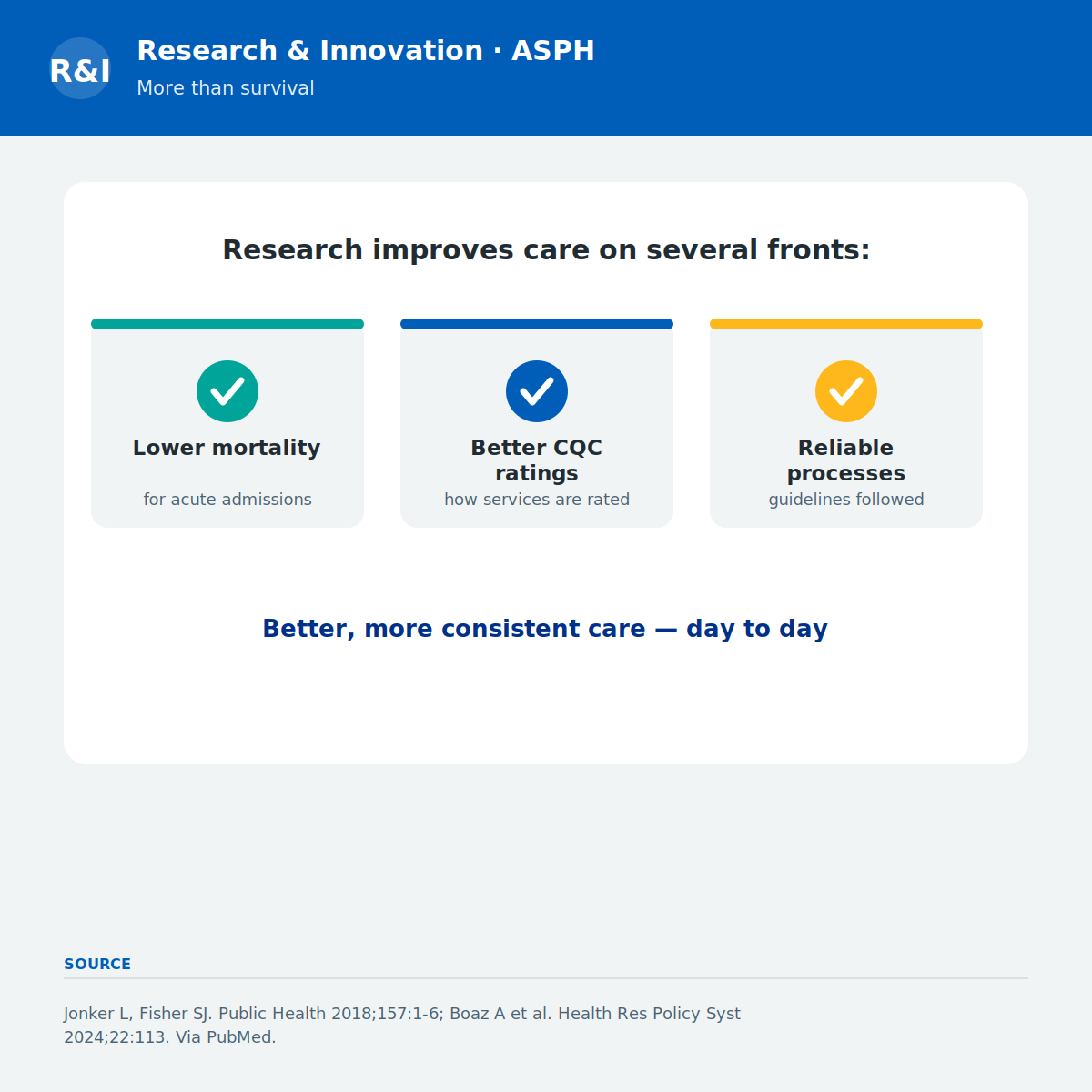
Research improves more than survival. Greater interventional research activity is linked to better CQC ratings across 129 NHS trusts (Jonker & Fisher 2018), and reviews report better care processes too (Boaz et al. 2024).
Better care, day to day.
#NHS#QualityOfCare
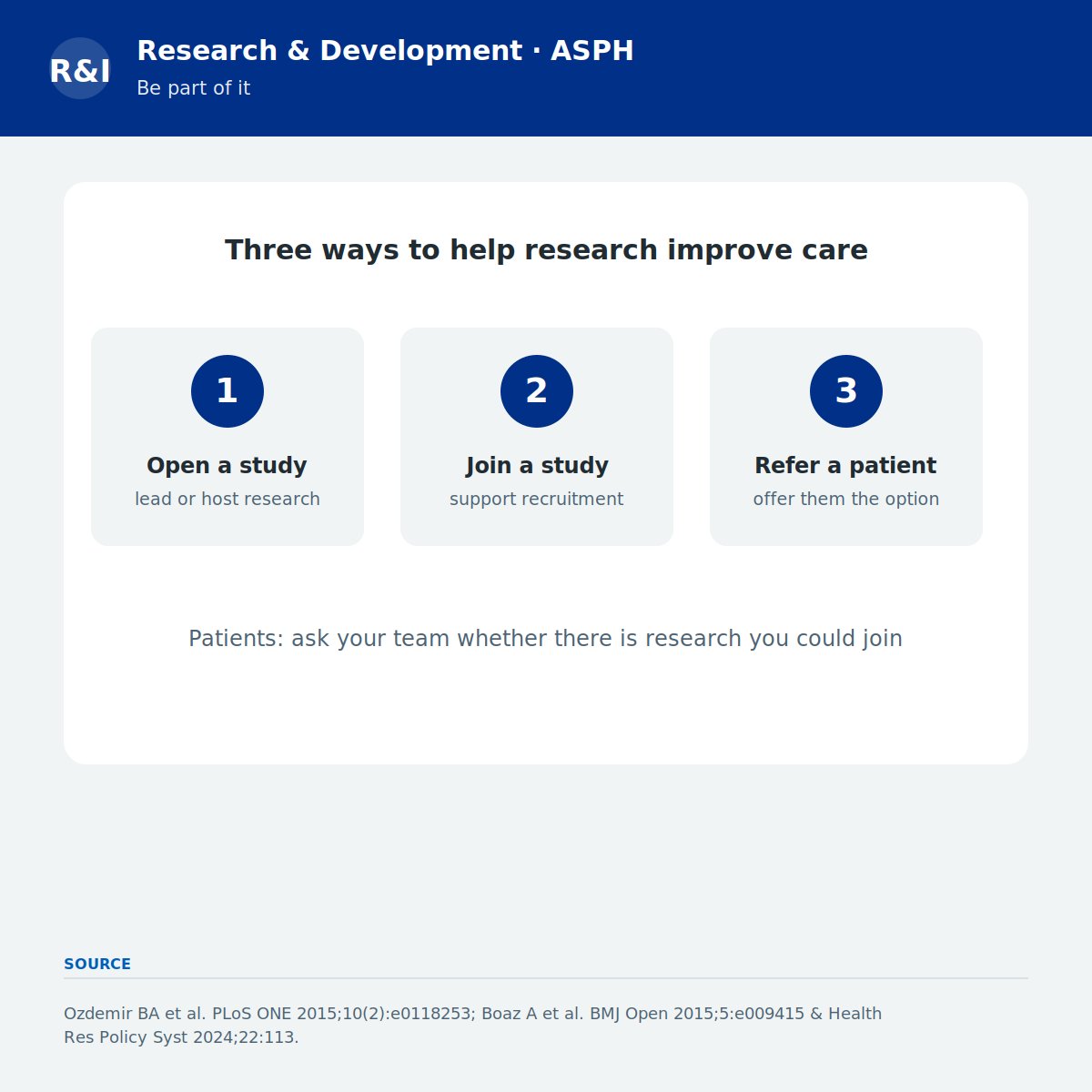
Research-active teams deliver safer, higher-quality care (Ozdemir 2015; Boaz 2015, 2024) — and it depends on people.
Colleagues: open or join a study. Patients: ask your team about research you could take part in.
#ClinicalResearch#NHS#ASPH
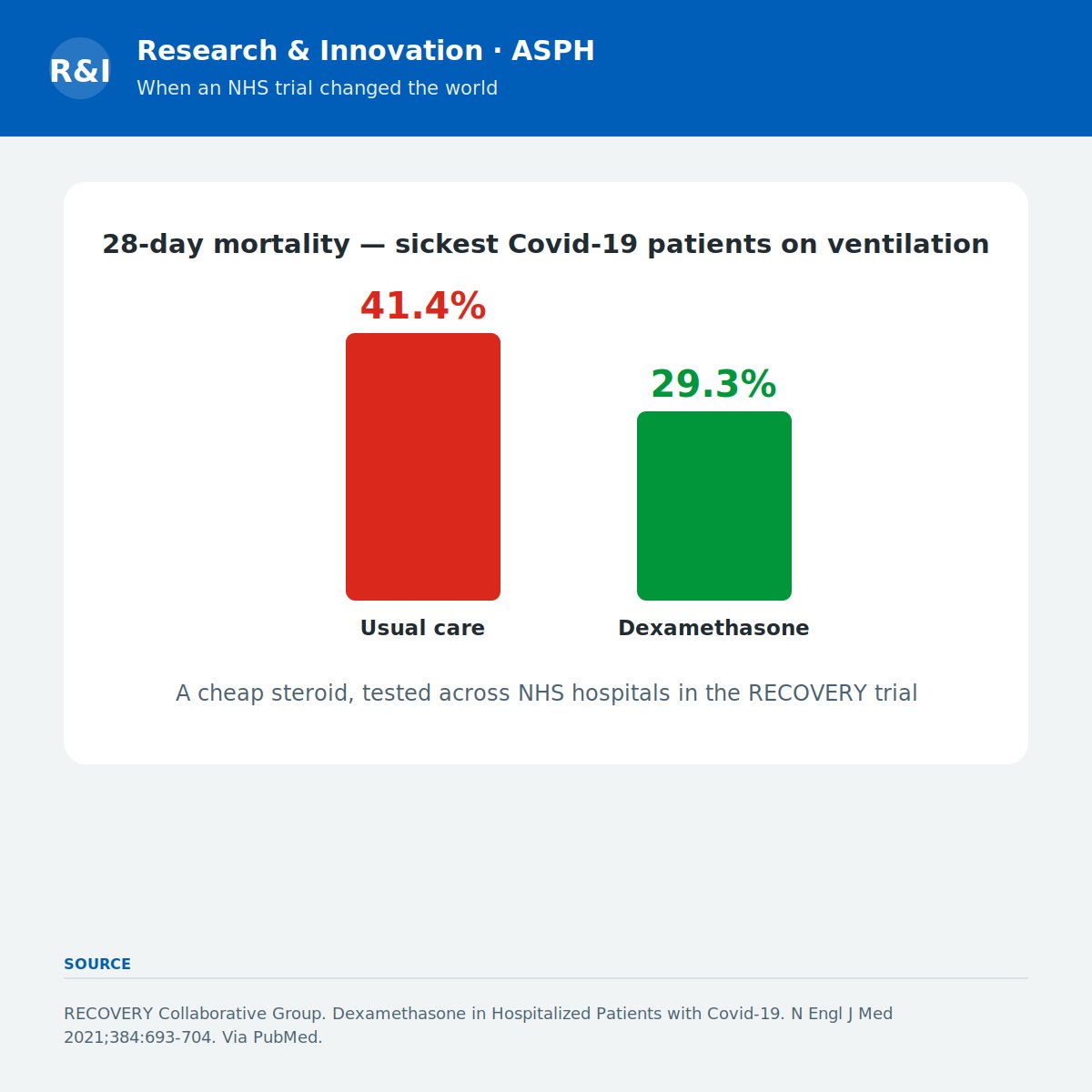
A cheap steroid. An NHS trial. Lives saved worldwide.
The RECOVERY trial showed dexamethasone cut 28-day deaths in ventilated Covid-19 patients from 41.4% to 29.3% (RECOVERY Collaborative Group, NEJM 2021).
Why hospital research matters.
#RECOVERY#NHS#ClinicalTrials
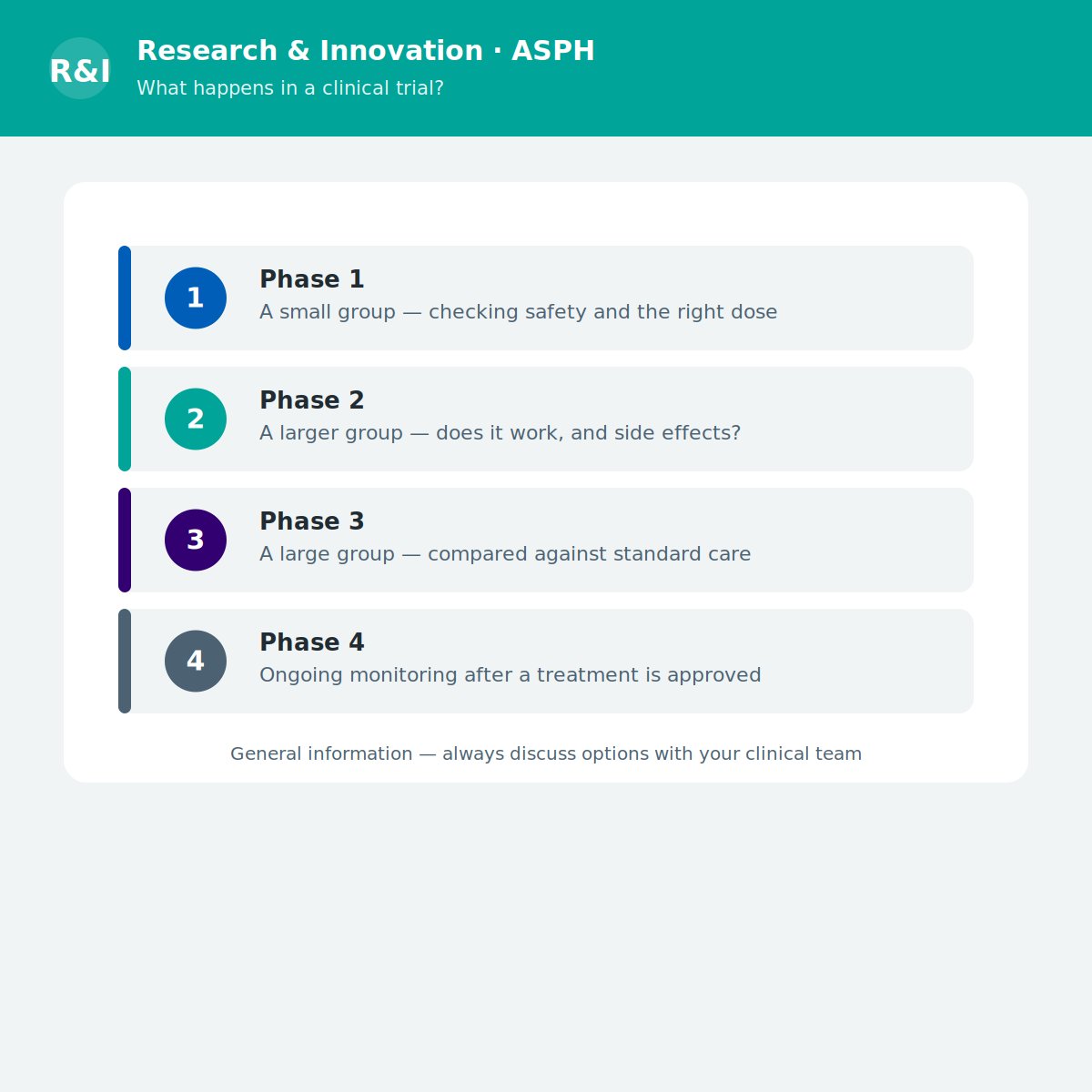
What happens in a clinical trial?
Phase 1: safety & dose (small group)
Phase 2: does it work? (larger)
Phase 3: vs standard care (large)
Phase 4: monitoring after approval
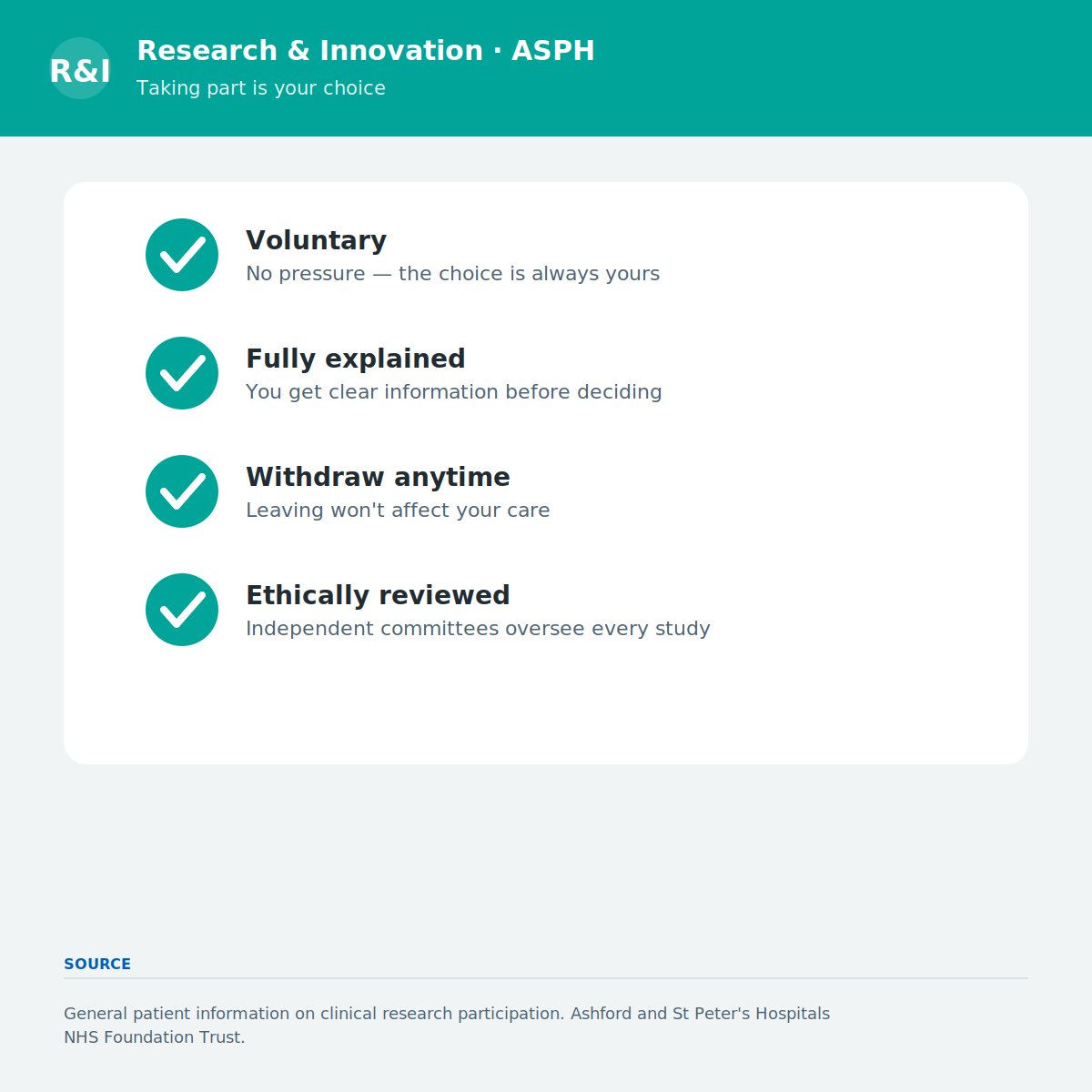
Voluntary, fully explained, withdraw anytime. Ask your team.
#ClinicalTrials#NHS#ASPH
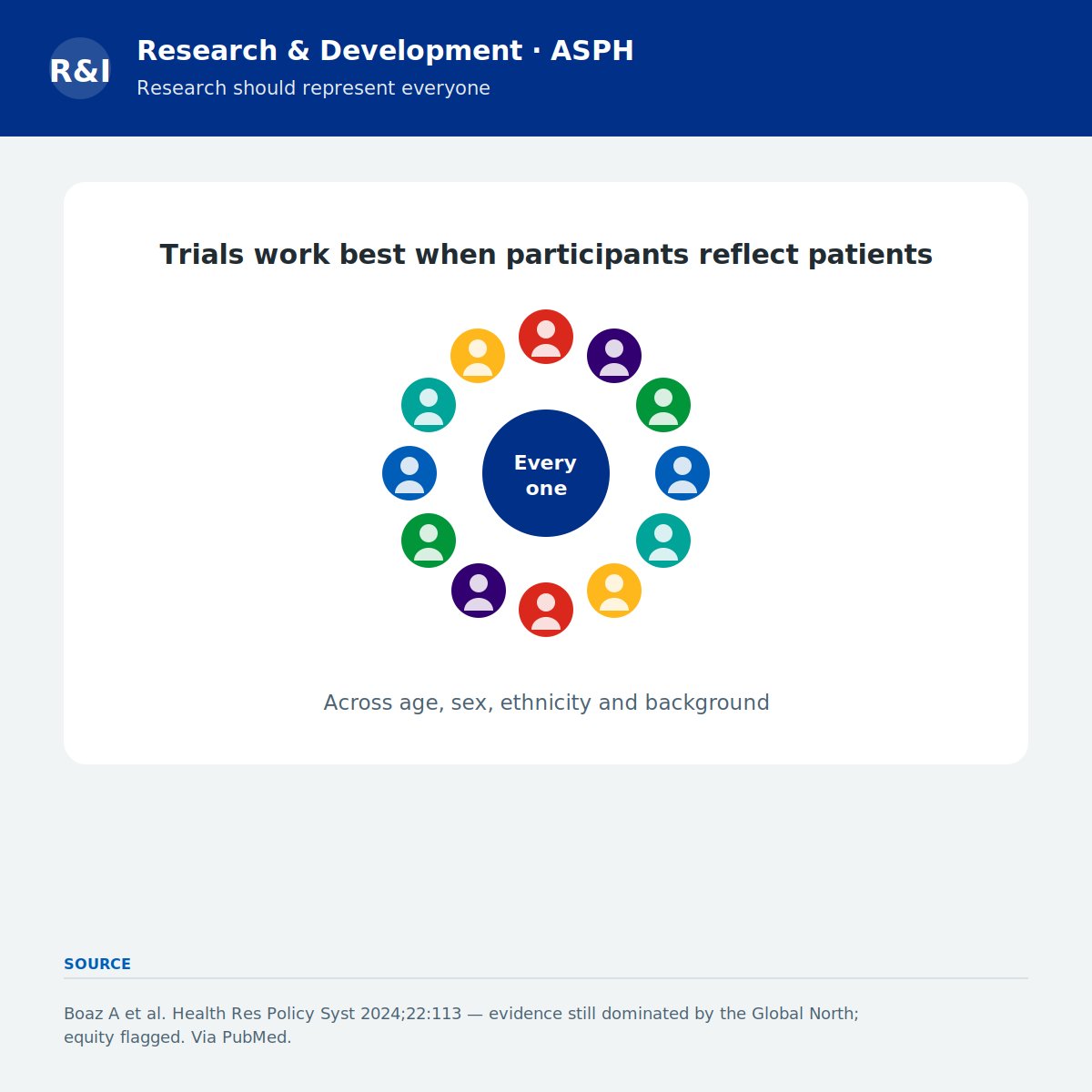
Research should represent everyone it aims to help.
A 2024 review found the evidence is still dominated by the Global North, and flagged equity (Boaz et al.).
Inclusive recruitment — across age, sex & ethnicity — makes research fairer & stronger.
#HealthEquity#NHS
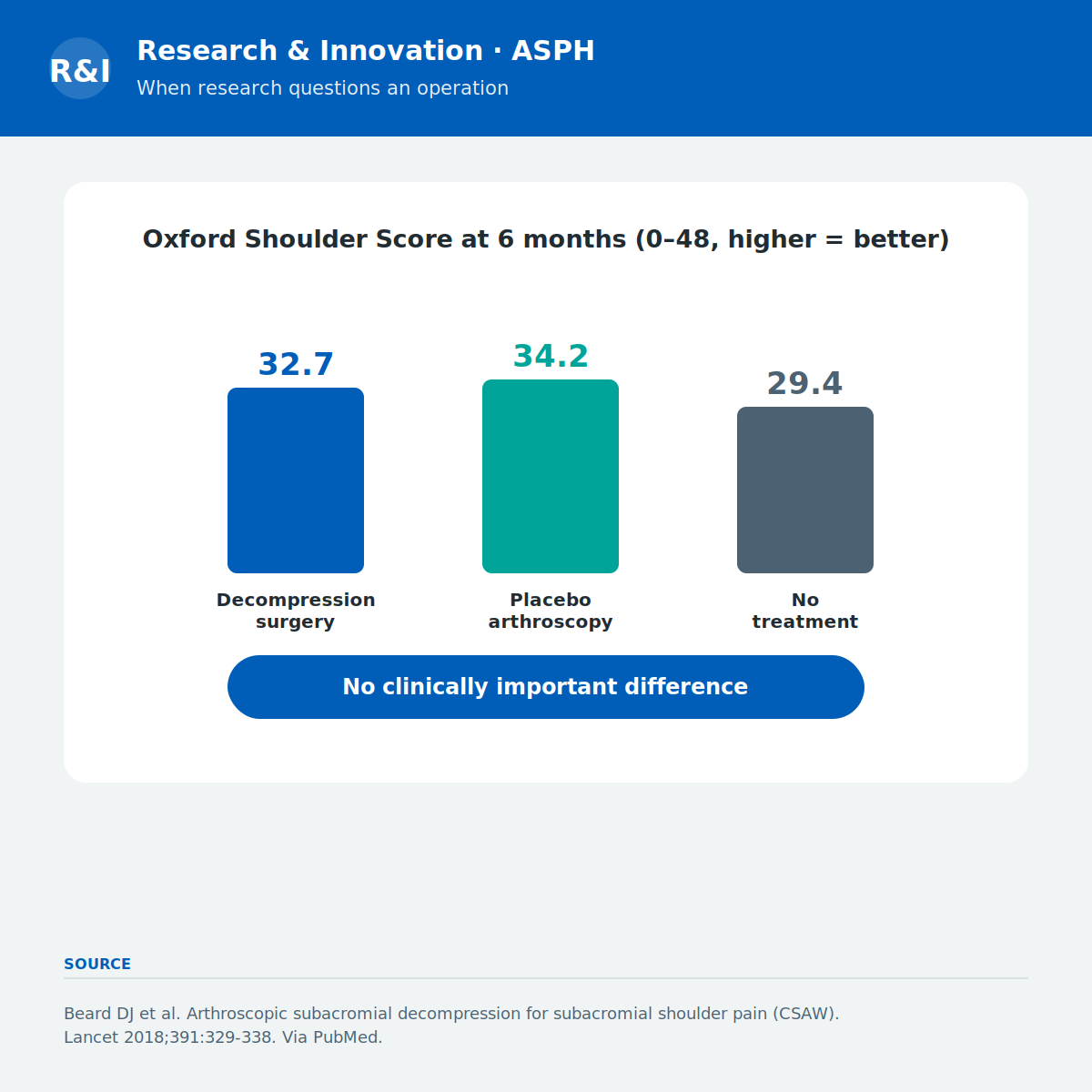
Sometimes the key finding is that an operation doesn't help.
CSAW — a UK trial in 32 NHS hospitals — found a common shoulder decompression op was no better than placebo surgery (Beard et al., Lancet 2018).
#ShoulderSurgery#NHS
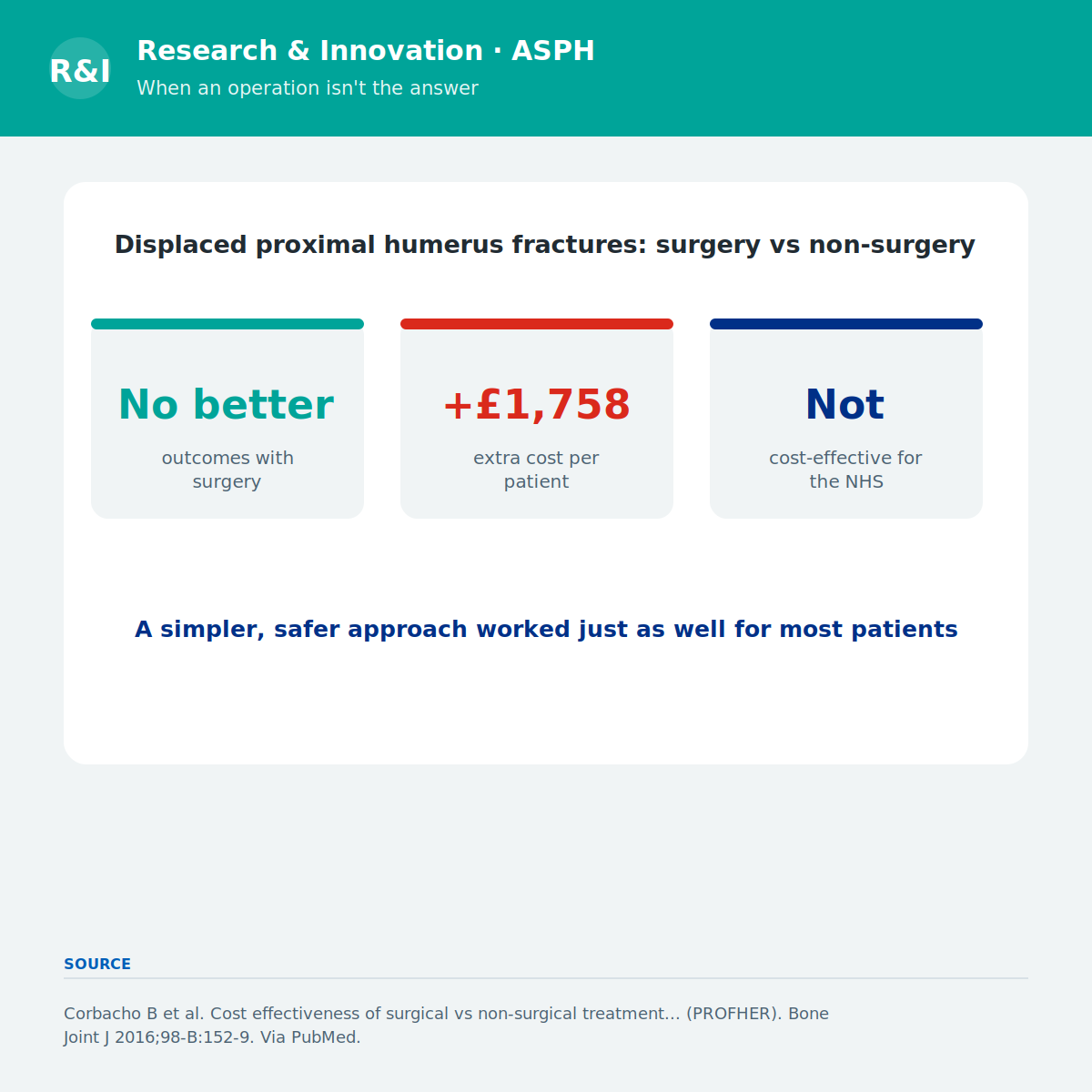
For many proximal humerus (shoulder) fractures, surgery is not the answer.
The NHS PROFHER trial found surgery gave no better outcomes than non-surgical care & wasn't cost-effective (BJJ 2016).
#Orthopaedics#NHS
'Negative' trials are among the most valuable research we do.
UK shoulder trials (CSAW, PROFHER) found some operations work no better than simpler care — fewer unnecessary surgeries.
Knowing what to stop matters.
#EvidenceBasedMedicine#NHS
Brilliant research deserves to be read.
Every year, outstanding research goes unnoticed
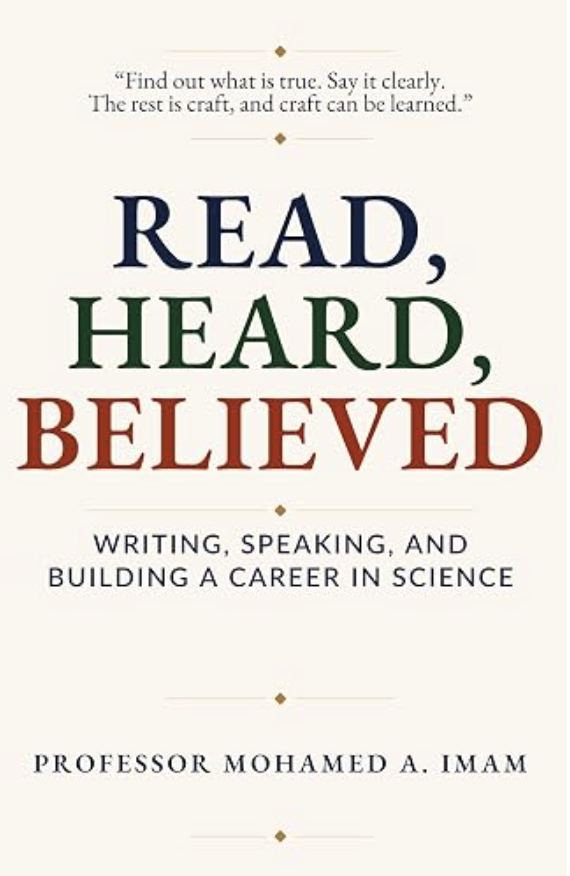
Read, Heard, Believed is the practical guide every researcher wishes they had before writing their first paper.
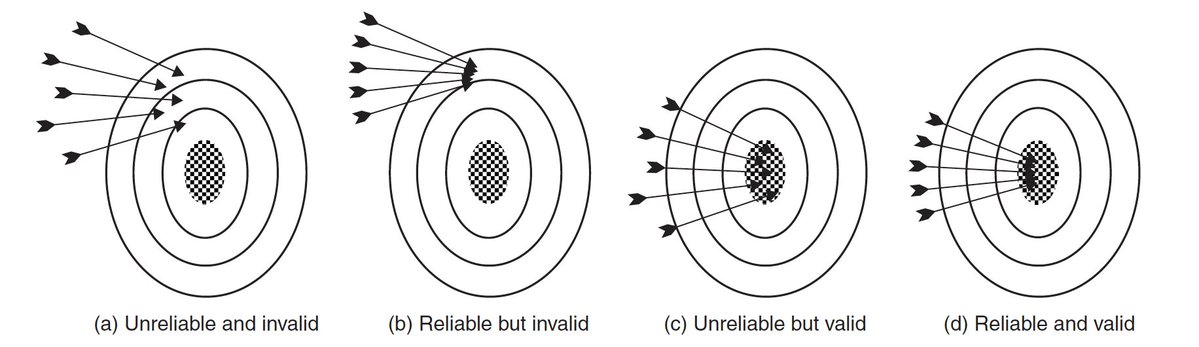
A target analogy for reliability and validity. The 'bull's eye' represents the true outcome to be measured, and each arrow
represents a single application of the outcome instrument.
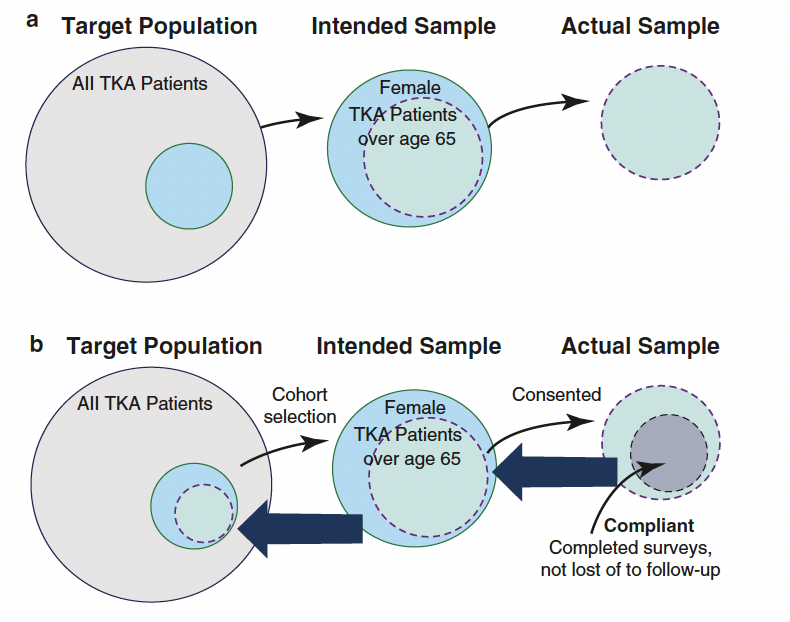
(a) Bias during selection may result in a sample population that is different from the intended study population. (b) Retention bias may result in a sample population that is not generalizable to the intended target population