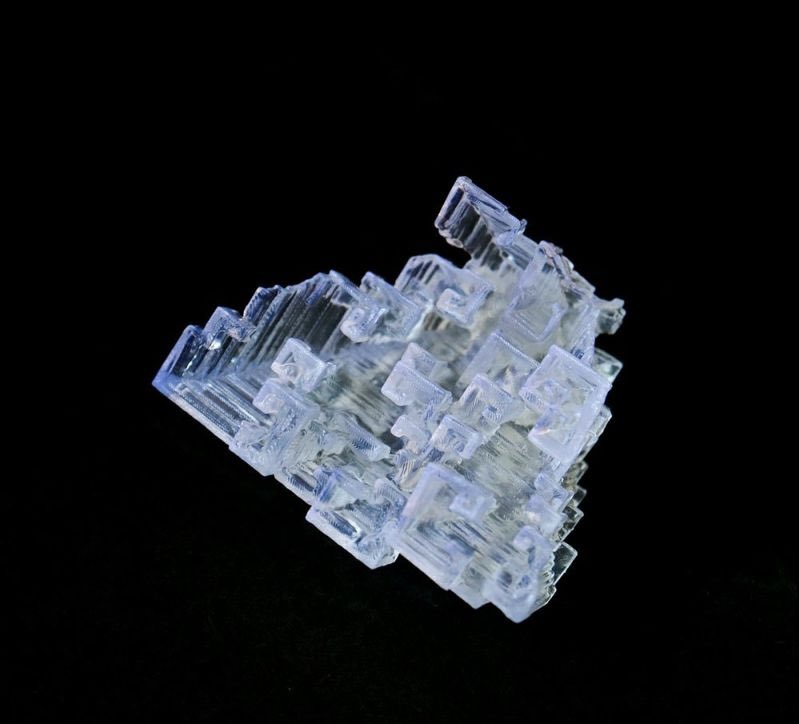
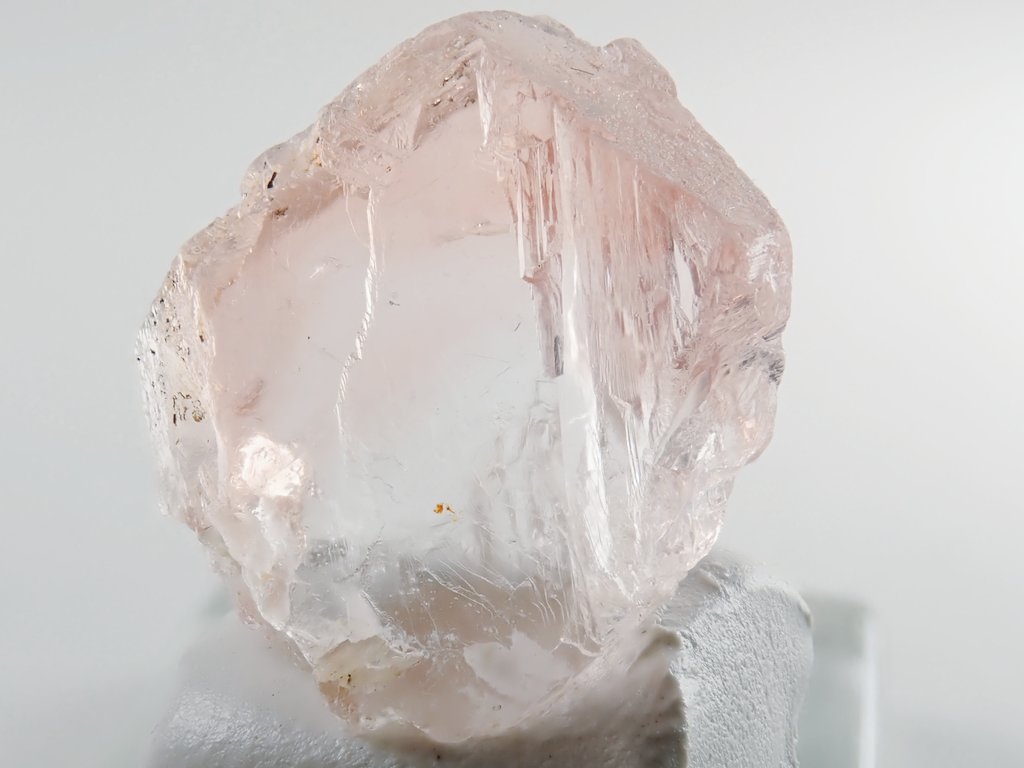
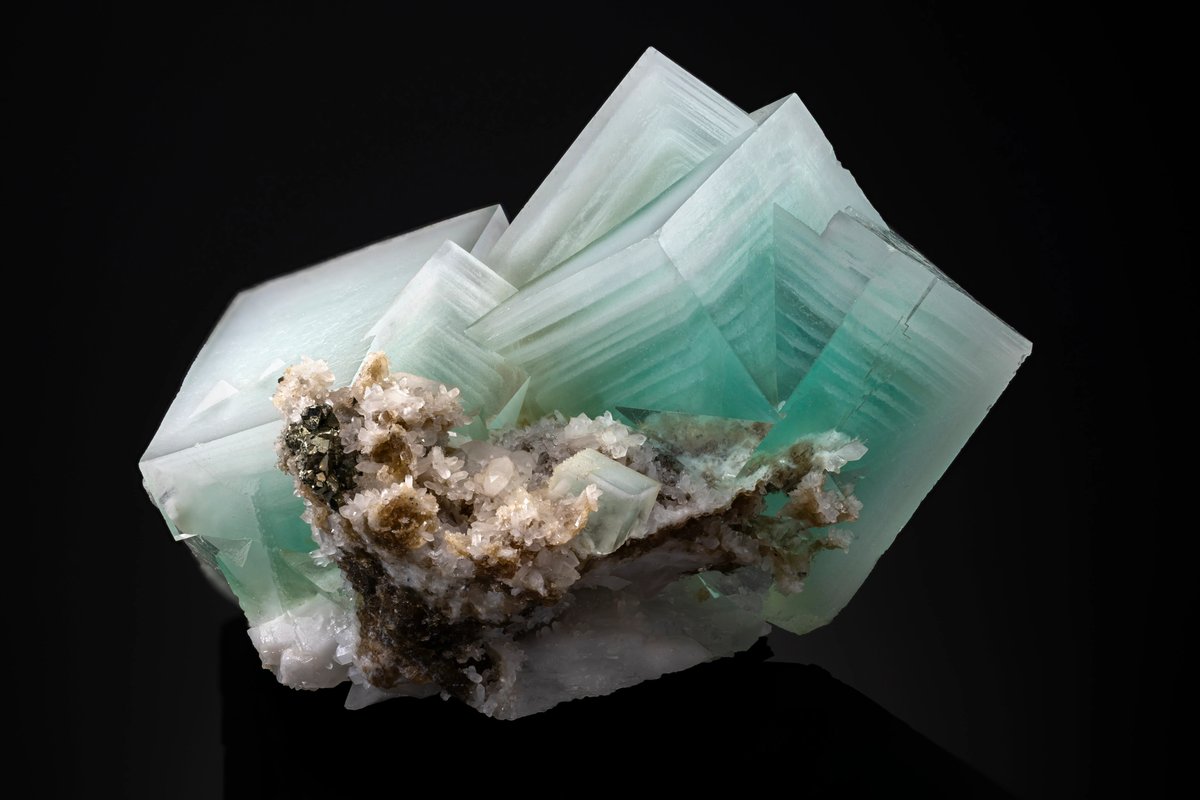
Been turning this Yaogangxian piece over in my head all afternoon because the growth habit on it is just plain weird for fluorite. Normal fluorite gives you clean cubes or interpenetrant octahedra, flat faces, done. This thing grew like a pagoda roof, stair stepped layers stacking back from each face instead of one smooth plane. You can actually count the ledges on the pyramidal terminations like tree rings turned sideways.
What's happening on the atomic level is that the crystal wasn't growing at a steady rate. Each face was building forward in pulses, and every time growth outran the supply of calcium and fluorine ions in the surrounding fluid, the leading edge stalled just slightly before the next pulse of saturated solution shoved growth forward again. Do that dozens of times and instead of one flat face you get a terraced stack, basically a fossilized record of the pocket chemistry lurching between undersaturated and oversaturated.
What gets me is the locality. Yaogangxian throws some of the sharpest, most photogenic cubic fluorite on the planet, that's the mine's whole reputation, crisp edges and saturated color zoning. So a pocket that also produced this stepped habit means the fluid there was capable of two totally different growth regimes depending on how stable conditions stayed during crystallization. Steady flow gives you the textbook cubes everyone collects Yaogangxian for. Turbulent, pulsing flow with temperature or pressure hiccups apparently gives you this.
I keep picturing what the pocket actually looked like while this was forming, fluid pushing in, dropping its load, backing off, pushing in again, over some span of time nobody can pin down exactly. Rare habit, and it makes me wonder how many other stepped specimens got broken down at the mine before someone realized what they were holding.
Link in 🧵