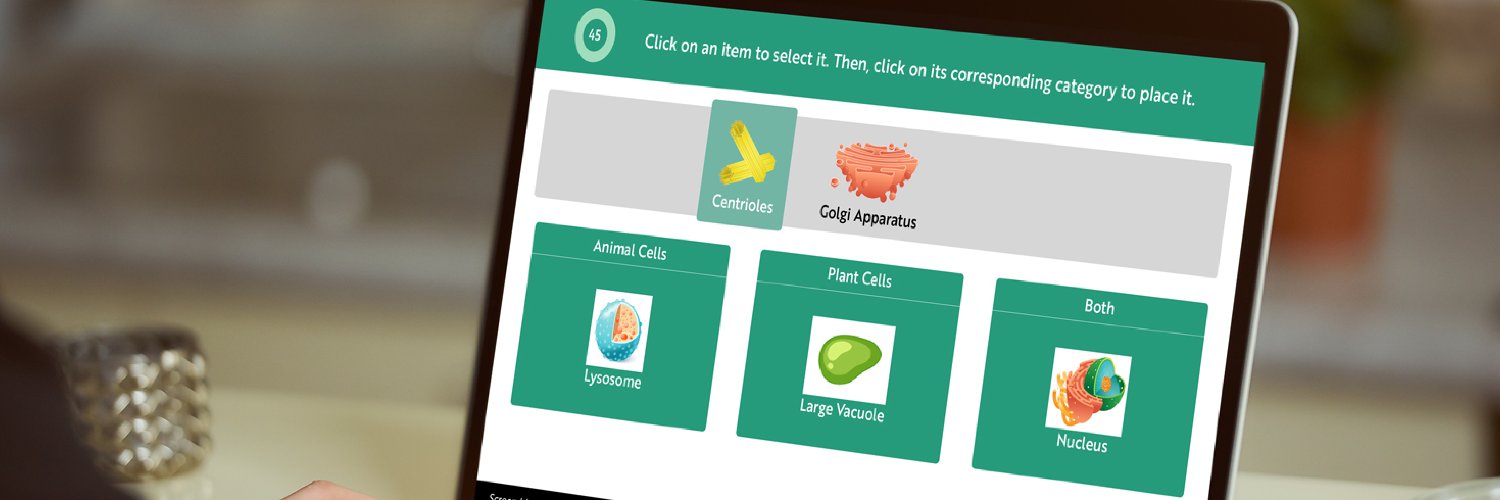
Most new “AI L&D tools” still force a new login, new prompts, or shallow outputs with no real measurement. That’s fighting human nature and adding friction exactly where we need speed.
Take a look at the data for social media and video game hours per week: "Key Insights from The CIRP
Freshman Survey 2024." Note that the data is self reported. Other research claims 70% of freshmen play games for 20+ hours/week.
“We are admitting a cohort that cannot read at a college level and are pretending otherwise.”
Another college professor adds to the chorus of concern about student capacity.
In @chronicle:
“Six weeks into the term, I assigned my rhetoric and writing students a 20-page article. It was the same length I had assigned for five years and the same length I had read without complaint as an undergraduate a decade ago. Not one student finished it.
When I asked why, a student answered honestly: It was too long, and she kept losing track of what the paper was about. This was not a remedial class: These were students who had cleared the admissions process and written essays good enough to get them here. Yet a routine academic reading assignment had defeated them.
Every generation of professors has complained that their students cannot read. The lament is usually overblown, but data have caught up to anecdote, and what I am seeing in my classroom is no longer a hunch. There is a measurable, generational collapse in sustained reading and writing, and the academy is responding to it with improvisation and exhaustion rather than the structural overhaul it requires.
In February 2024, Adam Kotsko, who teaches in the Shimer Great Books School at North Central College, wrote in Slate that students who once handled 30 pages of reading per class meeting now seem “intimidated by anything over 10 pages and seem to walk away from readings of as little as 20 pages with no real understanding.” Crucially, he added that this is “not a matter of laziness on the part of the students” but of underlying skills they were never given a chance to build.
The Chronicle of Higher Education’s 2024 investigation found the same pattern across institutions as different as the Stevens Institute of Technology and Wellesley College, where the average SAT exceeds 1400. Nicholaus Gutierrez, an assistant professor at Wellesley, told The Chronicle that the baseline for what students consider a reasonable amount of work has dropped so noticeably that he has cut his readings accordingly; a 750-word essay now strikes many students as long. At Stevens, the science and technology studies associate professor Theresa MacPhail described following the mantra of “meet your students where they are” for so long that she has begun to feel “like a cruise director organizing games of shuffleboard.”
Worse, the national data tell the same story in colder language. On the 2011 National Assessment of Educational Progress (NAEP) writing assessment, which is the most recent comprehensive writing benchmark, only 24 percent of 12th graders reached the Proficient level, and just 3 percent reached Advanced; another 21 percent scored below Basic. The reading side of the ledger is worse, and getting worse fast: The 2024 NAEP results released in September 2025 show 12th-grade reading scores at the lowest level recorded since the assessment began in 1992. Thirty-two percent of 12th graders now score below NAEP Basic in reading, meaning that, in the assessment’s own language, they likely “cannot draw general conclusions based on concepts presented explicitly in a text.” And yet more than half of these same seniors reported being accepted to a four-year college. That last sentence is the whole problem in one line: We are admitting a cohort that cannot read at a college level and are pretending otherwise.”
Non-technical people won’t give up their favorite chat agent. They’ve already chosen it — Claude, ChatGPT, Grok, whatever feels natural. Our job in L&D isn’t to replace it. It’s to make it the most powerful starting point they’ve ever had for real learning work.
@tomfgoodwin Science goes back to Krugman (1969) & Fuller (1978): passive viewing flips brainwaves from beta (active) to alpha (zoned-out) in <2 min. Richard Munro, HBO CEO in 1978, shared this & changed my life.
A former chapter president describes how conferences, chapter leadership, volunteering, and professional relationships shaped a career that spanned leadership roles at AT&T, Lucent, and others.
What are the most valuable takeaways?
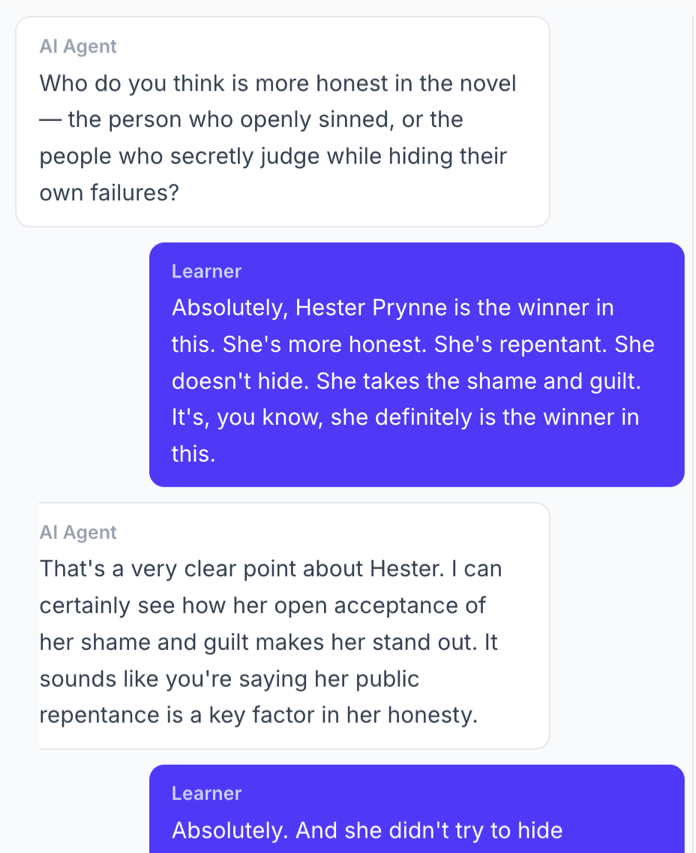
@rodjnaquin Here's an amazing use of AI:
This is a chunk of the transcript from a conversation between a GED student and a conversational agent. The topic was "The Scarlett Letter."
Have you ever felt like you were standing at a crossroads, unsure of your path? Joe Alvarez knows that feeling. His journey with the Association for Talent Development (ATD) is nothing short of inspirational.
When Joe first joined ATD, he was a quiet observer. Through workshops and networking events, mentoring, Joe discovered the power of community and mentorship. He connected with industry leaders who not only fueled his knowledge but also inspired him to believe in his potential.
Fast forward to today, and Joe is thriving as a learning leader encouraging others on their journeys. Joe’s story is a testament to the magic that happens when you embrace the opportunities that come your way.
#ATDJourney #TransformYourCareer
Tomorrow. 8AM EDT.
REACHUM Office Hours — live Q&A on enterprise learning, AI, and workforce readiness. Always interesting!
No registration. No agenda. Just show up.
👉 https://t.co/pOaEiF2HLn
To mark the grant we're offering to walk you through a free custom role-play build and give you enough credits to engage your team for 3 hours. No tricks, no pitches - you'll see for yourself how powerful this is.
https://t.co/od9jt15Sm2
We are proud to announce a grant form @ElevenLabs to build a conversational role-playing agent. The result is a web based app that you can configure for any situation in minutes – sales, customer service, management, deescalations, negotiations -
It's ideal to practice any sort of difficult conversation so that your team is ready when the time comes.
The avatars have been taught to talk back at various levels of difficulty and deliver real challenges that fit learner circumstances. And if you play 15x, each time is different.
Got a question you've been sitting on about learning technology or AI in the workplace?
Tomorrow, Wed March 18 at 12:30 PM ET — open office hours.
No agenda. No pitch. Just a straight conversation.
Bring it!→ https://t.co/mAWfrydVh6
Notebook LLM took our 67 page user guide and created a 5 minute video overview in 5 minutes. The naturalist vocal performance is outstanding. Cost = zero with a Google Workspace subscription.
https://t.co/xNKtZDb4IZ
#NotebookLM#AI