The International Monetary Fund on Monday said its executive board approved #Rwanda's request for a new $250 million, 38-month extended credit facility to help it deal with tighter global financial conditions, while protecting social and development spending.
The global lender said in a statement its board approved the new facility and authorized an immediate disbursement of $35.7 million.
#Nigeria: Imo State
June 8, 2026
+++ Imo Has Transformed Into an Investment Haven, Governor Uzodimma Tells Invest Lagos 3.0 Summit
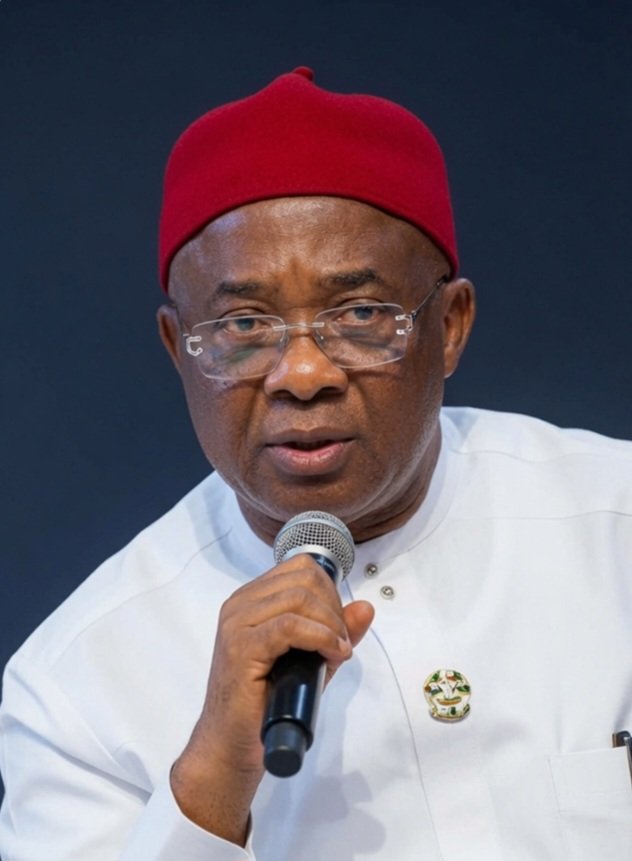
Governor @Hope_Uzodimma1 of Imo State mounted the stage at the Invest Lagos 3.0 summit today, making a strong case for Imo state as a prime destination for local and foreign investors.
Speaking at the trade and investment forum held at Eko Hotels & Suites in Victoria Island, the governor declared that Imo has shed its old image and now stands as a transformed “investment haven,” driven by infrastructure upgrades, improved security, power sector reforms, digital governance, and business‑friendly policies.
Governor Uzodimma redefined the acronym IMO to mean “Investment Meets Opportunities,” explaining that his administration has moved away from running businesses directly and instead acts as an enabler that creates space for the private sector to thrive.
He outlined key achievements, including a public‑private partnership that now allows the state to generate, transmit, and distribute electricity, with parts of the state capital enjoying 24‑hour power supply under Phase 1 of the initiative. An Energy Free Trade Zone has also been established, attracting investments in petrochemicals, fertiliser, gas processing, and related industries.
On infrastructure and ease of doing business, the governor noted major road projects, a digitised land administration system to reduce fraud, harmonised tax policies, and strengthened security measures that have made operations safer and more profitable for enterprises.
In the area of human capital, he revealed that over 65,000 youths have been trained in digital skills through the Imo Digital City initiative, with many now employed or running their own technology businesses.
Governor Uzodimma highlighted specific sectors ripe for investment. In agriculture, he pointed to the African Development Bank Quality Assurance Centre for exports. In aviation, the upgrade of Sam Mbakwe International Cargo Airport. The hospitality sector is seeing new interest, with Hilton Hotels set to arrive in Owerri. He also cited opportunities in technology and innovation, then logistics via the Orashi River corridor development, and the state’s strategic location between major commercial hubs such as Onitsha, Aba, and Port Harcourt, which gives investors access to southern Nigeria’s markets and positions Imo as a regional gateway.
“Seeing is believing,” the governor told the gathering of over 1,000 delegates, inviting them to visit Imo and witness the opportunities firsthand.
He later joined panel discussions alongside Lagos State Governor Babajide Sanwo‑Olu and Abia State Governor Alex Otti.
@martinokorowu@okoliecollins5@ChiHerbert9@investlagos_
#Nigeria; 4th June 2026
38th FUTO CONVOCATION LECTURE - Owerri. Imo State
● Emeka Mgbudem Esq. Commissioner for Petroleum & Natural Gas Development reacts to Gov Hope Uzodimma's lecture at FUTO
#QUOTE
"Your Excellency, many thanks for an excellent lecture. I am so glad that the world is listening to your very brilliant mind.
Your lecture brilliantly dymystified the complexities of the Fourth Industrial Revolution, making the rapid advancements in AI feel both accessible and urgent.
I especially appreciate how you seamlessly connected theoretical concepts with real-world applications, leaving the audience with a profound understanding of where we are heading.
It was a truly engaging, visionary, and thought-provoking presentation. The Stanford, Rwanda, and IIT examples were very inspiring.
Thank you for emphasising curriculum recaliberation, tech innovation licensing, and structured public-private partnership/collaboration in driving sustainable progress.
Thank you most especially for warning the nation on the dangers of graduating students and sending them out to work in an economy that would not exist in the next few years.
Congratulations, sir.
~ Emeka Mgbudem Esq. Commissioner for Petroleum & Natural Gas Development. Imo State.
@THISDAYLIVE@Hope_Uzodimma1@LeostanEkeh@LBSNigeria
Ousmane Sonko is expected to hold a major press briefing in the coming hours as tensions mount over Senegal President Diomaye Faye's new government that bypasses the ruling party PASTEF, and seemingly Macky Sall/Faye newfound relations.
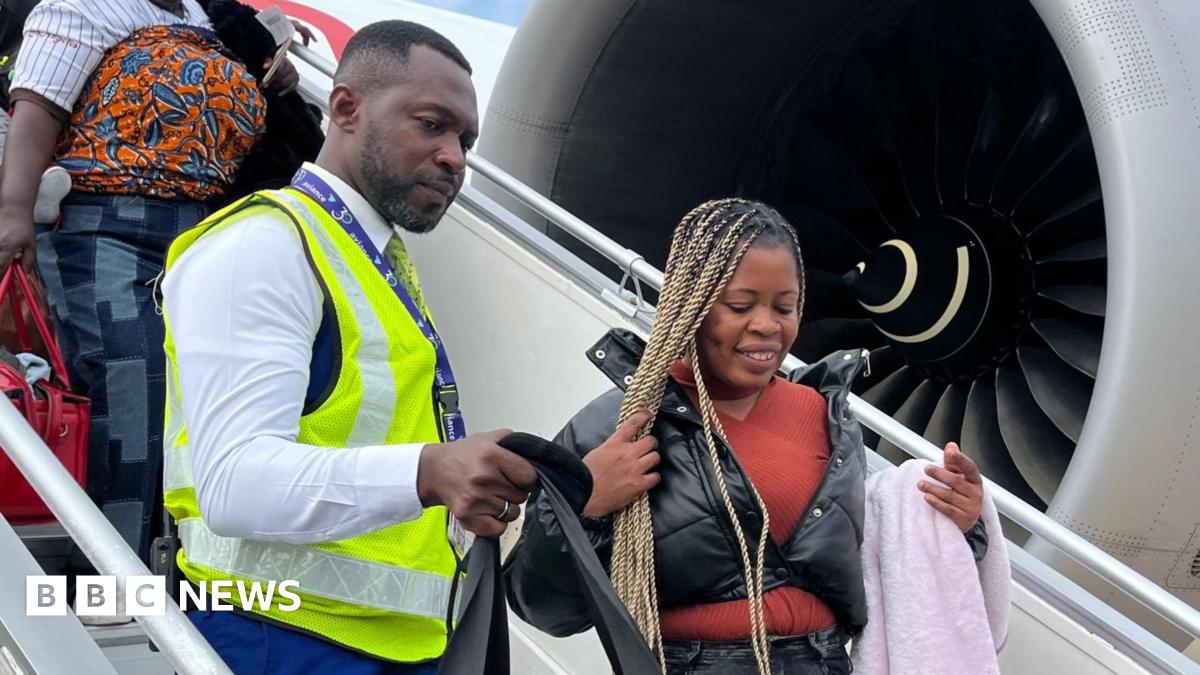
A flight carrying nearly 300 Ghanaians, repatriated from South Africa amid fears there could be a resurgence of xenophobic violence there, has landed in Ghana's capital city, Accra. https://t.co/xRtOT4rFpH
Senegal’s Ruling Party Lays Out Demands for President Faye Ahead of New Government Formation
Senegal’s majority party, PASTEF/Les Patriotes, led by National Assembly President Ousmane Sonko, has issued a firm set of prerequisites for President Bassirou Diomaye Faye as he begins consultations to form a new government.
While the party has expressed readiness to back President Faye “through sincere and accountable cooperation in the execution of public policies,” it insists that any such collaboration must follow clear programmatic guidelines.
Among the party’s key conditions are:
· Remaining strictly committed to the agenda that brought the party to power in 2024.
· Clarifying the strategy for managing sovereign debt.
· Rejecting any measures that would drive up living costs.
· Continuing efforts to renegotiate strategic contracts.
· Upholding the fight against corruption and monitoring illicit financial flows.
· Addressing judicial matters in a defined manner.
· Determining the structure, allocation, and distribution of ministerial positions.
The party also warned President Faye against consulting its members individually during the government formation process. “Any party member who participates in such individual consultations will be doing so in a personal capacity,” the statement read.
It further emphasized: “These discussions must not be held individually with party members, but exclusively with the party’s duly mandated institutional body.”
🇸🇳Ousmane Sonko: “There will be no system of hyper-presidentialism in Senegal today.”
Senegal’s parliament erupted in celebration and dance as Ousmane Sonko took his seat as the new President of the National Assembly, amid escalating tensions with President Bassirou Diomaye Faye.
“What is at stake is the relationship between morality and politics,” Sonko declared.
“The National Assembly will use all its levers of power firmly but responsibly moving forward,” Sonko warns in his first address, as he officially becomes Senegal’s second-highest state authority.
"I will not use the Assembly to feed personal vendettas. That would be a betrayal to our very own struggle."
While insisting that his party, PASTEF, will give President Faye “the best conditions to complete his term”, Sonko maintains that his party must remain central to the functioning of government. He argues that the appointment of the new Prime Minister, Ahmadou Al Aminou Lô, was carried out without adequate consultation with the ruling party, PASTEF.
“Our party was not involved in this decision to appoint the new prime minister. It was also not consulted in the formation of the government. You can’t have PASTEF without PASTEF.”
“I know the Prime Minister personally having worked with him for a year and a half during which he accomplished a tremendous amount of work.”
However, Sonko says he had “certain disagreements” with him on monetary and debt-related issues.
Headline: Ousmane Sonko Makes Stunning Return: Elected Speaker of Senegal’s National Assembly Hours After Reinstated as Deputy
Dakar, Senegal – May 26, 2026
In a dramatic display of political maneuvering, Ousmane Sonko has risen from recently dismissed Prime Minister to the second most powerful position in Senegal, after being elected President (Speaker) of the National Assembly today. During an extraordinary session of the National Assembly, lawmakers first voted to reinstate Sonko as a deputy.
He had originally won a seat in the 2024 legislative elections but suspended his mandate to serve as Prime Minister. Minutes later, Sonko was elected Speaker, securing a landslide **132 out of 133 votes** cast. The opposition largely boycotted the session, describing the process as controversial and irregular. However, PASTEF, which maintains a strong majority of around 130 seats out of 165, pushed the move through using the Assembly’s internal rules, particularly Article 124 governing the reintegration of former government members.
The swift transition was facilitated by the resignation of the previous Speaker, El Malick Ndiaye — a close Sonko ally — on May 24, clearing the path for today’s events. This development comes just days after President Bassirou Diomaye Faye dismissed Sonko as Prime Minister on May 22–23, 2026, amid growing tensions within their once-united PASTEF alliance.
President Faye has since appointed economist Ahmadou Al Aminou Lo as the new Prime Minister. ### A Historic Power Shift Sonko’s election as Speaker positions him as the second most powerful figure in Senegal’s institutions. The Speaker stands next in the line of presidential succession and wields significant influence over the legislative agenda, giving Sonko considerable leverage despite no longer holding executive office. Political analysts describe the move as a masterclass in political chess, allowing Sonko to maintain strong institutional power while exposing deep cracks in the relationship between Senegal’s two most prominent opposition-turned-governing figures.
The events mark a rapid and unexpected turn in Senegalese politics, just over a year after PASTEF’s historic victory in the 2024 presidential and legislative elections. Major international outlets including France 24, Bloomberg, and Al Jazeera have confirmed the developments through live reports from Dakar.
As Senegal watches closely, today’s events signal that the rift between President Faye and Ousmane Sonko is not only real but now deeply institutionalised — with major implications for governance and political stability in the coming months.
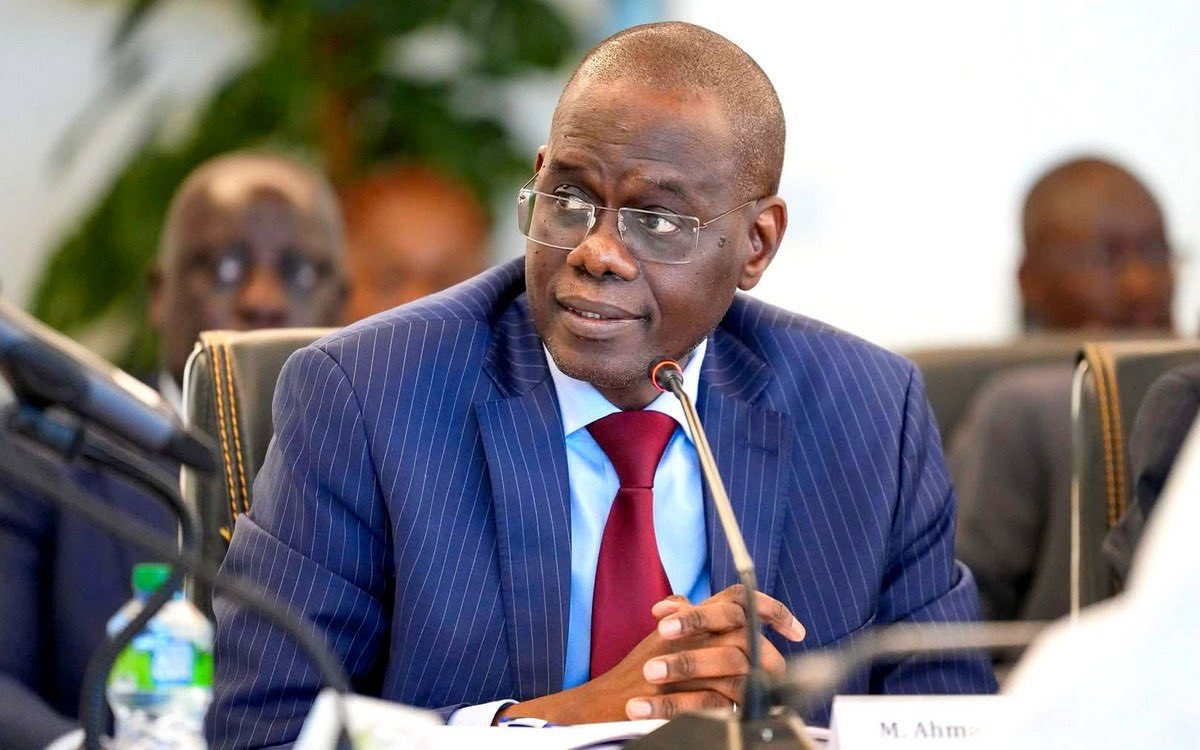
Senegal’s President Bassirou Diomaye Faye has named Ahmadou Al Aminou Lo as the country’s new Prime Minister, succeeding Ousmane Sonko.
Sonko is expected to assume the role of President of the National Assembly on Tuesday. Ahmadou Al Aminou Lo previously held the position of Secretary-General of the Government and, more recently, served as Minister of State in the Presidency. In that capacity, he oversaw the monitoring, coordination, and assessment of the national development blueprint known as “Vision 2050.”
A close confidant and leading technocrat of President Faye, Lo’s elevation to Prime Minister signals a deliberate move by Faye to reorganize the executive arm of government firmly under his direct control and distance it from Sonko’s political bloc.
Romuald Wadagni, 49, a technocrat and former Finance Minister, was sworn in as Benin’s ninth president after a landslide victory. He represents continuity with the economic reforms of the previous administration while promising improved living standards and stronger security.
His wife, Nathalie Villette-Wadagni (often called the new Première Dame), is a respected Franco-Burkinabè banker with an impressive international career in finance. She has largely stayed out of the public eye until now but is already making a positive impression through early engagements, such as visiting the Indigo Village, where she highlighted women’s entrepreneurship and traditional craftsmanship.
Together, they project a modern, professional image: a high-achieving Beninese leader paired with a accomplished international finance expert. Their partnership blends local roots with global experience, signaling a new chapter for Benin focused on economic development and inclusive progress.
The couple appeared together at the inauguration ceremony in Cotonou, warmly welcomed as they begin this new national journey.
Benin’s new president, Romuald Wadagni, has appointed a finance ministry veteran and former economist at the International Monetary Fund as the country’s new finance chief.
Wadagni named Aristide Medenou to be minister of economy, finance and cooperation, according to a statement broadcast on state television. Medenou worked at the ministry between 2014 and 2022 before joining the IMF. He returned from the fund.
Ousmane Sonko is set to take over as President of Senegal’s National Assembly, where his PASTEF party holds a commanding majority. This move represents a bold challenge to President Bassirou Diomaye Faye. Lawmakers have been called to an emergency session on Tuesday morning to formally reinstate Sonko as a deputy and elect a new Assembly leader. The current president, El Malick Ndiaye—a close Sonko ally—resigned on Sunday. The development further strains Faye’s reform agenda. Just days earlier, the president had dismissed Sonko as Prime Minister following prolonged tensions between the two allies. Faye must now appoint a replacement, who will need approval from the National Assembly within three months. Meanwhile, President Faye is barred from dissolving parliament until November. A recent electoral code reform also restores Sonko’s eligibility to contest the presidency.
Senegal in Turmoil: President Faye Sacks Prime Minister Sonko, Dissolves Government Amid Deepening Rift
Dakar, Senegal – In a dramatic escalation of long-simmering tensions, Senegalese President Bassirou Diomaye Faye has dismissed Prime Minister Ousmane Sonko and dissolved the government on May 22, effectively ending their once-powerful political alliance.
The move comes after months of growing friction between the two leaders, who rose to power together through the PASTEF (African Patriots of Senegal for Work, Ethics and Fraternity) movement in the historic 2024 presidential election.
What began as a close partnership has fractured over key issues including control of the ruling party, divergent economic policies, negotiations with the International Monetary Fund (IMF) over Senegal’s mounting debt, and competing influence ahead of future legislative and local elections.
Sources close to the presidency cited irreconcilable differences in governance style and strategic direction as the primary triggers for the split. Sonko, known for his fiery populist rhetoric and strong anti-establishment stance, had reportedly clashed with Faye over the pace and terms of economic reforms needed to address Senegal’s debt crisis.
With this decision, President Faye has moved to consolidate authority as the country grapples with economic uncertainty. Senegal continues to face significant fiscal challenges, including high public debt levels and ongoing talks with international creditors.
In the immediate aftermath, outgoing ministers will continue managing day-to-day governmental affairs until a new Prime Minister is appointed and a fresh cabinet is formed. The dissolution has injected fresh uncertainty into Senegal’s political landscape, raising questions about the stability of the Faye administration and the future direction of the West African nation. This unexpected rupture marks a significant turning point for Senegal, a country that had been viewed as a beacon of democratic stability in the region following the smooth 2024 power transition. Political analysts will be closely watching how quickly the president can reconstitute a government and whether this split weakens or strengthens his position heading into the next electoral cycle. Further developments are expected in the coming days as the president announces his new prime ministerial pick.
Zimbabwe Begins Returning Commercial Farms to Former European Owners
Zimbabwe has confirmed that the process of returning dozens of commercial farms to their former European owners is currently underway.
The properties were seized more than 20 years ago during the land reform program implemented under former President Robert Mugabe.
The move marks a significant shift in one of Africa’s most contentious land disputes, signaling a new phase in the country’s approach to agricultural policy and property rights.
Rwanda’s Exit From Cabo Delgado Would Leave Security Vacuum
Without funding, RDF counterterrorism efforts could end as early as May
https://t.co/bUPz8eIYLC