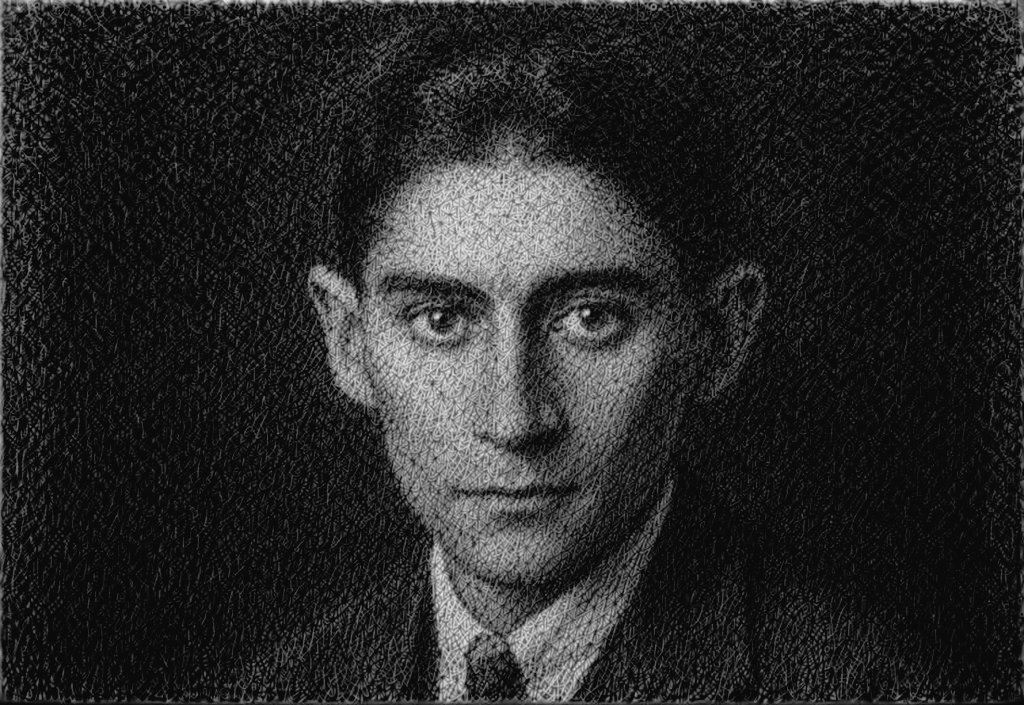
"Many cities have placed him [Julian] by the side of the statues of the gods and do honour to him with the gods, and already many a one has asked in prayer for some blessing from him, and has not been disappointed: so evidently hath he ascended up unto them"
- Libanius
Le poète latin Marcus Manilius sur la canicule de juillet, au début du Ier siècle :
« Lorsque le lion commence à nous montrer sa terrible gueule, le chien se lève, la canicule vomit des flammes : l'ardeur de ses feux la rend furieuse, et double la chaleur du soleil.
Quand elle secoue son flambeau sur le globe, et qu'elle nous darde ses rayons, la terre, presque réduite en cendre, semble être à son dernier moment; Neptune languit au fond de ses eaux, les arbres des forêts sont sans sève, les herbes sans vigueur.
Tous les animaux cherchent un asile sous un ciel lointain ; le monde aurait besoin d'un autre monde, où il pût se réfugier. La nature, au milieu de cet incendie, éprouve des maux dont elle-même est la cause, et elle vit en quelque sorte sur son bûcher; tant est grande la chaleur répandue par tout le ciel ! Les feux de tous les astres semblent concentrés dans un seul.
Lorsque cette constellation, sortant des eaux, commence à monter sur le penchant du globe, celui que l'eau de la mer effleure alors au moment de sa naissance sera d'un caractère violent et impétueux: livré à ses fureurs, il sera pour la foule un objet de terreur et de haine ; un tel homme précipite sans raison ses paroles ; il n'a pas encore ouvert la bouche, qu'il a déjà montré son emportement : le sujet le plus léger le met hors de lui-même ; il écume, il hurle au lieu de parler ; il se tord la langue, et ne peut achever son discours.
Un autre défaut rend celui-ci plus redoutable encore : Bacchus augmente la fureur de cet insensé, dont l'indomptable rage se porte aux derniers excès. La nuit des forêts, la hauteur des montagnes, la vue d'un lion terrible, les défenses d'un sanglier écumant, les armes dont les bêtes sauvages sont pourvues, rien n'est capable de l'intimider; il déploie sa fureur contre le premier ennemi qui se présente. Au reste, ne soyez pas surpris que cette constellation inspire de telles inclinations.
Ne voyez-vous pas qu'elle chasse elle-même dans le ciel? Elle cherche à atteindre dans sa course le lièvre qui fuit devant elle. »
Astronomique, livre V.
The Khazars were a semi-nomadic Turkic people that in the late 5th-century had established a major commercial empire covering the southeastern section of modern European Russia, Southern Ukraine, Crimea, Jordan and Kazakhstan.
They were nicknamed the “name stealers” by neighbouring countries that grew tired of their criminal behaviour of taking on the identities of those they murdered, as well as for their perpetuity for kidnappings, thievery, and road banditry, and are often know as “The Khazarian Mafia” today.
Khazaria was formed as a Kingdom ruled by an evil King named, Bulan, whose court included people trained in the occult Mysteries and Black Magic sciences of Babylon, Greece, and Rome.
In 740 A.D. Kievan Rus' (Russia) and other neighbouring countries such as Persia (Iran) gave the Khazarian King Bulan an ultimatum that they must adopt one of the three Abrahamic religions:
Judaism, Christianity or Islam.
They adopted Judaism, but continued to practice occult black magic rituals, including child sacrifice, blood-drinking, cannibalism, and Paedophila in order to worship and gain favours from Baal and Moloch, among other dark deities.
“Modern man is too busy to think about the meaning of life. We are constantly running, constantly consuming, constantly distracting ourselves from the quiet voice inside us that asks: Why are we here?”
— Andrei Tarovsky
“In spite of the flux of phenomena, life is indestructibly powerful and joyful ... With this chorus the profound Greek, so uniquely susceptible to the subtlest and deepest suffering, solaced himself.”
— Nietzsche
“As always, books remain a consolation—these light little ships for traveling through time and space and beyond their limits. As long as there is a book at hand and leisure for reading, the situation cannot be hopeless, not utterly unfree.”
— Ernst Jünger
The household itself stood at the center of Roman religious life. The Lares watched over the home and family, while the Penates safeguarded the prosperity and continuity of domestic existence.
“For these [the Romans] I set no limits in space or time; I have given them empire without end.” — Jupiter to Venus
Virgil, Aeneid Book 1, lines 278–279
The Euhemerist looks at a sacred narrative and asks, “Which historical event lies behind this story?”
Plutarch asks a different question: “What eternal truth is being communicated through this story?”
22 juin 1653, naissance du Cardinal de Fleury, précepteur aimé de Louis XV puis ministre d'Etat. Il est surnommé « l’apôtre de la paix ». En 1737, le Cardinal interdit la franc-maçonnerie.





![ThaddeusPapist's tweet photo. "Many cities have placed him [Julian] by the side of the statues of the gods and do honour to him with the gods, and already many a one has asked in prayer for some blessing from him, and has not been disappointed: so evidently hath he ascended up unto them"
- Libanius https://t.co/1bC1aCe8V4](https://pbs.twimg.com/media/HLv1n0vWEAAAnE-.jpg)


![resclassicae's tweet photo. “For these [the Romans] I set no limits in space or time; I have given them empire without end.” — Jupiter to Venus
Virgil, Aeneid Book 1, lines 278–279 https://t.co/Pkzgb7ixm5](https://pbs.twimg.com/media/HLc8qJnWUAEw6iP.jpg)