𝐌𝐎𝐒𝐒𝐀𝐃–𝐈𝐒𝐈𝐒 𝐂𝐎𝐋𝐋𝐀𝐁𝐎𝐑𝐀𝐓𝐈𝐎𝐍 𝐈𝐍 𝐒𝐘𝐑𝐈𝐀
The recent explosions in Damascus suggest a convergence of interests between Mossad and ISIS, particularly factions associated with Saudi influence.
These operations serve a broader strategic objective: countering the growing influence of Qatar and Turkey as they seek to shape the region’s future.
By carrying out such attacks, the goal is not merely to create instability, but to disrupt the emerging balance of power, exploit existing vulnerabilities, and push the region toward deeper divisions and tensions, whether ideological, sectarian, or even among groups from the same sect who hold different political visions for the region.
The broader objective is to fragment the region, fuel internal conflicts, and create conditions that allow Israel to consolidate the level of regional influence and strategic dominance it seeks, with divisions and wars among the region’s peoples serving as a means to that end.
The message being conveyed is clear: neither Turkey nor Syria’s transitional leadership can make major strategic decisions without accounting for Israel’s influence, and no regional order can take shape without Saudi interests being fully considered.
The Damascus explosions are not isolated incidents.
They are part of a wider struggle over who will define the political, security, and economic architecture of post-war Syria and the broader region.
Category Labs is proud to introduce Cadence, our multiple-concurrent-proposers (MCP) consensus protocol that matches the optimal good-case latency of single-leader consensus while supporting arbitrarily short block intervals. When combined with BTX, our design for encrypted mempools, this represents a significant step towards solving the problem of MEV at the protocol level.
In nearly every blockchain today, a single party ends up in control of each block: it decides which transactions get in, and can reorder them at will. MCP is the natural fix, but most recent designs pay for it with a separate aggregation phase, adding two extra communication rounds per block.
Cadence makes the proposers part of consensus itself. Its fast path finalizes in an optimal three communication rounds, even when proposers are offline. Cadence also offers speculative finality, similar to MonadBFT, after just two rounds, revertible only if a proposer provably equivocated. In a simulation using estimated network delays between Monad mainnet's 200 globally distributed validators, finalization takes 219 ms on average, speculative finality 167 ms.
Cadence pushes pipelining to the extreme: each block is proposed and finalized in its own independent consensus instance, without waiting on preceding blocks. The block interval then becomes a protocol parameter that can be arbitrarily small. At our initial target of 100 ms, a transaction waits on average just 50 ms to enter a proposal, and oracle prices, liquidations, and auctions can update every 100 ms. Cadence dynamically throttles the opening of new instances to bound the number of outstanding slots even during periods of network instability.
When the network is healthy (under synchrony), a transaction included by an honest proposer can be neither dropped nor deferred (short-term censorship resistance), and no proposer can see the others' proposals in time to react (hiding). We prove both, together with safety and liveness under partial synchrony at the optimal 3f+1 fault bound.
The Cadence protocol is modular: each module is simple on its own, and any of them can be swapped out without touching the rest.
Cadence also builds on components already being deployed: proposals are disseminated as erasure-coded chunks over Deterministic RaptorCast, now rolling out on Monad, and validators vote on proposal digests, so voting does not wait for the full data to arrive.
Start with the interactive tutorial: https://t.co/U39juw7lWf.
Full paper: https://t.co/TVAzvaKHL8.
Joint work by Kushal Babel, Fatima Elsheimy, Lioba Heimbach, Mohammad Mussadiq Jalalzai, Tobias Klenze, Jovan Komatovic, Jason Milionis, Mike Setrin, and Victor Shoup.
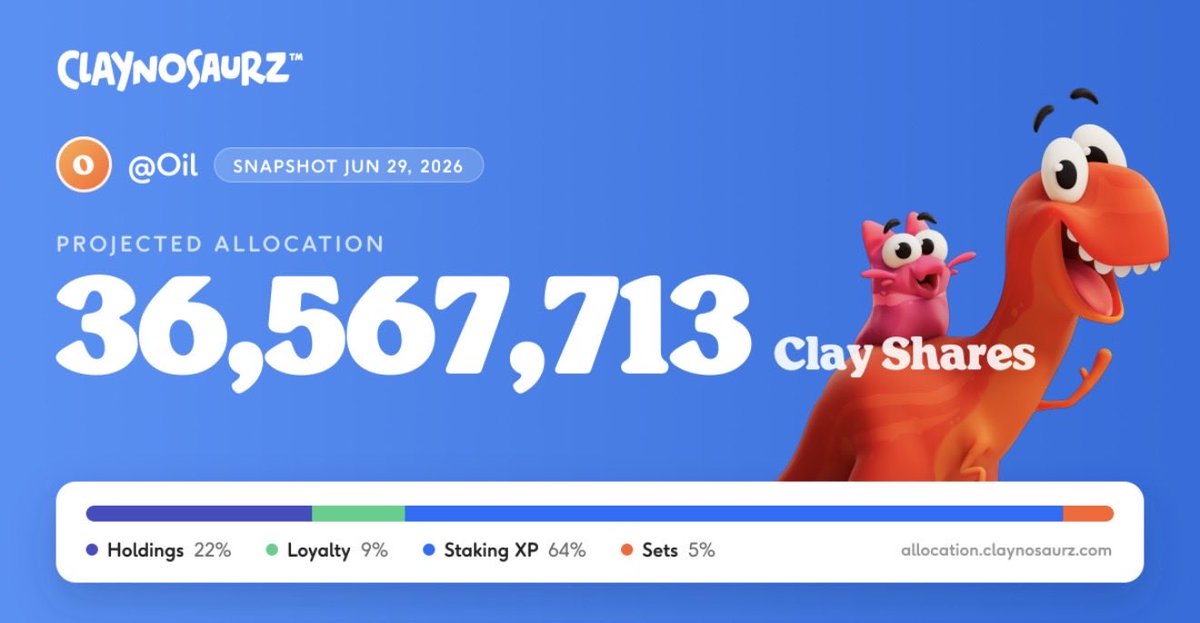
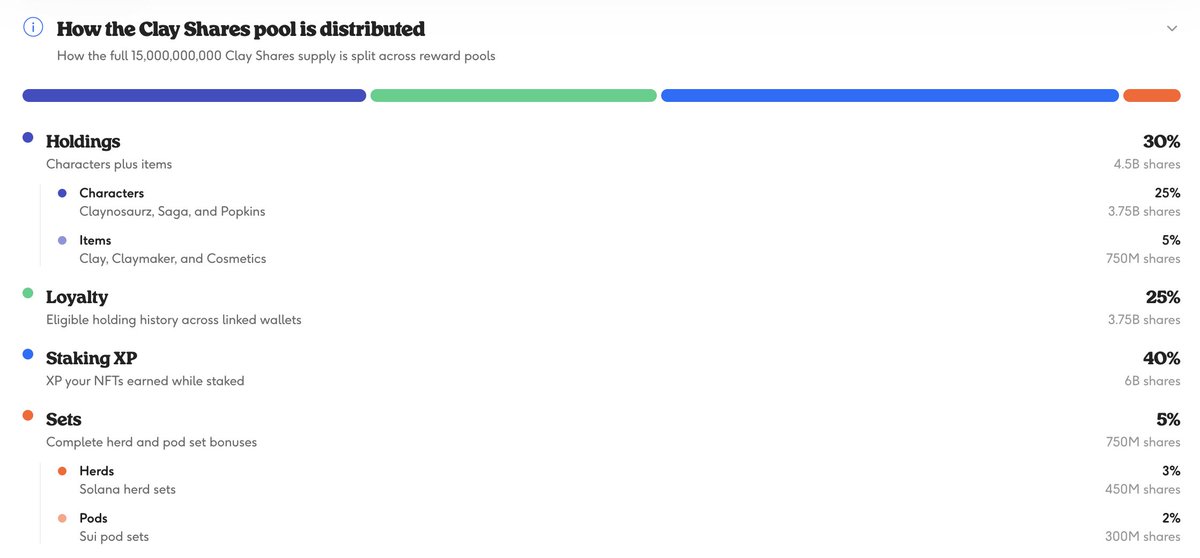
15B total shares split amongst Claynos and Popkins, Claymakers (so glad I kept mine) and Cosmetics, with staking weighted the most heavily.
Collector focused at every turn, incentivizing holders in unique ways- this team thinks every step through.
The breakdown of these allocations are the most detailed I have ever seen onchain.
So many can learn from everything this company does.
Literally no one does it like @Claynosaurz
Claynosaurz is one of the most mispriced bets in crypto right now 👀
While CT is chasing the next shiny thing, Clayno is quietly building an entertainment empire:
🎬 TV series in production (micro-episodes already live), in talks with every major streamer
🎮 Gameloft-built mobile game is finished, waiting to launch alongside the show for maximum flywheel
🏆 Already stacking industry awards
✍️ Sherry Gunther (The Simpsons, Family Guy, Rugrats) joined the team
🎨 David Horvath, a collectibles legend, onboarded
🛍️ Blind boxes hitting retail shelves in Japan & Korea this summer
🦉 Heeboo launching to onboard the next generation of IPs
🌍 Team is getting invited around the world to speak about their vision
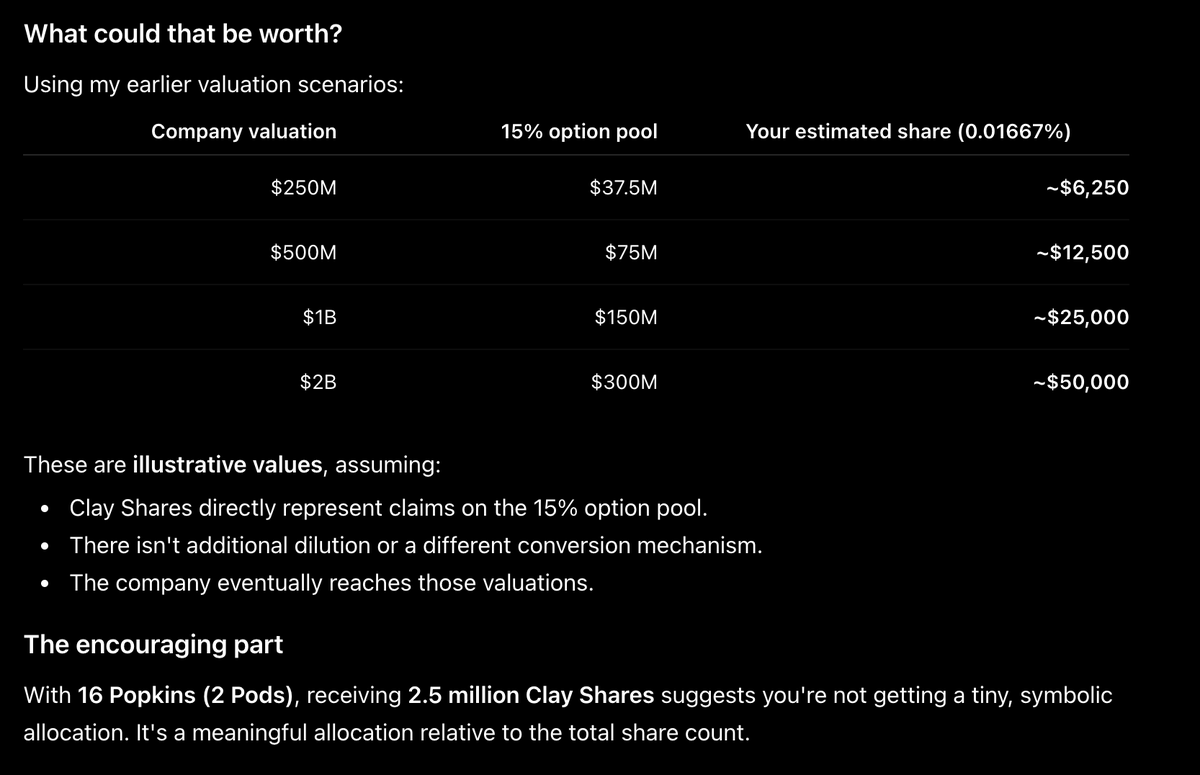
💎 15% of the company's equity is being distributed to holders
Most NFT projects launched a collection, meanwhile Claynosaurz is building a trans media IP company with holders along for the ride 🚀
Some KOLs thought 25k supply was too much for Popkins, that it was mass extraction 🤣
Today there are 249 / 25,000 listed (1%) the lowest number in the space 🥇
And the Floor Price is also one of the most resilient
Conclusion : Buy Claynosaurz assets, Team keeps delivering 🔥