The antisemitic dictator Erdoğan – who is committing genocide against the Kurds, supports the Hamas terrorist organization, oppresses his own people and imprisons political rivals – is the last person who can lecture the State of Israel on morality.
The State of Israel and the IDF, the most moral army in the world, will continue to take forceful action against Iran and its proxies, which threaten the Middle East and the entire world.
Clinical Quiz
"Doctor, my uric acid is 9.2. Should I start allopurinol or febuxostat?”
A 35-year-old healthy man underwent a routine health check-up. His serum uric acid was 9.2 mg/dL.
He had:
✅ No joint pains
✅ No history of gout
✅ No kidney stones
✅ Normal day-to-day functioning
Should he be started on medicines?
#MedTwitter #NeuroTwitter
10 Points to Know About Smoking, Polycythemia and Stroke
1. Smoking does not just damage the lungs; it also affects the blood and blood vessels.
2. Chronic smoking can cause secondary polycythemia (increase in hemoglobin/red blood cells).
3. The main culprit is carbon monoxide in smoke, which reduces oxygen delivery to tissues.
4. In response, the body produces more red blood cells to compensate for the “relative oxygen deficiency.”
5. More smoking over longer durations generally increases the risk and severity of polycythemia (dose-response relationship).
6. Polycythemia makes blood more viscous (“thicker”), which can impair blood flow and increase clot formation.
7. Increased blood viscosity can contribute to ischemic stroke, transient ischemic attacks, heart attack, and venous thrombosis.
8. A high hemoglobin in a smoker should NOT always be attributed to smoking alone. Other causes such as Polycythemia Vera, chronic lung disease, or Obstructive Sleep Apnea may coexist.
9. In patients with stroke plus elevated hemoglobin, further evaluation may be needed, including hematocrit, oxygen saturation, erythropoietin level, and sometimes JAK2 mutation testing.
10. Smoking cessation may reduce polycythemia, lower blood viscosity, and substantially reduce future stroke and cardiovascular risk.
A simple CBC in a smoker may sometimes reveal an important clue to stroke risk.
Dr Sudhir Kumar @hyderabaddoctor
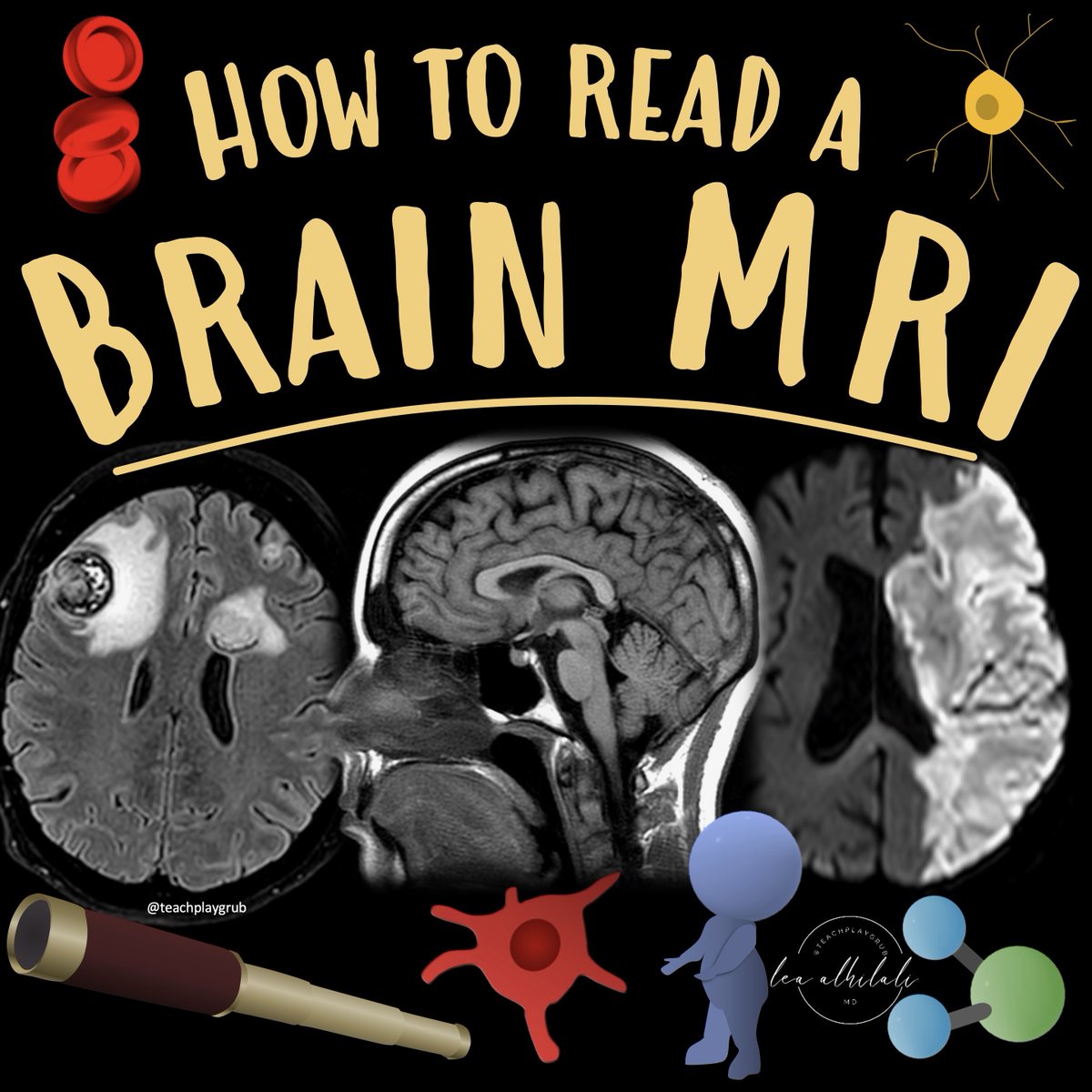
1/Do radiologists sound like they are speaking a different language when they talk about MRI?
T1 shortening what? T2 prolongation who?
Here’s a translation w/an introductory thread to MRI.
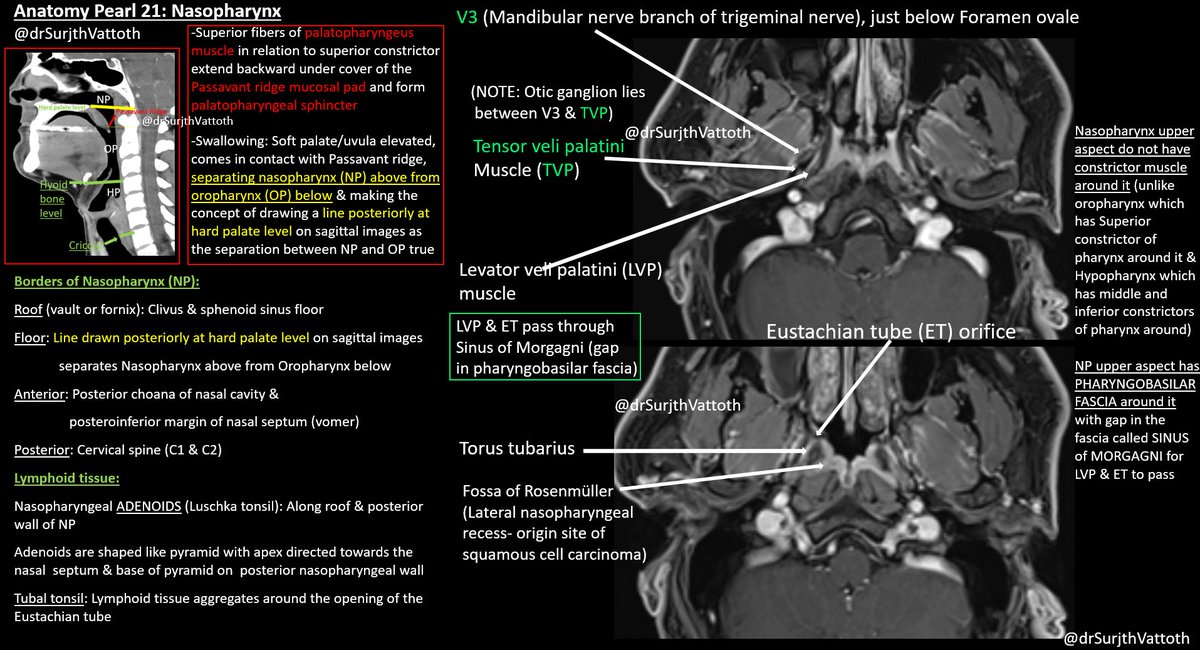
Imaging Pearl 28: Skull base Perineural Tumor Spread Pathways Explaining Multiple Symptoms
Tweeting a teaching case as "Imaging Pearl" after a long gap :-)
Always look into the clinical notes for patient's symptoms, so as not to miss these findings. They can really guide you!!
Don’t wait for disease. Know your numbers.
Most heart attacks, strokes & diabetes are predictable years in advance, if you track the right markers.
For Indian adults, these cut-offs matter more than ever:
1. Blood Pressure (BP)
Target: <130/80 mmHg
Even “borderline” BP in Indians carries higher cardiovascular risk due to earlier vascular aging.
2. Fasting Blood Sugar (FBS) <100 mg/dL
Indians develop insulin resistance earlier, even at “normal” BMI.
3. HbA1c <5.7%
Prediabetes starts silently. By the time glucose rises, damage has already begun.
4. Insulin Resistance (HOMA-IR)
Ideal: <2
Insulin resistance (IR) is not routinely measured, but it is extremely useful in high-risk individuals. IR is a hidden driver of diabetes, fatty liver & PCOS.
5. Waist Circumference (Most important for Indians)
Men: <90 cm
Women: <80 cm
🔸“Thin outside, fat inside” (TOFI) phenotype is common.
🔸Waist circumference is better than BMI for risk prediction.
6. LDL Cholesterol
Target
<100 mg/dL (general)
<70 mg/dL (high-risk)
🔸Lower is better; there is no “safe high LDL.”
7. HDL Cholesterol>50 mg/dL
Low HDL is extremely common in Indians and amplifies risk.
8. Triglycerides (TG)<150 mg/dL
High TG is an insulin resistance marker, not just a lipid issue.
9. TG : HDL Ratio<2
🔸TG:HDL ratio is one of the simplest markers of metabolic health.
🔸A ratio of 2 or more is insulin resistance until proven otherwise.
10. hs-CRP (inflammation marker)<2 mg/L
Atherosclerosis is an inflammatory disease, not just high cholesterol.
11. ApoB (the underrated one)
Target: <80 mg/dL (general)
<65 mg/dL (high-risk)
ApoB is better than LDL at predicting risk, as it counts actual atherogenic particles.
12. Sleep Duration
Optimum: 7–9 hours/night
Less sleep is associated with ↑ insulin resistance, ↑ BP, ↑ appetite, ↑ CV risk.
▶️What makes this crucial for Indians?
🔸Higher risk at younger age
🔸More visceral fat at lower BMI
🔸Greater tendency for diabetes & heart disease
🔸Normal-looking person does not mean low risk
▶️If you are above these thresholds, do not panic. Start with exercise, healthy diet, optimum sleep, and consistency. Consult your physician for individual opinion.
Dr Sudhir Kumar @hyderabaddoctor
(Disclaimer: This is not a medical consultation. The information provided here is general in nature, and applies to healthy people, who are not on medications. In any case, consult your doctor for individual opinion)
That morning cup of coffee might be doing more than just waking you up; it could be a powerful tool for long-term brain health.
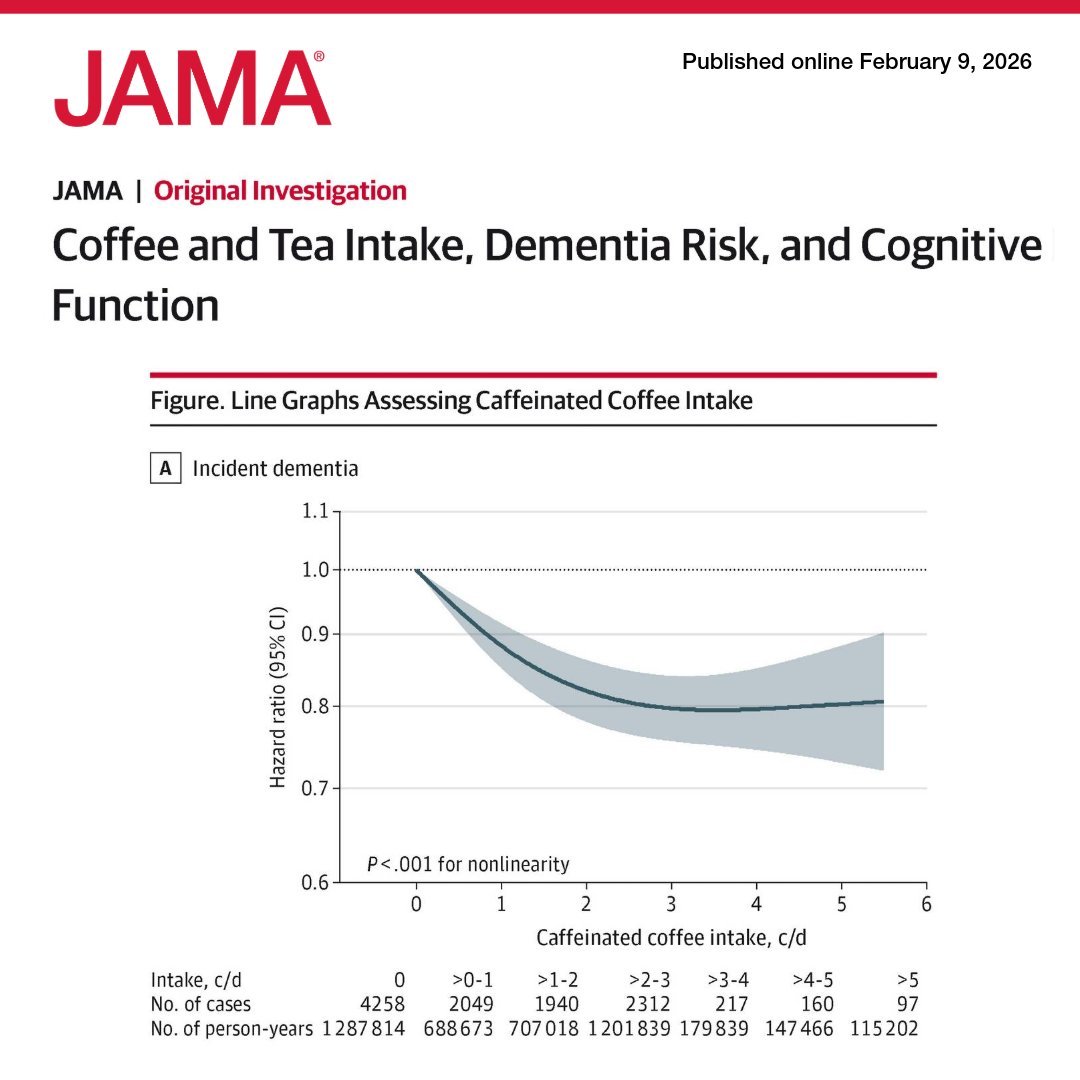
A massive new study just published in JAMA (following 131,000+ participants for over 40 years) reveals a significant link between moderate caffeine intake and a lower risk of dementia.
Main findings:
1. The "Sweet Spot" for Protection
The most pronounced benefits were seen in those consuming:
✅Coffee: 2 to 3 cups of caffeinated coffee per day.
✅Tea: 1 to 2 cups of caffeinated tea per day.
2. The 18% Advantage
Participants with the highest intake of caffeinated coffee had an 18% lower risk of dementia compared to non-consumers. They also reported significantly lower rates of subjective cognitive decline.
3. It’s All About the Caffeine
Interestingly, the study found no protective effect from decaffeinated coffee. This suggests that caffeine itself is the active neuroprotective agent, likely due to its ability to block adenosine receptors which reduces inflammation and cellular damage in the brain.
4. Long-Term Evidence
This was not a short-term trial. With data spanning 4 decades, the results held steady even after adjusting for age, smoking, and genetics. For those under 75, the risk reduction was even more striking, reaching up to 35%.
✅The Takeaway:
Dementia has no cure, making preventive lifestyle choices critical. If you already enjoy a few cups of coffee or tea daily, your brain may be reaping the benefits.
Dr Sudhir Kumar
@hyderabaddoctor
#Health #Neurology #DementiaPrevention #Coffee #BrainHealth #MedicalNews #Longevity