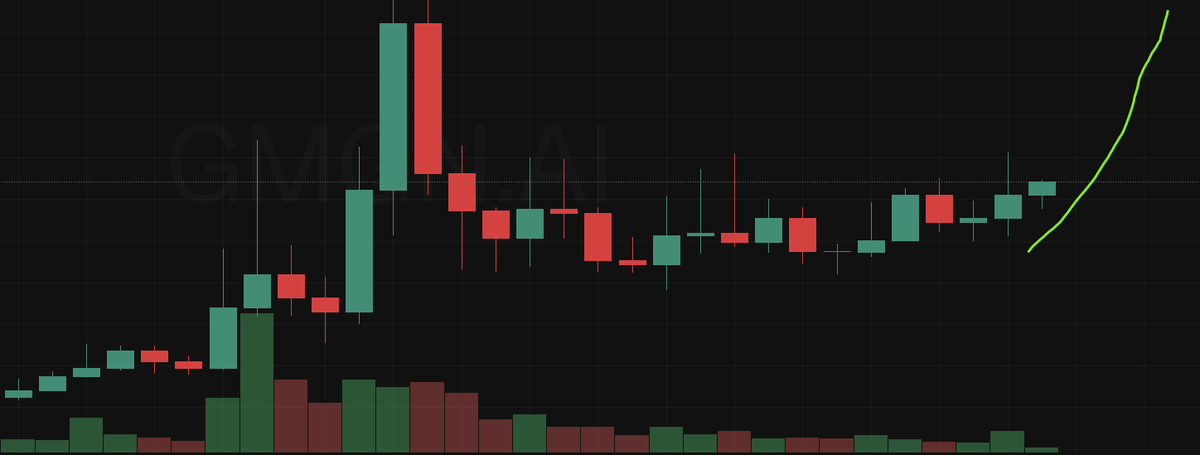
This is one of the early-stage projects I think deserves the most attention today: solana:3jLvsVjyh2iV3UQLHH4ck14m1rDHhBkUiEqRabAhpump.
Not because it pumped.
Not because “Privacy” is suddenly trendy again.
But because after digging into it, one thing stood out:
The product is ahead of the token.
CA:
0x923d915ddf0fe60c04addac68e13f0d5af03164f
Most early crypto projects follow this path:
Launch token
→ Tell a story
→ Publish a roadmap
→ Figure out the product later
Hades looks more like:
Builders work on privacy first
→ Polyhedge
→ Private deposits
→ Hades product goes live
→ Expand to Base / Optimism / Arbitrum / Solana
→ Then the market starts paying attention to solana:3jLvsVjyh2iV3UQLHH4ck14m1rDHhBkUiEqRabAhpump
That’s why I’m taking it seriously.
What Hades is trying to do is actually simple to understand.
You may not want everyone on a block explorer to see:
Which wallet is yours
What stocks you bought
What prediction markets you traded
Where funds moved after leaving Robinhood Chain
Hades is trying to break that public linkage.
From:
Wallet A
→ Privacy Layer
→ Cross-chain routing
→ Wallet B
As:
Tokenized Stocks
RWA
Prediction Markets
Payments
move onchain,
I don’t think privacy stays an optional feature forever.
It could become:
Infrastructure.
More importantly,
this isn’t a random anonymous team that appeared yesterday.
Hades states that it is:
Incubated by Polyhedge
And Polyhedge has already appeared in Starknet’s official privacy ecosystem coverage.
The builders also have public development history.
That moves Hades, for me, from:
“another privacy meme”
to:
“a privacy builder project worth tracking.”
Then another meaningful thing happened.
The dev locked:
20,694,817 HADES
until:
September 2028
roughly:
2.07% of supply.
That does not prove every team-linked wallet is safe.
But it does show one thing:
The builder did not choose the easiest short-term exit path.
For a newly launched microcap,
that matters.
And this is where it gets interesting.
solana:3jLvsVjyh2iV3UQLHH4ck14m1rDHhBkUiEqRabAhpump is still around:
~$1M valuation territory
while 24h turnover has at times approached the size of the market cap itself.
That tells me:
Attention has already arrived.
But the market still doesn’t seem to fully agree on what Hades actually is.
What interests me most is not whether it can pump another 50%.
It’s a much bigger question:
When does solana:3jLvsVjyh2iV3UQLHH4ck14m1rDHhBkUiEqRabAhpump become economically necessary to the Hades product?
Right now, I can verify:
Product ✅
Builder credibility ✅
Privacy narrative ✅
Multi-chain expansion ✅
But:
Token value capture is still incomplete.
I still haven’t seen a fully established mechanism like:
Protocol Fees → HADES Buyback
or:
Stake HADES → Privacy Capacity
or:
HADES → Relayer Collateral
or:
HADES → Fee Discounts / Routing Priority
And that is exactly why I think it’s worth studying now.
The most interesting stage of a project is often not when every answer is already public.
It’s when:
the product is already working, but the token economics are not fully priced yet.
If the future becomes:
Private Transfers ↑
→ Protocol Usage ↑
→ HADES Demand ↑
→ Buyback / Staking / Utility ↑
then the market’s understanding changes from:
Privacy Project with a Token
to:
Privacy Protocol Token.
Those are two completely different valuation frameworks.
So today, I’m putting solana:3jLvsVjyh2iV3UQLHH4ck14m1rDHhBkUiEqRabAhpump in:
Early Project Watchlist — Highest Priority
Not because it has no risk.
The opposite.
Liquidity is thin.
Microcap volatility is extreme.
Token utility is still not fully proven.
But that’s exactly why I’m not watching the next candle.
I’m watching one question:
When does solana:3jLvsVjyh2iV3UQLHH4ck14m1rDHhBkUiEqRabAhpump become economically necessary to Hades?
If that answer appears,
that may be when the real story begins.
CA:
0x923d915ddf0fe60c04addac68e13f0d5af03164f
What interests me most about robinhood:0xa92768863a55d8a0591709f7f5e594a249d36ea3 has changed.
At first, I was watching it because of one simple idea:
Hold ASKR → Pay 5% for AI.
Not 5% off.
But:
95% OFF.
Hold ASKR and you can use models like GPT, Claude, Gemini, Grok, DeepSeek and more at a heavily subsidized cost.
That alone was already interesting.
But now I’m watching something else:
ASKR may be evolving from a Token Community into a Product Community.
CA:
0xa92768863a55d8a0591709f7f5e594a249d36ea3
Recently, Marcus spoke directly with the HeyAskr founder.
He then confirmed something important:
ASKR isn’t being built by one person.
It’s currently a:
3-person team.
That may sound like a small update.
But for an early-stage project with only a few million dollars in FDV,
it matters.
One of my biggest concerns before was:
Single Builder Risk.
That risk has now moved down a level.
But the part that really changed my view wasn’t “3 people.”
It was seeing something more important:
Users are directly shaping the product.
Inside the HeyAskr Collab Room,
users are giving product feedback directly to the builders.
For example:
Can you add one-click copy for input/output?
The team replies:
We’ll do it.
Then they keep shipping.
That sounds simple.
But in crypto, the usual loop is:
Launch token
→ open community chat
→ talk about price
→ wait for the next KOL
What ASKR is starting to show is:
Hold Token
→ Use Product
→ Find Problems
→ Give Feedback
→ Builders Ship
→ Keep Using
That is a completely different structure.
Over the last few days, HeyAskr has already pushed:
Collab
Referral
Holder Discount
ASKR Connect
Feedback Improvements
The product keeps moving.
So now I’m asking a different question:
What happens if Token Holders are also Product Users?
You could get a very interesting flywheel:
Buy ASKR
↓
Get AI usage discounts
↓
Start using HeyAskr
↓
Join the Product Community
↓
Suggest features
↓
Team ships quickly
↓
Product gets better
↓
More users want to hold ASKR
At that point, this is no longer just:
Token Utility
It starts looking more like:
a Token-powered Product Community.
But ASKR still has one huge unresolved problem.
And it may be the most important one:
Who pays for the 95% discount?
Right now, the answer is:
HeyAskr.
If you use $10 worth of AI,
a holder may only pay:
$0.50
The platform covers the rest.
So more users do not automatically mean more profit.
It could also mean:
Subsidy burn ↑
That’s why I’m no longer asking:
“Does ASKR have utility?”
That question is already answered.
Yes.
The real question is now:
Can that utility become a sustainable business model?
Today, the structure still looks more like:
Token Trading
→ Creator Fees
→ Fund Product
The day I would truly re-rate the project is when it becomes:
Product Revenue
→ Funds Subsidy
→ Creates Profit
→ Buys Back ASKR
If that happens,
the entire flywheel flips.
From:
Crypto subsidizes AI
to:
AI Business creates value for Crypto.
So what interests me most about robinhood:0xa92768863a55d8a0591709f7f5e594a249d36ea3 now is no longer just:
95% AI Discount.
It’s the possibility that they’re building something rare:
Users = Holders = Product Community.
That’s what I want to track next.
Not the next KOL.
Not the next green candle.
But:
Daily Active Users
AI Credits consumed
Subsidy cost
Product Revenue
And eventually:
When does the product start paying for the token?
If that happens,
the real robinhood:0xa92768863a55d8a0591709f7f5e594a249d36ea3 story may only be starting.
CA:
0xa92768863a55d8a0591709f7f5e594a249d36ea3
After Zuckerberg followed @agrippa_muse,
I’m actually less interested in the question:
“Did he really follow it?”
That information has already been traded.
robinhood:0x83a49b808f8d5e02cb2931cd2352988f498e5ba3 already went through the first cycle:
Follow discovered
→ capital rushed in
→ market cap expanded fast
→ first major rotation
CA:
0x83a49b808f8d5e02cb2931cd2352988f498e5ba3
So now the real question is:
What happens AFTER the follow?
I’m watching 5 things.
1. Does Zuckerberg keep following?
This is the most basic signal.
If it was accidental or temporary,
the narrative can fade quickly.
But if the follow remains days later,
the market starts asking:
Was this intentional?
Important:
Follow ≠ endorsement.
But a sustained follow and a one-off follow are not priced the same way.
2. Is there a second interaction?
This is the catalyst I care about most.
For example:
Like
Reply
Repost
Quote
Mention of Agrippa / Muse
Zuckerberg doesn’t even need to mention the token.
If there is another public interaction,
the market will immediately ask:
Why is Zuck still paying attention to Agrippa?
One follow can be dismissed as random.
A second action is much harder to ignore.
3. Does Meta / Muse keep reinforcing the Agrippa character?
robinhood:0x83a49b808f8d5e02cb2931cd2352988f498e5ba3’s biggest advantage isn’t the name.
It’s how short the narrative chain is:
Meta
→ Muse
→ Zuckerberg
→ Agrippa
If future Muse content keeps featuring Agrippa,
then this stops being just:
“a meme trying to farm Zuck attention”
and starts becoming:
one of the most recognizable community characters around the Muse ecosystem.
That would be a real narrative upgrade.
4. Can the market hold after the first major pump?
I don’t need another +100% candle right now.
What I want to see is:
Does capital stay after the hype fades?
A healthier structure would look like:
Volume cools
but
Price does not collapse
while:
Holders keep growing
Liquidity stays strong
Large wallets don’t continuously dump
If AGRIPPA can build a new base after the first attention spike,
that matters much more than another random wick.
Because it means:
the market is starting to assign a longer-term value to the narrative.
5. Does MUSEBOOK reprice with it?
This is the layer I think many people are missing.
If AGRIPPA pumps alone,
it may just be a celebrity-attention meme.
But if:
AGRIPPA ↑
+
MUSEBOOK ↑
+
more Muse characters appear
+
Agent tokens start forming an ecosystem
then the market is no longer trading:
“Zuckerberg followed a meme.”
It may be trading:
the emergence of a Muse Agent Economy.
AGRIPPA could simply be the first character that broke through.
So to me,
the first Alpha was:
Zuck followed Agrippa.
That part is already known.
The second Alpha is:
What happens AFTER the follow?
If we start seeing:
sustained follow
+
a second interaction
+
Muse reinforcing Agrippa
+
price establishing a new base
+
MUSEBOOK strengthening too
then the narrative changes from:
one-off celebrity attention
into:
a persistent Zuckerberg × Muse narrative.
That is what I’m watching now.
Because the biggest moves often don’t begin with the first discovery.
They begin when:
the market realizes it wasn’t random.
I’ve started looking at $INU again.
Not because it looks like Apple.
But because it has turned a meme narrative into something incredibly easy to understand:
Hold the dog. Earn Apple.
CA:
0x63ee32ac3077d1fbd8a77ebba2a6ed4b8e9c1e18
What makes $INU interesting is that its core pair isn’t ETH or USDC.
It trades directly against:
INU / AAPL
where AAPL is the tokenized Apple stock on Robinhood Chain.
And the project takes that idea one step further:
Hold INU
→ Earn tokenized AAPL
Under the current reward structure:
100K INU
→ eligible for manual claims
1M INU
→ eligible for automatic AAPL distributions
So the narrative loop is actually pretty clean:
Apple Meme
→ AAPL Pair
→ AAPL Rewards
→ Buyback / Burn
→ Stronger Holder Incentives
That’s a lot more coherent than simply launching a dog coin and attaching Apple branding to it.
What makes the timing more interesting is that the first major run already happened.
$INU reached an ATH around:
$0.0182
and has since gone through a 40%+ drawdown.
But holders didn’t collapse with price.
Early on, there were only around:
762 holders
Now there are:
6,000+
So:
Price ↓
while:
Ownership distribution ↑
That’s often much more interesting to me than simply watching price print another green candle.
And Apple itself is currently in a strong narrative cycle:
new iPhone cycle
AI / Siri expectations
AAPL near historical highs
So INU has a natural external attention engine:
Apple attention ↑
→ AAPL attention ↑
→ tokenized AAPL attention ↑
→ INU narrative ↑
Of course,
that doesn’t mean AAPL goes up and INU automatically follows.
But at least this meme isn’t operating in a complete vacuum.
There are only two levels I’m really watching now:
$0.015
If INU reclaims this level with volume,
the first major washout may be ending.
Then comes:
$0.0182 ATH
If we get:
Volume ↑
+
Holders ↑
+
AAPL rewards keep growing
+
INU burns continue
+
ATH breaks
then INU could evolve from:
an Apple-themed meme
into:
the AAPL Reward Meme of Robinhood Chain.
That’s why I’m paying attention again.
Its strongest feature isn’t complexity.
It’s that the entire story can be understood in one sentence:
Hold the dog. Earn Apple.
CA:
0x63ee32ac3077d1fbd8a77ebba2a6ed4b8e9c1e18
Why do I think right now is an interesting time to look at $MOO again?
Not because it pumped today.
Because several things are finally lining up at the same time.
CA:
0xd9db30bb0d2b8d2eae3826a1372117e058791e18
The most important one:
Micron reports earnings on September 30.
And $MOO is basically one of the purest Robinhood Chain bets on:
**Micron / $MU
Memory Supercycle
Meme Beta**
It even trades directly against tokenized $MU.
So the real catalyst for $MOO was never another crypto announcement.
It’s:
Micron.
And the “Memory Supercycle” narrative isn’t something the meme community invented.
AI servers
HBM
DRAM
Memory shortages
Those are real industry tailwinds.
Meanwhile, $MOO has already gone from roughly:
ATH ~$0.0435
down to:
~$0.012–$0.014
Nearly a 70% drawdown.
That’s where it gets interesting.
Because now you have:
Micron fundamentals still strong
+
earnings catalyst getting closer
+
MOO already heavily washed out
+
holders not collapsing with price
Early on, $MOO had only around:
858 holders
Now it’s closer to:
8,000–9,000+
So price got crushed—
but ownership actually spread.
That’s very different from:
“pump → dev exits → holders disappear.”
The level I’m watching now is simple:
$0.017
If we get:
Volume expansion
→ break above $0.017
→ retest around $0.015 holds
→ holders keep growing
then I start watching:
$0.020
→ $0.027
→ ATH $0.0435
But if Micron earnings hype keeps building and $MOO still can’t reclaim $0.017—
that tells you the meme beta simply isn’t back yet.
So I’m not watching $MOO because it looks “cheap.”
I’m watching because:
the timing is becoming extremely sensitive.
In about a week, the market gets the real event:
Micron earnings.
If capital wants to front-run the:
Memory Supercycle
theme—
this next week may be when the answer shows up.
I’m not treating $MOO like a product token.
I’m treating it like:
a high-beta meme option on Micron earnings.
If $MU is strong,
$MOO may amplify it.
If $MU loses momentum,
$MOO can amplify the downside too.
That’s why I’m watching now.
The biggest catalyst isn’t in crypto.
It’s:
September 30 — Micron Earnings.
I just dug into robinhood:0xe8ffd7e24187f72afb08d75b1bb13088a989a791 again.
And I think the market may finally be pricing the business model, not just the token.
CA:
0xe8ffd7e24187f72afb08d75b1bb13088a989a791
Today we’re seeing:
+70%–100% price expansion
$8M–$11M 24h volume
$1.3M+ liquidity
~17K holders
But the real story isn’t the candle.
It’s what Delta is becoming.
Delta started as a liquidity-management layer for Robinhood Chain.
Now it’s expanding into:
Custom Pairs
LPs can build markets across:
tokenized stocks
commodities
stablecoins
Robinhood-native assets
That matters because every new onchain stock or RWA has the same problem:
Liquidity.
And Delta wants to own that layer.
Now look at the token economics.
Delta recently introduced a protocol take of roughly:
7.5% of LP fees
with:
80% of protocol revenue directed toward robinhood:0xe8ffd7e24187f72afb08d75b1bb13088a989a791 buyback & burn.
That creates a much cleaner flywheel:
More Robinhood assets
→ more pools
→ more LP activity
→ more trading volume
→ more protocol fees
→ more robinhood:0xe8ffd7e24187f72afb08d75b1bb13088a989a791 buybacks
→ lower circulating supply
This is the part that matters.
Because robinhood:0xe8ffd7e24187f72afb08d75b1bb13088a989a791 is no longer just:
“an infra project with a token next to it.”
The product and token are starting to connect.
The next question is whether the economics survive scale.
If Delta raises its protocol take, but:
TVL keeps growing
LPs stay
fees keep rising
buybacks continue
then the model gets very interesting.
Technically, I’m watching:
$0.020 — first major support
$0.024–$0.025 — current breakout zone
$0.030–$0.039 — previous ATH region
If price holds the breakout and eventually clears the ATH zone while protocol metrics keep expanding—
that’s not just another pump.
That’s:
Second Price Discovery.
The most important thing to watch now isn’t price.
It’s whether this flywheel keeps strengthening:
TVL ↑
Fees ↑
Protocol Revenue ↑
Buybacks ↑**
If all four move together,
robinhood:0xe8ffd7e24187f72afb08d75b1bb13088a989a791 starts looking less like a Robinhood Chain trade—
and more like:
Robinhood Chain liquidity infrastructure with real token value capture.
CA:
0xe8ffd7e24187f72afb08d75b1bb13088a989a791
robinhood:0xb9972ca7188e511174947e3936a5315ac7073277 is moving again.
And this time, I don't think it should be dismissed as just another bounce.
CA:
0xb9972ca7188e511174947e3936a5315ac7073277
The onchain picture is now roughly:
~$10M MC
~$730K liquidity
$1M+ 24h DEX volume
8,400+ holders
More importantly, we're seeing:
Price ↑
Volume ↑
Liquidity ↑
Holders ↑
That's a much healthier setup than a single random green candle.
But there's one level that matters most to me:
$0.0120–$0.0125
If the next move gives us:
Volume breakout above $0.0125
→ clean retest around $0.011–$0.012
→ volume stays strong
→ holders keep growing
then I would consider the:
second leg confirmed.
After that, the real battle is the previous ATH zone:
$0.017–$0.020
If that gets reclaimed too—
that's when we start talking about:
Second Price Discovery.
And there's another reason this setup is interesting.
robinhood:0xb9972ca7188e511174947e3936a5315ac7073277 isn't just a meme.
It's effectively a pre-token for Fables.
Fables already has a live product and real DEX activity, while the market has been waiting for:
TGE + FABLES conversion
Earlier team guidance pointed roughly toward a late September / early October window.
We're now getting close to that timeframe.
So this capital rotation may not be random.
The market could be starting to price in:
Fables TGE is getting closer.
Of course, TGE can also turn into:
buy the rumor, sell the news.
So I'm not chasing the first move.
I'm waiting for the market to answer one question:
Can $0.0125 actually hold?
If yes—
next stop is the ATH zone.
If ATH breaks—
the second robinhood:0xb9972ca7188e511174947e3936a5315ac7073277 story may truly begin.
CA:
0xb9972ca7188e511174947e3936a5315ac7073277
When it comes to $DEED, I think two things need to be separated completely:
What the project actually is
and
What I think about putting real estate onchain
1. First, $DEED itself
CA:
0x5e55f18453545d0d4314c5106a2d8db934298e95
Deed isn't simply launching another “real estate meme.”
It has designed two different assets:
$DEED
= Community Token
vDEED
= ERC-4626 Real Estate Vault Share
The token actually exposed to the real-estate cash-flow structure is vDEED.
The model is:
Tenants pay rent
→ maintenance / taxes / insurance / management costs are deducted
→ net income is converted into USDG
→ USDG enters the DeedVault
→ vDEED NAV increases
Meanwhile, $DEED itself:
does NOT represent property ownership
does NOT directly own the Vault
has no claim on NAV
does NOT automatically receive rental income
But there is one very interesting connection between the two:
1% of every $DEED trade flows into the vDEED Vault
So the loop looks like:
Crypto speculation
→ Trading fees
→ Real Estate Vault
→ vDEED holders benefit
I think that's a genuinely interesting mechanism.
But right now, the value flow is:
$DEED → vDEED
not:
Real Estate Revenue → $DEED
That distinction matters.
2. Now my view on “real estate onchain”
I believe:
Real estate can work onchain.
But blockchain cannot solve every problem.
Onchain systems are very good at proving:
How much money is in a Vault
Who deposited or redeemed
When funds moved
Whether a report was later altered
But the blockchain cannot automatically prove:
Who legally owns the apartment
Whether the tenant really paid that rent
Whether maintenance expenses were inflated
Whether the operating company could default
What legal rights investors have in bankruptcy
So:
Onchain ≠ Automatically Real
Putting the hash of a rental report onchain proves:
The report wasn't secretly changed afterward.
It does NOT prove:
The information inside the report was truthful in the first place.
3. A credible RWA needs three layers
This is how I now evaluate every real-estate RWA:
1. Onchain Layer
Smart contracts
Vaults
NAV
Transactions
Fund flows
2. Verification Layer
Bank statements
Lease agreements
Property records
Independent audits
Third-party attestations
3. Legal Layer
Property ownership
Operating company structure
Investor claims
Bankruptcy protection
Jurisdiction
If any one of these layers is missing,
“real estate onchain” can easily become:
the same old real-world trust problem with a Web3 interface on top.
So with $DEED:
I think the mechanism is worth studying.
The ERC-4626 Vault is deployed.
The Rental Roll concept makes sense.
And:
$DEED trading fees → Real Estate Vault
is a genuinely creative design.
But I'm still waiting for:
The first real Rental Roll
Complete legal disclosures
Operating company + property ownership evidence
Independent audits / attestations
And most importantly:
Will real-estate revenue ever flow back and create value for $DEED itself?
So my position isn't:
“Real estate onchain doesn't work.”
It's:
Real estate onchain CAN work.
But only when all three exist:
Onchain transparency
+
Offchain verification
+
Legal enforcement
Otherwise,
you may not actually own “onchain real estate.”
You may simply own:
an onchain promise about real estate.
I think $SFX has quietly entered a completely different phase.
It has moved from microcap testing into price discovery.
CA:
0x0a574aae41da077713ba32aa05ca151c8759e2f6
A few days ago, the biggest question was:
“Is this actually the official SAFIX token?”
That question is now resolved.
@SafixLabs has officially acknowledged the CA.
And once that happened, the market started repricing it.
I also went through the onchain structure, and one detail matters a lot:
Top holder ≈ 8.16%
At first glance, that looks like a massive whale.
It isn’t.
It’s the:
Pons V2 Launch Locker
—not a normal wallet that can suddenly market-sell 8% of supply.
The token also has:
~1B fixed supply
No traditional team premine
Permanent post-graduation LP locking
No arbitrary reminting
No sudden tax increase
No holder freeze / blacklist controls
That removes a large part of the classic microcap rug surface.
Then look at the price action.
$SFX went from roughly:
$0.000245
to around:
$0.00126
in a very short period.
More than:
5X
And it didn’t happen in isolation.
We also saw:
Holder growth
Heavy turnover
Official CA confirmation
Liquidity staying active
This is no longer the original trade:
“tiny market cap, gamble on whether it’s real.”
The market is now asking a different question:
What is SAFIX actually worth?
And the narrative fits Robinhood Chain extremely well:
Tokenized stocks
RWA collateral
Private collateral verification
Borrow USDG without selling
So the next question isn’t:
“Can it print another green candle?”
It’s:
How far can price discovery go?
The key zone I’m watching now:
$0.00120–$0.00126
If that gets cleared and we see:
Volume holding
Holders continuing to grow
A clean retest around $0.001
then the market may start searching for the next valuation range:
$1.5M
→ $2M
→ higher
The biggest fundamental question is still unresolved:
How does SAFIX protocol revenue ultimately accrue value back to $SFX?
If the team eventually introduces:
SFX staking
Protocol fee sharing
Buybacks
Token rewards
or another clear value-capture mechanism,
then the final loop becomes:
Official token
→ Real protocol
→ Real usage
→ Revenue
→ Token value capture
At that point, $SFX stops being just a newly confirmed microcap.
It starts getting repriced as a:
Robinhood Chain RWA / Private Credit protocol token.
The first validation phase is over.
The next phase has one name:
Price Discovery.
CA:
0x0a574aae41da077713ba32aa05ca151c8759e2f6
What interests me most about $UBIK isn't how much it has already moved.
It's this:
What is it still not telling the market?
CA:
0x812486eaea648819853f8e372dc9f1516c7868bd
The market has already assigned it roughly a $20M valuation.
Yet the project still has almost none of the things you'd normally expect:
Roadmap
Whitepaper
Token utility
Product docs
Instead, the official account gives us one line:
“24/7 synthetic subconscious.”
And somehow this is NOT just an ignored microcap meme.
$UBIK already has:
8,000+ holders
MEXC / Gate / LBank listings
Perpetuals
A GLD pair
Million-dollar daily volume
Even after a ~50% pullback from ATH, the holder base hasn't collapsed with price.
Then there's the other part the market keeps watching:
@0rxbt / AIXBT and their connection to UBIK.
There have already been public interactions.
But we're still missing the one thing that matters most:
What exactly is UBIK?
That's why I think $UBIK trades very differently from most AI tokens.
ORBIO is:
Product revealed → market validates usage
UBIK is:
Market assigns value first → waits for the product reveal
This is an information reveal trade.
If the reveal turns out to be:
**AIXBT-linked builders
real AI agent / memory / subconscious infrastructure**
then today's ~$20M valuation needs to be looked at again.
But if the reveal is only:
high-concept narrative + no real product
then $20M is expensive.
So I'm not trying to predict the next candle.
I'm waiting for one post:
“Here is what UBIK actually is.”
That may be the moment that decides whether $UBIK is ultimately:
just a meme
or
an AI project the market discovered before the product was fully revealed.
CA:
0x812486eaea648819853f8e372dc9f1516c7868bd
I went back through robinhood:0xaa07a0e9209e16ac99708c3ec70159c6ef3128a3’s holder structure.
And I found one of the biggest misconceptions around the token.
A lot of holder trackers currently show:
Top wallet owns ~38% of ORBIO supply.
At first glance:
Whale.
Massive sell pressure.
Red flag.
But when I traced the address—
0xe0710011278bfb63e57c5f227e5980984b1eddca
—it turned out to be Orbio’s official:
ORBIO STAKING CONTRACT.
That address now holds roughly:
365M ORBIO
Total supply:
950M ORBIO
Meaning approximately:
38.4% of the total supply is sitting in staking.
And just days ago, the team was reporting around:
117M ORBIO staked.
That completely changed how I look at the holder chart.
But the more interesting part is what staking actually does.
Orbio has evolved beyond:
“Hold token → earn AI credits.”
The current loop is:
Stake robinhood:0xaa07a0e9209e16ac99708c3ec70159c6ef3128a3
→ Earn solana:As9FpeL4rnXYmmAn6ZqJpaFojdoW2yU9MfHUNfbupump
→ Trade CREDIT onchain
→ Transfer it
→ Sell it
→ Or burn it into AI inference
And:
1 CREDIT = $1 of Orbio inference.
Agents can even:
buy CREDIT
→ activate it
→ fund their own next inference task
without relying on a human checkout flow.
Meanwhile, the product side is already showing real activity:
$100K+ credits distributed
133K+ gateway requests
14B+ tokens served
The founder also recently said the gateway, around day 8, was running at roughly a $23K/month retail collections pace at that moment.
Now robinhood:0xaa07a0e9209e16ac99708c3ec70159c6ef3128a3 has already moved into the ~$60M valuation range and pushed into new highs.
So the question I care about is no longer:
“Can ORBIO pump higher?”
It’s:
Can CREDIT become a real market for AI inference?
If we start seeing:
Staked ORBIO ↑
CREDIT bid depth ↑
Orderbook volume ↑
API usage ↑
Real buyer revenue ↑
at the same time—
then robinhood:0xaa07a0e9209e16ac99708c3ec70159c6ef3128a3 stops looking like just another Robinhood AI token.
It starts looking like:
a market for tokenized AI inference.
The next metric I’m watching isn’t price.
It’s:
CREDIT demand.
CA:
0xaa07a0e9209e16ac99708c3ec70159c6ef3128a3
My view on robinhood:0xf7894d31d569e6330592d346ecfefdf4257f3ec1 just changed.
At first, my biggest question was:
How much supply did the team reserve?
Because Sable's whitepaper says Phase 4 may eventually introduce:
Inference settlement
Node staking
Premium routing
In most DePIN projects, that usually means:
20% ecosystem
15% node rewards
10% team
years of unlocks.
But after digging through robinhood:0xf7894d31d569e6330592d346ecfefdf4257f3ec1's onchain structure, that's NOT what I found.
Pons launches with:
fixed 1B supply
full bonding-curve distribution
no traditional pre-mine allocation
Independent onchain reconstruction showed roughly:
~7.5% held by the deployer
~6.5% already in the burn address
and the largest ~10% address is actually the Uniswap v4 Pool Manager.
What I DON'T see is a giant 20%-30% “future node rewards” wallet waiting to unlock.
At first, I thought that was a problem.
Then I realized:
It may actually be the most interesting part of robinhood:0xf7894d31d569e6330592d346ecfefdf4257f3ec1.
Because if Sable eventually confirms:
Current Robinhood robinhood:0xf7894d31d569e6330592d346ecfefdf4257f3ec1 = the Phase 4 network token
then they can't simply rely on:
“print more tokens → offer high APY → subsidize nodes.”
They would need REAL demand.
Potentially:
Nodes buy robinhood:0xf7894d31d569e6330592d346ecfefdf4257f3ec1 to stake
Agents consume real compute
Compute creates real network revenue
Fees feed buybacks / burns / treasury
Node rewards come from actual compute revenue — not endless inflation
That's a completely different model.
One is driven by:
Emissions.
The other by:
Demand.
Important:
None of this is confirmed yet.
Sable's current Terms still explicitly state that robinhood:0xf7894d31d569e6330592d346ecfefdf4257f3ec1 has no platform utility.
So I'm NOT pricing future utility in as fact.
But after digging through the supply structure, the question I'm asking has changed.
It's no longer:
“How much supply did the team keep?”
It's:
If there is no massive node-reward allocation, how does Phase 4 staking eventually work?
If the answer becomes:
Fixed supply + market buy demand + real compute revenue
then robinhood:0xf7894d31d569e6330592d346ecfefdf4257f3ec1's tokenomics could become far more interesting than they look today.
The project is real.
The CA is official.
The product is live.
The
There is only ONE question that matters for $TRUMAN right now:
Will the original Truman AI Live team acknowledge this CA?
CA:
0xabffa443547b34ab6c3b3173d26e233900527777
Because if the answer is YES, the entire setup changes instantly.
The real Truman AI Live is not vaporware.
It came out of ETHGlobal Bangkok:
**AI Agents
The Truman Show
Prediction Markets
World AI**
It won prizes from Mantle, Zircuit and Dynamic.
The code is public.
But here's the catch:
This BSC $TRUMAN has NOT been confirmed by the original team.
The original Truman AI Live project publicly points to a Mantle Sepolia contract.
So right now, the market is effectively betting on one thing:
Will the original builders ever claim this CA?
If the answer is no—
this may simply remain a meme borrowing the Truman World narrative.
But imagine the original developers suddenly post:
“Yes. This is ours.”
Everything changes.
Now you're no longer looking at just a name.
You're potentially looking at:
**ETHGlobal-winning AI project
AI agents
prediction markets
open-source product
ultra-early token**
That's why I'm not obsessing over the next candle.
I'm waiting for a tweet.
A reply.
Any public acknowledgement from the original builders.
For a microcap this early,
the biggest catalyst may not be a CEX listing.
It may simply be:
Official acknowledgement.
I'm watching the Truman AI Live team closely.
If they ever claim this CA—
that's when $TRUMAN deserves a completely new valuation discussion.
I just dug into $MONITOR.
The most interesting part of this project is also its biggest risk.
CA:
0x1a911bb954dAA9CB38513423075bE74450351e18
$MONITOR isn't paired with ETH.
It's paired directly with tokenized $PLTR on Robinhood Chain.
The narrative is almost perfectly aligned:
Palantir
× Global Intelligence
× “Monitoring the Situation”
× Stock Tokens
And the dashboard actually works.
Conflicts, military bases, nuclear sites, aircraft, ships, outages, protests and global risk — all mapped in real time.
Onchain:
679 holders
$293K liquidity
$114K 24h volume
+27% today
Among the current PLTR-paired tokens, $MONITOR has the deepest liquidity.
It has also generated roughly:
$3.3M PLTR-pair volume
36K+ swaps
But here's the part the market needs to understand:
The underlying dashboard technology comes from the open-source World Monitor project.
World Monitor has:
87K GitHub stars
13K forks
7,600+ commits
and was created by Elie Habib.
I have NOT found evidence that Elie Habib / World Monitor officially launched or endorsed $MONITOR.
And the token itself explicitly says it is not affiliated with Palantir Technologies.
So this is NOT:
“Palantir's token + an official 87K-star project coin.”
Right now it's better understood as:
**World Monitor narrative
Palantir meme
tokenized PLTR pairing
Robinhood Chain**
Still, the chart is getting interesting.
It ran to ~$2M, washed out toward ~$600K, reclaimed the million-dollar area, and volume is returning.
If holders keep growing and $MONITOR breaks the previous ~$2M high with liquidity intact—
that's when I start watching for real price discovery.
And if World Monitor itself ever acknowledges the token?
That's a completely different story.
I dug into the biggest $FLX wallets.
And what looks like a massive red flag at first…
may actually be one of the most misunderstood parts of the token.
At launch, the largest wallet held:
79.5M FLX — 79.5% of supply.
Then:
79.5M → 59.5M → 34.5M
Roughly 45M FLX has moved out.
Now look at wallet #2:
25.1M FLX — 25.12% of supply.
This is NOT a normal whale.
0x548129a58bc230549df7f9e33f27e77f6779ff0f
It's identified on-chain as a:
Sablier Lockup NFT Contract.
And here's where it gets interesting.
Two days ago, that contract held only:
~5.1M FLX
Now:
5.1M → 25.1M
while the largest wallet dropped:
59.5M → 34.5M
Fairlaunch has also publicly stated:
“team supply in dated vaults.”
So the scary headline—
“Top 2 wallets control ~60%”
—doesn't tell the full story.
The structure today looks closer to:
34.5% — largest allocation wallet
25.12% — Sablier lockup
7.15% — liquidity pool
And after those?
The next holder owns only:
2.92%
Then:
1.24%
1.00%
0.96%
0.93%
The liquid supply is far more distributed than the holder chart initially suggests.
But there is still ONE question I haven't cleared:
What exactly is the remaining 34.5M FLX?
Who controls it?
What is it allocated for?
Will more move into dated vaults?
When can it become liquid?
If that final piece checks out, one of $FLX's biggest perceived risks could turn out to be a market misunderstanding.
Because then we're looking at:
Real launchpad
Anti-sniper / VRF mechanics
ETH fee sharing through staking
25%+ supply already in Sablier
3,300+ holders
~$1–2M FDV
That's a very different setup from:
“Dev owns 60% and can dump anytime.”
I'm still digging.
CA:
0x0d4ed27a906a0774474b200cc5392019facd2a47
I dug into $CASHED and this may be one of the more interesting experiments on Robinhood Chain.
Token trades
→ Creator fees
→ Cashed claims them
→ 80% to the creator
→ 20% to the protocol
Already:
~$28.7K claimed on-chain
~$20K paid to recipients
45.7M / 1B $CASHED bought back & burned
That's roughly 4.57% of supply.
But there's one major detail:
X Money integration is NOT live yet.
Cashed's own disclosures say X Money access is still pending. Creators can currently authenticate and withdraw USDG.
That makes X Money both the biggest risk — and potentially the biggest catalyst.
If the full loop eventually becomes:
Meme trading → Fees → Creator → X Money
then $CASHED becomes much more interesting than another Robinhood meme.
CA:
0x6249519883b8d7ccf915dfcd6c0442984dae9d24
A few real risks I found around $JEV
I still think OpenJEV is worth watching, but there are several things the market should NOT confuse.
1️⃣ OpenJEV ≠ TypeSafe
Jev is genuinely a TypeSafe model.
But I still haven’t seen TypeSafe officially announce a partnership with OpenJEV or endorse $JEV.
So:
$JEV is the OpenJEV token — not a confirmed TypeSafe token.
2️⃣ “500M API calls” can be misleading
The creator fees in the Treasury are real.
But the API call figure is basically:
Lifetime fees ÷ estimated cost per inference.
That means “how many calls the Treasury could theoretically fund.”
It does NOT mean 500M real API calls have already happened.
3️⃣ The current revenue loop still depends heavily on $JEV trading
Right now the flywheel looks like:
$JEV volume
→ Creator fees
→ Treasury
→ AI inference
Not:
Product users
→ Product revenue
→ Token value capture
If trading activity dies, Treasury growth could slow quickly.
4️⃣ The team is still not transparent enough
There is a real product.
There is a real on-chain Treasury.
There is a real API.
But I still haven’t found enough public information on the founding team, company structure or track record.
So my current view is simple:
$JEV is neither an obvious scam nor a fully validated AI project.
It is:
Real product + real cash flow + strong AI narrative + still-unverified team and relationships.
The next big signal is NOT another pump.
It’s whether TypeSafe acknowledges it, Treasury funds real API usage, and third-party developers actually build on OpenJEV.
That’s what decides whether $JEV stays a meme—
or evolves into a real Crypto × AI product.
CA:
0x4d066ab4d924b7b3d01c6ecbfc142efe33aeb7fa
robinhood:0xaa07a0e9209e16ac99708c3ec70159c6ef3128a3 just crossed ~$50M MC.
Am I chasing it here? No.
But this may be one of the few Robinhood Chain tokens actually evolving beyond a narrative.
Orbio is turning AI inference into an onchain asset:
• Stake ORBIO → earn solana:As9FpeL4rnXYmmAn6ZqJpaFojdoW2yU9MfHUNfbupump
• 1 CREDIT = $1 of AI usage
• Trade / transfer / sell CREDIT
• Burn it to access 400+ AI models
• Onchain order book + Uniswap liquidity
The important part isn't the token.
It's the attempt to turn AI credits from a number trapped inside an account into a liquid commodity that humans and agents can own and trade.
The risk: ~$50M valuation is already pricing in a lot of future adoption, while real external revenue is still early.
I'm watching one thing now:
CREDIT demand from actual AI users.
If that starts scaling independently of ORBIO speculation, the thesis gets much bigger.
CA:
0xaa07a0e9209e16ac99708c3ec70159c6ef3128a3
$HEDGE may be one of the strangest RWA experiments on Robinhood Chain.
It’s not just stock lending.
Every HEDGE trade feeds a system designed to:
pay stock tokens to holders + build a stock treasury.
That treasury can then lend stocks and write covered calls to generate more income.
Now the team is proposing something even more interesting:
HEDGE → collateral → borrow NVDA
while still receiving payouts.
And holders may eventually choose payouts in:
NVDA / SPY / ETH / a custom 5-stock basket.
My new thesis:
Programmable Stock Income.
Trading builds the treasury.
Treasury generates yield.
Yield buys/pays stocks.
Holders receive real tokenized assets.
But it’s still early: covered calls are currently paused, distribution isn’t fully automated, and liquidity is only ~$40–50K.
Great mechanism.
Still needs proof of recurring cashflow.
CA: 0x3f9108a3beca998c14c6dda822a7e8eaeb88e20d
$ASKR might be one of the more interesting utility launches on Robinhood — but the product is currently ahead of the token.
HeyAskr gives one crypto-funded balance access to hundreds of AI models:
GPT, Claude, Gemini, DeepSeek, Grok, image + video models.
No separate subscriptions.
The bigger thesis is:
AI Model Abstraction Layer
You stop choosing models.
You choose an outcome — the router chooses the best execution underneath.
$ASKR gives early model access, priority routing and future platform-fee discounts.
But here’s the catch:
HeyAskr currently charges ZERO platform fee.
So the main token utility isn’t economically active yet, and buybacks are still later on the roadmap.
That’s the trade:
Product = live.
Utility = designed.
Value capture = early.
If usage → fees → ASKR demand eventually connects, this could become a membership asset for the entire AI model economy.
CA: 0xa92768863a55d8a0591709f7f5e594a249d36ea3