U.S. Troops & Sherman Tanks Lay Down Heavy Fire in New Britain (1944) 🇺🇸
Colorized footage from the Pacific War shows American troops and M4 Sherman tanks pouring intense suppressive fire into entrenched Japanese positions during the New Britain campaign.
Fighting through thick jungle and coconut groves, U.S. forces relied on overwhelming firepower to break through hidden strongpoints and keep pushing forward.
“The 9,000 who never made it home”
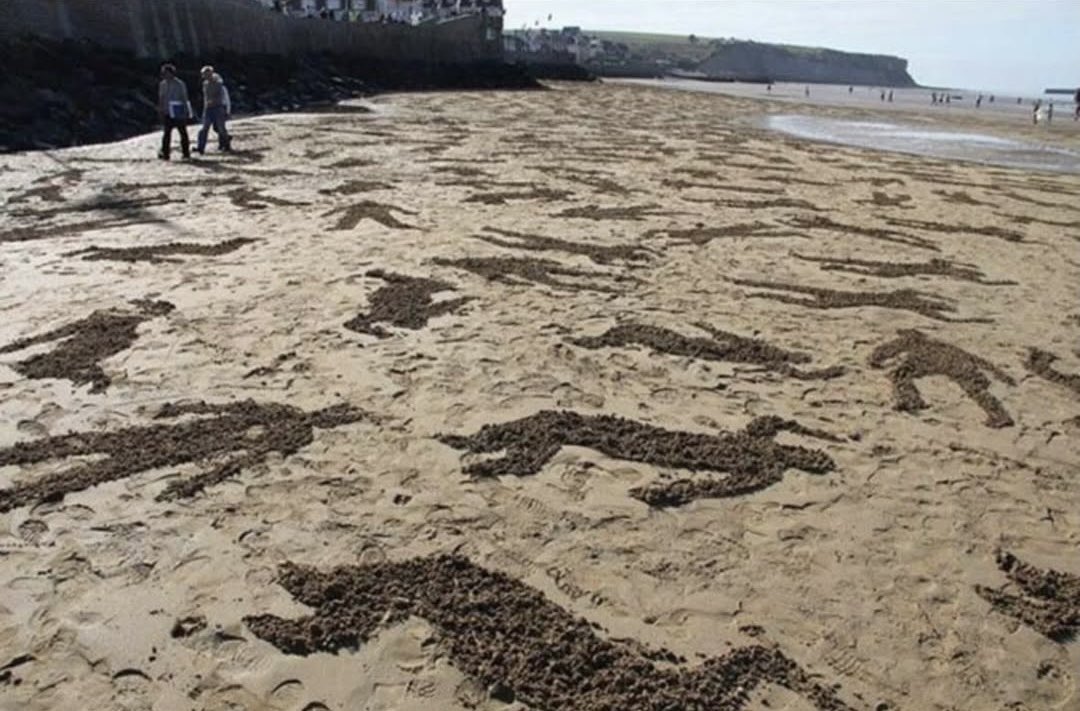
In 2013, British artists Jamie Wardley and Andy Moss created a striking temporary artwork on the beach at Arromanches, Normandy. Known as The Fallen 9000, the project involved volunteers using stencils and rakes to etch thousands of human silhouettes into the sand, each representing a life lost during the D-Day landings of June 6, 1944.
The silhouettes commemorated Allied troops, German soldiers, and civilians who died during one of the most pivotal days of World War II. What began as a small volunteer effort quickly expanded as hundreds of local residents joined in to help complete the installation.
Its most powerful feature was its impermanence.
Within hours, the incoming tide slowly washed the figures away. That was exactly the intention. The artwork served as a reminder of how individual lives can fade from memory, even when the events they shaped alter the course of history.
On D-Day, more than 150,000 Allied troops landed on the beaches of Normandy, launching the liberation of Western Europe from Nazi occupation. The operation breached Hitler’s Atlantic Wall and helped pave the way toward the end of World War II in Europe.
Created for International Peace Day in 2013, The Fallen 9000 was designed to highlight the human cost of war rather than the military scale of the invasion. According to History Hit and Colossal, the installation honored all those killed during the landings—civilians, German forces, and Allied servicemen alike.