It is still early--only 3 months into the fiscal year--but state revenues are running well above estimates--up 4.3% overall. Sales tax are up about 4% and business taxes are coming in much higher than estimated. Personal income taxes however are flat in relation to estimate.
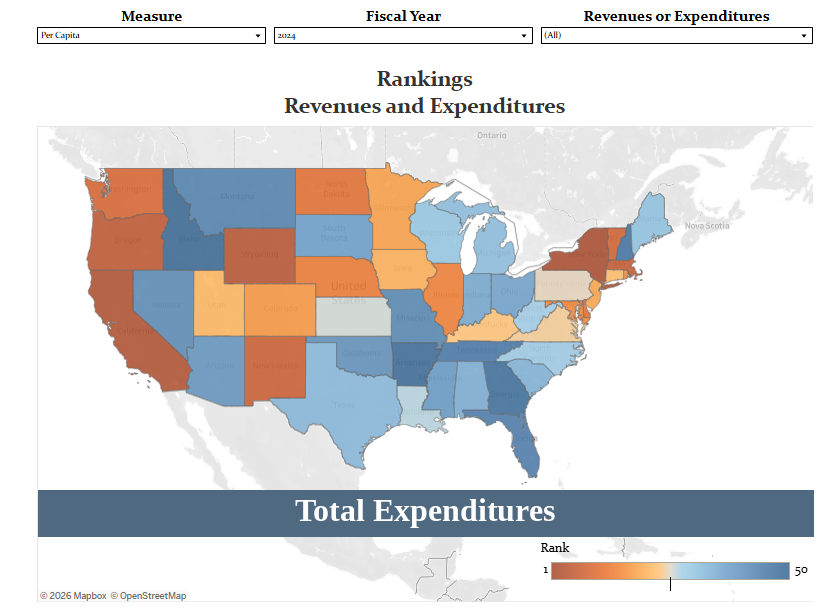
How does RI's government spending compare to other states? Our new 50-state analysis finds that RI continues to stand out regionally and nationally in public safety (5th in the U.S., 1st in New England) and government administration (6th and 1st).
More: https://t.co/7R8f4PIMn0
Yesterday, Speaker @CBlazejewski spoke at the @RIPEC_'s 50th annual meeting, offering his thoughts on pressing issues for the upcoming legislative session, which opens in January.
Congratulations to James Erinakes II, Superintendent of Exeter-West Greenwich Regional Schools, for being awarded the Robert M. Goodrich Distinguished Public Service Award, which recognizes an exceptional local employee. https://t.co/WFuFvezkpj
I enjoyed interviewing @jmart, politics bureau chief and senior political columnist at @politico, during last night's @RIPEC_ annual meeting. He offered good insights and anecdotes. Congratulations to @PaulDion5 and James Erinakes II for their awards. (Devon McWilliams photo)
Congratulations to @PaulDion5, Director of the Pandemic Recovery Office for the State of Rhode Island, for being recognized with the Gary S. Sasse Distinguished Public Service Award. https://t.co/CCGGnoevqJ
RIPEC has long examined the taxes Rhode Islanders pay and how public dollars are spent. Too often, higher spending has not delivered better outcomes. There is value in knowing which investments work, which fall short and how RI compares to other states.https://t.co/wYkt5SHMkw
Rhode Island incomes aren't keeping pace. Per capita personal income grew 25% vs. 32% nationally in FY 2019–24, so taxes and spending take a bigger bite of incomes. RI's rank by income rose 2 spots in taxes (13th) and 6 in spending (18th).
More: https://t.co/7R8f4PIexs
Preparations are underway for RIPEC’s Annual Meeting this evening! We’re looking forward to a timely conversation about what’s ahead in American politics with Jonathan Martin of POLITICO and Ed Fitzpatrick of the Boston Globe.
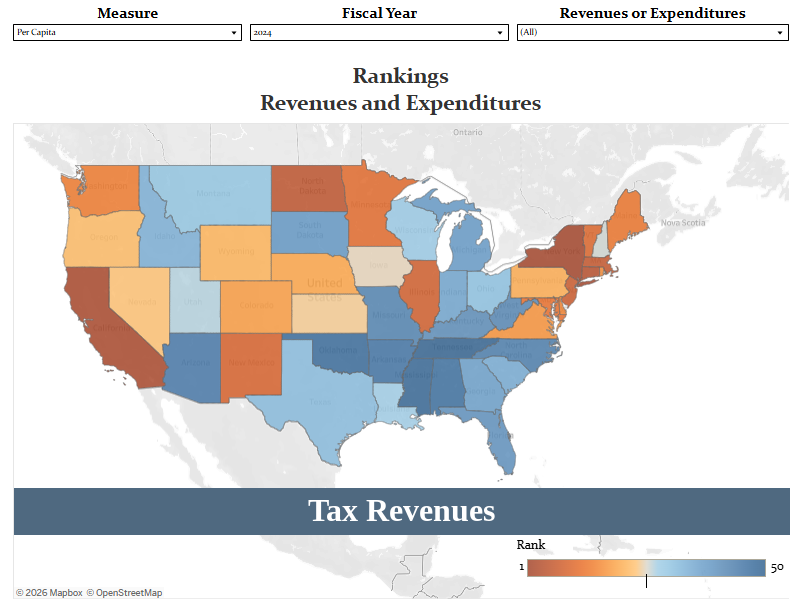
See where Rhode Island ranks on property taxes, government spending, and more. Our new interactive dashboard compares state and local taxing and spending for all 50 states.
Explore: https://t.co/yk4zUWSrXN
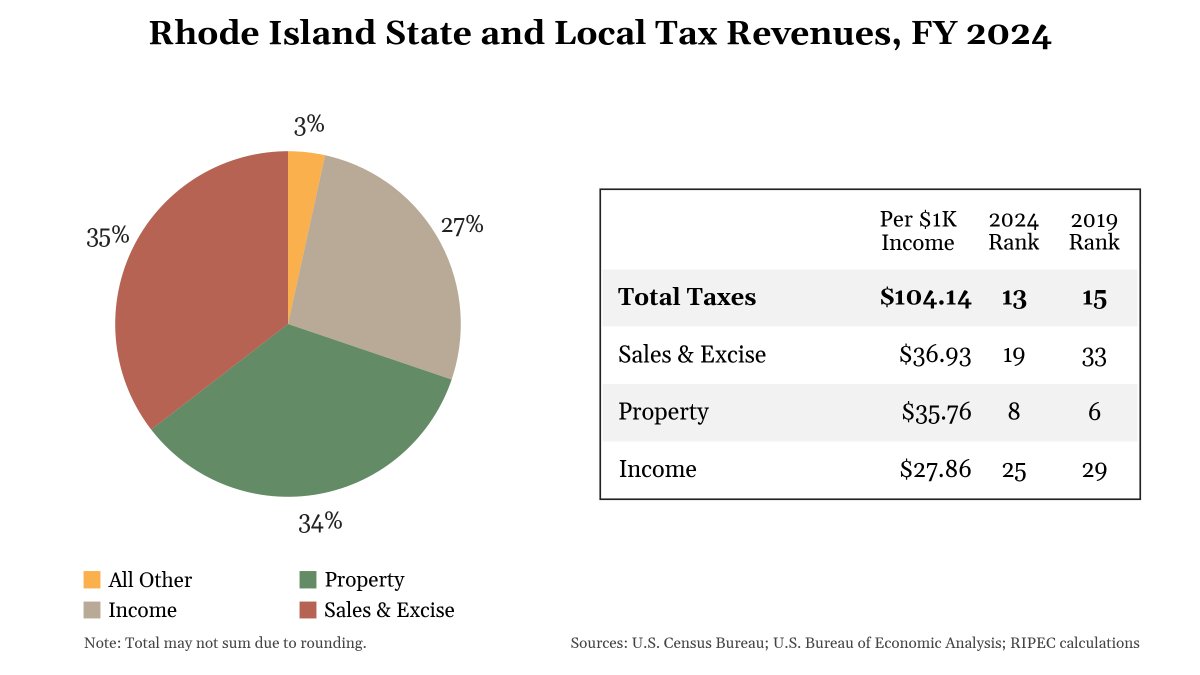
Rhode Island state and local tax revenues ranked 13th by personal income in FY 2024. Property taxes ranked 8th, while sales and excise taxes climbed 14 spots to 19th since FY 2019.
More on how RI taxes and spending compare in our new report: https://t.co/7R8f4PIMn0
R.I. economy and income lag behind national pace, report finds. “The cost of state and local government is outpacing Rhode Islanders’ ability to pay,” @RIPEC_’s @MichaelPDiBiase said.
https://t.co/wJWMGsrPML via @BostonGlobe
Just released: RIPEC's How Rhode Island Compares finds the cost of state and local government in RI is outpacing residents' ability to pay. RI stands out for high property taxes and high public safety and government administration spending.
Read more: https://t.co/TJbeTlc6Tj
RIPEC hosted the fourth and final Gubernatorial Candidate Series this afternoon. Republican nominee Aaron Guckian, MBA, MA spoke with members about issues like education, government spending, and economic growth. Thank you, Aaron for joining us!
RIPEC is hiring! We’re looking for a Public Policy Analyst who’s committed to using rigorous, critical analysis to advance public policy solutions for Rhode Island. Details below ⬇️
https://t.co/suNVLxmbCZ
RIPEC’s 83rd Annual Meeting is five days away. Join us Oct. 19 for an evening of conversation and connection, featuring POLITICO’s @jmart and the Boston Globe’s @FitzProv on the upcoming midterm elections.
https://t.co/ZBkFlMHNDY
RIPEC is proud to recognize James Erinakes II, Superintendent of Exeter-West Greenwich Regional Schools, with the Robert M. Goodrich Distinguished Public Service Award.
Join us in celebrating his leadership at RIPEC’s Annual Meeting on 10/19.
Tickets: https://t.co/ZBkFlMHfOq