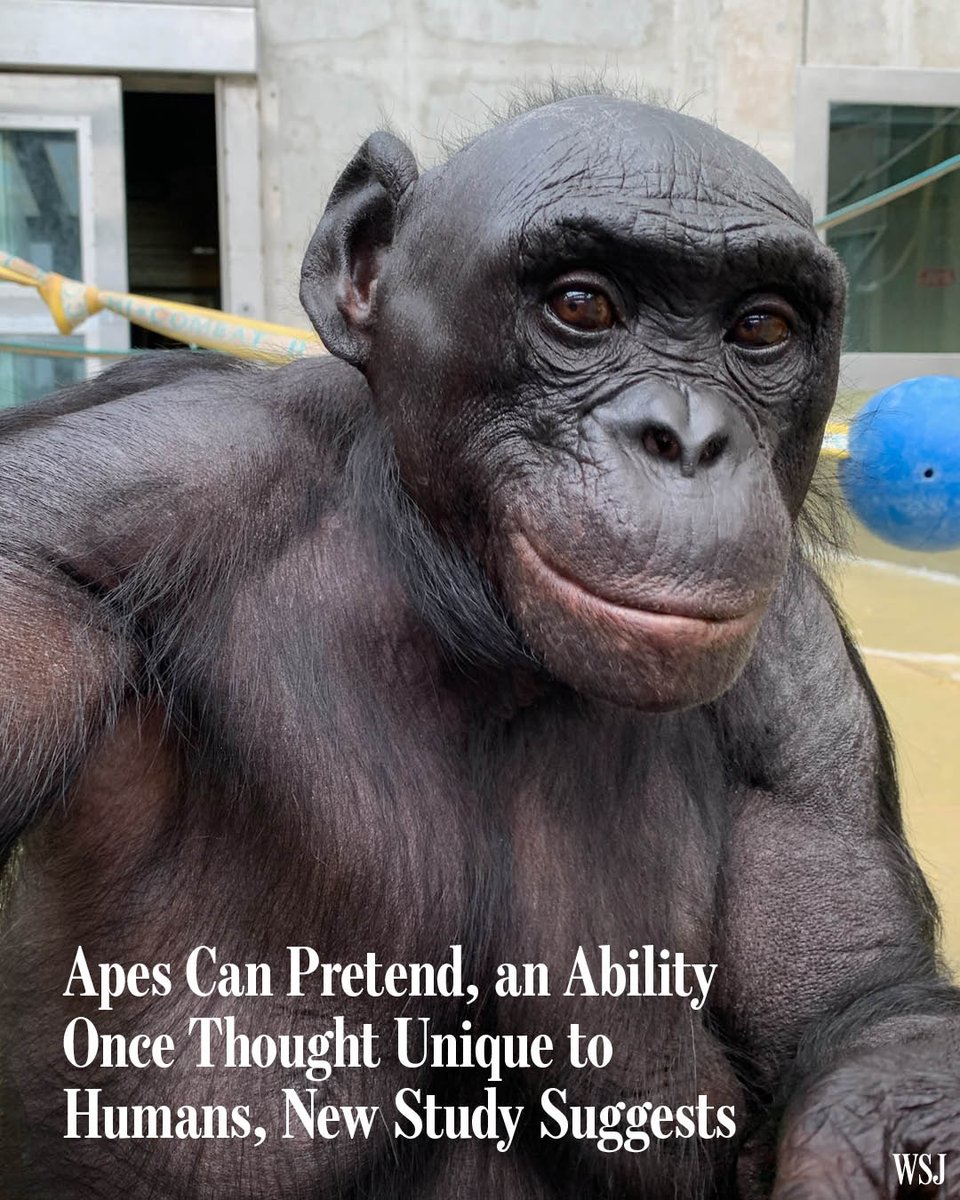
Astronomers detected a thin atmosphere around a tiny celestial body in the outer solar system for the first time — an object previously thought to be too small to support the presence of an atmosphere
https://t.co/JU5IPmmG8Y
Parliament has passed a bill to make cigarettes inaccessible to future generations in the U.K. Children born after Dec. 31, 2008, will never be able to buy cigarettes under the new Tobacco and Vapes Bill. https://t.co/k0zh1UG7TJ
One woman's entire life savings was stolen from her by sophisticated scammers who used artificial intelligence to perfectly manipulate her. https://t.co/tBiwrJbqyO
Greece has announced a social media ban for kids under 15 starting next year. The move comes after Australia became the world's first country to ban social media for children under 16 this past December.
AI sycophancy—the tendency for AI to tell us what we want to hear—is comforting. But we should do everything we can to fight it. https://t.co/I4MdE6FQRs
“Dubai Is Dead — And the GCC Won’t Survive This War”: A Sensational Video That Does Not Withstand Scrutiny
1. Jiang Xueqin’s video argues that the war involving Iran will ultimately lead to the collapse of Dubai, the Gulf Cooperation Council (GCC), and even the United States. The title is sensational, and its argument rests on factual errors and flawed assumptions about Dubai, the UAE and the broader region.
2. Jiang describes Dubai as attracting “tens of thousands of Westerners,” suggesting that its economic model depends primarily on Western expatriates. He argues that Westerners will now avoid Dubai because its reputation for safety has been compromised. However, the war will end, and Dubai’s robust social and economic infrastructure will continue to provide the opportunity that makes it so successful. Dubai and the UAE are home to more than 200 nationalities and remain a global hub for talent, capital, and major multinational corporations—including leading Western firms such as Microsoft, Google, Amazon, and JPMorgan.
3. Turning to the GCC more broadly, it is notable that Jiang misidentifies even basic facts about the region, referring to the GCC as “Gulf Coastal Countries” rather than the Gulf Cooperation Council, and describing Dubai as a country rather than one of the seven emirates that make up the United Arab Emirates. Such fundamental errors call into question the reliability of his broader analysis.
4. Jiang also claims that the United States will fail because it is dependent upon the GCC. But the strength of the U.S. is not dependent on any single region. Its strength comes from the scale and diversity of its economy, the depth and liquidity of its financial markets, the strength of its legal and institutional framework, and entrenched global network effects. Even significant disruption in the GCC would not translate into the collapse of the United States.
5. When he claims that the disruption of traffic through the Strait of Hormuz will permanently undermine the GCC countries, he significantly overstates the case. Iran has used the Strait to exert pressure—targeting or restricting certain vessels, particularly those linked to the United States and Israel—but this reflects a strategic show of force, not a permanent closure of one of the world’s most critical energy routes.
Precisely because the Strait of Hormuz is so strategically important, both regional states and the broader international community have strong incentives to ensure that traffic through the strait does not remain impeded. Current disruptions are severe and costly, but it is not serious analysis to assume that shipping through the Strait of Hormuz will never again resume in a stable manner.
6. Jiang characterizes the GCC as “artificial” because it imports so much food and relies on desalination for fresh water. This reflects a flawed understanding of modern economies. Many advanced states depend heavily on global trade for essential resources—Singapore being a prime example—and such interdependence is a defining feature of economic strength, not a sign of illegitimacy or collapse.
7. He baldly claims that GCC countries are defenseless. However, the GCC states invest tens of billions of dollars annually in defense, field advanced air forces, and maintain layered missile and drone defenses. These systems have been tested under sustained attack, where GCC countries have repeatedly intercepted and destroyed Iranian missiles and drones.
8. Jiang has asserted that Dubai, the UAE, and the GCC are “dead.” They are not. They are operating under the constant threat of attack while this war continues. As I write this from Dubai, I, together with millions of others, trust government defense instructions while continuing with normal daily life. I do not see a Dubai that is “dead”. I see a Dubai and UAE that are dealing with a difficult set of challenges with resilience and dedication.
Conclusion
Jiang used a sensational title for his video, “Dubai Is Dead — And the GCC Won’t Survive This War,” to attract attention. However, his thesis rests on exaggeration, factual errors, and a fundamental misunderstanding of both the region and the global system. He misinterprets temporary disruption caused by war as death for Dubai and the UAE, and as leading to the inevitable collapse of the GCC and even the United States. The result is a conclusion as unsupported as it is sensational.
@HHShkMohd@UAEmediaoffice@DXBMediaOffice
Former INTERPOL Secretary General, American citizen, and longtime Dubai resident Ronald K. Noble refutes Jiang Xueqin’s “Dubai Is Dead” video which claims that Dubai, the GCC and even the U.S. will fail as the war with Iran unfolds. Concerning Dubai, Noble asserts that under HH Sheikh Mohammed’s leadership, Dubai will remain one of the world’s most resilient cities. https://t.co/gIYwzWOi9S
@DXBMediaOffice@ADMediaOffice@realdonaldtrump@piersmorgan
As INTERPOL Secretary General (2000-2014), I traveled to 190 countries in times of crisis and calm, and have seen what resilience looks like. Jiang Xueqin’s claims about Dubai, the UAE and the GCC are riddled with errors and flawed reasoning—and his leap to predicting the collapse of the U.S. is absurd! I dismantle his claims in the following analysis.
Artificial intelligence can give some workers "brain fry" if overused, according to a new study published in Harvard Business Review.
https://t.co/bMlqtu4QYU
While nearly 18% of U.S. adults have taken a GLP-1 drug for weight loss or to treat a chronic condition, about half of people will stop taking it within a year. Often, they don’t understand what is likely to come next. 🔗: https://t.co/V2GlvOVg8F
The wreck of a luxury steamer that sank in a Lake Michigan gale nearly 150 years ago has been discovered, searchers announced last week, completing a quest that began nearly 60 years ago.
https://t.co/N9EK3q6TsL
When 60 Minutes visited Boston Dynamics in 2021, Atlas was a bulky, hydraulic robot. Back then, it relied on algorithms written by engineers.
Today, Atlas has a sleek, all-electric body and an AI-powered brain, smart enough to pull off hard-to-believe feats autonomously. https://t.co/2MPwKTPu8V
OpenAI announces it would begin rolling out test ads in ChatGPT, affecting the free and Go tiers of the artificial intelligence chatbot service. https://t.co/q7PkIlTy2B
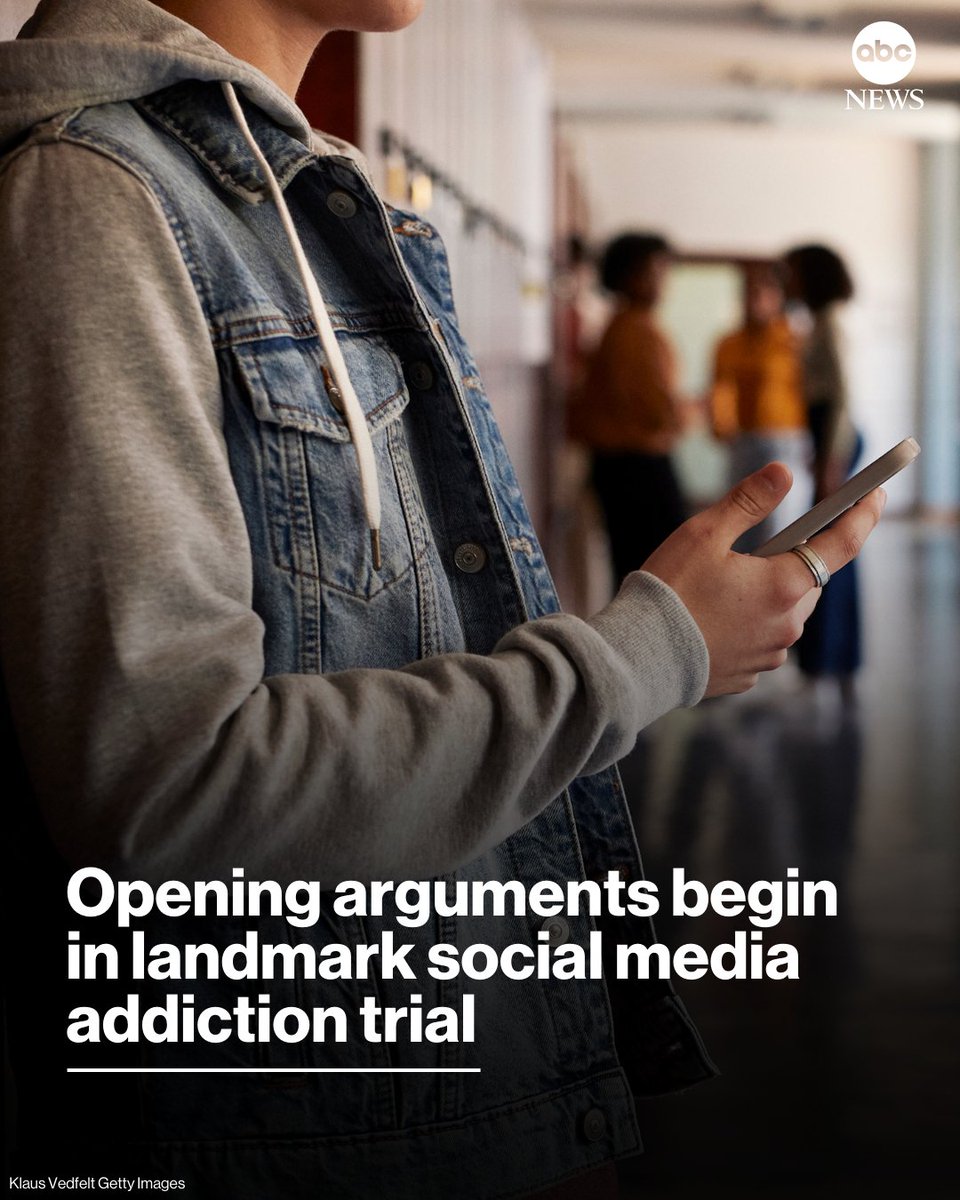
Opening statements begin this week in a landmark trial involving claims that social media platforms Meta and YouTube are designed to be addictive for younger users.
Read more: https://t.co/Oatmnfeyy8
Researchers deployed a robot dog on the slopes of Italy's Mount Etna, in hopes that it will be able to detect gas emissions that could help predict eruptions.