NEW PAPER: We followed 76 grizzly bears in a human-dominated landscape to explore coexistence. What we found surprised us. Tons of mortality, tons of conflict, and yet also tons of bears—3x denser than Banff National Park. How could this be possible? 🧵
https://t.co/4XfTA02RdX
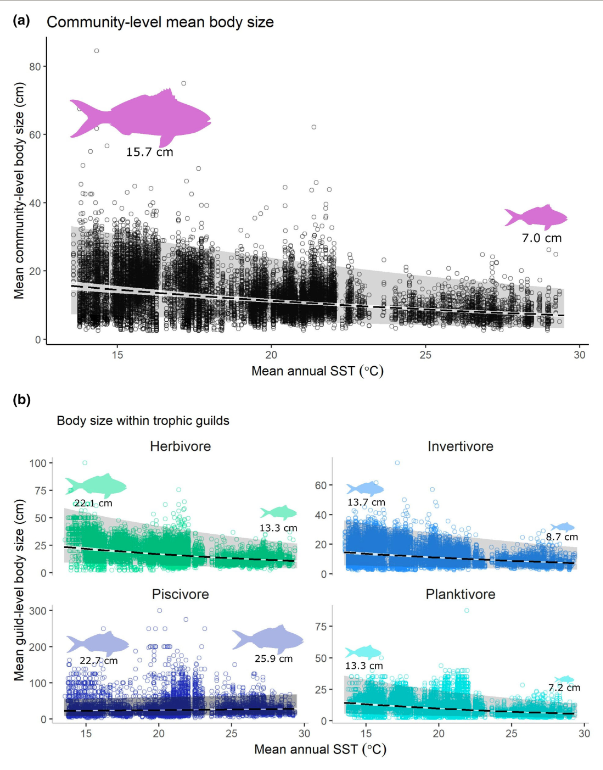
NEW STUDY: Mean reef fish body size decreases towards warmer waters
Coghlan et al. analysed 15,000+ surveys across a 15°C SST gradient to find a significant decrease in mean fish body size with warmer waters, averaging a 5% reduction per 1°C increase.
https://t.co/ppfvuA5BNJ
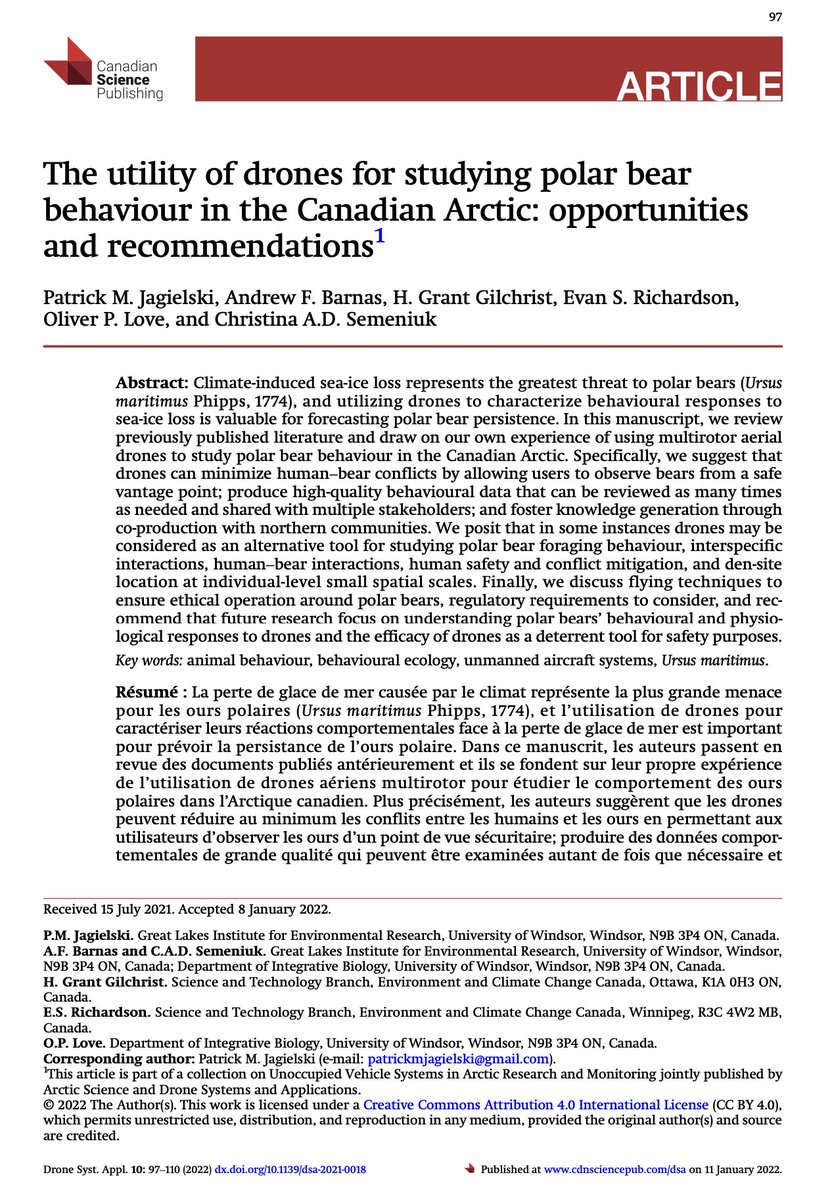
New polar bear paper is one of the most insightful ones I've seen in years. Video links are great too.
All in all, confirms what we know about the challenges the bears face with sea ice loss but the elegance of the study is very cool.
https://t.co/AUhampixon [open access]
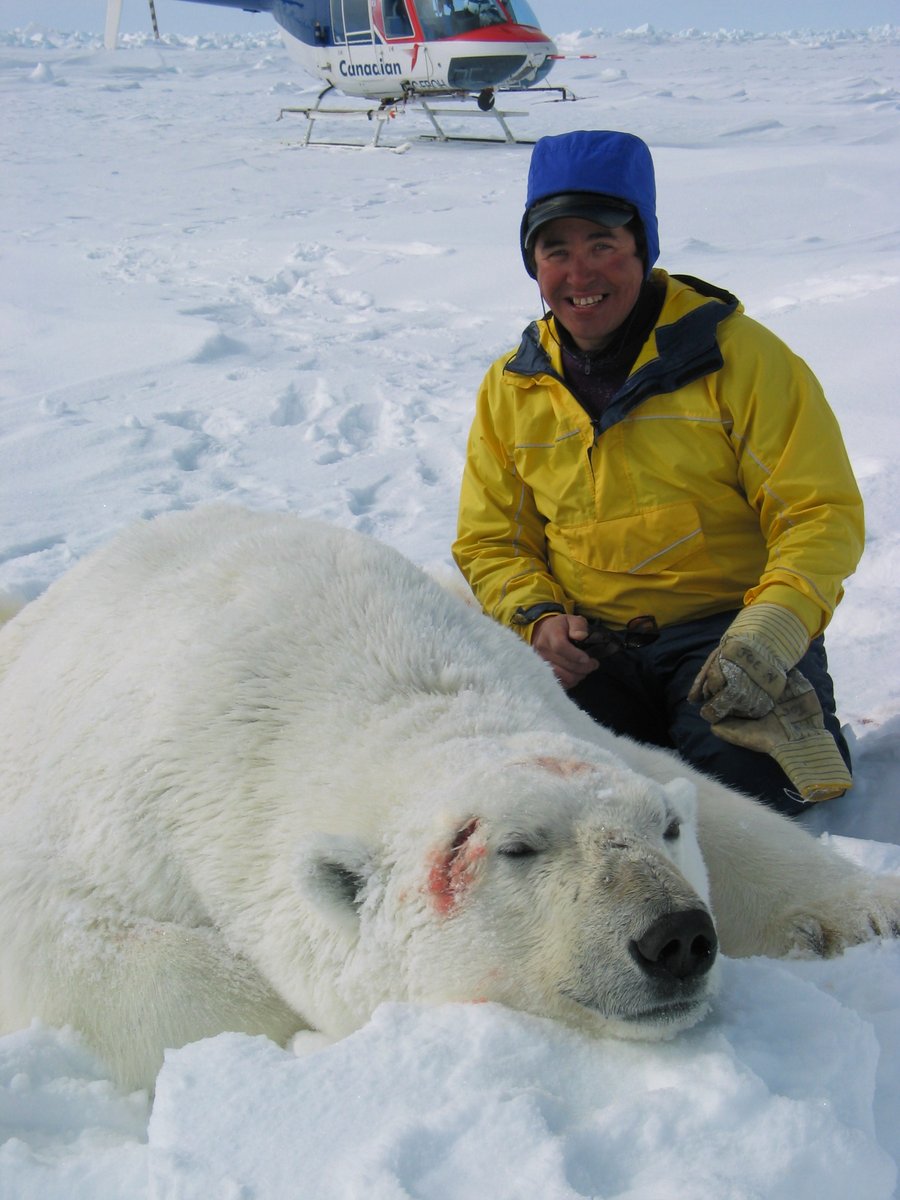
Fieldwork Friday: images taken during Arctic polar bear research. Beaufort Sea & Hudson Bay (2004-2023). Toshio Tsubota with @HokkaidoUni lying next to a large bear for scale.
Male guarding behavior and brood predators of invasive Bluegill in a Japanese lake - Peterson - North American Journal of Fisheries Management - Wiley Online Library https://t.co/kRmgdH958o
Best Talk honorable mentions (cont'd):
3. "The impact of population control on Asian black bear populations in Nagano, Japan" by Ririko Koido (@RK_biol)
(4/10)
New polar bear paper: using drones to study behaviour. Less invasive means of studying wildlife has moved in quantum leaps (e.g., camera traps, hair snags, fecal DNA). Coming years will further change how research is conducted.
Can a photo still make people care? 📷 Discover this photojournalist’s quest to find out as he travels to see polar bears ❄️🧊 living on the edge of #ClimateChange this Sunday on the @weathernetwork’s climate section: https://t.co/DYCDjv42kx #PolarBearDay@PolarBears
@AEDerocher@ualbertaScience I really glad your lab members were able to be back on a field and study polar bears! So cool.
It’s my dream to study polar bears in your laboratory.
Fieldwork Friday: here's hoping that 2022 allows us back onto the sea ice to study polar bears again. The @ualbertaScience research on polar bears has kept moving through the pandemic but some projects need new data. Fingers crossed.
Hudson Bay polar bears are moving offshore. Some radios are missing locations (colour coded). The Bay is now pretty much ice-covered & the bears can go where they wish. Happy New Year to the bears & best wishes for lots of seals!
MSc thesis "Anthropogenic influence on the autumn migration of polar bears (Ursus maritimus) in Hudson Bay" was defended by Erin Miller with @ualbertaScience An amazing thesis & excellent defence. 2 papers to follow soon: pertain to climate change & human-bear interactions.





![AEDerocher's tweet photo. New polar bear paper is one of the most insightful ones I've seen in years. Video links are great too.
All in all, confirms what we know about the challenges the bears face with sea ice loss but the elegance of the study is very cool.
https://t.co/AUhampixon [open access] https://t.co/nJdaxuLVy4](https://pbs.twimg.com/media/GGO-vUrbsAArtNr.jpg)