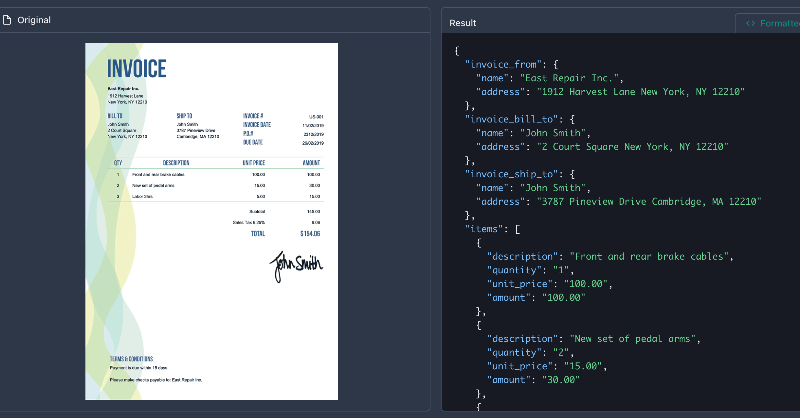
Goodbye broken PDF tools. Hello clean data in seconds.
Extract text, tables, charts & more from any PDF into Markdown or JSON — instantly.
Build PDF extractors by talking to our AI.
Deploy it as an API with a single click.
Apple is paying Google $1B/year for Gemini access, but the real play is the distillation rights. They're building smaller models from Gemini that run entirely on-device. No cloud. No data leaving your phone.
The company that refused to build its own frontier model might end up with the best AI distribution strategy of anyone.
The real question isn't whether LeCun is right.
It's what this means for everyone building on the assumption that language is the right foundation for all AI.
A Turing Award winner with $1B backing just said that assumption is wrong.
That's not a blog post hot take. That's a well-funded bet.
What's your read?
Yann LeCun just raised $1.03B to prove the AI industry is wrong.
He left Meta after 12 years. Built AMI Labs. Today announced the largest seed round in European history.
His thesis: LLMs are a dead end for real-world intelligence. World models are the path forward.
Here's why this matters. 👇
AMI Labs is building "world models" that learn from video and sensor data instead of text.
The approach is called JEPA. It learns abstract representations of reality.
Think: how a kid understands gravity before they know the word for it.
Nvidia, Bezos, Eric Schmidt, Temasek are all in. $3.5B pre-money valuation.
The bottleneck in software didn't disappear. It just moved.
Writing code: 10x faster. Shipping code: still painfully slow.
Merge conflicts, flaky tests, inconsistent quality. AI generates faster. Humans still have to maintain it.
Are you actually shipping faster, or just writing faster?
The part nobody wants to talk about:
Junior dev employment is down 20% since 2022. Harvard says AI adoption drops junior hiring 9-10% within six quarters.
We're removing the entry-level learning path while the data shows AI actually hurts skill development.
80% of enterprise teams have pushed AI agents into production.
Only 14% got security approval first.
The governance gap in agentic AI isn't a future problem. It's already here.
NIST just launched an AI Agent Standards Initiative. McKinsey published a security playbook for agentic deployments.
But standards take years. Agents are shipping in weeks.
The hardest security problem in AI right now isn't prompt injection. It's knowing what your own agents are doing.
The cost is real too. Shadow AI breaches run $670K more per incident than standard breaches.
Not because the attacks are fancier. Because nobody knows the agents exist until something breaks. Detection is late. Scoping damage is nearly impossible.
We’re building the engine for this at Doctly. The biggest bottleneck is accurately ingesting and structuring those messy outside forms and EMR records. We handle that extraction and structuring, then run agentic workflows to generate the note and pull in evidence-based guidelines for the plan.
Logic creates the map. Emotion chooses the path.
I was recently watching the interview between Ilya Sutskever and Dwarkesh Patel, and a specific anecdote stood out to me regarding the role of emotion in intelligence.
Ilya referred to a neuroscientific case study of a patient who suffered brain damage that severed their ability to feel emotions. Crucially, their logic and IQ remained intact.
The result? They were paralyzed. They couldn't make even the simplest decisions, or they made terrible financial choices. They could analyze every variable of a problem endlessly, but without the "emotional signal" of what felt good or bad, they couldn't actually choose.
It made me realize how perfectly this maps to how we build AI:
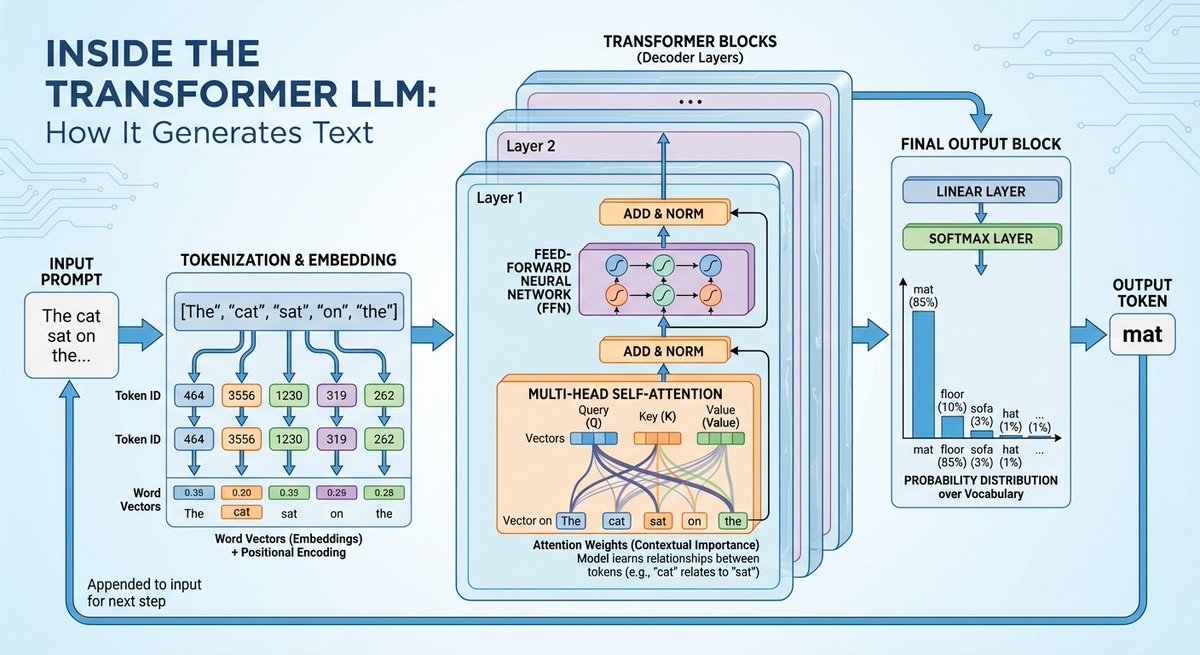
Pre-training is the "Logic": It builds the world model. It understands causality, facts, and possibilities. It creates the map of the territory.
The Value Function is the "Emotion": In Reinforcement Learning, the value function is what scores a specific state or action. It provides the "gut feeling" of whether an outcome is desirable.
Without a robust value function, an AI (like the patient) is just a simulator of infinite possibilities. It requires that "emotional" signal to collapse the search space and become a viable, decisive agent.
We often think of emotion and logic as opposites. In reality, you can't have an intelligent agent without both.
@demishassabis You’re absolutely right. It’s a combination of factors working closely to bring on a great product. Great job! So far in my testing, it has been pretty amazing. Makes me excited about the things to come.