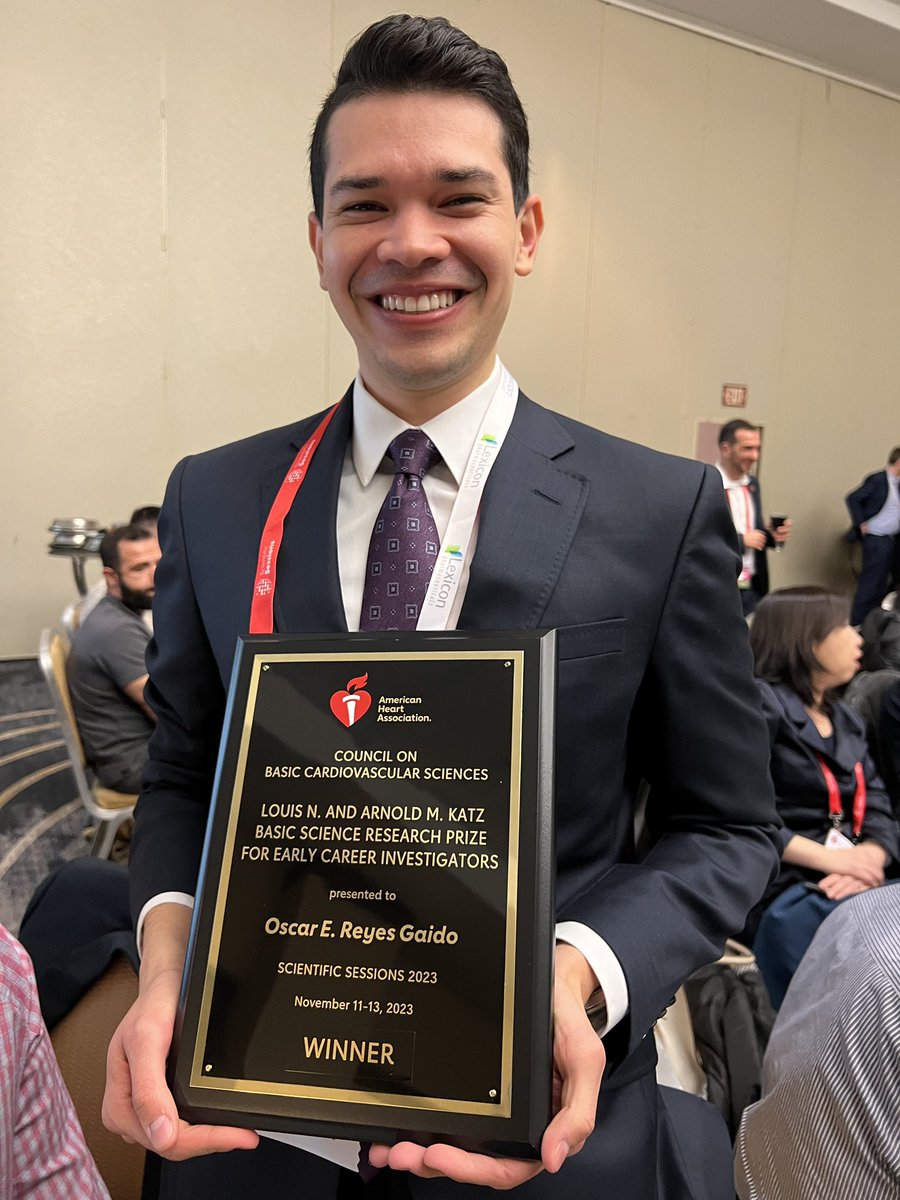
Congratulations to @Oscarreyesgaido, winner of this year’s AHA Katz Basic Science Research award and to our indefatigable mentor Dr. Mark Anderson. Looking forward to more Katz and Marcus AHA winners from this pedigree! @priyaumapathi@KlitosKon@betsy_luczak
There’s worry about what the Supreme Court’s ruling on affirmative action could mean for the pipeline of who eventually provides health care in the U.S.
For more on these concerns, @IAmAmnaNawaz spoke to @UREssien. https://t.co/x2wbLMyl6O
@RyanTedfordMD@CardioNerdsJC This brings up another issue - HFpEF is a heterogeneous disease, yet we keep treating it as one disease. Maybe sub-populations of HFpEF patients stand to benefit or suffer harm.
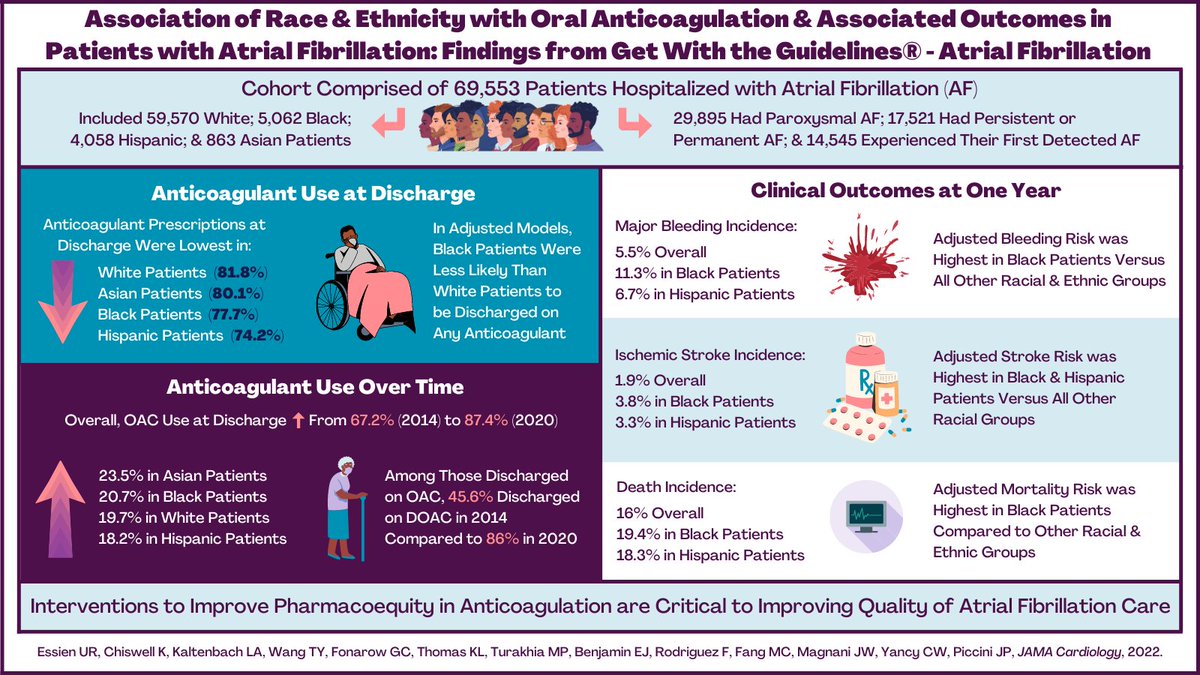
1/ 🧵 NEW Paper.
In @JAMACardio we asked: are there racial/ethnic disparities in treatment & outcomes in the Get With the Guidelines - AFIB Registry.
Short answer: YES.
Here’s what we found, what it means, and what we can do to achieve #Pharmacoequity.
https://t.co/O4FsVTxnmJ
Based on the data in this paper, there is not enough evidence for routine screening, especially with the Kardia device at a clinic visit to a primary care visit. #CardsJC
@KTamirisaMD@HafizaKMD@RajendraPShahMD@CardioNerdsJC I think the brings up two issues -
1) Access to care
2) Quality of care, when there is access. Presumably a good quality physical exam (for pulse) vs ECG vs a device like Kardia will give approximate results (don't have any data on this!)
The average BMI in this study was ~ 28. This is certainly much lower than I see in my practice and may have also affected the outcomes. Obesity is a known risk factor for AF. I may send my patients to MA for weight loss therapy! #CardsJC