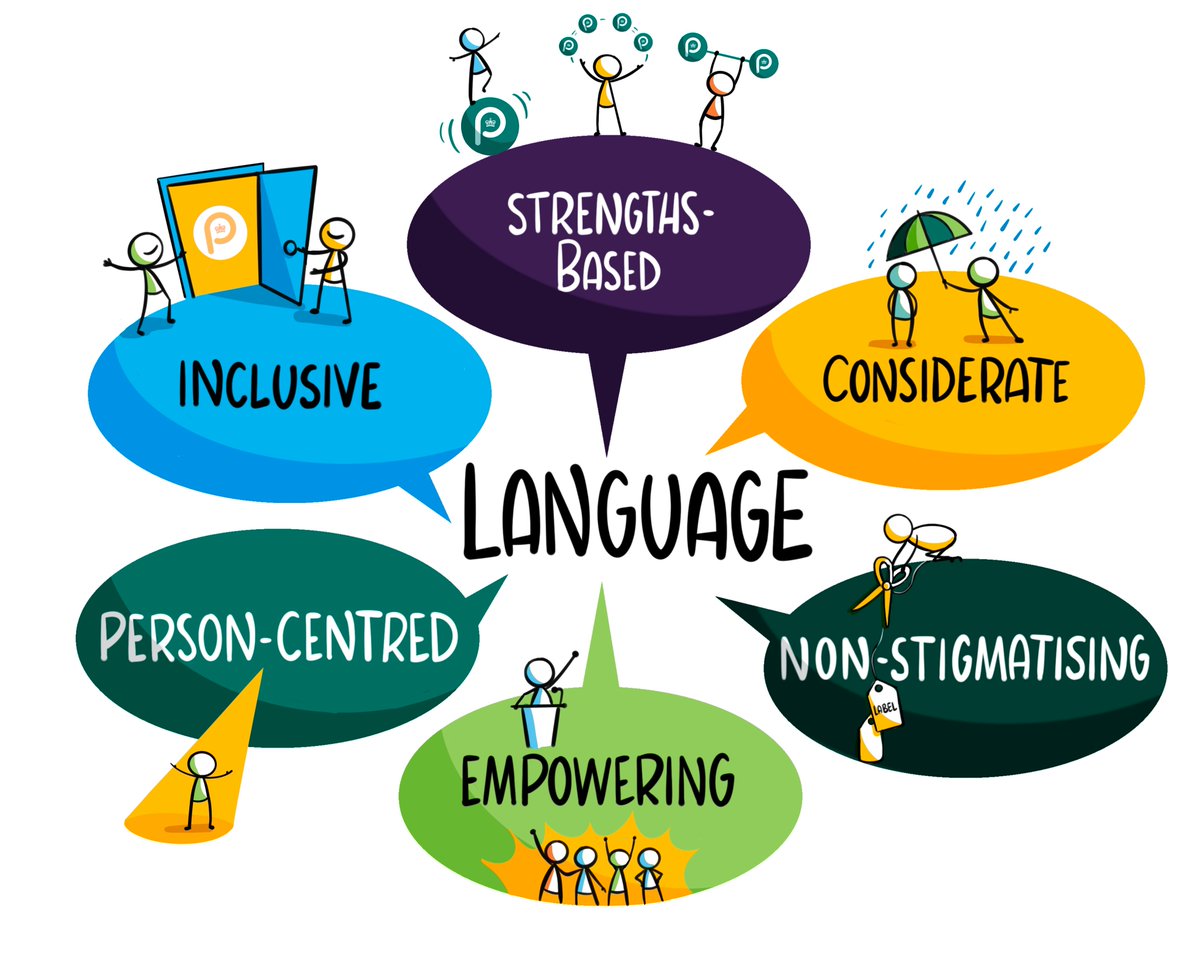
The probation/youth justice literature consistently demonstrates the importance of building connections and relationships. Thinking about our language is thus important, helping to ensure that positive relationships and opportunities for positive development are not hindered
Do you work in probation or youth justice? For the next few weeks, we will be highlighting key themes from our research products, sharing knowledge from across the research community and promoting some of the key ingredients for high-quality services https://t.co/0kn7hFEMpy
A huge thanks to the research team from the University of East Anglia and Research in Practice/NCB for undertaking this work. The implications set out encompass the National Transitions protocol, joint training, policy and inspection, and wider local connections.
NEW RESEARCH: Read our latest Research & Analysis Bulletin on Transitional Safeguarding in youth justice and probation services.
https://t.co/ZvwdVwanq1
A big thank you to @AliWigzell and Claire Paterson-Young for this paper which reflects upon the existing desistance literature and sets out four key requirements for the application of progressive desistance practice in youth justice https://t.co/TS9Unfr7cS
Many thanks to @DavidBe25428272 for our latest video with advice for the delivery of high-quality probation services, covering the need to make your relationships matter, to effectively engage people with community resources, and the importance of patience https://t.co/6WGdfHXAvc
A huge thanks to all the authors of this paper which highlights how hope can be facilitated through the adoption of person-centred, strengths-based practices and through a focus on localised delivery, service user engagement, and substantive rather than technical compliance
A big thank you to Victoria Knight for this paper which provides a guide for responsible and ethical digitisation in probation. The overall goal is to reduce digital exclusion, enhance human interactions, and foster societal integration. https://t.co/N0rXno2k4O
NEW ACADEMIC INSIGHT: Our latest paper produced by Dr Victoria Knight provides recommendations to transform probation services into equitable, digitally-capable environments. Read the paper here: https://t.co/EPdq7YmNHC
Our latest bulletin! This one provides an update on our 2018 research report on the quality of work by probation services to protect the public. We review the key points from recent inspection findings, before considering approaches to help improve the quality of the work
A big thank you to Andrew Day and @catia_malvaso for this paper which sets out three core components for engaging justice-involved children, with attention given to how to put them into practice and how some of the challenges that might arise can be addressed.
NEW: Our latest 2025 Academic Insight highlights work undertaken in partnership with Youth Justice in South Australia to develop more trauma-informed and child-centred case management processes and practices. https://t.co/kkkNhiHuhP
The new webpages highlight the importance of building and maintaining positive relationships and connections at the community, system, organisational, and practitioner levels – these levels and the relationships within them are interrelated and exert influence upon each other.
NEW: Today we have published a new contribution to our research evidence base highlighting the importance of relationship building in probation and youth justice services. Read more about relationship-centred work: https://t.co/h8uUqUVvRa
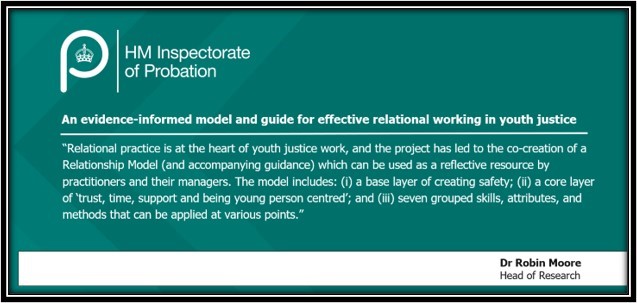
A big thank you to @omearadaly, @DwaneJackie, @Caitlin_REPPP and Seán Redmond for this paper. Relational practice is at the heart of youth justice work, and this model provides evidence-informed signposts and pointers for youth justice practitioners to follow.
NEW: Our first Academic Insight of 2025 presents findings from a three-year research project which examined effective relationship building between youth justice practitioners and crime-involved young people. https://t.co/fNFe6E3a53
Many congrats to all at Bromley. Great to read about the Bromley Relationship Model (BRM), the partnering with a number of universities for research, and statistical analysis and reporting tools turning raw data into meaningful performance information.
Bromley Youth Justice Service have been rated 'Outstanding'. Staff know their children well and focus on each child’s success. Inspectors were also impressed with the wide range of services available for children. https://t.co/leSftCIdwo
A big thank you to everybody we have worked with during 2024, further developing and promoting the evidence base underpinning high-quality probation and youth justice services. Looking forward to our first publications in 2025 which focus on relationship-centred services!
We are running a consultation on our thematic inspection and research programmes for 2024/2025.
Have your say by Friday 22 November: https://t.co/W9naipW4gt
A big thank you to @DavidBe25428272, Shelley Duffy & @CharlotteColman for this paper highlighting how the Inclusive Recovery Cities model seeks to mobilise existing networks/resources and build momentum to challenge stigma/exclusion and create opportunities for the benefit of all
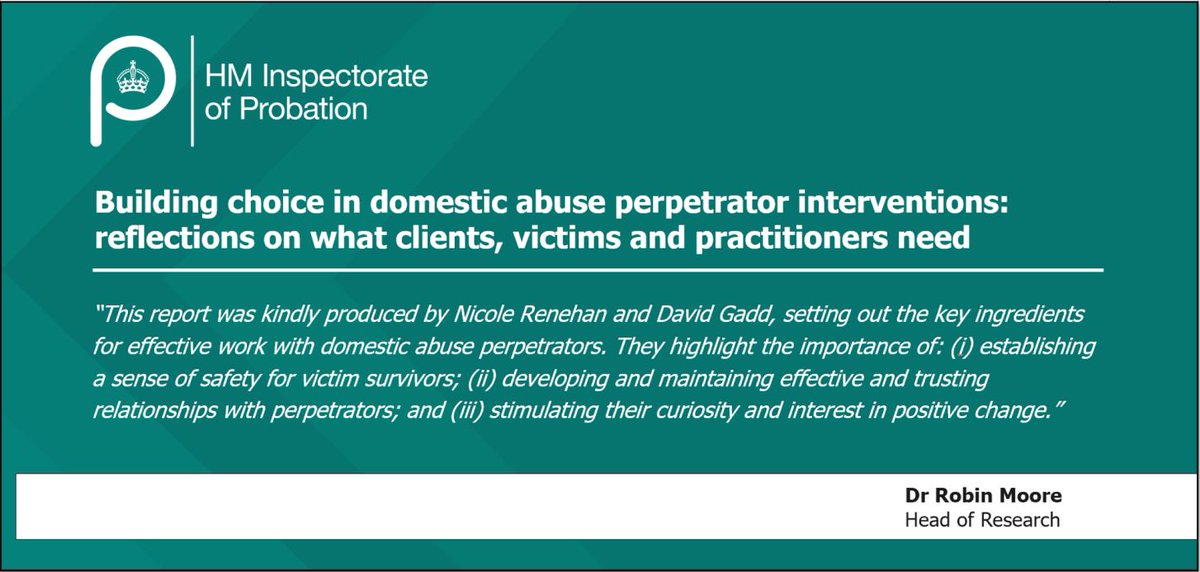
Many thanks to @nikitarenee37 & @ProfDavidGadd for this Academic Insights paper which sets out the key ingredients for effective work addressing domestic abuse, including the importance of establishing a sense of safety and developing/maintaining positive working alliances
A big thank you to @HmppsInsights for the opportunity to talk about evidence-informed and evidence-based practice, and some of the approaches for building and implementing the evidence base!
📢 NEW BLOG ALERT 📢
We talk a lot about 'Evidence-Informed' and 'Evidence-Based Practice' - but why is it so important? 🤔
Head to the HMPPS Insights blog to hear Robin Moore - Head of Research at HMIP - explain why.
-
https://t.co/0zsCccTl84
-
@HMIProbation
A big thank you to @IDurnescu and @FayeTaxman for bringing a global perspective to our reflections videos! Based upon a recent edited book, they set out four grand challenges, including the need to focus on relationship building, culture change, and community support.
WATCH: Our new ‘reflections from research’ video by Professor Ioan Durnescu (University of Bucharest) and Professor Faye S. Taxman (George Mason University), on investing in individuals, families, communities, and community corrections. https://t.co/3JFYXejRb3
✍️ What are pre-sentence reports? Why do they matter? And what's going wrong?
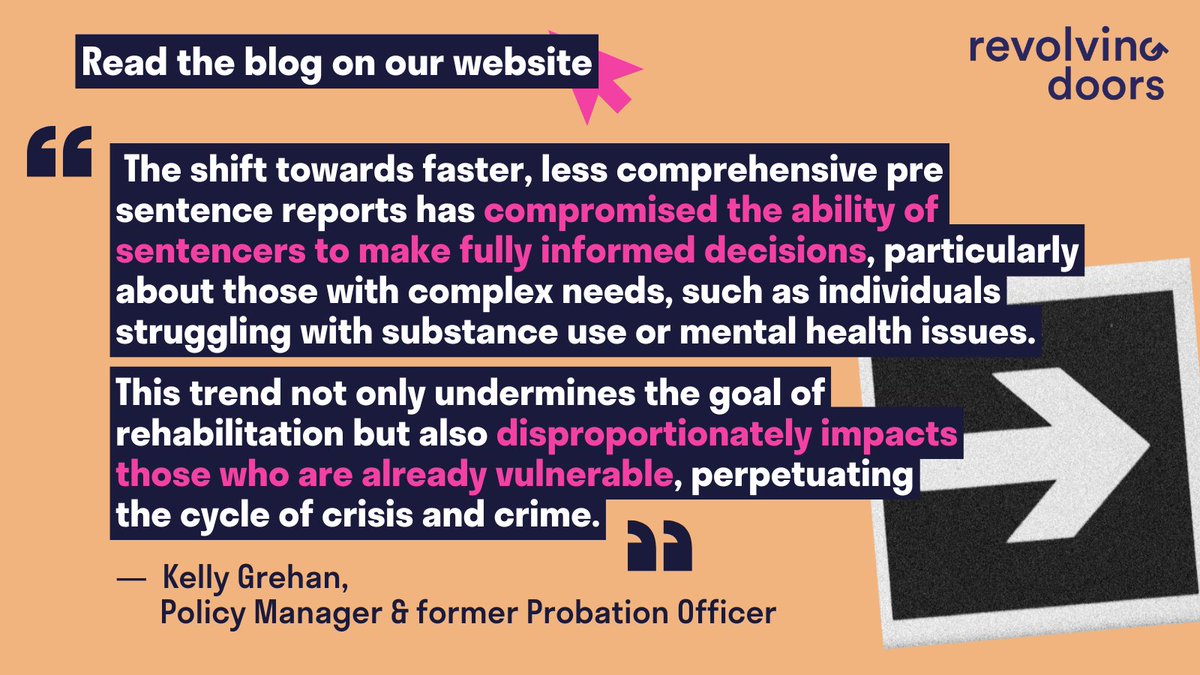
Following a concerning report from @HMIProbation about the inadequacy of pre-sentence information provided to courts, our latest blog makes a case for high-quality PSRs to support effective sentencing.
Our latest bulletin! This one explores explores pre-sentence reports (PSRs) and the extent to which the Probation Service have been able to provide courts with advice which is sufficiently analytical, personalised to the individual, and which supports the court’s decision making
NEW RESEARCH: Read our latest Research and Analysis Bulletin on the quality of pre-sentence information and advice provided to courts (2022 to 2023 inspections)
https://t.co/OCRnVY952u