The global supply chain loses $4.5 trillion every year to counterfeiting, fraud and mislabelling.
That is larger than the GDP of Germany.
And most brands cannot tell you in real time where their products are or whether what's in the box matches the label.
Here is why. 🧵
@SenLummis Clear regulation is only part of the equation.
Once the rules become clearer, the next challenge is building infrastructure that businesses and developers can actually use, that’s where the real work begins.
@SenLummis Regulatory frameworks and infrastructure need to evolve together. Clear rules help create the confidence needed for digital assets to move beyond early adopters.
@TWINGlobalOrg Four days to ten minutes shows how much hidden friction can exist in documentation. When information flows efficiently, ports, carriers, and businesses all benefit.
@WatcherGuru The conversation is no longer if tokenization will happen, but how it will be implemented at scale. Infrastructure, interoperability, and usability will determine which ecosystems succeed.
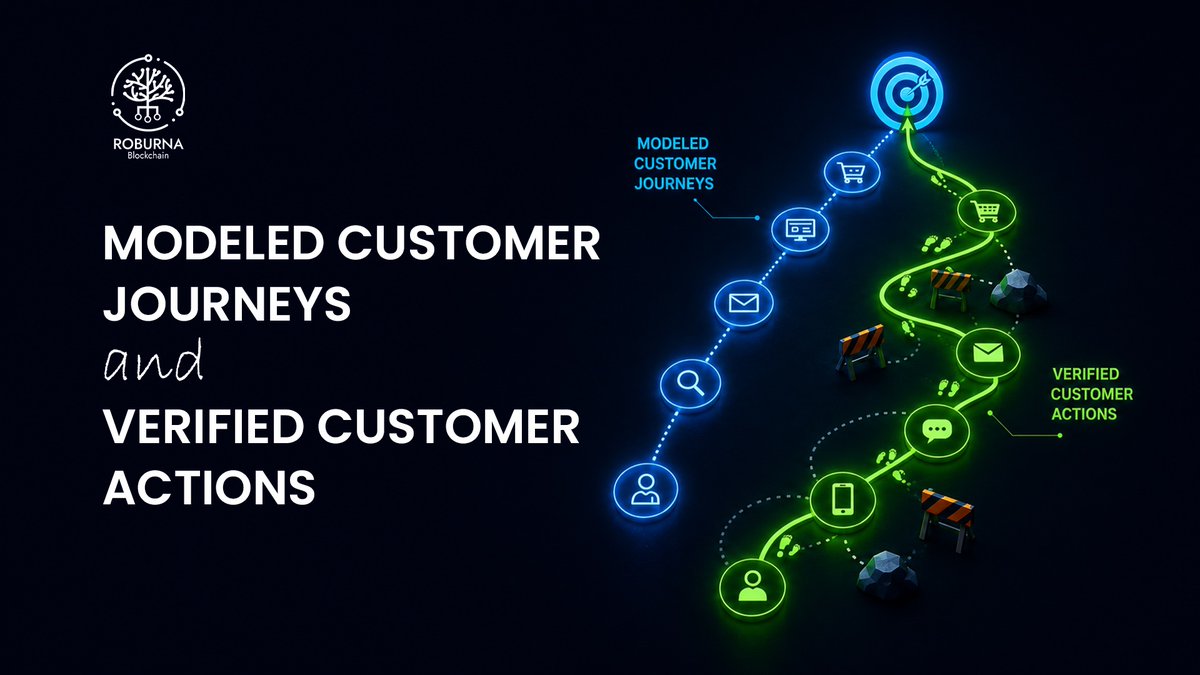
Customer journey analytics doesn’t always show what actually happened.
Often, it shows what most likely happened.
Modern analytics platforms combine recorded interactions with predictive models to reconstruct customer journeys across fragmented channels and devices.
That makes modeled journeys useful, but they’re different from verified customer actions.
A modeled journey estimates customer behaviour.
A verified action records behavior that actually occurred.
As enterprises rely more on customer intelligence, knowing the difference between prediction and verification becomes increasingly important.
How does your organization separate modeled behavior from verified customer activity?
Today’s analytics platforms often lack complete records of every customer touchpoint.
Instead, they build models that predict behavior based on patterns in existing data.
Predictive scores and behavioral forecasts are not direct observations.
They are inferred signals generated by statistical models and algorithms.
Gaps in tracking across channels and systems force analytics tools to connect dots through assumptions.
As a result, decisions are driven more by what models predict customers will do than what they actually did.
What challenges have you faced when analytics relied on inferred behavior rather than verified actions?
@TWINGlobalOrg It’s a good reminder that supply chains move on information just as much as they move on cargo. Better visibility upstream usually means fewer delays downstream.
@APompliano Affordability is shaped by more than wages or inflation. The efficiency of supply chains, logistics, and production all influence what consumers ultimately pay at the checkout.
@FoxBusiness Incidents like this highlight why connected, verifiable records are so important. The quicker the source and affected products can be identified, the quicker risks can be contained.
https://t.co/aTdY7aBorq
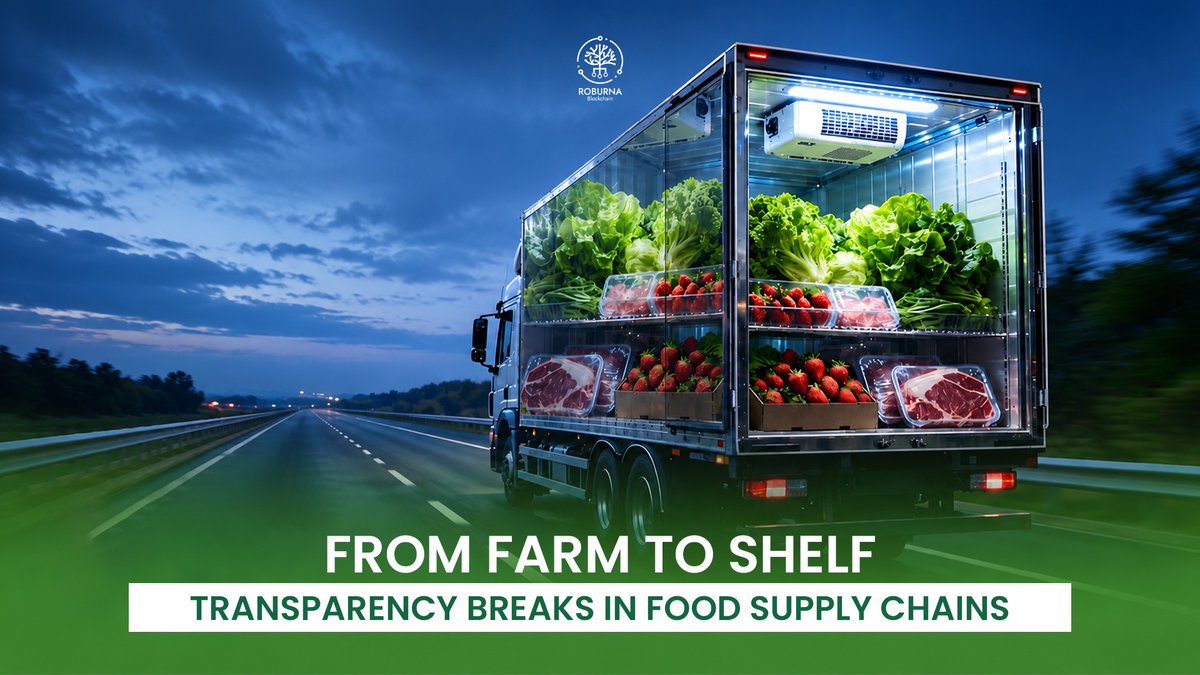
Most people assume the food they buy has been verified every step of the way.
The reality is more complicated.
Food products often pass through multiple countries, suppliers, processors, distributors, and logistics providers before reaching a supermarket shelf. Each party keeps its own records, few of those records are connected.
When something goes wrong, tracing the source becomes an investigation.
In 2018, an E. coli outbreak linked to romaine lettuce affected 210 people across 36 US states. It took 11 days to identify the source region, and regulators advised consumers across the country to avoid all romaine lettuce while the investigation continued.
In 2024, illnesses linked to contaminated cucumbers began in March. The recall wasn't issued until the end of May, people were still falling ill in July.
The response in both cases wasn't slow because nobody cared.
It was slow because the supply chain could not isolate the problem quickly enough.
The food industry doesn't have a shortage of data.
It has a shortage of connected, verifiable records that allow everyone to see the same chain of events.
And when traceability breaks down, the consequences don't show up on a balance sheet first.
They show up in hospitals.
Most people assume the food they buy has been verified every step of the way.
The reality is more complicated.
Food products often pass through multiple countries, suppliers, processors, distributors, and logistics providers before reaching a supermarket shelf. Each party keeps its own records, few of those records are connected.
When something goes wrong, tracing the source becomes an investigation.
In 2018, an E. coli outbreak linked to romaine lettuce affected 210 people across 36 US states. It took 11 days to identify the source region, and regulators advised consumers across the country to avoid all romaine lettuce while the investigation continued.
In 2024, illnesses linked to contaminated cucumbers began in March. The recall wasn't issued until the end of May, people were still falling ill in July.
The response in both cases wasn't slow because nobody cared.
It was slow because the supply chain could not isolate the problem quickly enough.
The food industry doesn't have a shortage of data.
It has a shortage of connected, verifiable records that allow everyone to see the same chain of events.
And when traceability breaks down, the consequences don't show up on a balance sheet first.
They show up in hospitals.
Fashion is one of the world’s most complex supply chains.
A single garment can pass through 8–12 different tiers before reaching a customer, with each company keeping its own records.
What rarely exists is one verified record that follows the product from origin to retail.
That creates three major challenges:
• Counterfeit products are harder to identify.
• Sustainability claims are difficult to verify.
• Brands have limited visibility into lower-tier suppliers, making labour issues harder to detect.
The EU’s Digital Product Passport changes this.
From 2027, textile products sold in the EU must carry a verified digital record with information such as material composition, country of manufacture, repairability, and recycling guidance.
Not a marketing claim, but a record that can be verified.
For many fashion brands, the biggest challenge isn’t the regulation, it’s building the product-level infrastructure needed to support it across a global supply chain.
How prepared do you think the fashion industry is for product-level transparency?