ENTERTAINING SHORT FILMS: TRANQUIL (SCIFI)
A team of intelligence specialists defy government orders in a race against time. They must navigate a high-stakes game of surveillance and cover-ups.
Watch:https://t.co/08POS4REFu
#movies#Trending#podcasts#scifi#Entertainment
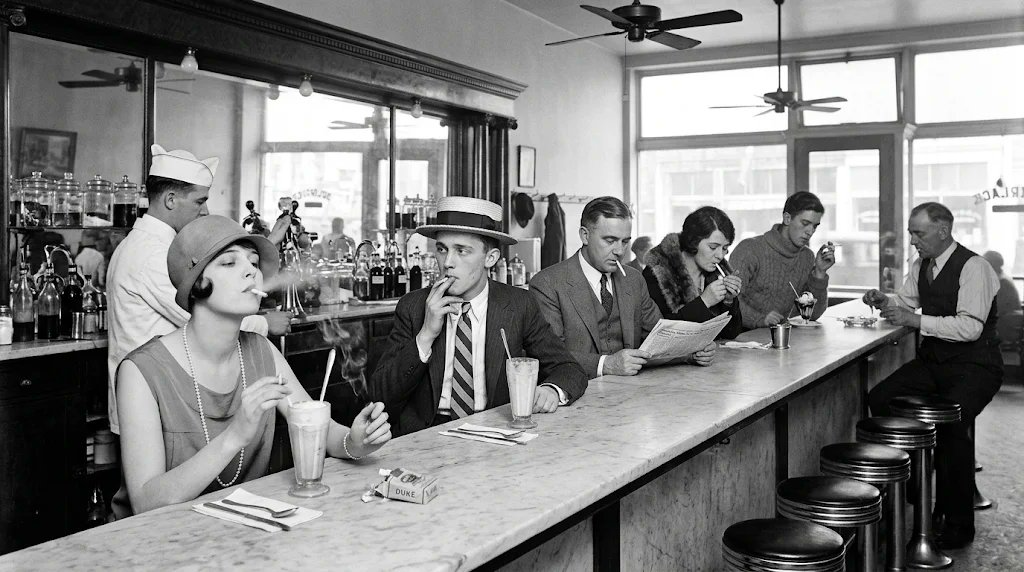
Sugar is what made the cigarette deadly.
For most of history tobacco was a pipe, a cigar or a plug in the cheek, and almost nobody drew the smoke into their lungs, because they could not. Smoke from tobacco dried in the open air is alkaline. It hits the throat like a wire brush and the body refuses it. People puffed and held it in the mouth. Lung cancer was a curiosity a doctor might see once in a career.
Sugar changed the chemistry. Tobacco cured over heat keeps its natural sugar, up to a fifth of its weight, and sugar burns to an acid smoke that is mild, sweet and goes down without a cough. In 1913 Reynolds launched Camel, a blend that took the harsh, nicotine-heavy leaf and soaked it in sugar sauce until it behaved. Every rival copied it. By 1929 American cigarette makers were getting through 50 million pounds of sugar a year.
A smoke you can inhale reaches a surface the size of a tennis court instead of the inside of a mouth. The nicotine arrives in seconds. So does everything else.
A government tobacco chemist wrote it down in 1950, in a report the sugar trade paid for and was pleased with: without sugar there would have been no American cigarette.
Lung cancer in the United States went from a few hundred cases a year when Camel launched to more than 150,000 deaths.
Sugar has a talent for this. It rarely does the killing in person. It makes the thing that kills you go down easily enough to have another.
🔥 In January 1942, Clark Gable lost his wife, Carole Lombard, in a plane crash. She was coming home from selling war bonds.
The biggest star in Hollywood could have stayed safe at home.
Instead, at 41, he signed up as a private.
And a year later, over Germany, a shell came through the floor of his plane...
It missed his head by inches. It took the heel off his boot and never exploded.
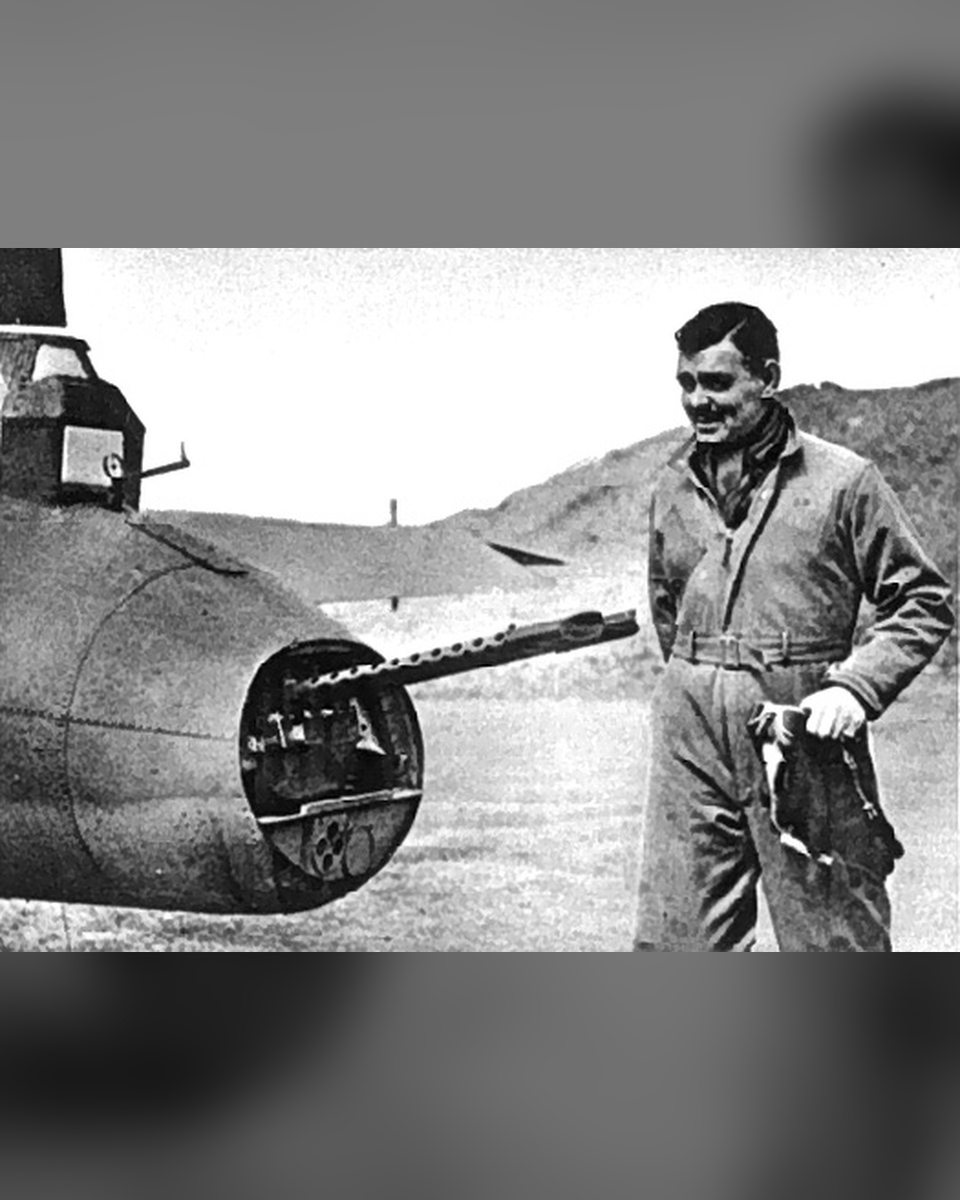
Gable trained as an aerial gunner and flew combat missions over Europe in B-17 bombers, filming real gunners for the Army.
Word was that Hermann Göring offered a reward to any German pilot who could shoot him down.
He came home with the Air Medal and the Distinguished Flying Cross. His discharge papers were signed by a captain named Ronald Reagan.
Did you know the King of Hollywood went to war? 🎬
ENTERTAINING SHORT FILMS: TRANQUIL (SCIFI)
A team of intelligence specialists defy government orders in a race against time. They must navigate a high-stakes game of surveillance and cover-ups.
Watch:https://t.co/08POS4REFu
#movies#Trending#podcasts#scifi#Entertainment
ENTERTAINING SHORT FILMS: THE OLD MAN AT THE BAR (DRAMA)
Two waiters closing up a Parisian bar for the night have their routine upended by a mysterious old man who may have shown up for more than just a late night drink.
Watch:https://t.co/eb7He8v7Wd
#indie#movies#Podcasts
John F. Kennedy could not do one sit-up on the day he became the most powerful man on earth, and the corset his doctors kept him in is why the bullet that killed him found its mark.
He had been in pain since Harvard. In 1954 surgeons bolted a metal plate to his spine. The wound went septic and a priest was called to give him the last rites. A second operation took the plate back out. After that came the anaesthetic needles, sometimes several a day, a rocking chair, crutches kept out of the photographs, and a stiff canvas corset he laced on every morning like a second shirt.
That was the settled treatment for a bad back. Cut it, numb it, strap it up and keep it still.
In October 1961 an Austrian called Hans Kraus was shown into the White House. Kraus was a rock climber who had mended his own fractures by moving them, and he examined the President the way he would a recruit. Kennedy could not sit up from the floor. Asked to touch his toes, he could not reach his knees. The most photographed torso in America had been rested for 20 years and there was very little of it left.
Kraus told him the back was weak, and that weak things are loaded until they are strong. He gave him exercises and then weights, in the little gym beside the White House pool, and said he would walk out if the needles carried on.
It worked almost at once. Within a year Kennedy was picking up his children, which he had not been able to do, and playing golf again. Kraus's notes, handed to the Kennedy Library by his widow in 2006, record a lifelong complaint that was very nearly gone by the autumn of 1963.
The corset was the one thing Kraus could not get off him. He told the President he no longer needed it. Kennedy kept lacing it on.
He was wearing it in the open car in Dallas on 22 November. The first bullet went through the base of his neck. A man with nothing round his middle folds forward at that point, down below the line of the seat. Kennedy stayed bolt upright, held there by canvas and laces, with his head exactly where it had been.
His back was the strongest it had been in 20 years, and he died sitting up straight in the last piece of the old treatment.
Almost every sack in this room is full of gold.
American soldiers found it in April 1945, hidden deep inside a German salt mine.
More than 8,000 gold bars.
But the gold wasn't what shocked Eisenhower.
This is the story of the Merkers salt mine..🧵1/6
ENTERTAINING SHORT FILMS: WASTE NOT (HORROR)
Everyone does Thanksgiving a little differently, but when Andrew meets his girlfriend's parents for the first time, he realizes he might have a little difficulty in respecting their family traditions.
Watch:https://t.co/NVL8tiGtEf
ENTERTAINING SHORT FILMS: WASTE NOT (HORROR)
Everyone does Thanksgiving a little differently, but when Andrew meets his girlfriend's parents for the first time, he realizes he might have a little difficulty in respecting their family traditions.
Watch:https://t.co/NVL8tiGtEf
A pre-Columbian Maya molar with jadeite stone inlays embedded into its chewing surface, a practice dating back over 1,000 years...
Maya dental specialists carved and polished precious and semi-precious stones—most notably jade, turquoise, pyrite, and hematite to fit precisely into prepared cavities. The stones were held in place using natural, organic adhesive mixtures derived from plant resins and essential oils. Recent scientific analyses indicate these ancient cements contained plant compounds with antimicrobial and anti-inflammatory properties, helping prevent infection and decay underneath the inlays.
While many visible front-teeth inlays served as social or ritual status markers (comparable to modern decorative dental art or "grills"), discoveries of inlays in back molars—which are hidden during normal social interaction—suggest some procedures were also used to repair structural damage or relieve pain. Using sharp tools made from obsidian and other hard materials, practitioners managed to drill into living teeth with enough precision to retain the stone without destroying the sensitive inner pulp.
. . .
More than a thousand years ago, Maya dental specialists were creating decorative tooth inlays with a level of precision that still impresses researchers today.
They carefully drilled small cavities into living teeth and fitted pieces of jade, turquoise, pyrite, and other minerals into the openings.
The work was not simply a rough attempt to push stones into enamel.
The holes were shaped with care, and the inlays were secured using durable cements made from mixtures that included plant resins, mineral materials, and other organic compounds.
Modern chemical analysis has found ingredients with antibacterial, antifungal, or anti-inflammatory properties in some of these ancient adhesives.
That may have helped protect the tooth and surrounding tissue while keeping the decoration in place.
The strongest evidence of their skill is that some inlays have remained attached for centuries.
Researchers believe the practice was usually decorative or connected to identity and status rather than a treatment for damaged teeth.
It also appears across different levels of Maya society, suggesting that dental modification was not reserved only for rulers.
Imagine the knowledge required.
The specialist needed to drill without breaking the tooth or reaching the sensitive pulp. The stone had to fit the cavity. The adhesive had to hold in a wet mouth exposed to pressure, food, and bacteria every day.
This was accomplished without electric tools, modern anesthetics, or synthetic dental cement.
Ancient dentistry is often described as primitive because it lacked modern equipment.
The Maya evidence tells a more complicated story.
Their methods combined craftsmanship, botanical knowledge, mineral science, and an understanding of the human tooth.
What looked like jewelry was also an extraordinary technical achievement, small enough to fit inside a smile and strong enough to survive for a millennium.
#archaeohistories
This historic photograph shows the interior of a crowded saloon in Prescott, Arizona, around 1900 during the late American frontier era...
The scene captures a typical gathering spot along Whiskey Row in downtown Prescott, a famed strip that once housed dozens of saloons packed into a single block. The narrow, gas-lit room is filled with local miners, ranchers, railroad workers, and townspeople gathered for card games, conversation, and live piano music.
Around this time, Prescott was transitioning from a wild mining boomtown into a more established territorial hub. Famous historic spots like The Palace Restaurant and Saloon (which famously had its long wooden Brunswick bar carried across the street during the 1900 Whiskey Row fire) kept this tradition alive and still operate today.
. . .
By 1900, Prescott was one of the most established towns in the Arizona Territory. Founded in 1864, it had served as the territorial capital and developed into an important center for mining, ranching, government and trade.
Its most famous entertainment district was Whiskey Row, a stretch of Montezuma Street packed with saloons, gambling rooms, hotels and other businesses. At its height, the district reportedly contained more than 40 saloons standing near one another.
The crowded room in this photograph offers a less romanticized view of saloon life than Hollywood later created. Patrons sit shoulder to shoulder beneath electric lights, while card games, drinking and conversation fill the narrow interior. A pianist stands against the wall, providing entertainment in an era before radio or recorded music became common.
Saloons functioned as more than places to drink. In Western towns, they could serve as informal meeting halls, gambling establishments, employment exchanges and gathering places where miners, ranchers, railroad workers, businessmen and travelers mixed.
Yet this world was also changing rapidly. Prescott already had rail connections, electric lighting and an increasingly permanent downtown. The frontier was not vanishing overnight, but it was steadily becoming part of modern America.
On July 14, 1900, a massive fire destroyed five blocks of Prescott, including most of Whiskey Row. Patrons reportedly carried the Palace Saloon’s wooden bar and liquor across the street before the flames reached it.
#archaeohistories
Les Espaces d'Abraxas is a high-density housing complex with 591 apartments in Noisy-le-Grand, approximately 12 km (7.5 mi) from Paris, France.
It was designed by architect Ricardo Bofill at the end of the 1970s to cope with the rapidly increasing urbanisation across France.