The RPC project presents the standard typology of the coins minted in the provinces of the Roman Empire. Tweets by Jerome Mairat and Marguerite Spoerri.
Exciting news!
🎉 The RPC project is editing and translating over 100,000 coin inscriptions into English using AI and EpiDoc standards.
🔊Plus, you can now listen to Latin and Greek inscriptions!
👉 https://t.co/eAfzxdCIWL
#numismatics#epigraphy
🎄📷 — RPC volume V.2 and V.3 are now available online! They cover all Roman provincial coinage issues from Pertinax to the death of Macrinus (AD 193–218) in all the Eastern provinces of the Roman Empire.
https://t.co/IcF1ETXOQt
https://t.co/R6HsPuyte2
#roman#numismatics
🎄📷 — RPC volume V.2 and V.3 are now available online! They cover all Roman provincial coinage issues from Pertinax to the death of Macrinus (AD 193–218) in all the Eastern provinces of the Roman Empire.
https://t.co/IcF1ETXOQt
https://t.co/R6HsPuyte2
#roman#numismatics
📚Wonderful new sourcebook on Provincial coinages for scholars and students in the Guides to the coinage of the ancient world series, published by Andrew Burnett!
👉Discover all coins online at https://t.co/9LCHiOULLt
#numismatics
Out now! Burnett’s The Roman Provinces, 300 BCE–300 CE | Highly illustrated introduction to Roman provincial coins, opening up a huge range of contemporary evidence to students of ancient history.
Find out more: ☑️ https://t.co/p4QemL626X
#ancienthistory
@charistikarea <encodingDesc>… following the EpiDoc guidelines (https://t.co/JLgP1yvGQk) and inspired by SigiDoc (https://t.co/d9ct8IaXsB) </encodingDesc>
Index at https://t.co/au3G7q6ff5
[4/4] ⭐️ We are seeking a skilled Research Fellow with expertise in Ancient Greek, Latin, epigraphy, and onomastics, to contribute to our groundbreaking project.
🔔‼️ Please share or apply here: https://t.co/per7Y8R0Cq
#epigraphy#epidoc#ancientgreek#job#digitalhumanities
[4/4] ⭐️ We are seeking a skilled Research Fellow with expertise in Ancient Greek, Latin, epigraphy, and onomastics, to contribute to our groundbreaking project.
🔔‼️ Please share or apply here: https://t.co/per7Y8R0Cq
#epigraphy#epidoc#ancientgreek#job#digitalhumanities
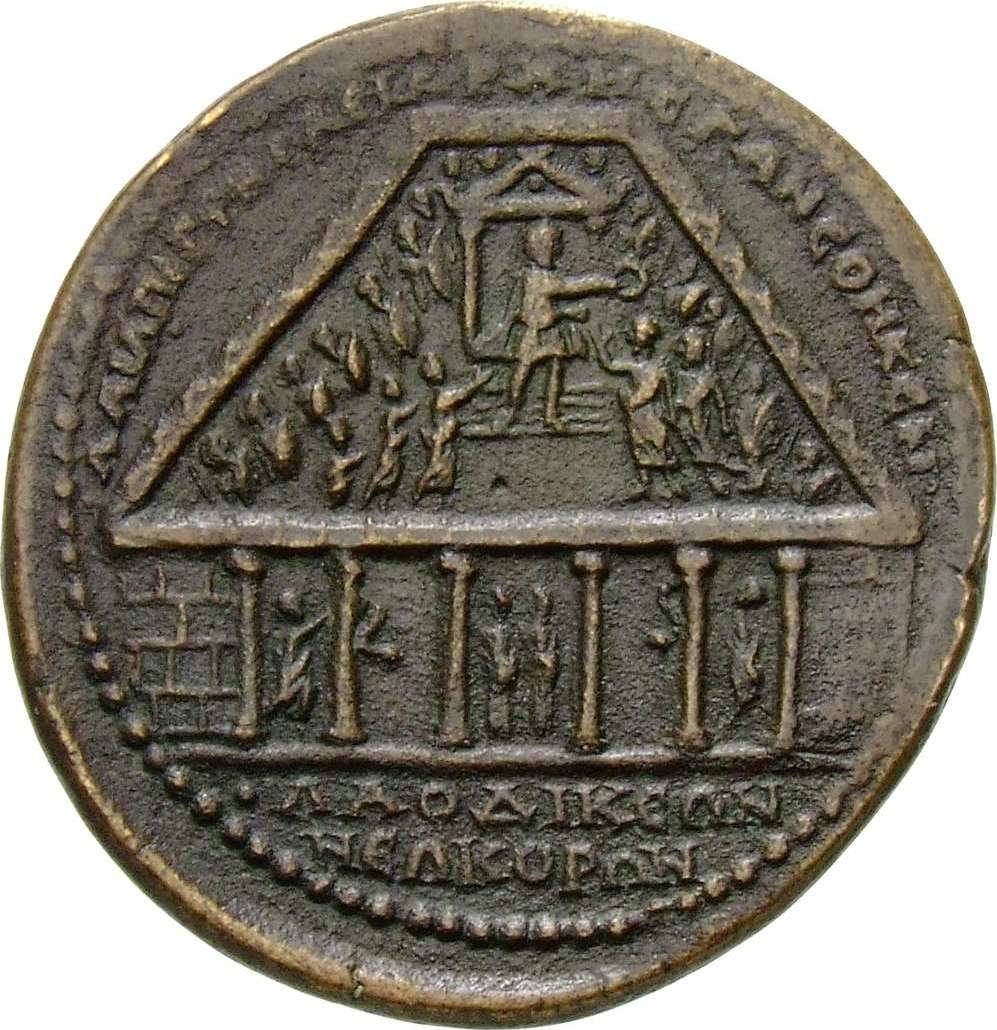
[1/4] ⭐️ Exciting news from the RPC project!
We received funding for a new initiative: 'RPC, EpiDoc, & AI'. This innovative effort aims to make inscriptions on Roman Provincial coins more accessible to everyone.
#epigraphy#epidoc#ancientgreek#job
[3/4] For the epigraphists and papyrologists, we are encoding all the inscriptions in EpiDoc format, using AI to automate the process. This innovation opens up numismatic data for comprehensive epigraphic analysis.
A few examples at https://t.co/au3G7q6ff5
#epigraphy#epidoc
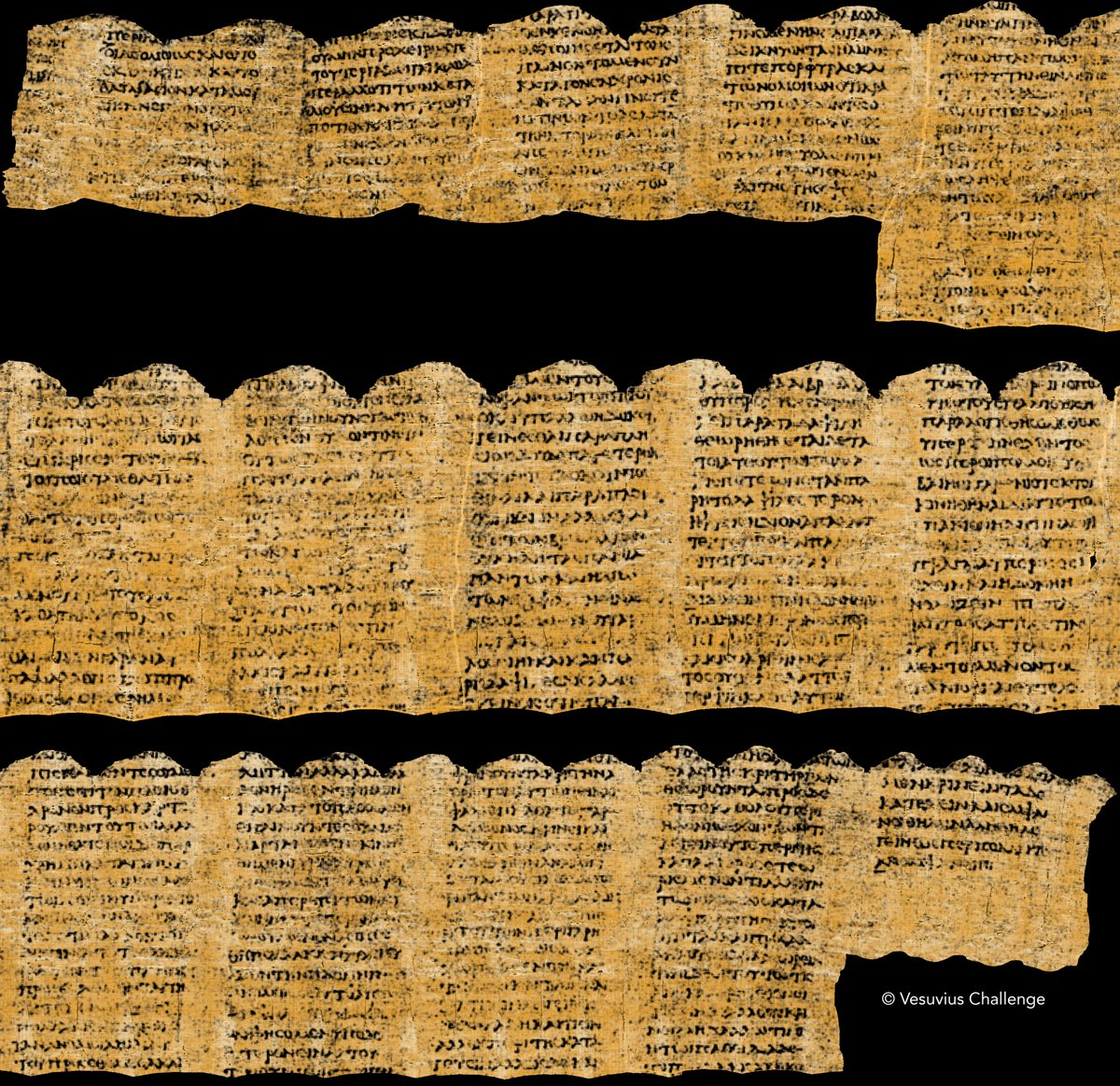
Ten months ago, we launched the Vesuvius Challenge to solve the ancient problem of the Herculaneum Papyri, a library of scrolls that were flash-fried by the eruption of Mount Vesuvius in 79 AD.
Today we are overjoyed to announce that our crazy project has succeeded. After 2000 years, we can finally read the scrolls:
This image was produced by @Youssef_M_Nader, @LukeFarritor, and @JuliSchillij, who have now won the Vesuvius Challenge Grand Prize of $700,000. Congratulations!!
These fifteen columns come from the very end of the first scroll we have been able to read and contain new text from the ancient world that has never been seen before. The author – probably Epicurean philosopher Philodemus – writes here about music, food, and how to enjoy life's pleasures. In the closing section, he throws shade at unnamed ideological adversaries – perhaps the stoics? – who "have nothing to say about pleasure, either in general or in particular."
This year, the Vesuvius Challenge continues. The text that we revealed so far represents just 5% of one scroll.
In 2024, our goal is to from reading a few passages of text to entire scrolls, and we're announcing a new $100,000 grand prize for the first team that is able to read at least 90% of all four scrolls that we have scanned.
The scrolls stored in Naples that remain to be read represent more than 16 megabytes of ancient text. But the villa where the scrolls were found was only partially excavated, and scholars tell us that there may be thousands more scrolls underground. Our hope is that the success of the Vesuvius Challenge catalyzes the excavation of the villa, that the main library is discovered, and that whatever we find there rewrites history and inspires all of us.
It's been a great joy to work on this strange and amazing project. Thanks to Brent Seales for laying the foundation for this work over so many years, thanks to the friends and Twitter users whose donations powered our effort, and thanks to the many contestants whose contributions have made the Vesuvius Challenge successful!
Read more in our announcement: https://t.co/rUlrdGXBMs
Hunting wild animals with a hunting dog from Castellum Tingitanum (modern-day Chlef), Algeria, circa 4th century AD; on display at the National Museum of Antiquities, Algiers, Algeria.
#Algeria#Numidia#MosaicMonday
The sacrifice of Phrixus and Helle from the ancient city of Lambaesis, Algeria, 3rd century AD. Discovered in 2006, this is the only representation of the sacrifice of Phrixus and Helle for the Roman period, all supports combined; on display at the Museum of Tazoult, Algeria.
The western mole of the Hadrianic/Antonine harbour of Pompeiopolis in Cilicia.
In AD 129/30, Hadrian visited the province of Cilicia, and donated money for the expansion of the port in Pompeiopolis, but the work was only completed in the reign of Antoninus Pius, his adopted son.
The completion of the harbour renovations was celebrated on coinage (RPC IV.3, 3581).
https://t.co/4nW10nLpVC
The coin's reverse shows a two-storey harbour and a divine figure lying down inside the harbour, probably representing a local river god. A lighthouse is visible at the end of the western breakwater. On the roof of the harbour, jar-like objects are perched at regular intervals, and a torch is seen between the first two. These torches are thought to have been used to illuminate the harbour.
Why do people find Ancient Greek prepositions complicated even though you could summarise the uses of, say, ἐπί on a single leaf* of paper**? Just don't get it.
* Leaf, not page, required.
** Small handwriting essential.
Supplementum Epigraphicum Graecum LXVIII (for 2018) is out. Here is one of the more interesting inscriptions from the section for which I was responsible (Moesia / Dacia / North Shore of the Black Sea).
'I am ambitious for what more we can do for the world.'
Vice-Chancellor Professor Irene Tracey is joined by the wonderful choir at @WorcCollegeOx as she delivers her festive message to supporters, alumni and friends of the University.
Watch now ⬇️
🎉 Exciting news from RPC’s elder sibling project! The Roman Imperial Coinage, Volume V.4, on the Gallic Empire, is now available at https://t.co/tBWcMtrf2B
#numismatics#coins@AshmoleanMuseum




![RPCproject's tweet photo. [1/4] ⭐️ Exciting news from the RPC project!
We received funding for a new initiative: 'RPC, EpiDoc, & AI'. This innovative effort aims to make inscriptions on Roman Provincial coins more accessible to everyone.
#epigraphy #epidoc #ancientgreek #job https://t.co/z87094Nd0m](https://pbs.twimg.com/media/GGXc_ZDWMAAL69w.jpg)
![RPCproject's tweet photo. [3/4] For the epigraphists and papyrologists, we are encoding all the inscriptions in EpiDoc format, using AI to automate the process. This innovation opens up numismatic data for comprehensive epigraphic analysis.
A few examples at https://t.co/au3G7q6ff5
#epigraphy #epidoc https://t.co/92CC4M2b0n](https://pbs.twimg.com/media/GGXdIcCWIAAtsPE.jpg)