I get the trust point, but "Detroit produces nothing” isn’t accurate
Michigan produces ~20–25% of U.S. vehicles, exports $80B+ annually, and is a top manufacturing state
It was literally the “Arsenal of Democracy” in WWII
It’s not a VC hub like SF or Singapore, but that’s a different metric, not "nothing"
“When you go from consumer to B2B, the number one mega-challenge that you must master is LTV:CAC.” - @travisk
"Yes, you can make that argument on consumer, but when you have a sales funnel that starts with 'I'm going to talk to customers, and I have to make LTV:CAC work' — versus 'My LTV:CAC is the App Store' — it's a whole different ballgame."
“LTV:CAC with a sales machine, especially if you go [after] small businesses, is life on hard mode. Anybody who’s crushed it on SMB, those guys are special individuals who've made that happen. Because life in the SMB B2B world is no joke."
The four players on the ice when the USA scored to win the Gold Medal:
Jack Hughes - Canton, MI
Zach Werenski - Grosse Pointe, MI
Dylan Larkin - Waterford, MI
Connor Hellebuyck - Commerce, MI
Hockey runs through the state of Michigan. And why Detroit will always be Hockeytown.
Building on @balajis’ analysis:
Here's my perspective: https://t.co/wWZjJHrcvt
The India story in the U.S. is bifurcated. Wall Street decks talk about scale, while TikTok pushes ridicule for clicks. As an Indian-American, you scroll both at once. The tension isn’t about where India is headed, it’s about what that split does to identity here.
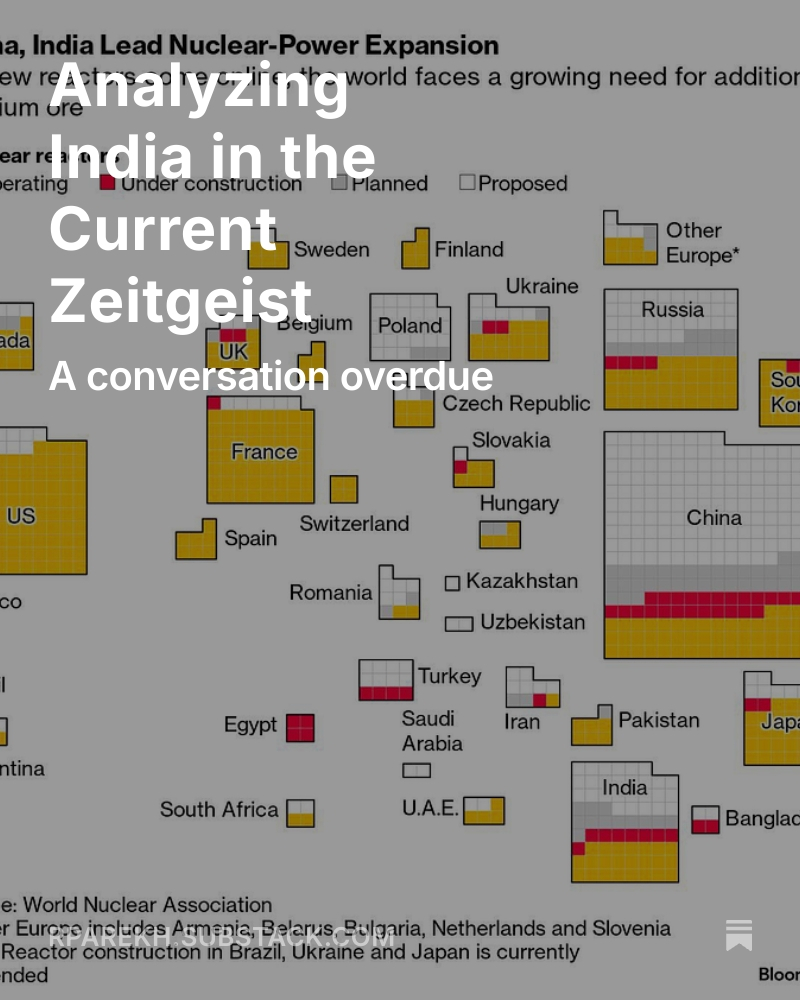
A few weeks ago, I wrote an article called Analyzing India in the Current Zeitgeist
With the renewed online debate around H-1B visas, it’s hard not to miss the contradictions
On one hand, U.S. government officials meet tech leaders every week to discuss the future of AI and innovation. On the other, proposals like this threaten to cripple the very companies in their ecosystem, especially early-stage startups/SMBs that can’t foot $100K-per-year bills for every skilled employee
The assumption that these roles would seamlessly “trickle” to American-born workers is, frankly, naive. H-1B regulations were designed to bring in specialized talent, the kind of knowledge that isn’t easily replaceable. Filling these gaps would require massive investment in education, re-skilling programs, and behavioral shifts in how we approach technical training
This doesn't feel like a long-term strategy to build a stronger workforce, it looks like a short-term revenue measure that risks eroding what has historically made America the most attractive place to build a business
The new $100k/year H1B fee is pure economic self-harm—workers making **5 times the median US income**, who contribute massively to the US, would still basically be unable to afford this fee
Oh, but never fear, the White House reserves the right to dish out exemptions as favors!
Swiatek’s the betting favorite, Sabalenka’s the defending champ, but the @WTA draw feels loaded with landmines.
There are teenagers who don’t know they’re supposed to be nervous, vets who can drag anyone into a three-hour street fight, and floaters who can flip a match quick🧵
Building on @balajis’ analysis:
Here's my perspective: https://t.co/wWZjJHrcvt
The India story in the U.S. is bifurcated. Wall Street decks talk about scale, while TikTok pushes ridicule for clicks. As an Indian-American, you scroll both at once. The tension isn’t about where India is headed, it’s about what that split does to identity here.
Building on @balajis’ analysis:
Here's my perspective: https://t.co/wWZjJHrcvt
The India story in the U.S. is bifurcated. Wall Street decks talk about scale, while TikTok pushes ridicule for clicks. As an Indian-American, you scroll both at once. The tension isn’t about where India is headed, it’s about what that split does to identity here.