🇱🇧 ITALY STANDS WITH MAZBOUD TO ADDRESS THE DISPLACED EMERGENCY 🇮🇹
A unit of the Italian Army serving within the Military Technical Committee for Lebanon (MTC4L) delivered food supplies and cleaning kits to the Municipality of Mazboud, in the Chouf District of the Mount Lebanon Governorate.
The initiative, promoted in collaboration with the Religion & Security Council (RSC), took place on June 16 at the Martyr Lieutenant Alaa Chehade Center. The Center was established by the Municipality to honor the memory of Alaa Chehade, a native of Mazboud and an officer of the Lebanese General Security Forces, who lost his life after being caught in the vicinity of an Israeli airstrike in the nearby village of Sibline, despite not being the intended target.
The ceremony was attended by the Head of the Municipality, Mr. Marwan Chehade; Captain Andrea Vanini, representing MTC4L; RSC Chairman @e_stornelli; and Mr. @bahaachehde, Board Member of the Beirut and Mount Lebanon Water Establishment, who played a key role in the organization of the initiative.
During the meeting, the members of the Municipal Council expressed their gratitude to the Italian Army for its continued commitment in support of vulnerable communities in Lebanon.
The donated items will contribute to assisting displaced families from South Lebanon, strengthening the Municipality’s efforts to address the humanitarian emergency.
Mazboud, a village of approximately 5,000 inhabitants, is currently hosting around 2,700 displaced persons. RSC engagement is part of the SOS Lubnān initiative, which has been active throughout Lebanon since 2024.
RSC website:
https://t.co/ZjehAAR9Vd
🇱🇧 ITALY SUPPORTS MEDICAL CARE INITIATIVE IN BEIRUT 🇮🇹
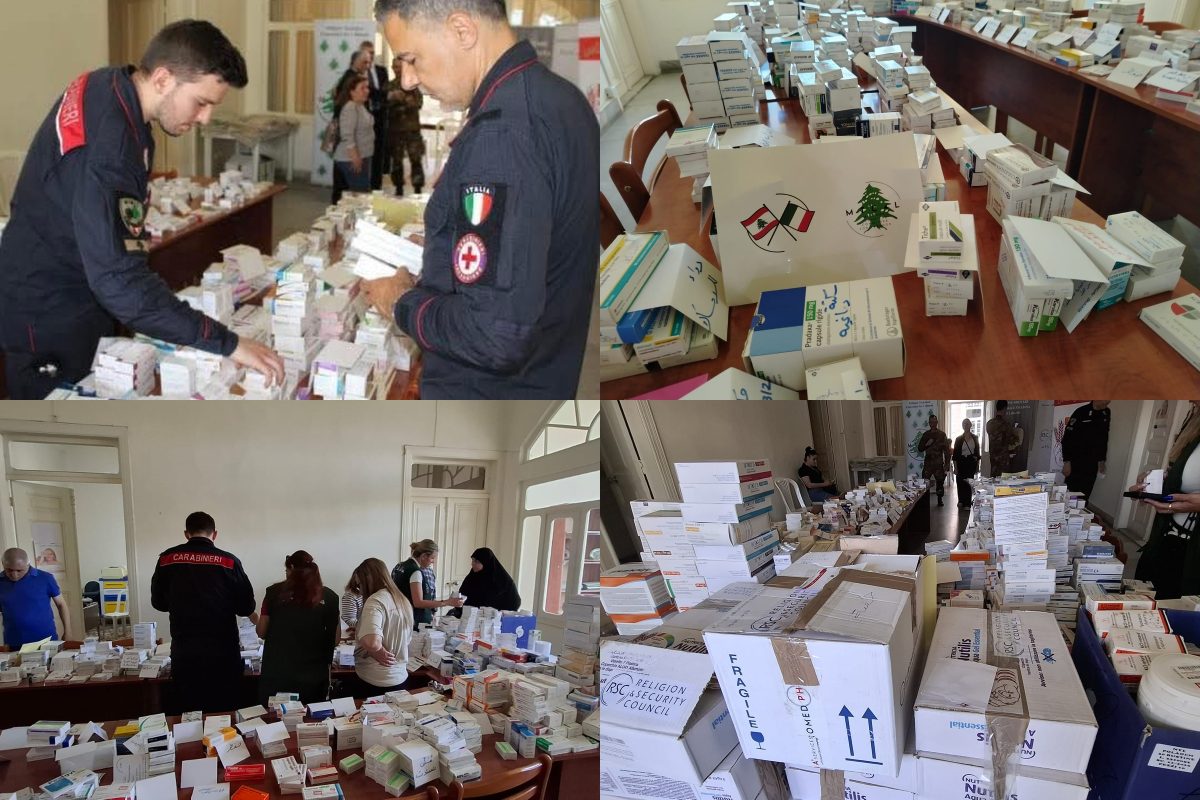
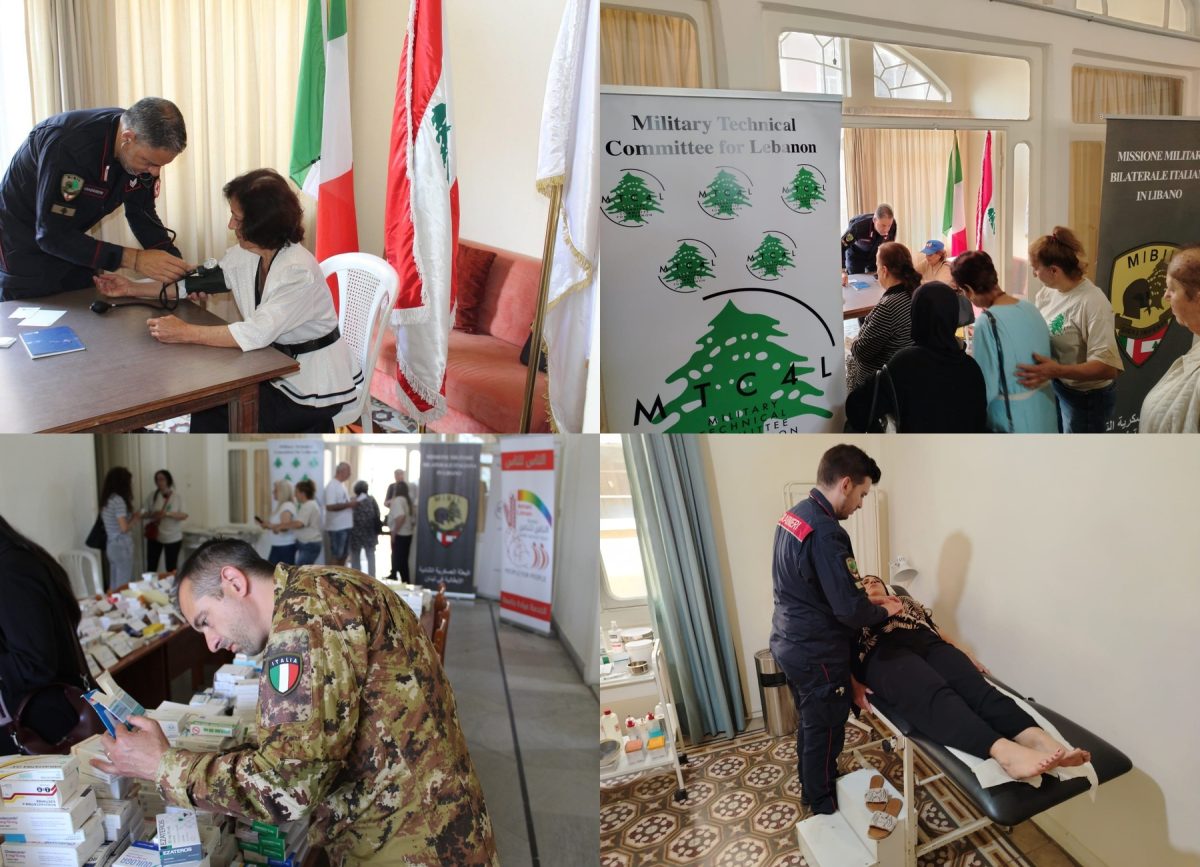
The Religion & Security Council (RSC) coordinated a new humanitarian initiative in support of the Lebanese population, in partnership with the Italian Army’s unit serving within the Military Technical Committee for Lebanon (MTC4L). On May 30, in Beirut (Mar Mikhael), more than 130 beneficiaries received free medical consultations at the Pierre Gemayel Social Health Center from a team of Lebanese specialist doctors and medical personnel from the Italian Bilateral Military Mission in Lebanon (MIBIL). Medicines and pharmaceutical products prescribed by the doctors were distributed, together with clothing items, thanks to private donors from Italy.
The Pierre Gemayel Social Health Center is managed by the Maternity & Childhood Aid Association, with the support of the Annas Linnas Association.
The initiative was attended by RSC Chairman Emiliano Stornelli, alongside H.E. Ahmed Seklaoui, Honorary Consul of Italy in Lebanon, Colonel Stefano Chironi, Deputy Commander of the MTC4L Forward Task Force, Ms. Fadwa Yaqoub, President of the Maternity & Childhood Aid Association, and representatives of the Annas Linnas Association, headed by Rev. P. Abdo Raad.
RSC website:
https://t.co/wqu4vBlICi
🇱🇧 RSC Expands Humanitarian Assistance to Lebanon – #DONATE_NOW! 🇱🇧
As #Lebanon is once again suffering from a new cycle of deadly violence and destruction, @religionandsecurity is intensifying its humanitarian engagement in support of the Lebanese population.
Building on the efforts carried out over the past years under the #SOSLubnān initiative, RSC is currently leading a network of Italian associations and volunteers in collecting medicines, medical equipment, clothing, and other essential aid, in close coordination with the Italian Army’s contingent deployed in the country with the Military Technical Committee for Lebanon (MTC4L).
The items are airlifted to Lebanon and delivered to medical centers and charitable organizations working on the ground to meet the needs of wounded and displaced persons nationwide, from south to north, serving all local communities.
As soon as the aid reached Lebanon, it was channeled to selected beneficiaries, in particular Caritas Lebanon, which is extensively operating in the war-torn south of the country, and the Maternity and Childhood Aid Association, focused on treating women and children in Beirut, Mar Mikhael area.
Further aid provided by RSC and its partners is scheduled to depart from Italy to Lebanon shortly.
Please #DONATE_NOW to help ensure the sustainability of this effort, which involves growing costs related to logistics, storage, and operational management.
Cards and PayPal
CLICK HERE
https://t.co/mKjDkoWWVn
RSC Bank Details
Holder
Religion & And Security Council
Iban
IT560538703222000003058327
Swift/Bic
BPMOIT22XXX
For any queries, please contact RSC at [email protected].
Every contribution – large or small – makes a difference!
#SOSLubnān reflects RSC commitment to promoting interreligious solidarity, community resilience, and peace-building through concrete action in troubled areas and countries.
RSC website:
https://t.co/34X23MZlK8
💡RSC CHAIRMAN ADDRESSED THE ROLE OF RELIGIONS IN THE EMERGING MEDITERRANEAN
On May 19, RSC Chairman @e_stornelli took part in the panel discussion “Mapping the Emerging Mediterranean”, held at the Temple University Rome Campus. The discussion, coordinated by Diego Pagliarulo, analyst and researcher at the Observatory on the Mediterranean (OSMED), focused on the latest geopolitical and security developments in the MENA region and featured, alongside RSC Chairman, OSMED Director Francesco Anghelone and Temple University scholar Marta Bordignon. The proceedings were opened by the Dean of the Temple University Rome Campus, Emilia Zankina.
In his remarks, RSC Chairman addressed the key role of the religious dimension in the current confrontation involving Iran, Israel, and the United States, highlighting how ideological visions based on the instrumentalization of religions continue to shape geopolitical agendas, security and military policies, and regional alignments. He also examined the main religious fault lines currently unfolding across the Mediterranean and the Middle East, devoting particular attention to the case of Lebanon.
RSC website:
https://t.co/e08SJ1KKzg
💡 What are the possible outcomes of the ongoing confrontation in the Middle East, involving Iran, Israel, and the United States? And how is Lebanon's position evolving in the current scenario?
Read the latest RSC analyses:
- The Middle East at War: Current Scenarios and Possible Outcomes
https://t.co/QTfvwtGoNu
Lebanon’s Weaker Negotiating Position
https://t.co/n7aCNqc1Yc
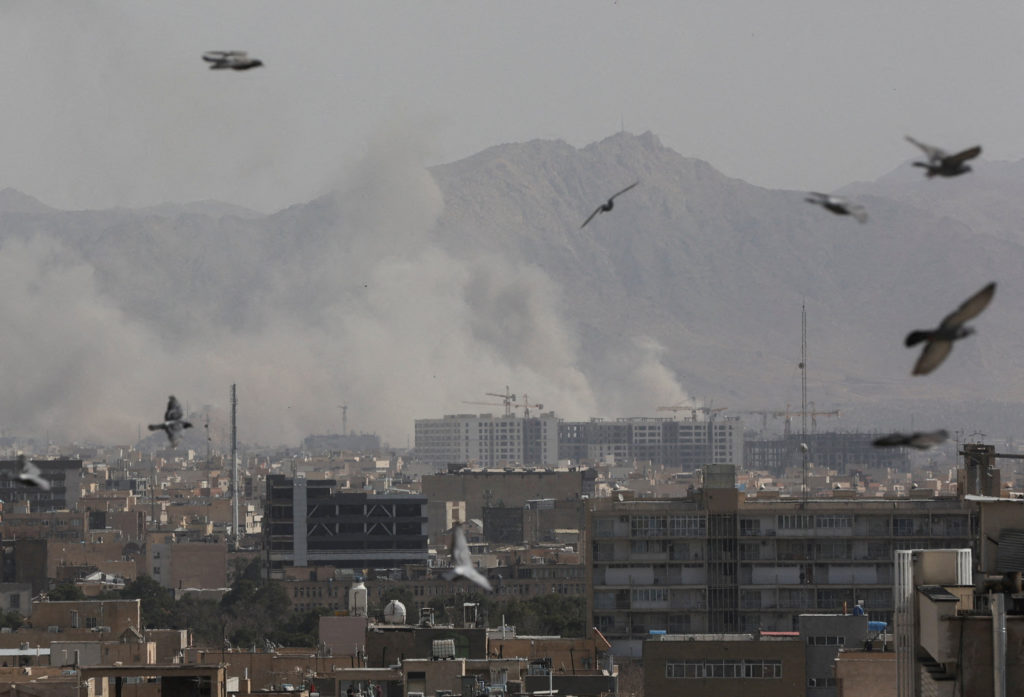
The death of Iran’s Supreme Leader Ayatollah Ali Khamenei on February 28, following coordinated U.S. and Israeli strikes against Tehran, triggered strong reactions across the Middle East and beyond.
My first analysis with @RSCouncil
https://t.co/rCj9ZMNpKC
🇮🇷 KHAMENEI’S DEATH AND IDEOLOGICAL FRACTURES IN THE MIDDLE EAST
Read the full report authored by the Iraqi analyst and researcher @GilgameshNabeel on the reactions triggered across the Middle East by the death of Ali Khamenei.
https://t.co/StbYlxhAFq
🇱🇧 New article by RSC Chairman @e_stornelli on the ongoing war in Lebanon, focusing on the political developments, the narrative dimension, and the religion-and-security perspective. Below is a summary of the main points:
- The Lebanese government’s decision to ban Hezbollah’s military activities marks an unprecedented shift. Hezbollah now finds itself completely isolated on a political and institutional level, reflecting the deep divide between the organization and the Lebanese society, including sectors of the Shiite community.
- By offering Israel a new pretext to escalate militarily in Lebanon, Hezbollah has demonstrated blatant indifference to the will of the vast majority of the Lebanese, who understandably oppose the entanglement of their country in another catastrophic misadventure. Hezbollah is executing directives from Iran in pursuit of the latter’s agenda, confirming its nature as a body alien to the Lebanese fabric.
- Hezbollah’s new Secretary General, Naim Qassem, continues to claim that the organization is fighting to defend the Lebanon, but fewer and fewer people are buying the “resistance” propaganda anymore. The decision to inflict another plague upon Lebanon has been a defining eye-opener for many of those who once sympathized with the organization or sought to justify its conduct in one way or another.
- Ideological drivers rooted in Hezbollah's religious vision prevailed over more cautious and responsible approaches, despite the certainty of the heavy retaliation that would have severely harmed the Lebanese population, first and foremost the Shiite community itself.
- Throughout Netanyahu’s era, the radical Khomeinist version of jihād has proved to be a “functional enemy” for Israel’s religiously-driven geopolitical agenda, backed by Evangelical circles in the U.S., not only in the Middle East and Gulf region, but from Morocco to Azerbaijan as well.
- This is a clear example of the nefarious role that “eschatology” can play in shaping security and military thinking and policies.
- Paradoxically, the deceptive “myth” of Hezbollah and its blind allegiance to the regime in Iran are serving the purpose of drawing Lebanon into Israel’s sphere of influence, including from a cultural standpoint.
- Lebanese authorities have detained dozens of Hezbollah members and Iranian “pasdaran”, but this is unlikely to suffice to restore peace and security in Lebanon.
- The systematic razing of South Lebanon, parts of Beirut, the Bekaa Valley, and other areas is already underway, according to the “Khan Younis” model invoked by a minister in Netanyahu’s government. Therefore, only a swift establishment of complete territorial control over these areas by the Army, fully replacing Hezbollah’s presence, could prevent the looming devastation before it is too late.
- Iran's President Pezeshkian apologized “to the neighboring countries that were attacked” by the Tehran in the war with the U.S. and Israel, referring to the Gulf states. But his regime owes Lebanon far more than an apology.
https://t.co/1Q4qog5SyE
🇱🇧 HUMANITARIAN ASSISTANCE IN SOUTH LEBANON WITH UNIFIL 🇮🇹
From January 22 to 25, UNIFIL carried out the distribution of humanitarian aid in South Lebanon provided by the Religion & Security Council (RSC) and the Annas Linnas Association
The aid – comprising medicines, clothing, and other essential items – was delivered in the municipalities of Tyre, Abbasieh, and Aita al-Shaab, with particular attention to schoolchildren and vulnerable groups.
The supplies were delivered from Italy to Lebanon by the Italian Army, within the framework of Italy’s contribution to UNIFIL.
New initiatives in support of the Lebanese population are currently being planned nationwide, with special focus on Saida, Mount Lebanon, and Tripoli.
https://t.co/kobTHbhAJz
🇱🇧 TRIPOLI’S "MEDICAL DAY": A COOPERATION MODEL FOR ALL OF LEBANON 🇮🇹
RSC Chairman @e_stornelli was interviewed by Télé Lumière-Noursat on the “Medical Day” organized by RSC in #Tripoli, North #Lebanon, in collaboration with UNIFIL and the Italian Bilateral Military Mission in Lebanon (MIBIL).
Main takeaways from the interview:
- A cooperation model.
The “Medical Day” in Tripoli stands as a concrete cooperation model that brings together local religious and civil actors with international partners to address urgent community needs. This model can be applied to all of Lebanon.
- Strong international engagement.
The close cooperation with the Italian Armed Forces enabled the delivery of medicines, clothing, and essential supplies from Italy to vulnerable communities in various areas of Lebanon, including Tripoli.
- The importance of trusted local partnerships.
The role of local actors as leading stakeholders is crucial in ensuring ownership, effective coordination, and tangible impact at the community level.
- Dialogue translated into action.
Initiatives such as the “Medical Day” shows how interreligious dialogue can move beyond rhetoric and be translated into concrete educational, social, and humanitarian initiatives that engage all communities.
- Supporting Tripoli’s aspirations for peace, security, and development.
The initiative reflects the true nature of Tripoli: a city whose people aspire to peace, security, and development. Therefore, in pursuing these goals, Tripolitans deserve greater international support.
Read the full interview ⬇️
https://t.co/BpX9CXXNP9
🇱🇧 MEETING WITH THE GOVERNOR OF MOUNT LEBANON 🇮🇹
The Governor of Mount Lebanon, H.E. Mohammad Makawi, received Col. Attilio Cortone, representing the Italian Army contingent within UNIFIL, RSC Chairman Emiliano Stornelli, and Mr. Bahaa el Dine Chehade at the Grand Serail in Baabda. Held in the aftermath of the visit to Lebanon by the Italian Minister of Defense, H.E. Guido Crosetto, the meeting focused on future cooperation activities aimed at addressing the needs of local communities, building on Italy’s longstanding engagement in support of the Lebanese population.
#Lebanon #Italy #UNIFIL
🇮🇶 Mosul, Iraq. Following the successful conference held on 28-29 April 2025, the Nināwā Forum continues its engagement by promoting the training program “Interreligious Dialogue for Peace and Living Together”, scheduled to take place at the University of Mosul (UoM) on December 14-16.
The initiative, designed for undergraduate students, is organized by the Peacebuilding and Peaceful Coexistence Center (PPCC – UoM) and the Religion & Security Council (RSC), with the support of the KAICIID International Dialogue Centre.
Through awareness sessions and practical activities, Iraqi and international scholars, experts, and officials will enhance participants’ understanding of the key role that interreligious dialogue can play in fostering peaceful coexistence, mutual trust, and cooperation for the common good, in a context shaped by the encounter of religious and cultural traditions, such as the Nineveh region.
The goal is to equip the young attendees with the skills to further interreligious engagement, prevent and resolve conflicts, support peace-building and reconciliation efforts.
The program also seeks to strengthen their capacity to stand against sectarianism, discrimination, hate speech, radicalization, and violent extremism, in line with the “Nineveh Declaration for Peace, Dialogue, and Coexistence” upheld by the Nināwā Forum.
https://t.co/Grm8MFOSK0
🇱🇧 Some insights from Lebanon that I had the chance to share with @robertopaglial for @oss_romano and @vaticannews_it. The focus is on the new attack that struck Beirut nearly a year after the "ceasefire" agreement, ahead of the visit of Pope Leo XIV.
https://t.co/NctspHXfhm
🇱🇧 🇮🇹 TRIPOLI, CAPITAL OF “HUMAN FRATERNITY” WITH THE “MEDICAL DAY”
On November 15, representatives of all local communities gathered in Tripoli at the Al Moutran School for the “Medical Day”, an initiative promoted by UNIFIL, the Italian Bilateral Military Mission in Lebanon (MIBIL), and the Religion and Security Council (RSC), under the high patronage of the Maronite Catholic Archeparchy of Tripoli, Dar al-Fatwa for Tripoli and North Lebanon, and the Municipality of Tripoli.
Hundreds of beneficiaries received medical consultations, laboratory tests, and essential medicines. Clothing and additional aid items coming from Italy were also distributed.
The event opened with an inaugural ceremony featuring the Mayor of Tripoli, Dr. Abdelhamid Karimeh; Col. Attilio Cortone of the Italian Army; RSC Chairman @e_stornelli; H.E. Sheikh Muhammad Imam, Mufti of Tripoli and North Lebanon; and H.E. Msgr. Youssef Soueif, Maronite Archbishop of Tripoli.
The ceremony – coordinated by Ms. Lea Adel Maamary, journalist of Télé Lumière-Noursat – was also attended by Sheikh Ali Rassi, Head of the Religious Affairs Department at the Alawite Islamic Charity Association.
The “Medical Day” was held in close collaboration with the following associations: Annas Linnas, headed by Rev. P. Abdo Raad, TrueBless, and Rise. A key role in the organization of the program was played by Mr. @BrairAmin, RSC Coordinator for Tripoli and North Lebanon.
In his remarks, RSC Chairman @e_stornelli highlighted that “the organization of the Medical Day is based on a synergy that demonstrates how Tripoli’s social fabric is composed of actors committed to peace, security and development”.
RSC Chairman described Tripoli as “the capital of ‘human fraternity’ in Lebanon, a vocation that deserves to be acknowledged and supported”.
He also noted that “the Medical Day offers a model of cooperation that unites local religious and civil actors with international partners. A model that can be replicated in other parts of the country”.
https://t.co/U9DwlF0H0I
🇱🇧 Tripoli will shine once again as the capital of “human fraternity” in Lebanon.
On November 15, representatives of all local communities will gather for the “Medical Day”, an initiative promoted by @UNIFIL_, #MIBIL, and @RSCouncil.
Hundreds of beneficiaries will receive free medical consultations, medicines, and other aid.
The initiative reflects the shared commitment of religious, civil, and international actors, and will be followed by other humanitarian programs across the north and the whole of Lebanon.
https://t.co/XanFROqSNY
Giornata di assistenza sanitaria gratuita promossa da UNIFIL, MIBIL e Religion & Security Council, con il sostegno delle autorità religiose e civili locali. Un’iniziativa interreligiosa che rafforza la cooperazione e il sostegno umanitario nel Nord del Libano. 🇮🇹🤝🇱🇧
@UNIFIL_@Esercito@e_stornelli@RSCouncil
Clicca sul link per scoprire di più ⬇️
https://t.co/9LkyZAC1oL
#Libano #UNIFIL #MIBIL #Italia
🇱🇧 RSC Chairman @e_stornelli was received by the Mayor of Tripoli, Dr. Abdelhamid Karimeh, to discuss the organization of the “Medical Day”, promoted by RSC in partnership with UNIFIL and the Italian Bilateral Military Mission in Lebanon 🇮🇹 (MIBIL). https://t.co/1OzeN9IQPQ