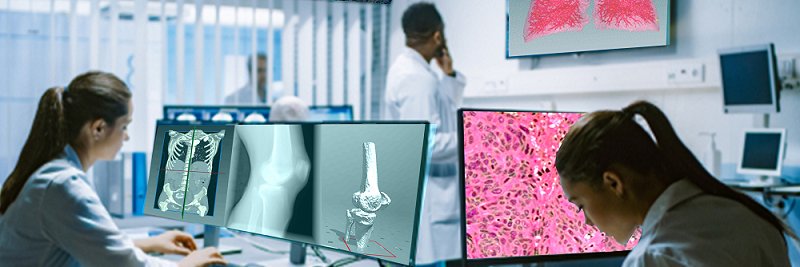
Custom #algorithms in #MedTech#Imaging for Visual Intelligence. Publishes #AI magazine Computer Vision News. Take us along for your next deep learning project!
Our new company video is now live on YouTube, and we're excited to share it with you. A quick look at who we are and the work we do in AI for MedTech.
Watch here: https://t.co/slhOnL8X9s
#MedTech#MedicalImaging#AI
We are happy to announce RSIP Vision is attending AAO in New Orleans!
Attending and want to connect with our CEO Ron Soferman? Let us know by scheduling a meeting through our Google Form: https://t.co/d1E8v1RIzH
See you in New Orleans!
A student asked me about my habit of bike riding or walking in the forest as a way of gaining inspiration. I thought I'd share my response:
I suspect everyone is different but all of our brains need time to process information. Some of this happens in sleep -- the idea that if you have a hard problem that you should "sleep on it" is very true. I often wake up with an inspiration.
You need to give your brain time to do its thing. You can't control inspiration. All you can do is create opportunities for it to occur.
I often have ideas in a dark conference hall while half-listening to a boring talk. I'll have spent the day at posters and learning about new work. Sitting in the dark and letting my mind drift is when those fragments come together into something new.
I will often do some work early in the morning and hit a snag. Then I go for a bike ride in the forest. I am not intentionally thinking about my problem -- I'm in the moment. My body is moving in the world. But part of my brain must be working on the problem because within 15-20 minutes, I have the solution.
The brain is amazing. Cramming it with information all the time may feel productive. But feeding it information is very different from letting it be creative. You can't force it to be creative and if you are force feeding it, it can't be creative. You need to leave it alone. Let it wander. Let it make connections. Give it space. Trust it.
Thank you Ralph Anzarouth and @RSIPvision for featuring our work in the July issue BEST OF CVPR 2026 by Computer Vision News. It's an honor!
https://t.co/BuX4IimE7I
w/ @omri_kaduri@talidekel
RSIP Vision is excited to announce our collaboration with Professor Yuqiang Bai from the USF School of Medicine, Ophthalmology department. The groundbreaking tear film imaging system shows promising potential for dry eye disease, and we are honored to contribute to this project
#CVPR2026 marks Cauth AI’s first and my 10th time @cvpr. Trajectories, responsibilities, and even research focus may change; but curiosity, scientific hunger, and friends stay with you just like your first time. Sincere thanks and hugs to everyone making this community flourish.
New blog post! Part 3 of our Engineering for Annotation in the ML Pipeline series is now available.
Learn about the engineering practices that help improve annotation consistency, data quality, and downstream model performance.
Read more: https://t.co/zMim0FCspK
RSIP Vision is heading to Boston for DeviceTalks, May 27–28, 2026.
Meet with Ron Soferman (CEO) to discuss how AI and computer vision are shaping the next generation of medical devices.
Attending? Schedule a meeting through our Google Form: https://t.co/bRjROvlkk8
RSIP Vision will be at AUA 2026 in Washington, DC, May 15–18.
Meet our CEO Ron Soferman to discover how AI and computer vision are transforming urology, including:
If you're attending AUA 2026, we'd love to connect!
See you in Washington, DC!
Our newest blog post is live!
Check it out as our 3-part series about Engineering for Annotation in the ML Pipeline continues.
Click the link here: https://t.co/bMMzAhb5Qf
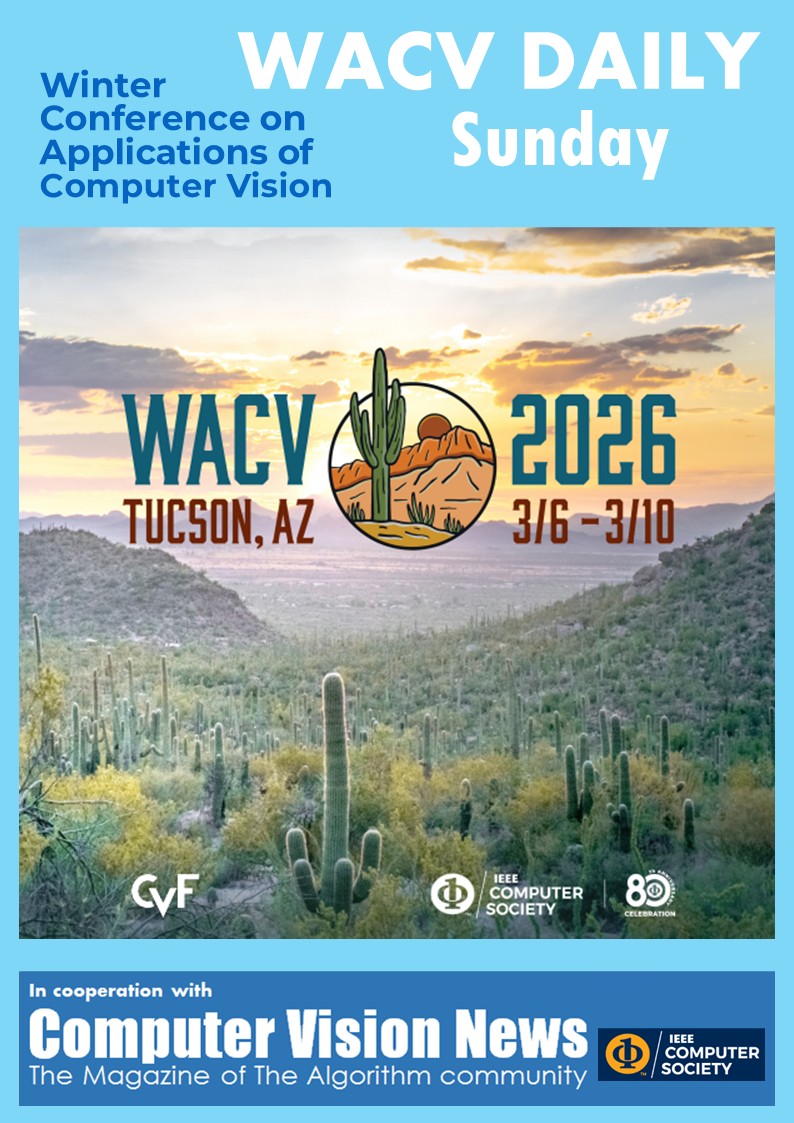
Good morning WACV!
https://t.co/4n5M9vy110
Hot off the Press: WACV Daily News for today, Sunday.
All you need to know before you start the day:
https://t.co/4n5M9vy110
Kam yuu and have a happy Sunday at WACV 2026!
#WACV#WACV2026#ComputerVision
We are starting a new blog series called Engineering for Annotation in the ML Pipeline
This is a 3-part series posted weekly. Part 1 will demonstrate Designing a Testable Protocol.
Read it on our website: https://t.co/SCZgJIx3XW
We're excited to announce that RSIP Vision will be attending the SAGES NBT Innovation. Our CEO will be attending the event. If you're attending SAGES as well, please reach out to us via this Google Form to schedule a meeting.
https://t.co/xJdXr1XziT
We're excited to announce that RSIP Vision will be attending the SAGES NBT Innovation. Our CEO and VP of Business Development will be attending the event.If you're attending SAGES as well, please reach out to us via this Google Form to schedule a meeting.
https://t.co/wPJMd91uMs
Here is our final piece of our 4-part segment about Our Dataset Pipeline for Medical AI.
Our final topic talks about Validation and Tests. A very insightful topic.
Give our blog post a read here: https://t.co/W0B0gQAYEO
You guessed it... Part 3 of our 4-part segment is now available.
This topic of the week is Prepare.
We brake down what prepare actually does with lots of insightful information.
Read it here: https://t.co/vdpVG4Adm0
We’re kicking off an exciting 4-part series on Dataset Pipelines for Medical AI.
Each week, we go in depth and break down a different stage of the dataset pipeline that powers reliable Medical AI.
Read it here: https://t.co/BEbe8SttsA
Here’s Part 2 of our blog series on Continuous Integration for AI projects.
It focuses on practical ways to test and validate AI systems in CI.
Check it out and give it a read!
https://t.co/6mmga1Efh6