.@FaruqueTaufiq and I explain why Bangladesh’s upcoming February elections are difficult to predict, the question of the banned Awami League, the prospects of the NCP–Jamaat coalition, and how this contest may radically divide the electorate ideologically
https://t.co/DZM7GlpA7i
.@Barugaru1 puts out what has been spoken of in hushed tones in Delhi. Modi trusted Bibi's claim that the Iranian regime will be finished for good with Israeli strikes, and India thus planned its policy on Iran waiting for the next government to take power in Tehran.
There's a lot of news about Pakistan lately, and much of it has to do with the current government's flashy, attention-seeking diplomatic style — all show and no substance.
1. The Arab countries asking Pakistan to repay its overdue loans — loans that used to be rolled over — seems to be true. This is clearly the result of Pakistan signing a military deal with Saudi Arabia without thinking it through. Overpromising gave Saudi Arabia unrealistic expectations, and Pakistan's failure to deliver has led to disappointment, even anger.
2. As for Pakistan buying China's J-35 fighter jets — I think that's fake news. Pakistan doesn't have the money to buy such aircraft. Besides, China is worried that Pakistan might leak secrets to the US and Turkey. Also, India doesn't have stealth fighters yet, from China's perspective, so Pakistan doesn't really need them.
3. The US-Iran talks hosted by Pakistan haven't made any progress either. China didn't respond to Pakistan's request to act as a guarantor, and the China-Pakistan five-point joint statement was just a collection of platitudes. Despite all the fake news, no senior American or Iranian official has actually gone to Pakistan for negotiations. Pakistan can offer a venue, but this is it. Portraying itself as a region peacemaker is just pure bragging.
4. The one real positive development is the Pakistan-Taliban peace talks. China is actively encouraging this, and it seems the two sides have reached some kind of understanding. At least in the short term, the Pakistan-Afghanistan border should stabilize.
I've always said that the current Pakistani government is 'truly terrible.' They refuse to keep the heads down and focus on practical things like economic development. Instead, they're obsessed with flashy, over-the-top diplomacy and constantly exaggerating their achievements. But diplomacy is built on real strength. Clever tricks and hot air won't get you anywhere.
Why Invading and Occupying Kharg Island Is a Stupid Idea
Kharg Island isn’t a place you can just storm, plant a flag, and hold. It’s a tiny coral outcrop, roughly 8 km long and 5–6 km wide, with a total area of only about 25 km², sitting just 25 km off the Iranian coast and 45-50 km from the Zagros Mountains. That extreme closeness turns it into a nightmare.
Beneath the surface lies a vast network of reinforced tunnels dug 20-40 meters deep into coralline limestone. In hard granite, explosions send shockwaves far and wide, cracking everything.
In porous limestone, though, the blast energy dissipates quickly by crushing the rock’s own pores around the impact point, protecting deeper fortifications. Satellite images from the last decade of naval base and terminal expansions show concrete plants and shipments of quartz and fine aggregates, clear signs of high-strength concrete being poured for these bunkers.
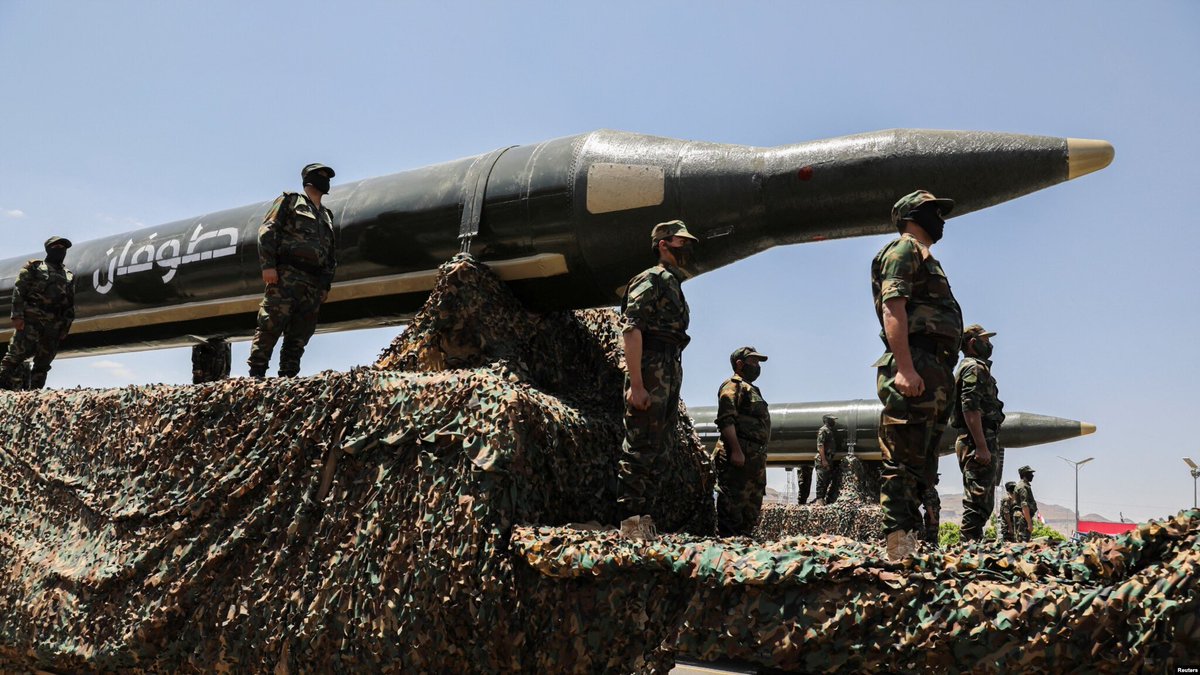
The island is heavily mined, guarded by troops in underground positions, overlooked by mountain firing points, and surrounded by hundreds of Iranian missile-armed vessels. Iranian fragmentation warheads, like those on Shahed-131 and 136 drones, scatter 3,000 to 7,000 pre-formed tungsten fragments, lethal against unarmored troops.
Any garrison crammed onto such a small island would face wave after wave of missiles and drones every day. Survival would come at horrific cost.
The Iranian defenders would remain safe inside tunnels with dozens of exits spread across the island. Hundreds of troops, many special forces who know every corner of the terrain, could hold out for days or weeks, launching ambushes like those seen in Gaza.
Attacking troops would have almost no safe shelter. The only significant infrastructure is the oil refining and storage facilities, and Iranian tunnel exits and fortifications almost certainly reach into or near them.
I can’t imagine special forces with limited or no supplies trading fire in the middle of fuel tanks and pipelines. That’s not combat, it’s insanity.
There’s no secure supply route by sea, and the airspace would be fiercely contested, making air resupply extremely dangerous. Even if supplies got through, there’s nowhere safe to store or protect them outside the refining areas.
Suppose a landing somehow succeeded by air. Beyond the hundreds of Iranian special forces in the tunnels, the threats would pile up fast:
By sea Iran has over 800 fast attack boats (Ashura, Seraj, and Ra’ad classes) fitted with 107mm rocket launchers in 12-tube pods. Just 80 of them could unleash 960 rockets in one salvo against the tiny island, many carrying Fajr-1 fragmentation warheads with an 8–12 km range.
Some Zulfiqar-class boats carry two canisters for the Fath-360 ballistic missile (120 km range) loaded with cluster munitions and anti-personnel tungsten. At least 30-40 of these boats likely have that setup.
Tondar-class boats with 23mm cannons could rake the island at night-Iran still operates around 10 of them. Even with many larger warships damaged, Iran keeps at least 25 smaller, well-armed patrol vessels active.
From the mainland Iran can strike with at least five types of ballistic ranging 85-200 km. Systems like the Ababil and Fath-360 launch in pods of 6–8 missiles per salvo, often with anti-personnel cluster munitions and tungsten fragments.
Heavy rockets such as the Zelzal-1 and Zelzal-2 with 150–200 km range, 600 kg warheads, have started receiving guidance kits, now with 50m CEP.
By air Iran operates more than 10 models of kamikaze and attack drones with modern day/night sensors. These can deliver repeated strikes, dropping bombs multiple times a day by models like the GAZA.
A landing might be possible with massive air and naval superiority, but actually holding the island would be nearly impossible. In the best case, you’d destroy much of the oil infrastructure during the fight. In reality, it would likely turn into a massacre.
Join my Substack:
https://t.co/tfm3rw40K6
Important Take. Pakistan's (perceived) diplomatic victories, and its bonhomie with Trump admin is unsustainable. You cannot claim to be powerhouse with an economy smaller than Bangladesh.
Pakistan is making the same mistake that India made earlier: hyping up diplomatic meetings rather than building military and economic capabilities that make diplomacy effective. The only difference is that Pakistan’s diplomatic wins are shallower and its capabilities are worse.
“The Saudi pact is becoming a problem for us,” said one person... familiar with the thinking of Pakistan’s senior military leaders. “It was supposed to be cash for deterrence. But we’ve not gotten any new Saudi investments, and deterrence failed.” https://t.co/8ADknYCvug
@angshuman_ch I was only pointing out that BNP has not really "changed with changing times". It has always been their party stance, even when they were in an alliance with Jamaat.
@Iyervval Have you ever seen the victory/Independence day statements made by Khaleda Zia when she was PM? BNP has always had this position, so he has not crossed any bridge, he merely reaffirmed it. You do not know that because you came to know about BNP/Zia after 5th August.
This creative misreading of the Suez Crisis misses the point.
Trump’s Iran war is already the US’s Suez Moment — the inflection point where US strategic decline becomes painfully undeniable.
Britain, France and Israel lost Suez because they overestimated their own military and economic strength. Israel was acting as a revisionist and expansionist power, and tag-teamed with stronger Western allies to attempt to redraw Mideast borders in a supposedly “preventive” war against Nasser’s Egypt— in that case, the fear that Nasser would close the Suez Canal.
*The war itself* then provoked Nasser to close canal. 🤦🏼♀️
Sounds familiar, eh?
The author wrongly concludes, however, that Uk, France & Israel’s mistake was backing down, and hence, destroying their own credibility.
The ACTUAL mistake was starting the war to begin with.
Fighting for the sake of “preserving credibility” is like chasing losses at a casino.
Genuine credibility can’t be manufactured by fighting. It naturally flows from vital national interests. The U.S. doesn’t need to “prove” it will fight for its core interests, like defense of the homeland from attack. The credibility of retaliation to attack on the U.S. homeland is inherent.
(Kind of like how Iran’s threats to retaliate to US/Israel attacks on its territory were also inherently credible. Trump was foolish to discount them.)
Where U.S. leaders have screwed up too many times is in trying to manufacture false credibility when the issues at stake *don’t* threaten core U.S. interests — like regime change in Iran, ending Iran’s support for Hamas and Hezbollah, etc. and all the other demands Israel foisted on the US-Iran nuclear talks.
Everyone knows Iran cares a lot more about its own survival than the U.S. cares about Iran’s survival. The war is existential for Iran but NOT existential for the US. That means the balance of interests favors Iran, and always will, no matter what crazy hoops the U.S. jumps itself through, at great cost, to try and prove otherwise.
That’s how we ended up fighting 20 years in Afghanistan to replace the Taliban with the Taliban. They outlasted us and everyone knew they eventually would.
Let’s hope Trump deescalates the conflict and avoids the credibility trap in Iran, which leads only to quagmire.
@defpriorities
https://t.co/7F1J1gWTTB
@Cernovich Do you even have any fixed position on any issue? You post one thing in the morning and completely opposite in the evening. You should seriously stop this tendency to keep everyone happy. It does not work.
@tunkuv Those are not Bangladeshis. As someone pointed out some Biharis in BD are still loyal to Pakistan. Bangladeshis will not support Pakistan team against their own. However, I do get your point: the issue of 1971 is largely irrelevant to Young Bangladeshis.