The #NobelPrize in Physics 2024 for Hopfield & Hinton turns out to be a Nobel Prize for plagiarism. They republished methodologies developed in #Ukraine and #Japan by Ivakhnenko and Amari in the 1960s & 1970s, as well as other techniques, without citing the original inventors. None of the important algorithms for modern AI were created by Hopfield & Hinton.
Today I am releasing a detailed tech report on this [NOB]: https://t.co/u9YxfBuqNf
Of course, I had it checked by neural network pioneers and AI experts to make sure it was unassailable.
Is it now acceptable for me to direct young Ph.D. students to read old papers and rewrite and resubmit them as if they were their own works? Whatever the intention, this award says that, yes, that is perfectly fine.
Some people have lost their titles or jobs due to plagiarism, e.g., Harvard's former president [PLAG7]. But after this Nobel Prize, how can advisors now continue to tell their students that they should avoid plagiarism at all costs?
It is well known that plagiarism can be either "unintentional" or "intentional or reckless" [PLAG1-6], and the more innocent of the two may very well be partially the case here. But science has a well-established way of dealing with "multiple discovery" and plagiarism - be it unintentional [PLAG1-6][CONN21] or not [FAKE,FAKE2] - based on facts such as time stamps of publications and patents. The deontology of science requires that unintentional plagiarists correct their publications through errata and then credit the original sources properly in the future. The awardees didn't; instead the awardees kept collecting citations for inventions of other researchers [NOB][DLP]. Doesn't this behaviour turn even unintentional plagiarism [PLAG1-6] into an intentional form [FAKE2]?
I am really concerned about the message this sends to all these young students out there.
REFERENCES
[NOB] J. Schmidhuber (2024). A Nobel Prize for Plagiarism. Technical Report IDSIA-24-24. https://t.co/u9YxfBuqNf
[NOB+] Tweet: the #NobelPrize in Physics 2024 for Hopfield & Hinton rewards plagiarism and incorrect attribution in computer science. It's mostly about Amari's "Hopfield network" and the "Boltzmann Machine." https://t.co/heYSuPQDxp (1/7th as popular as the original announcement by the Nobel Foundation)
[DLP] J. Schmidhuber (2023). How 3 Turing awardees republished key methods and ideas whose creators they failed to credit. Technical Report IDSIA-23-23, Swiss AI Lab IDSIA, 14 Dec 2023. https://t.co/Nz0fjc6kyx
[DLP+] Tweet for [DLP]: https://t.co/0fJVklXyOr
[PLAG1] Oxford's guide to types of plagiarism (2021). Quote: "Plagiarism may be intentional or reckless, or unintentional." https://t.co/kQTyqJuD9w
[PLAG2] Jackson State Community College (2022). Unintentional Plagiarism.
[PLAG3] R. L. Foster. Avoiding Unintentional Plagiarism. Journal for Specialists in Pediatric Nursing; Hoboken Vol. 12, Iss. 1, 2007.
[PLAG4] N. Das. Intentional or unintentional, it is never alright to plagiarize: A note on how Indian universities are advised to handle plagiarism. Perspect Clin Res 9:56-7, 2018.
[PLAG5] InfoSci-OnDemand (2023). What is Unintentional Plagiarism?
[PLAG6] https://t.co/e3f7QRvjy6 (2022). How to Avoid Accidental and Unintentional Plagiarism (2023). Copy in the Internet Archive. Quote: "May it be accidental or intentional, plagiarism is still plagiarism."
[PLAG7] Cornell Review, 2024. Harvard president resigns in plagiarism scandal. 6 January 2024.
[FAKE] H. Hopf, A. Krief, G. Mehta, S. A. Matlin. Fake science and the knowledge crisis: ignorance can be fatal. Royal Society Open Science, May 2019. Quote: "Scientists must be willing to speak out when they see false information being presented in social media, traditional print or broadcast press" and "must speak out against false information and fake science in circulation and forcefully contradict public figures who promote it."
[FAKE2] L. Stenflo. Intelligent plagiarists are the most dangerous. Nature, vol. 427, p. 777 (Feb 2004). Quote: "What is worse, in my opinion, ..., are cases where scientists rewrite previous findings in different words, purposely hiding the sources of their ideas, and then during subsequent years forcefully claim that they have discovered new phenomena."
The #NobelPrizeinPhysics2024 for Hopfield & Hinton rewards plagiarism and incorrect attribution in computer science. It's mostly about Amari's "Hopfield network" and the "Boltzmann Machine."
1. The Lenz-Ising recurrent architecture with neuron-like elements was published in 1925 [L20][I24][I25]. In 1972, Shun-Ichi Amari made it adaptive such that it could learn to associate input patterns with output patterns by changing its connection weights [AMH1]. However, Amari is only briefly cited in the "Scientific Background to the Nobel Prize in Physics 2024." Unfortunately, Amari's net was later called the "Hopfield network." Hopfield republished it 10 years later [AMH2], without citing Amari, not even in later papers.
2. The related Boltzmann Machine paper by Ackley, Hinton, and Sejnowski (1985) [BM] was about learning internal representations in hidden units of neural networks (NNs) [S20]. It didn't cite the first working algorithm for deep learning of internal representations by Ivakhnenko & Lapa (Ukraine, 1965)[DEEP1-2][HIN]. It didn't cite Amari's separate work (1967-68)[GD1-2] on learning internal representations in deep NNs end-to-end through stochastic gradient descent (SGD). Not even the later surveys by the authors [S20][DL3][DLP] nor the "Scientific Background to the Nobel Prize in Physics 2024" mention these origins of deep learning. ([BM] also did not cite relevant prior work by Sherrington & Kirkpatrick [SK75] & Glauber [G63].)
3. The Nobel Committee also lauds Hinton et al.'s 2006 method for layer-wise pretraining of deep NNs (2006) [UN4]. However, this work neither cited the original layer-wise training of deep NNs by Ivakhnenko & Lapa (1965)[DEEP1-2] nor the original work on unsupervised pretraining of deep NNs (1991) [UN0-1][DLP].
4. The "Popular information" says: “At the end of the 1960s, some discouraging theoretical results caused many researchers to suspect that these neural networks would never be of any real use." However, deep learning research was obviously alive and kicking in the 1960s-70s, especially outside of the Anglosphere [DEEP1-2][GD1-3][CNN1][DL1-2][DLP][DLH].
5. Many additional cases of plagiarism and incorrect attribution can be found in the following reference [DLP], which also contains the other references above. One can start with Sec. 3:
[DLP] J. Schmidhuber (2023). How 3 Turing awardees republished key methods and ideas whose creators they failed to credit. Technical Report IDSIA-23-23, Swiss AI Lab IDSIA, 14 Dec 2023. https://t.co/Nz0fjc6kyx
See also the following reference [DLH] for a history of the field:
[DLH] J. Schmidhuber (2022). Annotated History of Modern AI and Deep Learning. Technical Report IDSIA-22-22, IDSIA, Lugano, Switzerland, 2022. Preprint arXiv:2212.11279. https://t.co/Ys0dw5hkF4 (This extends the 2015 award-winning survey https://t.co/7goTtI5Uwv)
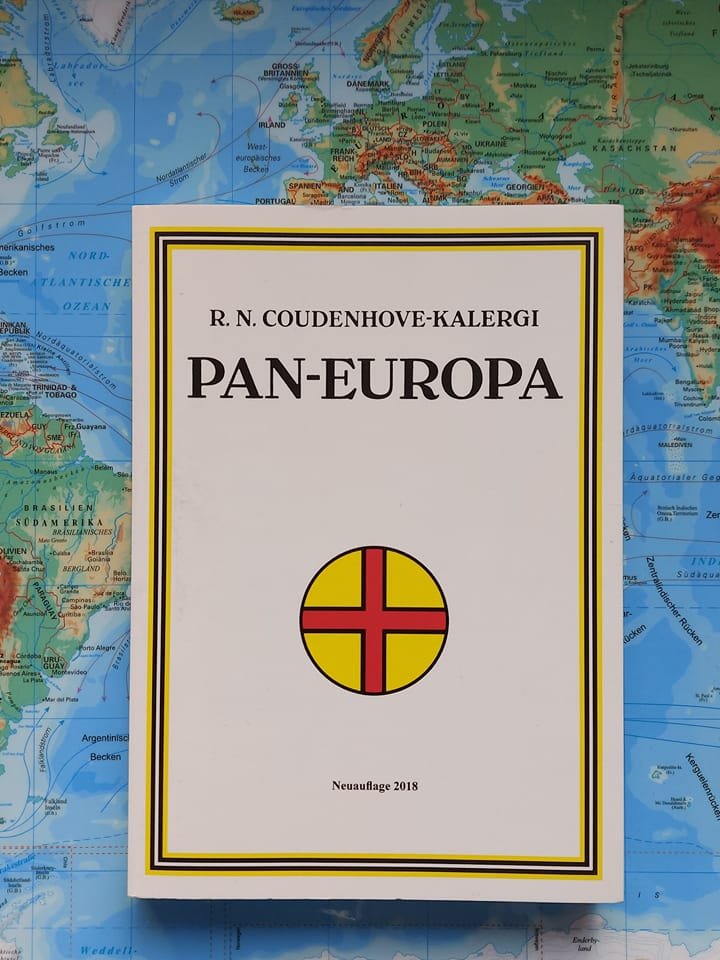
Vor 100 Jahren hat Richard Coudenhove-Kalergi, der Begründer der Europäischen Einigung, seinen Weltbestseller “Pan-Europa” auf Schloss Würting vollendet.
Dieses Buch sollte (in kommentierter Fassung) Pflichtlektüre in allen europäischen Lehrplänen sein. 1/5
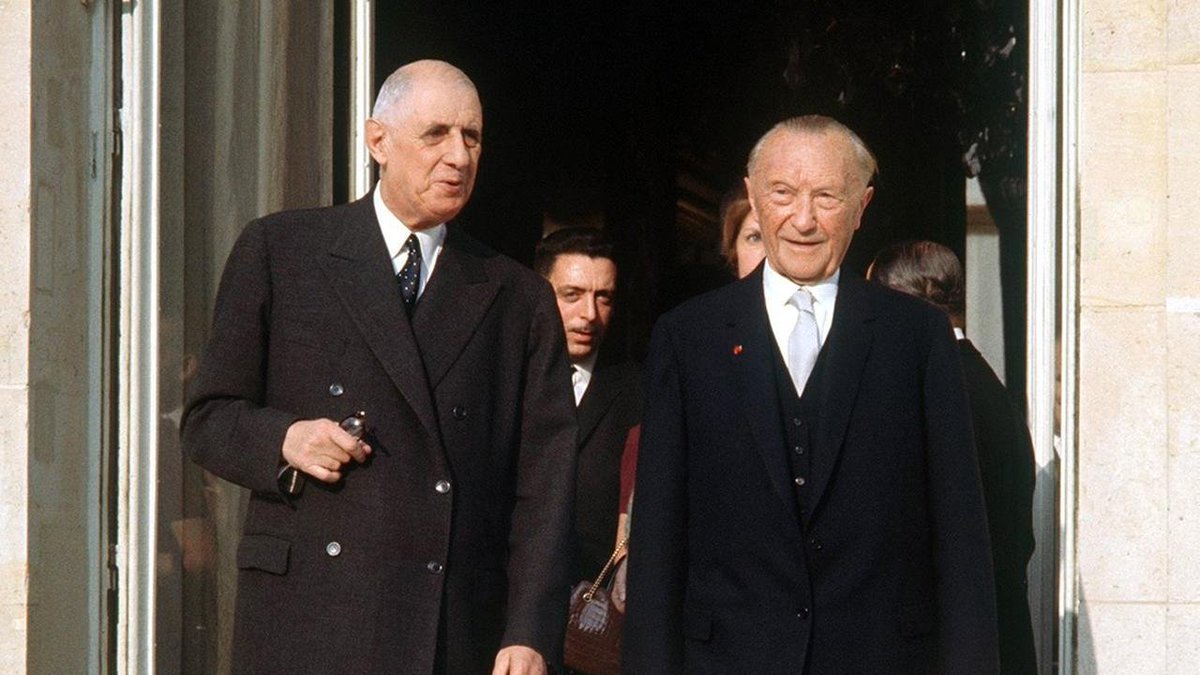
Instrumente auf diesem Weg sollen laut Coudenhove die deutsch-französische Aussöhnung, eine Europäische Verteidigung, eine Wirtschafts- und Währungsunion sowie eine Europäische Verfassung sein. 4/5
Proud to support this petition for a unified pan-European startup entity. Let’s unite Europe's startup ecosystems! https://t.co/z8qQKxID6t 🇪🇺 https://t.co/BwBaRRs0Iz
❤️We love people
solving
big problems.
📍https://t.co/jk4rfbLGZK is a community of over 30,000 Makers building with state-of-the-art, modern Artificial Intelligence.
👉Join Salz21 AI hackathon now,
https://t.co/KuD0QNb0ey
🕺Check out
Product Hunt: https://t.co/Ejfgft3gvI
🚀 This is a great opportunity
to meet new people, learn new skills, and have a ton of fun.
We'll be starting on March 10th, so mark your calendars and we'll see you there!
👉 More info and registration can be found here: https://t.co/n9wzRBepEB
#ai#artificialintelligence
📢 Event announcement: Salz21 AI Hackathon Salzburg by our friends at @ FH Salzburg, @ https://t.co/ksc27W1wgj and @ Salz21
💡 Are you looking for a fun and exciting way to spend your April?
👉 More info and registration can be found here: https://t.co/n9wzRBepEB
#ai
Want to hack with State-of-the-Art Artificial Intelligence? Join us September 4th for Deep Learning Labs #4 to build with OpenAI GPT-3 #ArtificialIntelligence#GPT3#AI#deeplearninglabs https://t.co/kHaKHvULVv
Eine Prise...
Salz21!
Was ist das Salz des 21. Jahrhundert?
⏳🚀In zwei Monaten ist es soweit.
Wir freuen uns auf das Home of Innovation, Changemakers, Innovators, und hochkarätige Gäste auf der Salz21.
https://t.co/xNZdobiLPg
#innovation#austria


![SchmidhuberAI's tweet photo. The #NobelPrize in Physics 2024 for Hopfield & Hinton turns out to be a Nobel Prize for plagiarism. They republished methodologies developed in #Ukraine and #Japan by Ivakhnenko and Amari in the 1960s & 1970s, as well as other techniques, without citing the original inventors. None of the important algorithms for modern AI were created by Hopfield & Hinton.
Today I am releasing a detailed tech report on this [NOB]: https://t.co/u9YxfBuqNf
Of course, I had it checked by neural network pioneers and AI experts to make sure it was unassailable.
Is it now acceptable for me to direct young Ph.D. students to read old papers and rewrite and resubmit them as if they were their own works? Whatever the intention, this award says that, yes, that is perfectly fine.
Some people have lost their titles or jobs due to plagiarism, e.g., Harvard's former president [PLAG7]. But after this Nobel Prize, how can advisors now continue to tell their students that they should avoid plagiarism at all costs?
It is well known that plagiarism can be either "unintentional" or "intentional or reckless" [PLAG1-6], and the more innocent of the two may very well be partially the case here. But science has a well-established way of dealing with "multiple discovery" and plagiarism - be it unintentional [PLAG1-6][CONN21] or not [FAKE,FAKE2] - based on facts such as time stamps of publications and patents. The deontology of science requires that unintentional plagiarists correct their publications through errata and then credit the original sources properly in the future. The awardees didn't; instead the awardees kept collecting citations for inventions of other researchers [NOB][DLP]. Doesn't this behaviour turn even unintentional plagiarism [PLAG1-6] into an intentional form [FAKE2]?
I am really concerned about the message this sends to all these young students out there.
REFERENCES
[NOB] J. Schmidhuber (2024). A Nobel Prize for Plagiarism. Technical Report IDSIA-24-24. https://t.co/u9YxfBuqNf
[NOB+] Tweet: the #NobelPrize in Physics 2024 for Hopfield & Hinton rewards plagiarism and incorrect attribution in computer science. It's mostly about Amari's "Hopfield network" and the "Boltzmann Machine." https://t.co/heYSuPQDxp (1/7th as popular as the original announcement by the Nobel Foundation)
[DLP] J. Schmidhuber (2023). How 3 Turing awardees republished key methods and ideas whose creators they failed to credit. Technical Report IDSIA-23-23, Swiss AI Lab IDSIA, 14 Dec 2023. https://t.co/Nz0fjc6kyx
[DLP+] Tweet for [DLP]: https://t.co/0fJVklXyOr
[PLAG1] Oxford's guide to types of plagiarism (2021). Quote: "Plagiarism may be intentional or reckless, or unintentional." https://t.co/kQTyqJuD9w
[PLAG2] Jackson State Community College (2022). Unintentional Plagiarism.
[PLAG3] R. L. Foster. Avoiding Unintentional Plagiarism. Journal for Specialists in Pediatric Nursing; Hoboken Vol. 12, Iss. 1, 2007.
[PLAG4] N. Das. Intentional or unintentional, it is never alright to plagiarize: A note on how Indian universities are advised to handle plagiarism. Perspect Clin Res 9:56-7, 2018.
[PLAG5] InfoSci-OnDemand (2023). What is Unintentional Plagiarism?
[PLAG6] https://t.co/e3f7QRvjy6 (2022). How to Avoid Accidental and Unintentional Plagiarism (2023). Copy in the Internet Archive. Quote: "May it be accidental or intentional, plagiarism is still plagiarism."
[PLAG7] Cornell Review, 2024. Harvard president resigns in plagiarism scandal. 6 January 2024.
[FAKE] H. Hopf, A. Krief, G. Mehta, S. A. Matlin. Fake science and the knowledge crisis: ignorance can be fatal. Royal Society Open Science, May 2019. Quote: "Scientists must be willing to speak out when they see false information being presented in social media, traditional print or broadcast press" and "must speak out against false information and fake science in circulation and forcefully contradict public figures who promote it."
[FAKE2] L. Stenflo. Intelligent plagiarists are the most dangerous. Nature, vol. 427, p. 777 (Feb 2004). Quote: "What is worse, in my opinion, ..., are cases where scientists rewrite previous findings in different words, purposely hiding the sources of their ideas, and then during subsequent years forcefully claim that they have discovered new phenomena."](https://pbs.twimg.com/media/GeLlJxJXEAEXGfJ.jpg)