"pṛthivyāṃ trīṇi ratnāni: water that flows, food that regenerates, words that land. The rest is just expensive dirt. (Regen investor, part-time philosopher) "
Building on @subhash_kak's insight about the Oudh Bequest fueling Iran's Shia revival: this 1825 'loan' from Lucknow was never fully repaid and pioneered Sharia-compliant finance 150+ years before Dubai Islamic Bank: https://t.co/hOE9YdkmaK #OudhBequest#IslamicFinance@ShashiTharoor@myogiadityanath
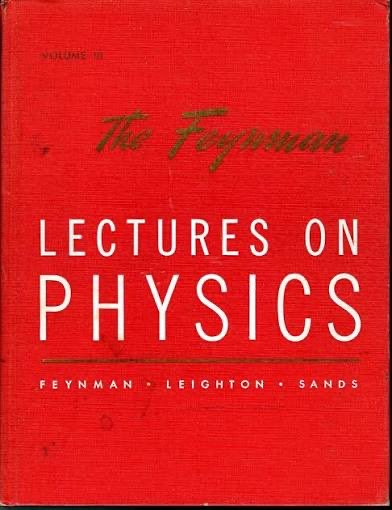
Yes..the best set of books with a red cover! My first read was during the summer breaks after 10th and 11th grades (borrowed from the local American Council Library), and I immediately fell in love with Feynman’s descriptive style.
@MattooShashank Hard to believe that the brilliant Anshu Jain worked for Howard Lutnick after leading Deutsche Bank. My recollection of Anshu Jain is as a supremely sharp and smart professional who did not suffer fools at all.
@avataram@DheerajSanghi Saravanan is correct. The other one (holding the trophy) is Narayanan Menon, 1987 graduate. Sadly, we couldn’t repeat their success the following year.
"Thus began his magnum opus project that spanned over eighteen years from 1796 to 1814, bringing artists from across India to collaborate on a monumental project — the creation of an illustrated manuscript of Tulsidas’ Ramcharitmanas. The original seven-volume manuscript featured 1,100 pages, each paired with a full-page illustration framed by lavish golden margins. The finest pigments and abundant amounts of gold leaf were used to illustrate stories from the Rama Katha. As calligraphers penned down Tulsi’s version of the epic, artists from various schools of miniature painting collaborated to illustrate every detail of it." (the Museum of Art and Photography (MAP) in Bengaluru).
https://t.co/mn3UTYQHWz
However, another, an even more impressive graphic rendering of the Ramcharitmanas from that period is in a museum. The "Book of Gold", or the Kanchana Chitra Ramayana commissioned by the Maharaja of Benares, Udit Narayan Singh, after the East India Company usurped the kingdom's military, judicial, and minting rights, leaving Udit Narayan to focus on arts and culture as his enduring legacy.
In other words, what Aryabhata said was that circumference of a circle with a diameter of 20000 is (4+100) x8 +62000= 62832. And we know that the value of pi is the ratio of the circumference to the diameter, so in this case 62832/20000, which is 3.1416. This is the value of pi accurate to five figures.
So:
a. Aryabhata knew that he was talking about a mathematical constant, because he uses the term rule, indicating the value remains the same, even when the numbers change. And the ratio of the circumference of any circle (whatever its size) to its diameter is always the same – pi.
b. He uses the term ‘approached’, indicating that the value is not exact, but rather an approximation. This is also the very first reference to the irrational nature of pi. Modern world in fact discovered that pi was irrational when proved so by Lambert in 1761.
Ref: “Best k-digit rational approximation of irrational numbers: Pre-computer versus computer era” by S.K. Sena, and Ravi P. Agarwal Department of Mathematical Sciences, Florida Institute of Technology
Do you think times are irrational? This is a perfect day and there is a perfect number for it: Happy Pi Day!
Irrationality can be beautiful, as this visualization of Pi shows:
https://t.co/gbHAQWx5Xt
The first detailed description of Pi came ~499AD from Aryabhatta (more below)
References to Pi in Aryabhatiya
The Aryabhatiya, written in Sanskrit consists of 108 verses divided into 4 padas or chapters. The second pada called the Ganitapada (Ganita = mathematics) bears a reference to the concept (and approximate value) of pi. In Ganitapada 10, Aryabhata says
“caturadhikam śatamaṣṭaguṇam dvāṣaṣṭistathā sahasrāṇām
ayutadvayaviṣkambhasyāsanno vṛttapariṇāhaḥ”
(Please note the format of this verse that was intended to be easy to memorize and thus to recall).
Translated into English, this verse means: “Add four to 100, multiply by eight, and then add 62,000. By this rule the circumference of a circle with a diameter of 20,000 can be approached.
https://t.co/JQTLOTDI8S
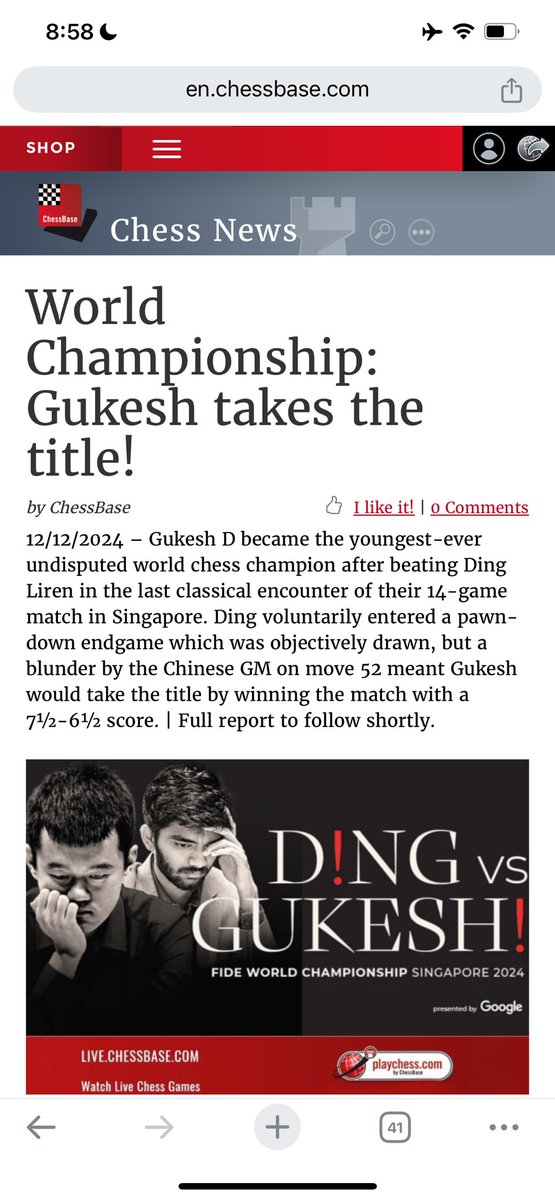
Turned out that the role models were somewhat representative of how the match went. In the end, the defending champion fought valiantly almost forcing tiebreaks, but Gukesh prevailed taking some risks, and we have a new World Chess Champion, the youngest ever!
Very interesting world championships being played out in Singapore right now, a precognition of the shape of things to come in global affairs. Very interesting inspirations from the two contestants. The defender prefers the boa-constrictor style Carlsen and Topalov, experts in squeezing out an advantage with every move. The challenger admires the more creative and flamboyant Vishy and Fischer. The Dragon and the Tiger are equally matched!

In today’s game, Gukesh could have forced a draw on move 26 by playing 26…Qe7, but instead, he played on with 26…Qh4. Some of us were reminded of a similar choice made by Vishy against Carlsen in a previous WC, with a disastrous outcome for him. Gukesh fared better in securing a draw ultimately. Looking forward to the resumption after the rest day!
Very interesting world championships being played out in Singapore right now, a precognition of the shape of things to come in global affairs. Very interesting inspirations from the two contestants. The defender prefers the boa-constrictor style Carlsen and Topalov, experts in squeezing out an advantage with every move. The challenger admires the more creative and flamboyant Vishy and Fischer. The Dragon and the Tiger are equally matched!

In today’s game, Gukesh could have forced a draw on move 26 by playing 26…Qe7, but instead, he played on with 26…Qh4. Some of us were reminded of a similar choice made by Vishy against Carlsen in a previous WC, with a disastrous outcome for him. Gukesh fared better in securing a draw ultimately. Looking forward to the resumption after the rest day!
❓From the past World Champions, who are your inspirations, either stylistically or who have inspired your chess growth as a whole?
🇨🇳 Ding Liren: Topalov and also Carlsen.
🇮🇳 Gukesh D: For me, obviously, from the start, it has been Vishy Sir. Other than Vishy Sir, I think Fischer and Magnus inspire me the most.
#DingGukesh
📷 Eng Chin An