Day 1 of crafting content and interesting lore on @RubiFi_HL ahead of the bounty’s end .
Mizuchi, the Hyperliquid Cat, is a veteran DeFi navigator. He uses his sharp eyes to spot arbitrage in the volatile Hyperliquid Ocean.
And guess what token his trying to catch an entry on !!? $RUB
RUB/HYPE is LIVE on Funnel as a Burn Pool
ALL protocol fees (16% of every tx) are routed to buy + burn $RUB, making it deflationary to trade on Funnel!
To kick it off - 2X FUN Points for all @RubiFi_HL LPs.
There's only 1 coin & now we're burning it🔥
Prediction: $RUB will distribute tokens to our community at least 3 times before projects that existed before us TGE
Also a fun note, the percentage of tokens distributed to the community will exceed 100% of supply as the initial airdrop was for 95% of supply
"RubiFi empowers users to participate in advanced strategies formerly only available to whales and professional organizations"
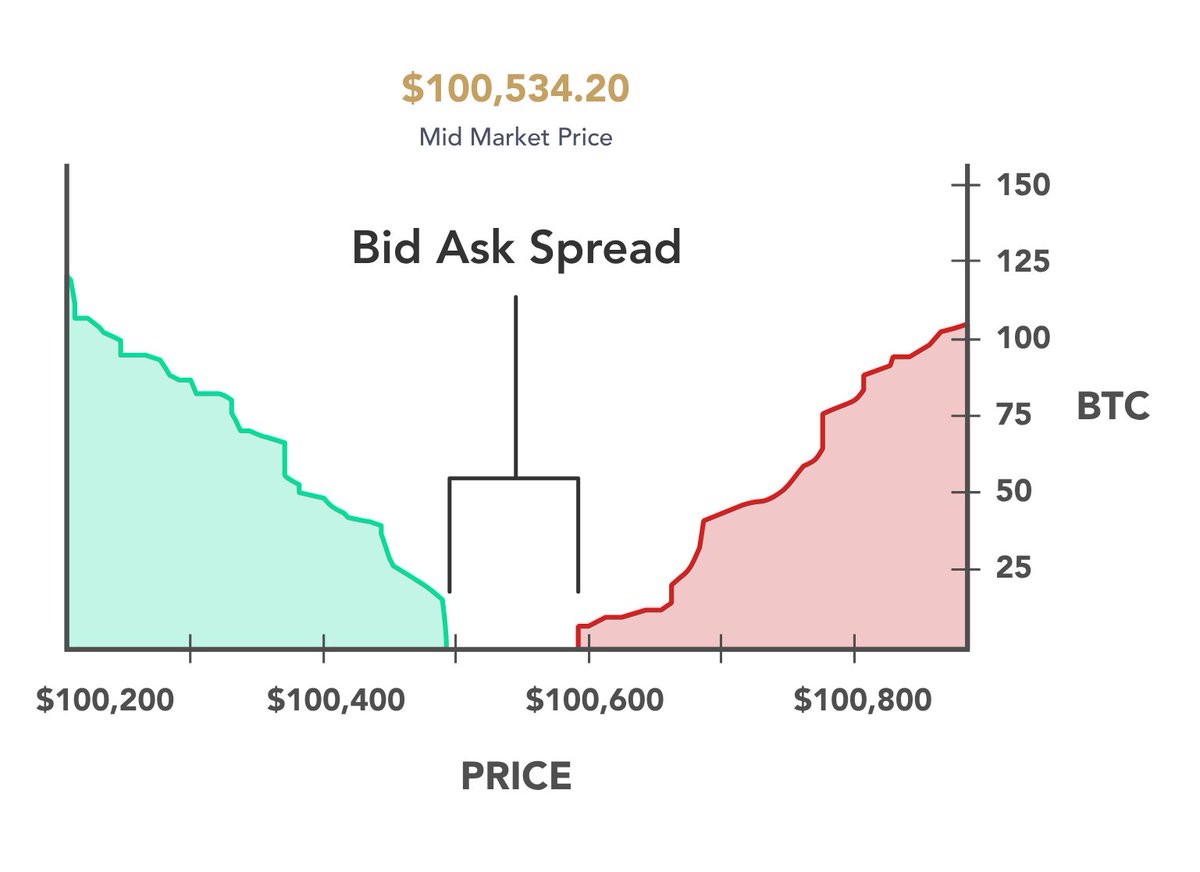
■Market making strategies are the tactics used by market makers to generate profits from the bid-ask spread. Again, market makers are financial institutions or individuals(whales) who buy and sell securities to ensure market liquidity.
they quote both a buy and a sell price in a financial instrument or commodity, hoping to make a profit on the bid-offer spread.
also, they must balance the need to make a profit with the risk of holding a large inventory (of tokens) that could lose value.
they require a deep understanding of market dynamics, a keen eye for trends, and the ability to make quick decisions based on a multitude of factors.
■Why are Market Making Strategies Employed?
a. provide liquidity
b. earn profit
c. manage risk
d. avoid toxic order flow
e. exploit inefficiencies
■Common Market Making Strategies
1. Basic Quoting Strategies
these are the simplest and foundational strategies employed by makers. Two brief examples are:
a. Constant Spread Quoting
this simply means keeping bid/ask prices at a fixed distance around a mid-price.
let's say $Hype mid-price is $50. the market maker decides to keep a constant spread of 0.006 (0.6%)
Bid Price = 49.997
Ask(Sell) Price = 50.003
if the price moves to $51, the "bot" automatically shifts to
Bid Price = 50.997
Ask(Sell) Price = 51.003
irrespective of the mid-price, the spread remains constant.
The formula used is:
Bid = Mid-price x (1 - s/2),
Ask = Mid-price x (1 + s/2)
where "s" is the spread percentage.
b. Pegged Quoting
pegged quoting means your bid and ask prices automatically follow a moving market reference, such as:
i. best bid / best ask (top of book)
ii. mid-price (average of best bid & ask)
iii. last traded price
iv. index price (for perps or cross-markets)
so, instead of quoting a fixed absolute price, you quote relative to the live market.
say $HYPE mid-price = $50.000
You decide to peg your quotes at ±0.3% around the mid-price.
Then:
Bid = $49.9985
Ask = $50.0015
if the mid-price moves to a new price, ut automatically re-pegs.
the market maker always posts a buy and sell order around the mid-price.
if price changes, quotes move with it.
this market making strategy(quoting, in general) is done to capture the spread repeatedly. It is used when the market is stable and liquidity is deep.
2. Inventory-Based Market Making
this strategy aims to balance risk by managing how much of an asset the maker holds. it adjusts the bid and asks quotes based on your current inventory(holdings) to make sure the marker maker stays market neutral.
large inventory (holding too much of an asset) opens them to directional exposure.
staying near a target inventory while still earning spreads is achieved using this strategy.
3. Volatility-Adaptive Market Making
here, the spread width and order size are adjusted based on market volatility.
○if volatility spikes, it widens spreads (protect against price jumps).
○if volatility drops, it tightens spreads (to win more trades).
this helps balance both risk exposure and execution frequency. it is often used by algorithmic desks and AMMs in volatile perps markets.
4. Order Flow–Aware(Flow-Adaptive) Strategies
these help monitor incoming trades and cancelled orders to detect “toxic” or informed flow.
○if order flow is one-sided or aggressive, spreads are widened, or quotes are pulled off the orderbooks
○if flow is balanced, spreads are tightened to maximize participation.
this strategy helps to avoid getting run over by informed traders (e.g., whales or liquidation bots). In an advanced setting, machine learning can be used to predict toxicity using trade patterns.
other strategies include:
5. Statistical Arbitrage (Stat-Arb) Market Making
6. Cross-Market / Cross-Exchange Market Making
7. Hedged Market Making
8. Machine Learning / Predictive Market Making