If you cant find a way, make one. It's hard to beat a person who never gives up. | Luke 1:37 | Utica U | Mets, Chelsea, Lakers, Cuse, Vikings, Clemson, Coyotes
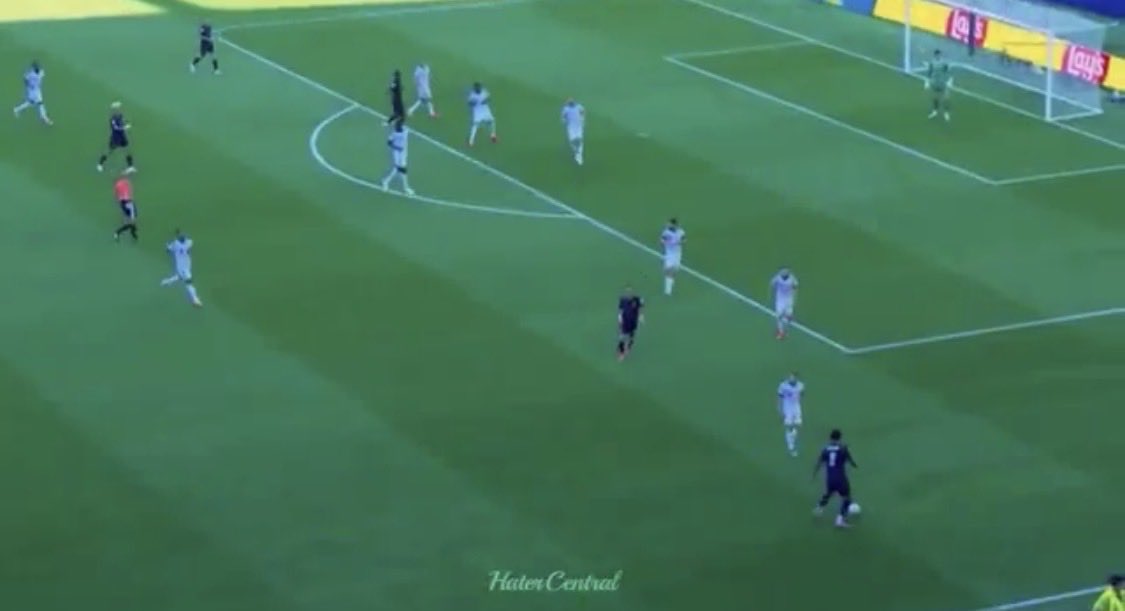
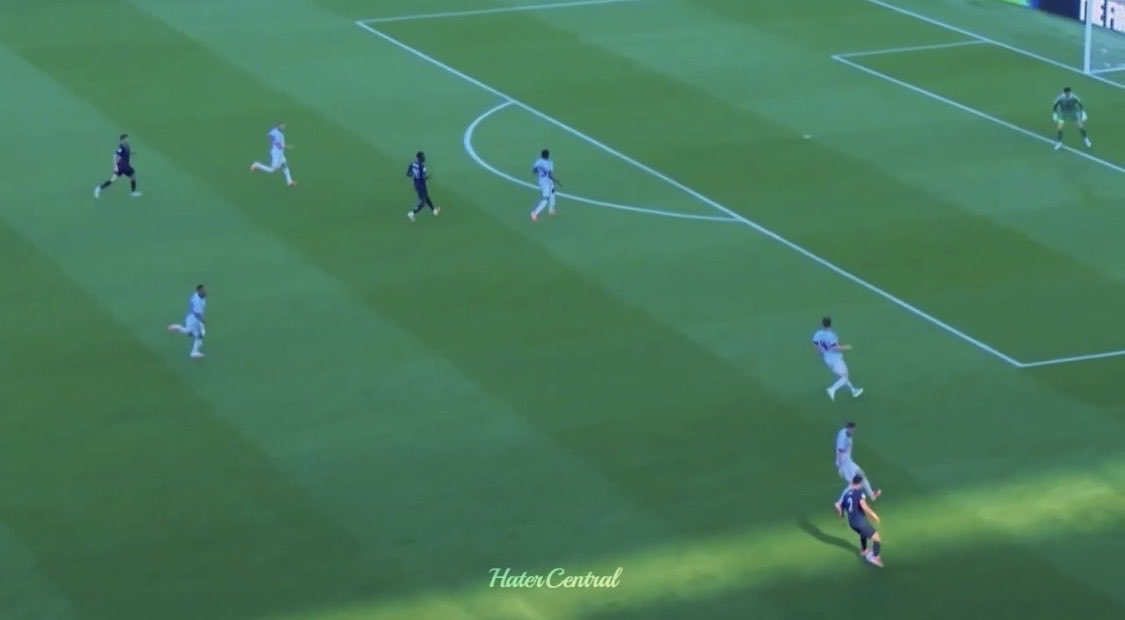
Dest got plenty of deserved criticism, but after looking at his lowlight reel, I’m baffled by how bad the U.S. shape was in possession. No options, nearest teammates not in a passing lane/running away.
No positive options here. He tries a positive play, and loses out.
One big US soccer thought: our youth development has to get more affordable. One of my kids plays travel. It’s at least $5k a year & this isn’t even super high end. We can afford it, thankfully, lots can’t. Youth sports costs in the US are out of control, soccer more than most.
Pay to play. Travel over training. An incentive to coddle not coach.
Youth soccer is broken in America, the USMNT keeps proving it true.
Column for @espn
https://t.co/CMvJrLKnHY
In Germany, a talented 14-year-old earns his club money. In America, his parents pay the club $15,000 a year.
That single inversion explains why "we will not" is the most accurate line ever written about US soccer.
FIFA built a global system for this. Training compensation and solidarity payments send a cut of every transfer fee back to the clubs that developed the player, from age 12 onward. Develop one future pro and your academy gets paid for a decade. Barcelona's La Masia, Ajax, every Bundesliga academy runs on this logic. The kid is the asset.
US Soccer refuses to enforce those rules. When Seattle's Crossfire Premier claimed its $60,000 share of DeAndre Yedlin's transfer to Tottenham, it got nothing. Claims on the Dempsey and Bradley transfers died partly because the federation couldn't even produce the youth training records.
So American clubs earn zero dollars when a kid turns pro. They earn when a kid enrolls. Which makes the parent the customer, and the product is whatever keeps the parent writing checks: travel tournaments, hotel weekends, $500 showcase events, private training at $100 an hour. Elite pathways run $8,000 to $20,000 a year. A comparable academy spot in Italy costs about 120 euros.
Follow the incentive one level deeper and it gets darker. A club dependent on fees can't cut its weakest paying players, so rosters optimize for retention over development. The scouting pool shrinks to families who can afford the cliff, which appears around age 11, exactly when development matters most. The country runs a talent filter sorted by household income instead of ability.
Every four years someone proposes fixing this. The proposal always requires the people profiting from the $15,000 model to vote themselves out of business.
They will not.
The U.S. soccer federation is a poor return on invested capital.
I played soccer for 20+ years.
Grassroots.
Academy.
D1 college.
Pursued professionally after.
And I’ll say the quiet part out loud:
The US soccer infrastructure is broken.
In America, we treat playing D1 soccer like it is the peak achievement.
For most families, clubs, coaches, and players, the entire youth soccer machine is built around one goal:
Get recruited.
Get a scholarship.
Play college soccer.
But if the objective is to produce world-class players, D1 soccer is a terrible development path.
From 18-22, some of the most important technical development years of your career, you are preparing for a 3-4 month season built largely around athleticism, direct play, set pieces, fitness, and survival.
Now compare that to an 18-year-old in Spain, Argentina, Morocco, Italy, England, or France.
That player has likely been in a professional environment for years.
Training daily.
Playing meaningful matches year-round.
Competing against grown professionals.
Getting thousands more touches.
Learning how to solve the game under pressure.
The gap is massive.
And it shows.
American players are usually athletic.
They are usually fit.
They usually compete hard.
But at the highest levels, that is not enough.
The biggest difference is technical comfort.
We do not move the ball like Spain.
We do not combine like Argentina.
We do not play with the same fluidity, rhythm, and confidence you see from countries where the game is embedded into the culture from childhood.
That comes down to volume.
Volume of touches.
Volume of street soccer.
Volume of futsal.
Volume of unstructured play.
Volume of high-level training environments.
Volume of meaningful games.
In the US, youth soccer is expensive, overly organized, overly coached, tournament-driven, and too often built around winning games at 13 instead of developing players for 23.
Parents spend thousands.
Clubs charge thousands.
Travel teams fly all over the country.
Showcases become the product.
Recruiting becomes the scoreboard.
But the return on invested capital is poor.
We probably spend more money on youth soccer than almost any country in the world, yet the technical output does not match the investment.
That is a broken operating model.
And like any business, if the output is weak, you do not blame the customer.
You inspect the system.
The US has talent.
The US has athletes.
The US has money.
The US has facilities.
But the foundation is wrong.
We built a pay-to-play, college-recruiting machine and confused it for a world-class player development system.
Those are not the same thing.
Until we fix the grassroots layer, increase meaningful touches, make development less dependent on family income, and stop treating college soccer as the top of the mountain, the US will keep underperforming relative to its resources.
I’m not saying this to trash US Soccer.
I’m saying it because I lived it.
And if we actually want to become a powerhouse, we have to be honest about the infrastructure first.
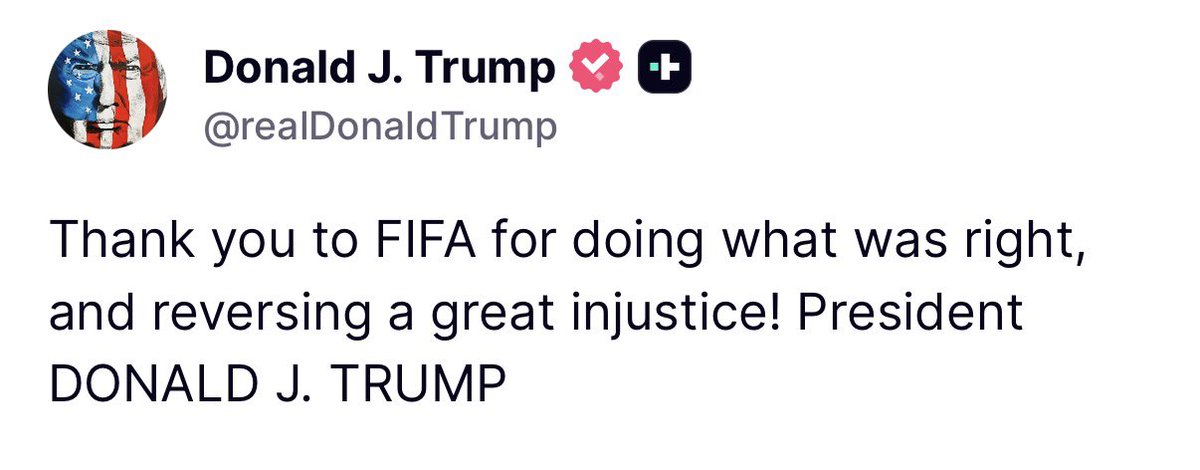
Breaking: Folarin Balogun will be available to play in USA's Round of 16 match against Belgium on Monday, FIFA announced.
The FIFA Disciplinary Committee has suspended the red card issued to the USA striker during their Round of 32 win over Bosnia and Herzegovina.
NOW: America is burying a nearly one-ton time capsule beneath Philadelphia's Independence National Historical Park as part of the nation's 250th birthday celebration.
Inside are nearly 200 artifacts from all 50 states, Washington, D.C., the U.S. territories, all three branches of government, and everyday Americans—including a signed pocket Constitution, a crystal from the 2026 Times Square New Year's Eve ball, a Coca-Cola message in a bottle, a Rose Parade flag, and more capturing life in America today.
The waterproof capsule is being sealed underground for the next 250 years and isn't expected to be opened until 2276.