THE FIRST CASE
S v Makwanyane, 6 June 1995
The Constitutional Court of South Africa sat for the first time on 14 February 1995, and the first matter it heard was whether the state could still kill people.
Two men convicted of murder had been sentenced to death under section 277(1)(a) of the Criminal Procedure Act of 1977, and the question referred to the new court was whether that section survived the Interim Constitution. On 6 June 1995 eleven judges answered unanimously. It did not.
The death penalty was declared inconsistent with the constitutional protection against cruel, inhuman or degrading punishment, every provision authorising it was struck down, and the state was forbidden from executing anyone already sentenced.
Understand the context. Opinion polls at the time showed most South Africans supported capital punishment, and the country had a severe violent crime problem. The court abolished it anyway, and in doing so established something more important than the outcome. A constitution means that certain questions are no longer decided by majority preference.
President Arthur Chaskalson wrote the main opinion. Every one of the other ten justices wrote a concurring judgment of their own.
Yvonne Mokgoro had been appointed to that bench in October 1994, the first Black woman ever to sit on it. She had grown up in Galeshewe outside Kimberley and studied law part time while working as a nursing assistant, a court clerk and a prosecutor.
In her concurring judgment she reached for something the court had not yet used.
"Generally, ubuntu translates as humaneness. In its most fundamental sense it translates as personhood and morality. Metaphorically it expresses itself in umuntu ngumuntu ngabantu, describing the significance of group solidarity on survival issues so central to the survival of communities." A person is a person through other people.
She was arguing that South African constitutional interpretation should not draw only on Canadian, German and European jurisprudence, valuable as those sources are, but also on the values of the people the Constitution was written for. Ubuntu appears in the epilogue of the Interim Constitution, which spoke of a need for ubuntu rather than victimisation. Mokgoro took that word out of the epilogue and put it to work as an interpretive principle.
Justices Langa, Madala and Mahomed developed the same theme in their own concurring judgments.
Four things followed from Makwanyane and they still shape South African law. Constitutional supremacy became real rather than theoretical. A statute passed by Parliament was struck down by a court because it conflicted with the Constitution, and that happened in the court's very first case.
Human dignity was established as a foundational value rather than a decorative phrase. The reasoning ran through sections 9, 10 and 11 of the Interim Constitution, and dignity has anchored South African rights jurisprudence ever since.
Comparative and international law were confirmed as legitimate interpretive aids, with the court applying the proportionality test from the Canadian case of R v Oakes.
Ubuntu entered South African constitutional law. It has since been applied in cases concerning eviction, defamation, restorative justice, contract and customary law, and an entire field of legal scholarship grew from those paragraphs.
Somebody has to decide what a new country will actually be, and the deciding happens in rooms most people never see. A woman from a township outside Kimberley, whose parents had primary schooling only, sat on the first bench of the first court of a democratic South Africa and wrote an African philosophical principle into its founding jurisprudence in its opening case.
#RememberHerName
The quiet before the storm...
⚽️ Bafana Bafana 🇿🇦 vs Canada 🇨🇦
📅 Sunday, 28 June 2026
🏟️ Los Angeles Stadium
🕕 Kick-off: 21:00pm SA Time
🖥 SABC 1/3 & SABC+
#Fifaworldcup#BafanaPride#BafanaBafana
Yesterday at Cartrack's head office in Rosebank, a woman named Gcina Dhladhla passed away after reportedly informing management last week that she was unwell. Instead of being supported, she was issued with a warning for being absent from work and was called into meetings regarding her attendance.
On Friday morning, Gcina went to work after being threatened with dismissal if she did not report for duty. At around 8:30am, she went to the bathroom. After being inside for an unusually long time, her team leader went to check on her. When there was no response, security was called to open the door.
Gcina was found unconscious on the bathroom floor. She had removed her clothing because she was feeling extremely hot. She remained on the floor for a prolonged period while assistance was being arranged. CPR was attempted by individuals who were not trained first aid responders, and it was only later realised that an ambulance had not yet been called.
Supervisors managed the situation, A manager went to Netcare in person to request an ambulance. By this stage, Gcina's body had become cold, her hands and feet had turned purple, and she had begun bleeding from the nose.
An ambulance only arrived after 11:00am, following intervention from her family, who instructed the company to call emergency services. When paramedics arrived, Gcina had already passed away. Employees from the Debtors Department were then instructed to vacate the building.
Gcina had previously complained about the way she was treated by team leaders. Her family, colleagues and the public deserve answers about the circumstances surrounding her death.
#CountryDuty
BREAKING NEWS:
High court issues an immediate WARRANT OF ARREST FOR THE DETENTION OF #NgizweMchunu for contempt of court.
Warrant is effective immediately and once arrested, he needs to spend 10 (ten) days inside.
https://t.co/cpo6gQRf5i
Did you know it’s completely ILLEGAL for tuckshops to charge an extra "Speedpoint fee" (R2–R10) to swipe your card, or add extra fees on airtime? 💳
Section 23 of the CPA & banking rules state the shelf price MUST be the price at the till. Surcharging is strictly forbidden.
This widespread trend is a massive regulatory failure—the NCC and banks are asleep at the wheel while consumers get exploited daily by lawless pricing.
Fight back:
1️⃣ Demand the displayed price.
2️⃣ Snap a photo of illegal fee signs.
3️⃣ Report them to the machine provider (Yoco, Flash, or bank) or the Consumer Ombud (CGSO: [email protected]).
Know your rights. Retweet to stop the exploitation! 📢🇿🇦
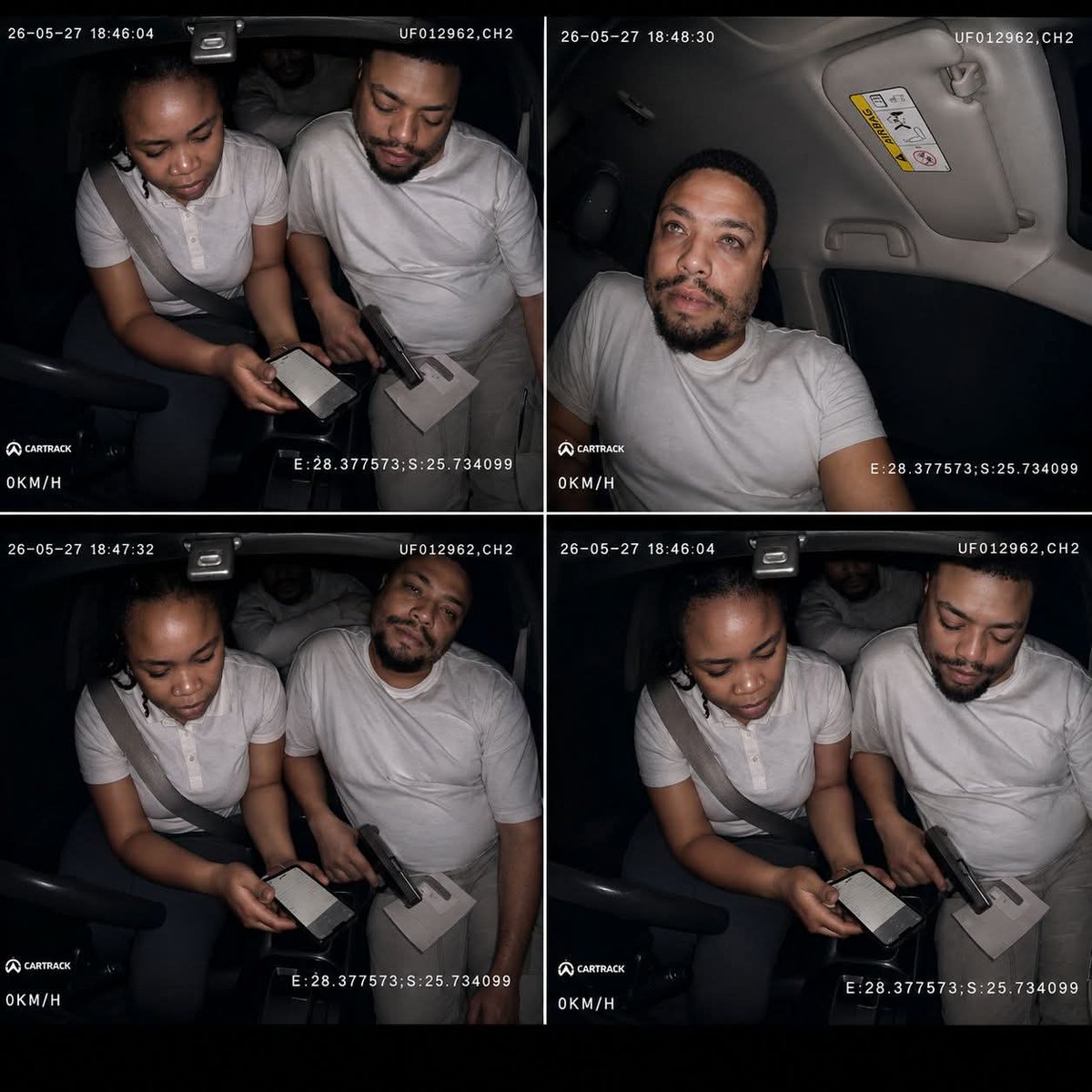
The suspect is allegedly Tshepo Nkoagatse he has deleted his pictures apparently please help find him 🚨
He thought deleting dashcam video will help him but Dashcam camera 📸 from Car Track uploads to the cloud so even if they destroy the dashcam they are captured📸 already 👌🏾👌🏾
#CountryDuty
Let’s help SAPS find these criminals!
They robbed a lady last night in Pretoria Nelmaphius area.
@TshenoloPi is on the ground as we speak and looking for them!
Only a few hours before they dance!
If this appears on your Timeline kindly Repost. We need to find this criminal! They robbed this lady in Nellmephius, Pretoria. South Africa is criminal! When he went out she was like "Dankie neh" and deep down that dankie means thank you for not killing me. 💔💔