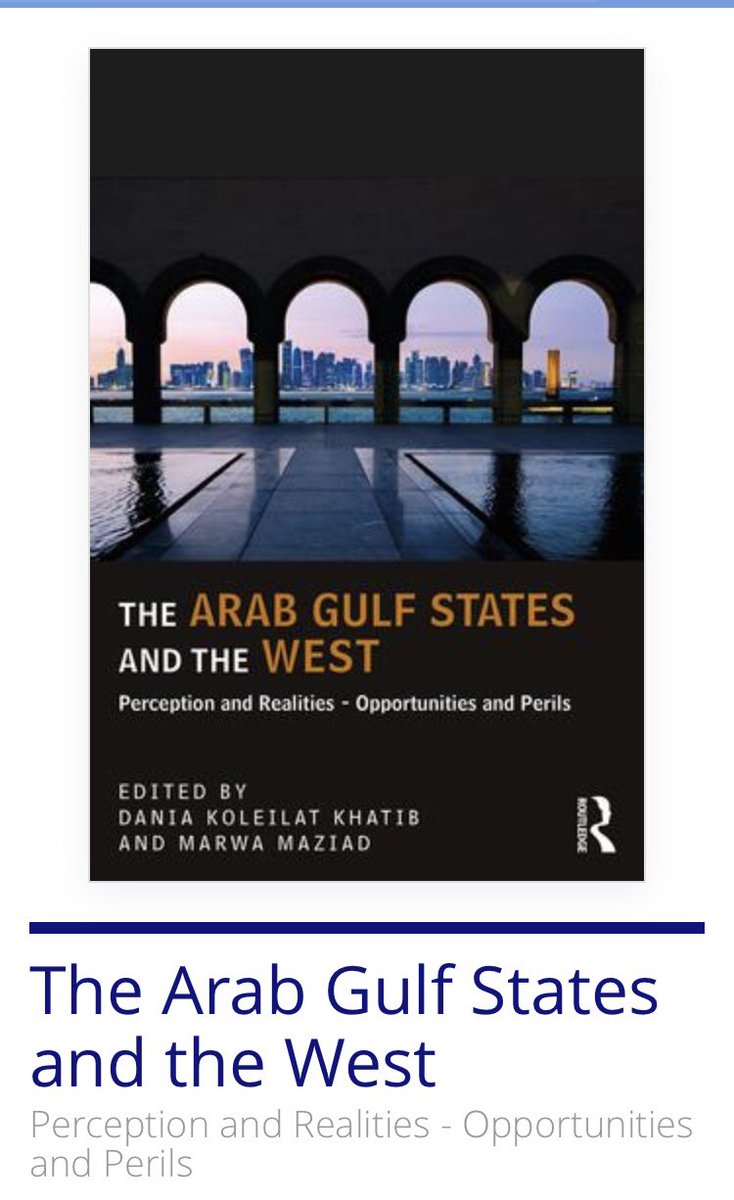
Pleased to announce that my book chapter ‘Islam and UN human rights treaties’ is now available for preorder within this great volume via @routledgebooks https://t.co/Z27wJ3pcSs
My generic career advice, as an economist-teacher-blogger-program director with an Econ PhD from a dept. outside T30 (T50?). As with most career advice, N = 1.
1. The danger in optimizing for a very specific career outcome is that you could get stuck at a local max.
2. Lean into your comparative advantages.
3. Send signals to different audiences. Research papers are one kind of signal, but so are blogs, policy white papers, talks, tweets, digital projects, etc.
4. It's hard to predict the future, so don't shortchange doing things that are interesting/valuable today.
Recent research from Stanford lecturer Rachel George and colleague Ian Klaus shows how AI is shaping democracy, from elections to civic trust. Read more for how new risks and opportunities continue to emerge.⤵️
https://t.co/qxAtzcHHDL
California dreamin’ — of the future of AI. The 2025 Carnegie California AI Survey is out. While Californians believe that AI will impact their work, communities, and democracy, they are uncertain of specific impacts, such as safety and cybersecurity.
"Artificial intelligence poses severe challenges for democracies, but also opportunities", keynote speech by @Rageorge88, lecturer at Stanford University and Consultant at @CarnegieEndow, on Democracy, Algorithms, and AI, in conversation with @carmecolomina
In @pass_blue, @giwps' Kim Hart & @Rageorge88 state that women’s inclusion must be central to UN peace ops. On #UNSCR1325’s 25th anniversary, they call for bold action to protect hard-won gains amid rising conflict & shrinking resources.
Read more: https://t.co/mIuaUs1cww
Share our global survey of women supporting peace & security by Friday, June 20th! This survey aims to hear about women’s priorities, concerns, and visions for the future. Amplify their voices by sharing the survey: https://t.co/lLhfGqQqJE
#WPS
Will funding cuts reduce research collaboration?
How do #thinktanks and research organizations advance #interdisciplinary research?
Check out the research brief via #BridgingBoundaries
https://t.co/H55p6zIM4F
Interdisciplinary, multidisciplinary and transdisciplinary research - what's the difference?
Should #research funders care? Is there an ideal type?
My latest post in #bridgingboundaries
https://t.co/5d151cwDIZ
With #doge cuts hitting the U.S., could an unintended consequence be disciplinary boundaries?
#Government funds for interdisciplinary research tend to break boundaries that persist in #academia - I write about potential effects to look out for here 👇https://t.co/RPvmfIY8Nk
Happy to be at #ISA2025 presenting on aid as foreign policy and the future of humanitarian assistance. The buzz in the room convening academics for important debate on these issues right now is palpable. One area of consensus? More evidence gathering from #academics is critical
I've refreshed my website with updates about my current @research, approaching the upcoming #ISA2025 conference, in the hope of connecting with others working on similar projects. Updates here https://t.co/r8DlwjlfyL
While development and foreign policy can be aligned for mutual benefit, they also come with tensions, trade-offs, and critical distinctions, @Rageorge88 writes. https://t.co/qmA8nkFfsL