The Abundance and Growth Fund goal is to raise broadly shared economic growth. We support work ranging from research to fieldbuilding to practice, with an initial focus on innovation, energy, clinical trials, housing, and state capacity. More here! https://t.co/Wjv6evohYI
Yesterday, @IFP and @UChi_MSA launched a tool that the world has needed since at least when I started designing programs to fund innovation nearly 2 decades ago.
Federal program managers, political appointees, and action oriented OMB examiners and congressional staff often struggle with how to fund programs that will trigger the right incentives to actually solve the problem at hand, so they default to what they've always used (grants, cost plus contracts, etc) or the latest fad in funding mechanisms (prizes, AMCs, etc). Often these choices matter much more than the amount of money or effort expended on the program because if economic/contract principles aren't properly considered, you end up with misaligned incentives and stalled progress. Getting those choices right it critical, so IFP and MSA have done the work to read through (literally) hundreds of academic publications and consolidate that knowledge into a simple framework so you don't have to.
The Atlas of Innovation is a free interactive tool that brings that design choice to the foreground. It maps thirteen funding mechanisms (grants, contracts, prizes, AMCs, intramural research, joint ventures, etc) and narrows them with three diagnostic questions about any innovation problem: how well-specified is the problem, how well-specified is the solution, and how good is the selection process. To navigate the online version you'll answer questions about your goal to find the funding approach aligned with the information you have. Each funding mechanism has its purpose for particular technologies and specific moments in development. There shouldn’t be an ARPA for every field, just like we don’t need a prize or AMC for every innovation. The Atlas helps you navigate those tradeoffs.
I am so grateful to have joined a team last month that thinks so deeply (and practically) about neglected but important areas like mechanism design. Props to @matthewesche, @calebwatney , Christopher Snyder, @heidilwilliams_, @mattsclancy , Sarrin Chethik, Claire McMahon, @siddhharia and many more for their work over the last three years to envision this product, develop it rigorously and release it into the world.
It was good to see so many friends in the innovation community last night to celebrate the launch, but now it's time to see it used! Check it out and let us know what you think: https://t.co/2tLheeUSxp
At @IFP, we’ve spent the past 3 years thinking about all the different ways the US government & philanthropy fund R&D.
Until now, R&D funders haven’t had a systematic way to match the innovation problem to the right funding tool.
We built THE ATLAS OF INNOVATION to fill that gap.
https://t.co/XZshJ7pr1f
Alongside @UChi_MSA, we’ve boiled down thousands of hours of research into a handful of questions covering how much the R&D funder knows about:
- the problem they want to solve
- the solution it should have
- the team that should build the solution
Why the Atlas matters:
The US government spends close to $200 billion every year on R&D. And after the Anthropic and OpenAI IPOs, there will be hundreds of billions of dollars in new philanthropic giving.
Choosing the correct funding approach to the social problems they’re trying to solve will mean the difference between success and failure.
For example, NSF research grants have helped seed breakthroughs from MRI machines to search engines, but grants aren’t built to deliver the kind of industrial speed and scale that a project like Operation Warp Speed required.
Picking the wrong funding approach can leave programs behind schedule, over budget, or without anything to show for all the money they spent.
How we built the Atlas:
1. We began by creating a matrix of dozens of considerations that a thoughtful policymaker or funder would ideally weigh before deciding how to fund a project.
2. We looked at every major funding approach, from grants to R&D tax credits to advance market commitments, analyzing when they work well and when they fail to meet the mission.
3. We spent months deep in the weeds of contract theory and incentive design, looking at historical examples and the state-of-the-art research in innovation economics.
4. We then worked to turn that research into a tool that time-strapped policymakers and philanthropic funders could rely on at the start of an innovation funding cycle.
5. Three years later, we are launching just that: a new (and visually stunning) website to help funders decide how to best incentivize innovation. And all they have to know… is what they currently know about their innovation goal! The Atlas takes care of the rest.
How to navigate the Atlas:
Answer questions about your goal to find the funding approach aligned with the information you have.
Each funding mechanism has its purpose for particular technologies and specific moments in development.
There shouldn’t be an ARPA for every field, just like we don’t need a prize or AMC for every innovation. The Atlas helps you navigate those tradeoffs.
Cool paper ⤵️ on preferences for architecturally distinctive buildings & welfare effects of policy interventions.
tl,dr: "the SB 79 strategy" of letting cities designate historic / design parcels while strictly capping the amount of land so designated looks pretty good!
1/3
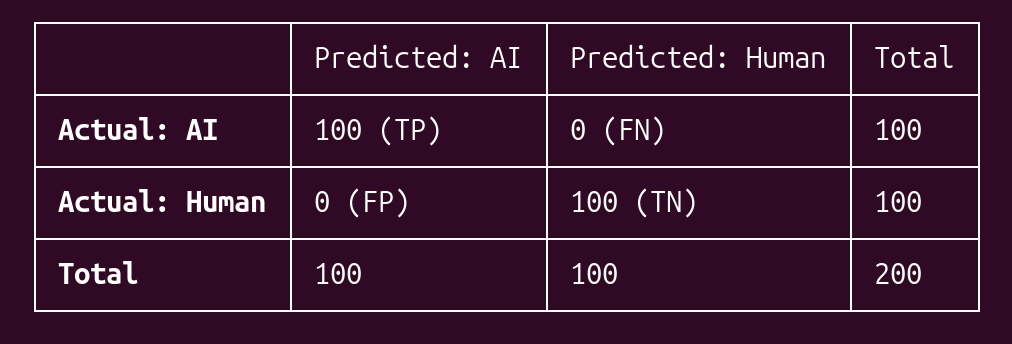
In an overdue 10 minute $10 task, I just ran Pangram against my blog and 100 fresh Claude outputs. Great stuff
(though this is the easy case, no adversarial edits whatsoever)
I got curious and did my own audit using the API and a large sample of my writing (the only corpus I can think of where I know the actual provenance). Pangram correctly assessed 118 items I wrote as human authored, and the 1 AI-authored item as AI!
Median academic does no work in their career anyone cares about. But avg research production by academics is why we have AI in the first place, win the Cold War, made cancer breakthroughs, etc. Both why we need to clean up our own house but also why NIH/NSF grant issues so bad!
I got curious and did my own audit using the API and a large sample of my writing (the only corpus I can think of where I know the actual provenance). Pangram correctly assessed 118 items I wrote as human authored, and the 1 AI-authored item as AI!
To what extent will AI automate innovation? How will social science research change with the advent of agents able to execute research end-to-end?
New Anthropic Economic Research from Thomas Lyttelton, Nathan Wilmers, & Maxim Massenkoff out today tackling these questions. 1/6
Yes, you should audit us! In fact, we offer API credit grants for researchers who want to evaluate our models. Please reach out!
Link to form in replies
Two recent examples of how AI lets you do "expert judgment at scales large enough to do quantitative analysis on":
@ChadJonesEcon and Christopher Tonetti's new paper on automation and growth. It has a model where production is a huge number of tasks. They use structured prompts to ask LLMs to come up with 100 production tasks per sector and estimate how much of the task was performed by machine or humans at different points in time, and the share of production costs associated with the task. Then they can use the results to do historical analysis and forward looking simulations on the contribution of automation to productivity growth. https://t.co/XBNeNpW4JM
@_brianpotter's latest blog post asks claude how much earlier 160 inventions could have been invented, given the important components in the inventions and the state of technology in earlier years. He can then do descriptive data and trends on the overall set. https://t.co/VQ3gkVaCyS
I'm sure there will be a bunch of methodological work to hammer out how well this works and what the failure modes are, but it seems like an exciting new tool to me. In the economics of innovation, we often rely on these very noisy proxies for subjective judgement: how many citations received, as a measure of a paper's impact/importance; clever transformations of citation data to assess how disruptive a paper is; overlap of technological classifications in patents to assess how similar two technologies are, etc. AI judgment (if validated) could let you come up with more precise measures of what we care about in all these cases.
I hadn't been following the Gino vs Harvard drama once it became obvious Gino was guilty, but this from Harvard's latest filing is nuts. They imaged the laptop at the start of the investigation, so they caught her when she made a fake, backdated file with "data" from her research
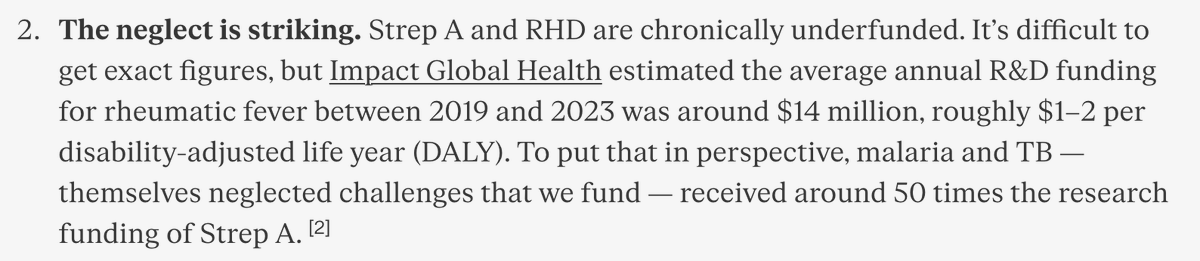
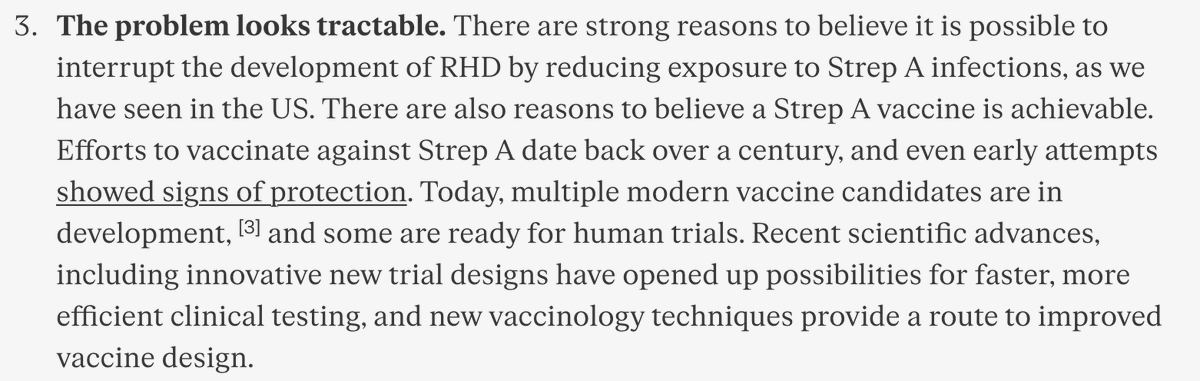
Really proud of @Kat_a_Collins and team for this launch. This fund nails each point of our importance (~639k deaths/year), neglectedness (~$1/DALY of R&D, much less than malaria or HIV), and tractability (promising but stalled vaccine candidates) framework.
Are you working on an exciting housing, transportation or energy paper that you want policymakers to engage with?
Submit to the BUILD Research Network's first annual research-to-policy convening. Application deadline is 6/5.
(link in next tweet)
With my great co-authors at @CenTaxUK, we have built a matched worker-to-firm database for the UK: the Business-to-Worker Register.
It covers the universe of UK workers (not just employees) and all UK organisations (not just employers, corporations or private sector).
Short 🧵
We're extending the Abundance Agenda deadline to June 18.
We've heard from researchers and policy thinkers at leading institutions and don't want to miss any other strong ideas. Details here: https://t.co/gePGGeUPyt